
The Critical Importance of Cleaning Machinery Pits in Factories
Often unseen and out of mind, machinery pits are the operational underbelly of many industrial facilities. These sub-floor areas house critical infrastructure, from machine foundations and hydraulic systems to coolant sumps and waste collection channels. However, when neglected, they transform from a functional necessity into a significant liability. The professional cleaning of machinery pits in factories is not a simple janitorial task; it is a critical maintenance procedure essential for safety, compliance, and asset protection.
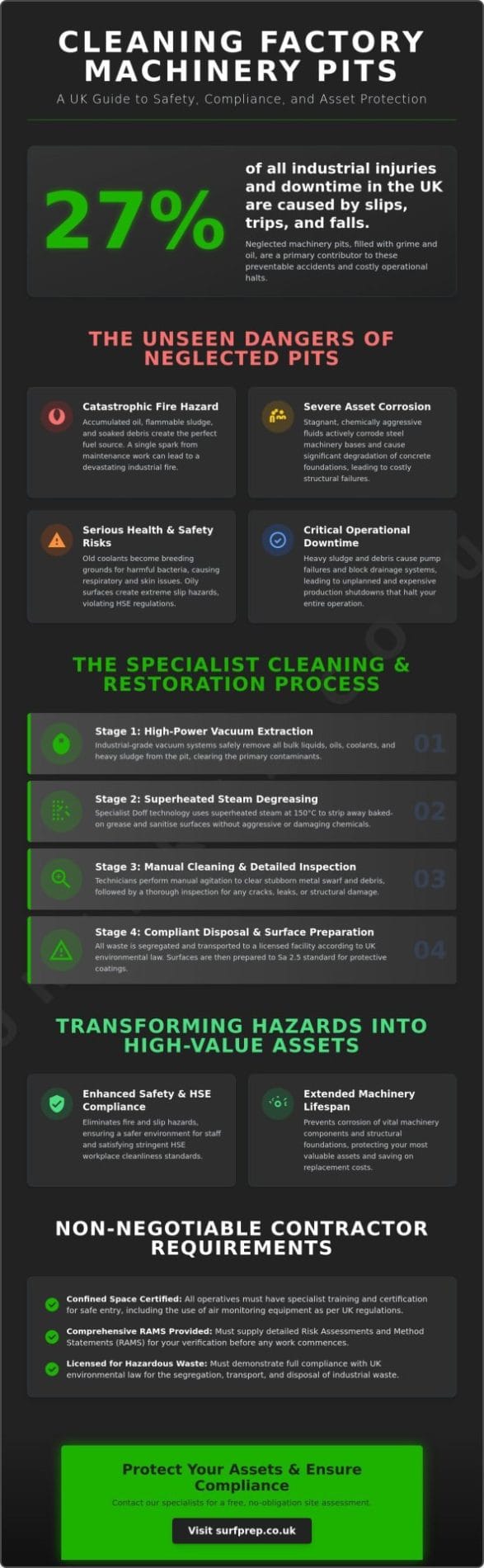
Regular, specialist cleaning addresses several core risks that can undermine your entire operation:
- Fire Risk Mitigation: Over time, pits accumulate a dangerous combination of leaked oils, flammable solvents, and swarf. This oil-soaked debris acts as a potent fuel source, dramatically increasing the risk of a small spark turning into a major factory fire.
- Asset Protection: Stagnant fluids, particularly old coolants and cutting fluids, can become acidic. This corrosive sludge attacks concrete foundations, degrades steel supports, and causes premature failure of the very machinery the pit is designed to house.
- HSE Compliance: A clean and well-maintained workplace is a cornerstone of UK Health and Safety Executive (HSE) regulations. Failing to manage hazardous waste and maintain a safe environment in and around machinery can lead to significant penalties and operational shutdowns.
Identifying the Risks of Neglected Pits
The dangers lurking in an uncleaned machinery pit extend beyond the obvious. The combination of stagnant liquids, industrial by-products, and limited airflow creates a hazardous micro-environment.
- Bio-hazards in Stagnant Fluids: Old coolants and water-based cutting fluids are a perfect breeding ground for harmful bacteria, including Legionella. As these fluids degrade, they can release hazardous aerosols into the factory’s air, posing a direct health risk to your staff.
- Structural Integrity: The chemical breakdown of oils and sludge can create compounds that are highly corrosive to concrete and metal. This acidic mixture can compromise the structural integrity of machine bases and the pit walls themselves, leading to costly and disruptive repairs. For pits constructed from traditional materials like engineering brick, this degradation can be particularly severe.
Impact on Operational Efficiency
A proactive approach to machinery pit cleaning delivers tangible returns by safeguarding operational continuity. A clean pit is an efficient one, directly contributing to a more productive and reliable factory floor.
- Reducing Downtime: The most common consequence of a neglected pit is the failure of pumps and drainage systems. Blockages caused by thick sludge and solid debris can halt production lines, leading to unplanned and expensive downtime whilst the issue is resolved.
- Improving the Factory Environment: Foul odours from stagnant, bacteria-laden fluids can permeate the workplace, negatively impacting air quality and staff morale. A clean facility is a safer, more pleasant, and more professional environment for everyone.
Specialist Methods for Industrial Pit and Sump Cleaning
- High-Powered Vacuum Extraction: The first step is always the safe removal of bulk materials. Industrial vacuum tankers are used to efficiently extract liquids, oils, heavy sludge, and swarf, containing the hazardous waste for correct disposal.
- Superheated Steam Cleaning: To break down stubborn, baked-on grease and sanitise surfaces, we utilise advanced superheated steam systems like ThermaTech. This method uses high-temperature steam at low pressure, effectively melting away contaminants without chemicals and minimising water usage. This is a far more effective solution than standard pressure washers for thick industrial grime.
- Manual Agitation and Swarf Removal: After the bulk of the waste is removed, trained operatives enter the space (following strict confined space protocols) to manually scrape and agitate remaining residues, ensuring even the smallest metal fragments and compacted sludge are cleared from corners and crevices.
- Surface Inspection: Once the pit is clean and dry, a thorough inspection is conducted. This allows for the identification of any cracks, leaks, or signs of degradation in the pit lining or concrete structure that were previously hidden by debris.
Handling Oil, Coolant, and Sludge
The responsibility for your factory’s waste does not end when it leaves your site. It is a legal requirement under UK environmental law to ensure all hazardous materials are handled, transported, and disposed of correctly.
- Waste Segregation and Legal Disposal: A specialist contractor will segregate different waste streams (e.g., oils, coolants, solid sludge) and provide a full audit trail, including Waste Transfer Notes, to prove compliance with Environment Agency regulations.
- Utilising Oil-Absorbent Materials: For a final, bone-dry finish, oil-absorbent pads and granules are used to capture any remaining residue, leaving the pit surfaces clean and ready for inspection or recoating.
Surface Preparation for Protective Coatings
A deep clean offers the perfect opportunity to apply new protective coatings, extending the life of the pit. However, the surface must be properly prepared for these linings to be effective.
- Preparing Pit Walls for Recoating: A thoroughly degreased and decontaminated surface is essential for the adhesion of epoxy or chemical-resistant linings. Superheated steam cleaning provides an ideal, chemical-free preparation for concrete or brick-lined pits.
- Treating Internal Metal Components: If the pit contains integrated steelwork, such as beams or supports, that require recoating, they must be prepared to a specific standard. For steel, this often means achieving a cleanliness level like Sa 2.5 (Near-White Metal Blast Cleaning) to ensure the new coating system performs as intended. You can learn more in our detailed guide to understanding surface preparation standards.
Compliance, Safety, and Choosing a Specialist Contractor
Due to the inherent dangers, cleaning machinery pits is not a task for an internal maintenance team or a general cleaning company. It requires a specialist contractor with proven experience in high-risk, industrial environments and a deep understanding of UK safety legislation.
- Confined Space Entry: Many machinery pits are legally classified as confined spaces. This classification mandates specialist training, continuous air monitoring, and dedicated rescue plans before any operative can enter.
- Risk Assessments and Method Statements (RAMS): Before work begins, a competent contractor must provide detailed RAMS. This documentation outlines the specific hazards of the job and the precise safety measures that will be implemented to control them.
- Insurance and Accreditation: Verify that your contractor holds the correct insurance for working in hazardous and confined spaces. Accreditations from safety bodies provide further proof of their competence and professionalism.
- Minimising Disruption: Experienced contractors understand the need to minimise factory downtime. They can schedule work during planned shutdowns or use physical screens and localised ventilation to safely section off the work area, allowing surrounding production to continue.
Navigating Confined Space Regulations
The Confined Spaces Regulations 1997 are a critical piece of UK legislation governing this type of work. A machinery pit often meets the legal definition of a confined space due to limited entry/exit points, the potential for hazardous fumes to accumulate, and poor natural ventilation.
- Legal Requirements: The law requires a robust safe system of work to be in place for any entry into a confined space. This is non-negotiable and is a primary focus of any HSE inspection.
- Rescue Plans and Equipment: It is not enough to simply have a plan; the contractor must have a trained and equipped rescue team on standby. For deep or poorly ventilated pits, this may include the use of breathing apparatus and specialist retrieval equipment.
Why Local Expertise Matters in the North of England
Working with a contractor who understands the local industrial landscape is a distinct advantage. The manufacturing challenges in the industrial heartlands of Northern England are unique, shaped by a blend of heritage infrastructure and modern production demands.
- Serving Industrial Hubs: We have extensive experience working across the North, from the advanced manufacturing centres in Leeds and Manchester to the heavy industries surrounding the Humber ports in Hull.
- Understanding Local Challenges: Our team understands the specific issues faced by factories across Yorkshire, Lancashire, and the North East, allowing us to provide a more responsive and relevant service.
Ready to secure your facility and ensure compliance? Contact Surfprep today for a specialist machinery pit cleaning quote.
Frequently Asked Questions
How often should machinery pits be cleaned?
In most heavy manufacturing environments, pits should be inspected quarterly and deep-cleaned at least annually to prevent the build-up of flammable sludge and hazardous bacteria. High-volume production lines or those with significant fluid loss may require more frequent attention to ensure pump systems do not fail.
Is machinery pit cleaning considered a confined space task?
Yes, many machinery pits are classified as confined spaces under UK law. This is due to factors like limited access, poor natural ventilation, and the potential for hazardous fumes from stagnant oils or chemical residues. Professional contractors must use gas detection equipment and have a certified rescue plan in place before any entry.
Can you clean pits whilst the factory is operational?
Yes, specialist contractors can often organise pit cleaning during scheduled downtime or weekends. Alternatively, by using physical screens and local exhaust ventilation (LEV), the work can be safely isolated from surrounding production lines, maintaining a safe environment for your staff and minimising disruption.
What happens to the hazardous waste collected from the pits?
All collected oils, coolants, and contaminated sludge are classified as hazardous waste and must be disposed of via a licensed waste carrier. You should receive a formal Waste Transfer Note from your contractor to prove the material has been handled and processed in full compliance with UK environmental regulations.
