
That bottle of white vinegar and scrubbing brush in your kitchen cupboard might be the very thing that ruins your period fireplace forever. We understand the frustration of looking at a blackened hearth that once served as the centrepiece of your room. It’s natural to feel anxious that stubborn carbon deposits have permanently stained the porous masonry, especially when standard household cleaners seem to do nothing but smudge the soot further. Since we began restoring stone in November 2000, we’ve seen how well-meaning DIY attempts often drive contaminants deeper into the grain.
In this guide, you’ll learn exactly how to clean soot off stone fireplace surrounds using professional-grade dry restoration techniques that protect your property’s internal masonry. We’ll explain why we favour low-pressure dry grit blasting for indoor projects to prevent moisture damage, whilst also touching on when superheated steam systems like Thermatech, or DOFF, are appropriate for external work. You’ll discover the safest path to returning your stone to its original colour, ensuring those deep carbon deposits are lifted without the risk of permanent damage.
Key Takeaways
- Understand why standard wet cleaning methods often fail on porous stone by driving carbon particles deeper into the material structure.
- Learn the importance of moisture management and why we prioritise low-pressure dry grit blasting for internal fireplace restoration.
- Discover how to clean soot off stone fireplace surrounds using professional dry methods that lift stubborn carbon without the risk of moisture damage.
- Identify the benefits of the sand jet machine, a gentle alternative for external stonework that we have operated since November 2000.
- See how we protect your home through meticulous masking and sealing techniques designed to contain dust throughout the restoration.
The Challenge of Soot: Why Your Stone Fireplace Requires Specialist Care
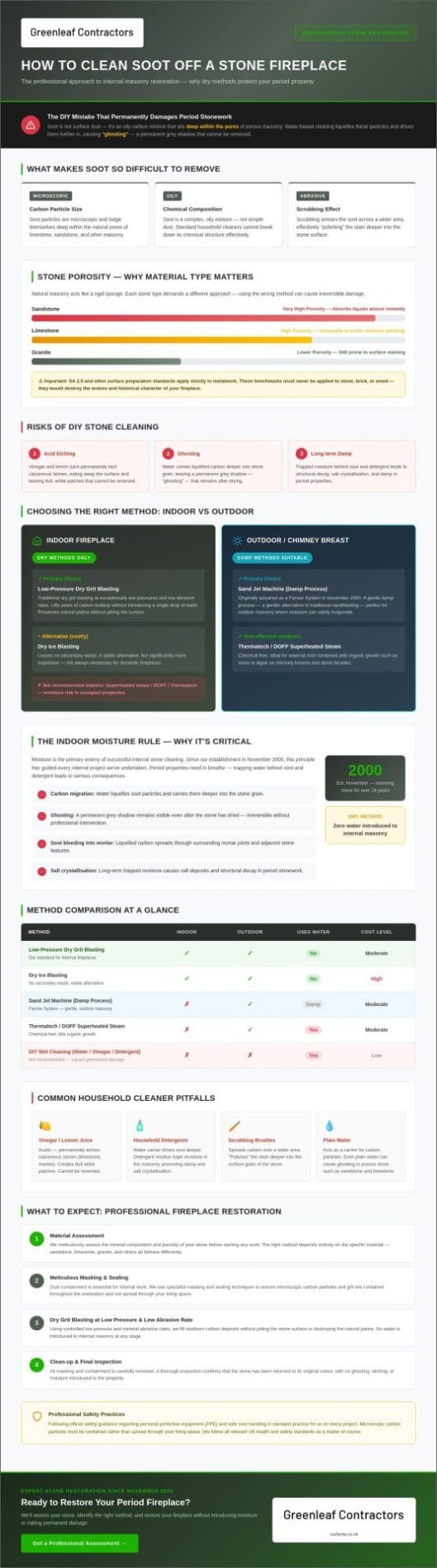
Understanding What is Soot? is the first step in successful restoration. It isn’t just surface dust; it’s a complex, oily mixture of carbon particles that are microscopic in size. These particles lodge themselves deep within the natural pores of the stone, creating a stain that sits far below the visible surface. Because natural masonry like limestone and sandstone is inherently porous, it acts like a rigid sponge, drawing contaminants into its structure over years of use.
Many homeowners searching for how to clean soot off stone fireplace surrounds are tempted by the “Wet Method” trap. This involves using water, detergents, or vinegar to scrub the stone. Whilst it may appear to work initially, water acts as a carrier. It liquefies the carbon and pulls it deeper into the grain of the masonry. This often leads to “ghosting,” a permanent grey shadow that remains visible even after the stone has dried. Since we established our business in November 2000, we’ve found that moisture is the primary enemy of successful internal stone cleaning.
Carbon is naturally resistant to standard household cleaners and remains highly abrasive. Attempting to scrub these deposits away often results in the soot being smeared across a wider area, effectively “polishing” the stain into the stone. Our professional experience has shown that moisture management is the most critical factor in internal restoration. We prioritise dry methods for indoor work to ensure that we aren’t introducing liquids that could cause the soot to bleed into the mortar or the surrounding stone features.
The Risks of DIY Stone Cleaning
Using acidic cleaners like vinegar or lemon juice is a common mistake amongst property owners. These chemicals cause permanent etching on calcareous stones, physically eating away the surface and leaving dull, white patches. Furthermore, introducing water into internal masonry can lead to long-term damp issues. Period properties need to breathe, and trapping moisture behind a layer of soot and detergent can lead to structural decay or salt crystallisation over time.
Assessing Your Fireplace Material
Different stones require vastly different approaches. Sandstone is exceptionally thirsty and absorbs liquids almost instantly, whilst granite is denser but still prone to surface staining. We meticulously assess the mineral composition before starting any work. It’s also important to note that technical surface preparation standards like SA 2.5 are strictly for metalwork. We never apply these aggressive benchmarks to stone, brick, or wood, as they would destroy the delicate texture and historical character of your fireplace.
Professional Methods for Removing Soot Safely
We don’t approach a fireplace restoration with a single tool; instead, we categorise our equipment based on whether the stone is inside or outside your property. This distinction is vital because high-temperature steam or water, whilst effective outdoors, can be catastrophic for internal period masonry. Following Official Safety Guidance regarding personal protective equipment and safe soot handling is standard practice for us. This ensures that microscopic carbon particles are contained rather than spread through your living space during the process.
Internal Works: The Case for Dry Grit Blasting
For occupied houses, traditional dry grit blasting at exceptionally low pressures is our standard choice. This dry method allows us to lift years of carbon buildup without introducing a single drop of water into your walls, avoiding the “ghosting” issues discussed earlier. We use very low abrasive rates to ensure we aren’t “pitting” the surface or destroying the natural patina. Whilst dry ice blasting is a viable alternative that leaves no secondary waste, we often find it is a significantly more expensive option that isn’t always necessary for domestic fireplaces. If you are unsure which method fits your home, we can help you identify the right stone cleaning services for your specific project.
External Fireplaces and Chimney Breasts
When moving to external chimney breasts or stone facades, we often utilise sand jet cleaning. This machine, which we originally acquired as a Farrow System in November 2000, uses a gentle damp process that is perfect for outdoor masonry where moisture can safely evaporate. For external soot combined with organic growth like moss or algae, we might recommend Thermatech or DOFF superheated steam. These systems provide a chemical-free finish by using high temperatures rather than aggressive pressure. This approach is the most effective answer to how to clean soot off stone fireplace features located on the exterior of a building. Choosing the right medium for the specific location is the only way to ensure how to clean soot off stone fireplace surrounds without causing long-term structural harm.
What to Expect During a Professional Fireplace Restoration
When we arrive at your property, our primary focus isn’t just the cleaning itself; it’s the protection of your living space. Professional restoration is a methodical process that begins with meticulous masking and sealing. We use heavy-duty polythene and specialist tapes to contain any dust generated during dry blasting, ensuring that carbon particles don’t migrate to your furniture or carpets. This preparation phase is often the most time-consuming part of the job, but it’s essential for a clean result.
The execution follows a logical progression. We start by removing loose surface deposits before carefully lifting the deeper, ingrained soot layers using our low-pressure dry grit system. By working in small, controlled sections, we ensure that the natural texture of the material is revealed without being damaged. This expertise in how to clean soot off stone fireplace surrounds comes from over 25 years in the industry. Since establishing our business in November 2000, we’ve remained committed to preserving the integrity of your stone through every stage of the process.
Once the soot is removed, we conduct a thorough clean-up. We remove all masking materials and vacuum the area, leaving your home in the same condition we found it. You’ll be left with a revitalised centrepiece that has been restored to its original colour. We provide specific advice on aftercare to help you maintain the finish, ensuring you know exactly how to clean soot off stone fireplace hearths for routine upkeep without risking the damage caused by “wet” DIY methods.
The Surfprep Difference
We take pride in our “Honest Specialist” approach. If we believe a specific method won’t work for your fireplace, we’ll tell you. We won’t sell a service that risks your property’s character. Based in the North, we bring industrial-grade precision to domestic projects across Leeds, York, and the surrounding areas. Our history with the sand jet machine and modern Thermatech units means we have the right tool for every environment.
Ongoing Maintenance
Knowing when to call in the experts for a minor clean can prevent the need for more intensive work down the line. If you are also looking for broader residential maintenance solutions, you can learn more about professional home cleaning services that ensure every room remains in pristine condition.
For more information on flue safety and preventative care, Best Chimney Services provides a detailed guide on maintenance that offers valuable insights for any homeowner.
Restore the Natural Beauty of Your Period Masonry
Cleaning a period hearth requires more than just effort; it demands the right technical approach to avoid permanent staining. As we’ve discussed, “wet” DIY methods often backfire by pushing carbon deeper into the stone’s grain. By choosing low-pressure dry grit blasting, you protect the internal masonry and avoid the moisture issues that plague older properties. This is the definitive answer to how to clean soot off stone fireplace surrounds whilst preserving the historical character of your home for years to come.
Since establishing our business in November 2000, we’ve spent over 25 years refining our restoration techniques. Our Doff and Thermatech certified technicians bring industrial-grade precision to domestic projects across Leeds, York, and Manchester. Whether you’re dealing with light staining or decades of carbon buildup, we provide the honest advice and technical expertise needed to revitalise your stone. Request a professional stone fireplace restoration quote today and let us help you return your fireplace to its original, striking colour. Your home’s centrepiece deserves a specialist touch that stands the test of time.
Frequently Asked Questions
Can I clean a stone fireplace with soapy water?
No, we don’t recommend using soapy water or liquid detergents on porous internal stone. Water acts as a carrier that pulls liquefied carbon particles deep into the stone’s grain, which often results in permanent “ghosting” or dark shadows that are impossible to remove with standard cleaning. Professional dry methods are the only reliable way to ensure you know how to clean soot off stone fireplace surrounds without causing irreversible staining.
Will professional soot removal create a lot of dust in my house?
We take extensive precautions to contain dust by meticulously masking and sealing the work area with heavy-duty polythene before starting. Whilst dry grit blasting does generate debris, our containment strategies ensure it remains within the immediate hearth area. We vacuum and clean the site thoroughly after the restoration, leaving your home in the same condition we found it, but with a revitalised fireplace.
Is Thermatech or DOFF steam cleaning safe for indoor fireplaces?
Whilst Thermatech and DOFF are excellent for external stone facades, we generally avoid superheated steam for internal fireplaces in occupied properties. Introducing high volumes of moisture into internal masonry can lead to long-term damp issues or salt crystallisation. For indoor work, we favour low-pressure dry grit blasting, which lifts soot effectively without the risks associated with moisture ingress.
How much does it cost to professionally clean a stone fireplace in the UK?
The cost of professional restoration depends on the size of the surround, the type of stone, and the severity of the carbon buildup. We provide bespoke quotes after assessing the specific requirements of your project. Factors such as accessibility and the level of masking required also influence the final price, ensuring you receive a transparent and fair estimate for your unique restoration needs.
How long does the soot removal process take?
Most domestic fireplace restorations are completed within a single working day. This includes the extensive preparation time needed to seal the room and the methodical execution of the cleaning process itself. Larger or more complex installations, such as full-height chimney breasts, may require additional time to ensure every layer of ingrained carbon is safely removed without damaging the stone’s natural patina.
Can you remove soot from wooden beams above the fireplace?
Yes, we can restore blackened wooden beams using the same low-pressure dry grit blasting techniques we use for stone. We never use superheated steam like Thermatech on internal wood due to the risk of moisture damage in domestic settings. Our dry process effectively lifts soot and old wax from the timber grain, revealing the natural beauty of the wood whilst maintaining the structural integrity of the beam.
