
A standard pressure washer is often the fastest way to permanently ruin a historic building. Whilst it might seem like an efficient tool for removing grime, the high-pressure stream frequently “blows” the face of the stone, stripping away the protective quarry sap and leaving the surface vulnerable to the British weather. If you are researching how to clean fragile sandstone, you probably already suspect that a more nuanced approach is required to handle stubborn black soot or old layers of paint without causing structural heartbreak.
Since we established our specialist services in November 2000, we’ve seen first-hand how the right equipment makes the difference between a botched job and a stunning restoration. In this guide, you’ll discover how to safely restore delicate surfaces using professional superheated steam (specifically the Thermatech system) and gentle sand jet techniques that protect the underlying masonry. We’ll compare these external damp processes with the dry grit blasting methods required for internal works, ensuring you have the confidence to choose a conservation-led solution that retains the historic character of your property.
Key Takeaways
- Learn why preserving “quarry sap” is essential for stone longevity and why aggressive pressure washing causes irreversible delamination.
- Understand how to clean fragile sandstone using the Thermatech superheated steam system to sanitise surfaces at 150°C without using harsh chemicals.
- Discover why the sand jet is the preferred gentle alternative to traditional sandblasting for removing stubborn atmospheric pollutants and old paint from external facades.
- Distinguish between external damp processes and the dry grit blasting or dry ice methods required for internal stone to prevent moisture ingress.
- Find out how a professional pre-clean survey identifies “face-bedding” and hollow mortar before work begins to ensure structural integrity.
Why Fragile Sandstone Requires a Specialist Cleaning Approach
Sandstone is fundamentally a collection of mineral grains held together by natural cements. Understanding the properties of sandstone is the first step in any successful restoration project. Because this material is highly porous, it acts almost like a hard sponge. Over decades, moisture and pollutants penetrate deep into the sedimentary layers. If you’re researching how to clean fragile sandstone, you have to account for “quarry sap”. This is the natural mineral binder that hardens when the stone is first cut. Aggressive cleaning can strip this layer away, leaving the stone “soft” and prone to crumbling, or spalling, as the face delaminates.
The Dangers of Pressure Washing and Acidic Cleaners
Many homeowners reach for a standard domestic jet washer, but this is a critical error for heritage masonry. Even on a low setting, high-pressure water scours the surface and creates micro-fissures. This forces water deep into the stone’s core. When winter hits, this trapped moisture expands as it freezes, literally pushing the face of the stone off in a process known as freeze-thaw damage. Similarly, “brick cleaners” found in DIY shops are often hydrochloric acid-based. These react with the iron content inherent in many UK sandstones, causing permanent orange rust-coloured staining that is almost impossible to reverse.
At Surfprep, having operated since November 2000, we’ve learnt that “cleaner” isn’t always better. A specialist stone cleaning project should focus on removing harmful carbon crusts and biological growth whilst respecting the stone’s aged patina. Sometimes the most honest advice we can give is to limit the intensity of the clean to ensure the building’s structural integrity remains intact. It’s about preservation; we want to ensure the stone is prepared for the next century, not just made to look “new” for a week.
Professional Techniques: Thermatech Steam and Sand Jet Systems
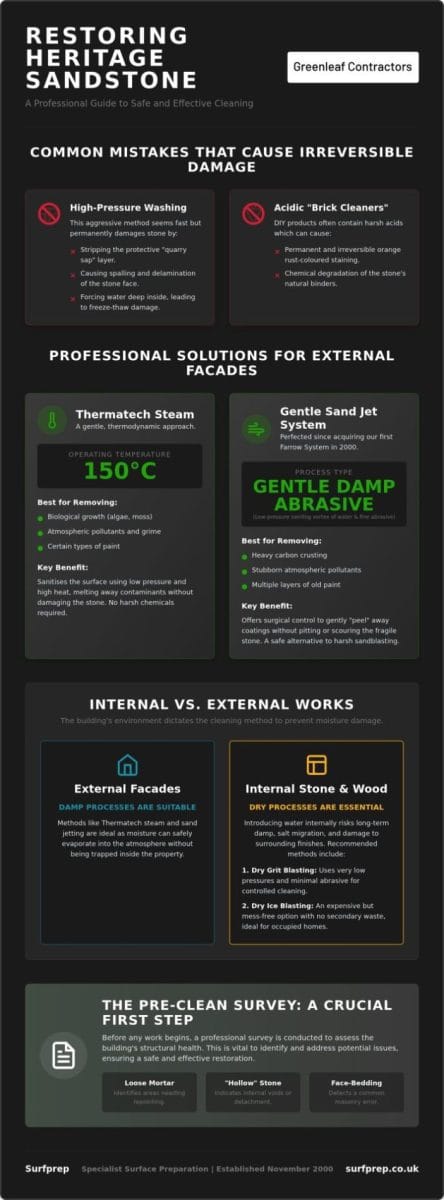
When considering how to clean fragile sandstone, the focus must shift from mechanical force to thermodynamics. We utilise the Thermatech system, which produces superheated steam reaching temperatures of 150°C. This isn’t just “hot water”; it’s a phase-change state that melts the bond between the stone and biological growth or atmospheric pollutants. Because the pressure remains exceptionally low, the structural integrity of the masonry isn’t compromised. This methodology aligns with the preservation principles found in Historic Environment Scotland’s guide on sandstone cleaning, which warns against the blunt-force trauma of historical cleaning methods.
For more resilient contaminants like heavy carbon crusting or old paint layers, a different level of precision is required. We employ a specialised sand jet system, a tool we’ve operated since Surfprep was established in November 2000. Originally known as the Farrow System, this machine creates a low-pressure, swirling vortex of fine abrasive and water. It’s a damp process that provides surgical control, allowing us to “peel” away unwanted coatings without pitting the stone. This is a far cry from traditional sandblasting; it’s a controlled restoration technique we’ve spent over two decades perfecting during our stone cleaning projects across the UK.
External vs. Internal Sandstone Cleaning
The damp nature of the sand jet makes it ideal for external facades, but we never recommend it for indoor use. Introducing water into an interior environment can lead to salt migration and long-term damp issues within the property. For internal sandstone, we typically deploy traditional dry grit blasting at very low pressures or dry ice blasting. Whilst dry ice is an expensive option, it’s often preferred for occupied homes as it creates no secondary waste. If your heritage property features mixed materials, our wood restoration guide offers further advice on treating period timber alongside stone. If you’re uncertain which method is appropriate for your specific stone type, contact our team for a specialist assessment.
General property maintenance is just as important as specialist stone care in preventing damp. For readers in the capital, having a contact for an emergency plumber London is a sensible precaution to ensure that plumbing or heating emergencies don’t compromise your building’s interior.
Assessing and Restoring Period Sandstone Features
Before deciding how to clean fragile sandstone, a professional must first understand the building’s structural health. We always start with a thorough pre-clean survey. This involves checking for loose mortar and “hollow” sounding stone that indicates internal voids or detachment. We also look for “face-bedding”; this is a common masonry error where the stone’s sedimentary layers are oriented vertically, making the surface highly susceptible to peeling. Identifying these issues early prevents us from exacerbating existing damage during the restoration process.
Our restoration process follows a methodical three-step approach:
- Step 1: We use the Thermatech system to remove heavy debris and biological growth. This sanitises the surface at high temperatures without the need for harsh chemicals.
- Step 2: For areas with heavy carbon staining or old lime-wash and paint, we deploy the sand jet. This allows for targeted removal, cleaning only what is necessary whilst leaving the surrounding healthy stone untouched.
- Step 3: Finally, we conduct a post-clean inspection. This often highlights the need for repointing with lime mortar to protect the newly exposed stone edges from water ingress.
Maintaining Sandstone in the North of England
In the damp climates of Leeds, York, and Manchester, algae and moss thrive on porous surfaces. It’s often tempting for property owners to apply modern “waterproof” sealants, but these are usually disastrous for UK heritage buildings. Breathable surfaces are essential. Modern sealants trap moisture within the stone, which leads to internal decay and accelerated crumbling during the winter months. Since our establishment in November 2000, we’ve consistently advocated for traditional, breathable finishes that allow the stone to “breathe” naturally. If you’re concerned about the condition of your masonry, you can contact Surfprep for a specialist stone assessment to ensure your property is treated with the care it deserves.
Restoring the Integrity of Your Heritage Masonry
Preserving the structural health of a period building requires a shift in perspective; it’s about thermodynamics and gentle abrasion rather than brute force. By choosing specialist methods like Thermatech superheated steam or the damp sand jet system, you protect the stone’s delicate quarry sap whilst removing decades of carbon crusting and biological growth. Understanding how to clean fragile sandstone is the difference between a facade that crumbles and one that stands proud for another century. It’s a task that demands precision, starting with a professional survey to identify underlying issues like face-bedding or loose mortar.
Since establishing Surfprep in November 2000, we’ve spent over 25 years refining these techniques across Leeds, York, Hull, and the wider North. Our team brings the grit and technical expertise required to handle complex restoration projects with total transparency. We don’t just aim for a clean surface; we aim for a preserved legacy. If you’re ready to see the true character of your stone restored without the risk of structural damage, request a specialist stone cleaning quote from Surfprep today. Your property’s history is worth the investment in specialist care.
Frequently Asked Questions
Can you use a pressure washer on fragile sandstone?
You should avoid using a standard pressure washer on fragile sandstone because the high-pressure stream often scours the soft stone surface. This mechanical force strips away the protective quarry sap and creates micro-fissures that trap moisture. In the UK climate, this trapped water expands during winter frosts, leading to permanent structural damage known as spalling. We always recommend low-pressure superheated steam as a safer, more effective alternative for delicate masonry.
What is the best way to remove black soot from sandstone walls?
The most effective method for removing stubborn black soot or carbon crusts is a combination of Thermatech superheated steam and a gentle sand jet. Whilst steam at 150°C melts away oily pollutants, the sand jet (originally the Farrow System) uses a low-pressure swirling vortex to peel away heavy carbon deposits. This approach ensures the stone’s historical patina remains intact whilst revealing the original colour and detail hidden beneath decades of industrial grime.
Will cleaning my sandstone cause it to crumble further?
Professional cleaning should help prevent further decay by removing harmful biological growth and salts, provided the correct specialist methods are used. If you use aggressive chemicals or high pressure, you certainly risk causing the stone to crumble or delaminate. Our process for how to clean fragile sandstone includes a pre-clean survey to identify face-bedded stone or loose mortar, ensuring we adapt our pressure and temperature to suit the stone’s specific condition.
Is steam cleaning safe for internal sandstone fireplaces?
We don’t recommend superheated steam cleaning for internal sandstone features because it introduces excessive moisture into the property. This can lead to salt migration or damp issues within the chimney breast and surrounding walls. For fireplaces and internal masonry, we prefer using traditional dry grit blasting at very low pressures or dry ice blasting. These dry methods effectively remove soot and old paint without the risks associated with water ingress.
