
What if the aggressive scrubbing or high-pressure blasting you’re considering is actually doing more harm to your masonry than the paint itself? It’s a frustrating reality for many property owners in the UK, where discovering a fresh tag on a historic or soft brick wall often leads to a panicked, and often destructive, DIY attempt. You’ve likely seen the results before; “ghosting” shadows that never quite disappear or, worse, a permanently scarred brick face that has lost its protective outer layer.
We understand that your primary goal is to restore your building’s appearance without compromising its structural integrity. Since establishing our specialist services in November 2000, we’ve found that the secret to success isn’t brute force; it’s the precise application of heat and gentle abrasives. This guide will show you how to remove graffiti from brick using professional-grade methods like Thermatech superheated steam and our specialist sand jet (originally acquired as the Farrow System). You’ll learn which techniques lift pigment from deep within the porous surface whilst preserving the delicate substrate, ensuring your property looks as good as it did before the vandals arrived.
Key Takeaways
- Understand why the porous nature of masonry leads to “ghosting” and why standard scrubbing fails to reach pigments trapped deep within the brick capillaries.
- Discover why Thermatech superheated steam is the professional choice for delicate restoration, using 150°C heat to melt paint binders whilst avoiding high-pressure damage.
- Learn how to remove graffiti from brick using the sand jet, which is a gentle alternative to traditional sandblasting that we’ve utilised since acquiring our first Farrow System in 2000.
- Identify the most effective proactive measures, including sacrificial and permanent anti-graffiti coatings, to protect your property from repeat vandalism.
Why Removing Graffiti from Brickwork Requires a Specialist Approach
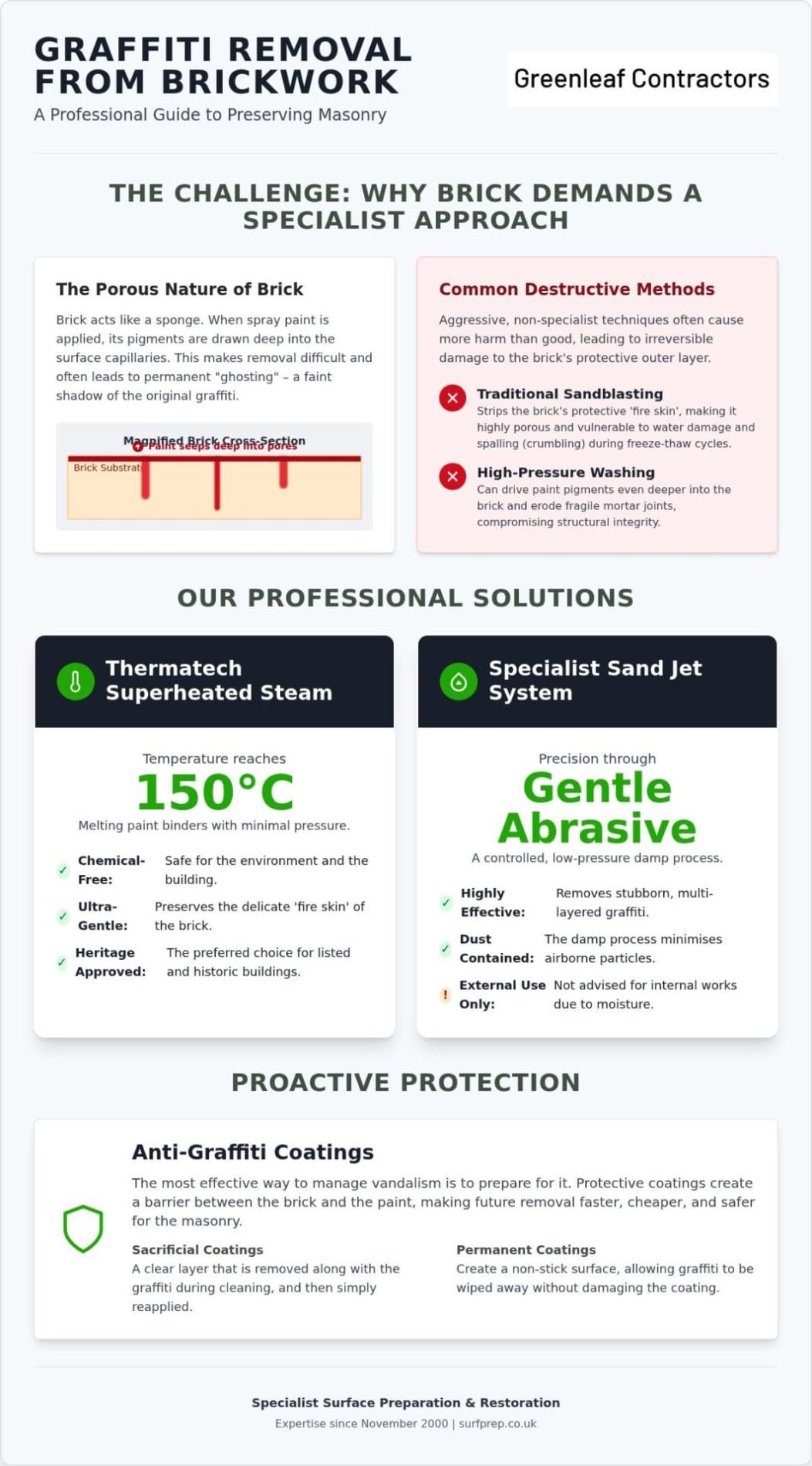
Removing spray paint from a wall isn’t like wiping a kitchen counter. Brick isn’t just a flat surface; it’s a complex, porous material that behaves more like a sponge than a shield. When vandals strike, the paint is pulled into the surface capillaries by suction. If you approach this with raw force, you’ll likely damage the facade rather than clean it. Understanding how to remove graffiti from brick requires a shift in mindset: you need precision and temperature, not just a higher PSI.
The Science of Brick Porosity and Paint Adhesion
Bricks vary significantly in their density. A hard-fired engineering brick might resist penetration for a short while, but soft, reclaimed bricks or historic red bricks act like a sponge. Once the aerosol solvents evaporate, the pigment is locked deep within the pores. This is what causes “ghosting”, a stubborn shadow that remains even after the surface paint is gone. Standard solvents often fail here because they can’t reach the depth of the pigment. In some cases, they actually thin the paint and push it even deeper into the masonry. Professional Graffiti removal techniques focus on breaking the molecular bond of the paint without driving it further into the substrate.
The Dangers of Traditional Sandblasting
Many property owners assume that if a pressure washer doesn’t work, they should move to sandblasting. This is a dangerous misconception. Traditional sandblasting is far too aggressive for most brick cleaning projects. It strips away the “fire skin”, which is the protective vitrified layer created during the kiln-firing process. Once this layer is gone, the brick becomes even more porous, leading to rapid water absorption and eventual “spalling” during winter freeze-thaw cycles. We’ve seen countless facades permanently ruined by contractors who treat a delicate wall like an industrial steel beam. It’s why we’ve championed gentler methods, like the sand jet and superheated steam, since we established Surfprep in November 2000. Precision allows us to lift the paint whilst leaving the character and integrity of the brickwork untouched.
Safe and Effective Methods for Professional Graffiti Removal
Selecting the right equipment is the difference between a clean wall and a ruined one. We’ve spent over two decades refining our approach, and we’ve found that temperature is almost always more effective than pressure. High-pressure water often just pushes pigment deeper into the brickwork or causes “spalling” by stripping the brick’s face. Instead, we rely on specialised technology that respects the substrate whilst delivering a thorough clean.
Thermatech: The Power of Superheated Steam
For most projects involving delicate masonry, the Thermatech system is our gold standard. It produces superheated steam at temperatures reaching 150°C. This intense heat is vital because it melts the binders in the spray paint, allowing the pigment to be rinsed away at very low pressure. It’s a chemical-free process that’s particularly favoured for heritage and listed buildings in historic centres like York and Durham. When following guidelines for Removing Graffiti from Historic Masonry, preservation is the priority. This method ensures we don’t saturate the wall or erode the mortar joints. You can find more technical details on Surfprep’s brick cleaning services page.
Gentle Abrasive Cleaning with the Sand Jet
Sometimes, graffiti is multi-layered or has been baked on by the sun for years, making it incredibly stubborn. In these instances, how to remove graffiti from brick becomes a question of finding a gentle abrasive that won’t scar the surface. We utilise a specialist sand jet, a system we’ve operated since acquiring our first Farrow System in November 2000. It’s a damp process that mixes a small amount of water with a fine abrasive, which keeps dust contained and provides a much softer finish than traditional sandblasting. It’s an excellent choice for external walls, though we don’t recommend it for internal timber or occupied houses due to the moisture involved. For commercial clients looking for a restorative finish, our sand jet cleaning offers a controlled, damage-free solution that prepares the surface perfectly for future protection.
Preventing Future Damage and Maintaining Your Facade
Speed is your greatest ally when dealing with vandalism. The “Broken Windows Theory” suggests that leaving graffiti in place signals neglect, which often invites further tagging and antisocial behaviour. For those managing commercial property portfolios in cities like Leeds and Manchester, rapid removal is the most effective deterrent. By cleaning a surface within 24 to 48 hours, you break the cycle of visibility that vandals crave. It’s a proactive stance that protects the long-term value of your asset.
Choosing the Right Anti-Graffiti Coating
If your property is in a high-risk area, applying a protective layer is a sensible investment. We generally categorise these into sacrificial and permanent coatings. Sacrificial coatings are typically wax-based; they’re removed along with the paint during the cleaning process and then reapplied. Permanent coatings allow for multiple cleanings without needing a fresh application. The most critical factor for brickwork is breathability. A coating must allow water vapour to escape from the masonry. If you seal the surface completely, you risk trapping moisture, which leads to dampness and structural “spalling” during the winter months. For retail parks and industrial units, the ROI is found in reduced labour costs during future cleaning cycles.
When to Call the Specialists
It’s tempting to try a quick DIY fix, but painting over a tag is rarely the answer. It creates a “patchwork” effect that devalues the building and can trap moisture behind the paint layer. Before deciding how to remove graffiti from brick on your own, use this checklist to assess the risk:
- Is the brickwork historic, soft, or previously restored?
- Has the paint been absorbed deep into the pores (look for “ghosting”)?
- Are there multiple layers of old paint involved?
- Is the area large enough to require industrial-scale containment?
Since establishing Surfprep in November 2000, we’ve seen many well-intentioned cleaning attempts result in permanent surface scarring. If you are dealing with delicate masonry that requires a specialist approach to graffiti removal, it’s always safer to consult a professional. We’ve spent over 25 years refining our techniques to ensure we lift the pigment without harming the brick. You can contact Surfprep for a specialist site assessment to ensure your building is restored correctly the first time.
Restore Your Property’s Professional Appearance
Leaving graffiti on your building doesn’t just affect its aesthetics; it risks long-term damage to the masonry and invites further vandalism. As we’ve explored, the most effective approach avoids the brute force of high-pressure washing in favour of controlled heat and gentle abrasives. By using Thermatech superheated steam or our specialist sand jet technology, you can lift pigments from deep within the brick capillaries without compromising the structural integrity of the facade. Understanding how to remove graffiti from brick is the first step toward a successful restoration that preserves your property’s value.
Since establishing Surfprep in November 2000, we’ve spent over 25 years helping commercial and industrial clients across the North of England maintain their premises. Our commitment to using the right tool for the job, whether it’s the precision of the Farrow System or 150°C steam, ensures that your brickwork remains protected. Don’t let a temporary tag become a permanent scar on your building’s character. You can Request a Professional Graffiti Removal Quote today to start the restoration process with a team you can trust. Your building’s facade is its first impression; let’s make sure it’s the right one.
Frequently Asked Questions
Can you remove graffiti from brick without leaving a shadow?
Yes, it’s possible to achieve a shadow-free finish if you use the correct specialist equipment to address the pigment trapped in the brick’s pores. These stubborn shadows, known as “ghosting”, usually occur when standard pressure washing fails to reach the depth of the masonry. By utilising Thermatech superheated steam or a gentle sand jet, we can lift deep-seated pigments whilst preserving the surface. Acting quickly before the paint fully cures also significantly improves the chances of a perfect result.
Is pressure washing safe for removing spray paint from old bricks?
High-pressure water blasting is generally not recommended for old or historic bricks as it can strip away the protective “fire skin” and cause permanent erosion. Old masonry is often softer and more brittle than modern engineering bricks; aggressive force can lead to “spalling” or force moisture deep into the structure. Instead of raw pressure, we advocate for superheated steam at low pressure. This melts the paint’s bond without risking the integrity of the delicate brick face.
How much does professional graffiti removal cost in the UK?
The cost of professional removal in the UK depends on several variables, including the total area covered, the type of paint used, and the height of the building. Every project requires a bespoke assessment to determine whether superheated steam or a sand jet is the most efficient solution for your specific site. Whilst DIY kits might seem like a cheaper alternative, they often lead to higher costs later if the brickwork is damaged or if ineffective cleaning requires professional rectification.
What is the best temperature for steam cleaning graffiti?
The optimal temperature for effective graffiti removal is 150°C, which is the precise heat delivered by our Thermatech superheated steam system. At this temperature, the binders in most aerosol paints and permanent markers begin to liquefy, allowing the pigment to be rinsed away easily using very low water pressure. Lower temperatures are often ineffective against modern, high-performance paints; whereas excessive, dry heat could potentially stress certain types of historic masonry.
Will graffiti removal damage the mortar between my bricks?
Professional removal shouldn’t damage your mortar joints if the correct low-pressure methods are employed by a specialist. Damage typically occurs when untrained operators use high-pressure washers too close to the wall, which can rake out lime mortar or erode cement pointing. By focusing on how to remove graffiti from brick using heat and gentle abrasives rather than brute force, we ensure the structural integrity of the pointing remains completely intact throughout the cleaning process.
Do I need permission to clean graffiti from a listed building?
You should always consult your local planning authority or Conservation Officer before carrying out any work on a listed building in the UK. Even cleaning can be considered an “alteration” if it changes the appearance or risks damaging the historic fabric of the building. Using approved, non-destructive methods like Thermatech is often a requirement for such properties. We’ve worked on numerous heritage sites across the North since 2000 and can help ensure your cleaning method meets strict conservation standards.
