
Could the very act of “cleaning” your property actually be the thing that destroys it? For many owners of listed buildings, the fear of aggressive sandblasting turning soft heritage bricks into a porous mess is a very real concern. It’s a valid worry, especially when you need specific conservation cleaning methods for historic brickwork but receive conflicting advice. We know you want to remove carbon crusts whilst strictly adhering to the requirements of local conservation officers.
Since we established Surfprep in November 2000, we’ve focused on specialist techniques that prioritise the fire-skin of the masonry. In this guide, you’ll discover how to restore original brick colour safely using technology like the Thermatech superheated steam system and the gentle sand jet. We’ll help you navigate masonry restoration, ensuring your project secures planning consent and stands the test of time without compromising material integrity.
Key Takeaways
- Protect the structural integrity of your masonry by understanding the “fire-skin” and why aggressive cleaning leads to irreversible brick decay.
- Navigate conservation cleaning methods for historic brickwork by choosing between chemical-free Thermatech superheated steam and the gentle, damp abrasive action of the Sand Jet.
- Ensure internal restoration success by opting for dry grit or ice blasting methods, whilst avoiding the moisture risks associated with steam or damp systems inside the home.
- Secure necessary planning consents by conducting mandatory site trials to determine the safest pressure and temperature settings for your specific heritage materials.
Understanding the Sensitivity of Historic Brickwork and Masonry
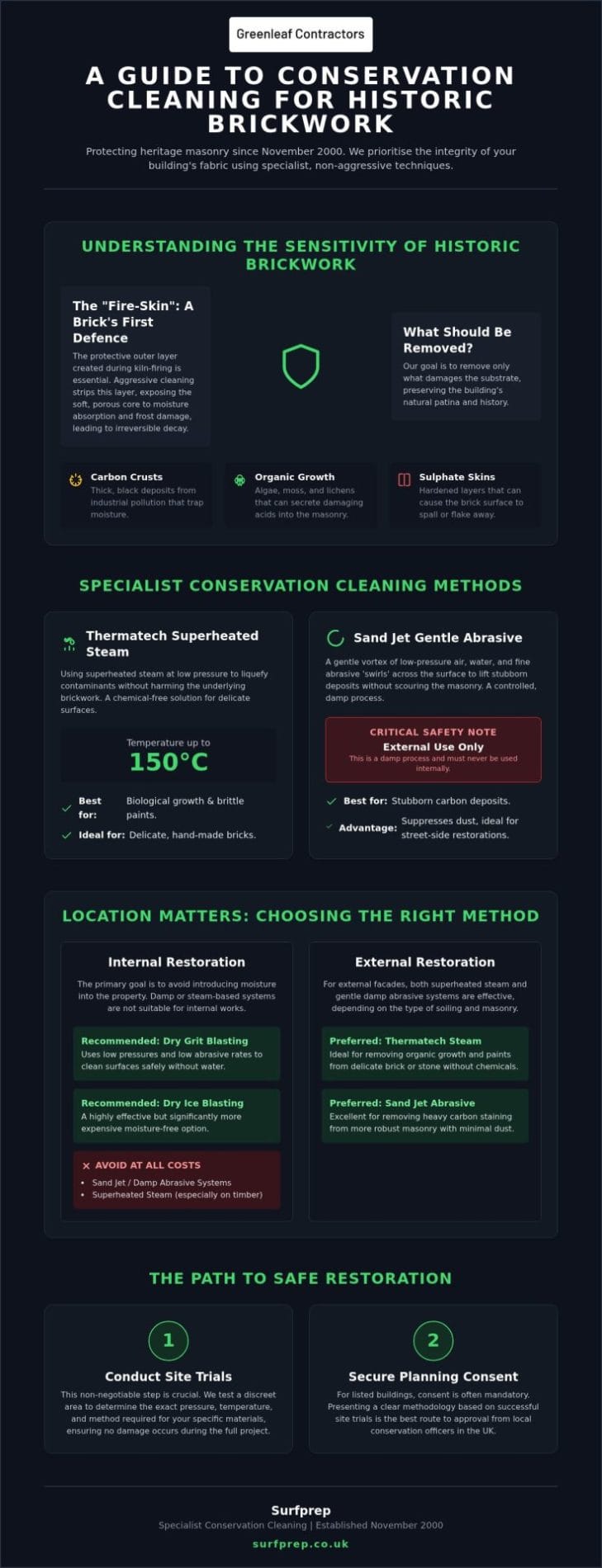
Historic masonry isn’t just a stack of bricks; it’s a delicate system held together by tradition and chemistry. Central to its survival is the “fire-skin”, the protective outer layer created during the kiln-firing process. Aggressive cleaning methods that strip this layer expose the soft, porous core, leading to rapid moisture absorption and frost damage. We’ve seen properties across Northern England where traditional high-pressure jet washing has effectively “sandpapered” the building, destroying both the brick and the lime mortar. Effective brick cleaning requires using proven conservation cleaning methods for historic brickwork to distinguish between harmful soiling and the natural patina that defines a building’s history. These conservation and restoration principles dictate that we only remove what is damaging the substrate, such as:
- Carbon crusts: Thick, black deposits from historical industrial pollution that trap moisture.
- Organic growth: Algae, moss, and lichens that secrete acids into the masonry.
- Sulphate skins: Hardened layers that can cause the brick surface to spall or flake away.
Planning Permission and Conservation Officer Requirements in the UK
In heritage hotspots like Leeds and York, Listed Building Consent is often mandatory before any cleaning begins. Local conservation officers look for a clear methodology that prioritises material safety over aesthetics. Having operated since November 2000, we’ve found that presenting a plan including site trials and non-aggressive equipment is the best route to approval. As an honest specialist, we occasionally make an “Expert Admission” and advise against cleaning specific elevations. If the masonry is structurally compromised, the most responsible action is to leave it alone. Following established conservation cleaning methods for historic brickwork ensures your project meets regulatory standards whilst preserving the building’s integrity.
Specialist Conservation Cleaning Methods: Thermatech vs Sand Jetting
Selecting the right conservation cleaning methods for historic brickwork depends entirely on the substrate’s hardness and the type of soiling present. For removing biological growth or brittle modern paints without harsh chemicals, we utilise the Thermatech system. It reaches temperatures of 150°C, using superheated steam at low pressure to liquefy contaminants whilst leaving the underlying brickwork untouched. This is vital for delicate hand-made bricks, which are far more susceptible to damage than dense engineering bricks. For holistic building care, we often refer clients to the SPAB guide on the repair of old brick walls to ensure cleaning is integrated into a wider conservation strategy.
Why We Recommend the Sand Jet for External Heritage Restoration
The sand jet, which we’ve operated since November 2000 (originally acquired as the Farrow System), is our preferred alternative to aggressive, traditional sandblasting. The system works by creating a gentle vortex of low-pressure air, water, and fine abrasive that “swirls” across the surface rather than striking it directly. This action lifts stubborn carbon deposits without scouring the masonry. It’s a highly controlled damp process that suppresses dust, making it ideal for external street-side restorations. However, we always advise that damp abrasive methods must never be used for internal works to avoid introducing moisture into the building’s fabric. For those sensitive internal projects, we’d recommend dry grit or dry ice blasting instead, although dry ice remains a significantly more expensive option. If you’re unsure which method fits your property, you can speak with our team for a technical assessment.
Planning Your Restoration: Trials, Internal Works, and Aftercare
Before committing to a full-scale project, site trials are absolutely non-negotiable. Every heritage building is unique; even within a single elevation, brick porosity and mortar strength can vary significantly. A successful trial should demonstrate that the chosen conservation cleaning methods for historic brickwork can lift contaminants without pitting the surface or scouring sound joints. We typically test a discreet, inconspicuous area to establish the exact pressure and temperature settings required for the specific masonry before proceeding with the wider facade.
Safe Methods for Internal Brickwork and Timber Restoration
When moving indoors, the methodology must change entirely. Whilst we advocate for Thermatech and sand jet systems for external masonry, we don’t recommend them for interiors. Introducing water or superheated steam into an occupied home or a building with historic wooden beams is a recipe for disaster. Moisture can cause internal timber to warp or become trapped behind plaster, leading to long-term damp issues. Instead, we utilise dry grit blasting at exceptionally low pressures and abrasive rates to lighten dark beams safely. Alternatively, dry ice blasting is a premium, moisture-free option that’s particularly effective for delicate surfaces, as it leaves no secondary waste behind, though it is a more expensive choice.
Once the cleaning is complete, the restoration doesn’t end there. The process often reveals the need for repointing where old mortar has failed. It’s vital to use traditional lime-based mortars rather than modern cement, as lime allows the building to “breathe” and prevents moisture from being forced back into the bricks. Since establishing Surfprep in November 2000, we’ve consistently seen that the best results come from this holistic approach. For more on internal timber care, you can view our wooden beam cleaning services.
Restoring Heritage with Precision and Integrity
Restoring a historic property is a significant responsibility that requires more than just a standard wash. It’s about protecting the building’s vital fire-skin whilst removing the pollutants that threaten its long-term survival. By selecting the correct conservation cleaning methods for historic brickwork, such as Thermatech superheated steam or the gentle sand jet vortex, you ensure the masonry remains breathable and structurally sound. We’ve operated as specialist heritage contractors since November 2000, and we take pride in being honest advisors who understand the strict requirements of UK conservation officers. Whether you’re dealing with stubborn external carbon crusts or delicate internal timber restoration, the right methodology makes all the difference. To ensure your project meets the highest standards, contact our restoration specialists for a site survey and methodology report. We look forward to helping you reveal the true character of your building safely.
Frequently Asked Questions
Will cleaning my historic brickwork cause it to erode faster?
Cleaning only causes erosion if you use aggressive, non-specialist techniques that strip the brick’s fire-skin. When we apply conservation cleaning methods for historic brickwork such as superheated steam or the Sand Jet, the process is controlled to remove only the soiling. This approach actually prevents decay by lifting harmful carbon crusts and organic growth that trap moisture within the masonry.
What is the difference between DOFF and the Thermatech system?
Whilst DOFF is a well-known brand name, we utilise the Thermatech system for our superheated steam cleaning projects. Both machines achieve the 150°C temperatures required to kill biological matter and soften paints without chemicals. We’ve found the Thermatech to be exceptionally reliable for delicate heritage work since we began specialising in masonry restoration in November 2000.
Do I need planning permission to clean the bricks on my listed house?
Listed Building Consent is almost always required for cleaning works. Local conservation officers need to approve your specific methodology to ensure the heritage fabric isn’t at risk. Whilst there is currently no fee for Listed Building Consent, a standard householder application for alterations to a single dwelling costs £548 as of April 2026. We always recommend conducting a site trial first.
Can you remove modern masonry paint from old bricks without damaging them?
Removing modern masonry paint is achievable using the Thermatech system’s superheated steam. This method liquefies the paint layer, allowing it to be rinsed away at low pressure. It avoids the need for aggressive chemicals or traditional sandblasting, both of which can permanently scar the brick surface. We always assess the paint type during our initial site survey to ensure compatibility.
Why shouldn’t I use steam cleaning for the wooden beams inside my barn conversion?
Steam cleaning inside a property introduces high levels of moisture that can cause historic wooden beams to warp or split. It also creates a humid environment that can lead to damp issues in occupied homes. For internal restoration, we prefer dry grit blasting or dry ice blasting, as these dry methods safely lighten timber without the risks associated with water.
How much does professional conservation brick cleaning cost in the UK?
Industry data from late 2025 suggests that general brick cleaning typically costs between £12 and £25 per square metre. Specialist steam cleaning or abrasive methods like the Sand Jet often range from £25 to £55 per m². For a typical two-bedroom UK house, you might expect total project costs to start from approximately £800, depending on the complexity and access requirements.
