
That thick, bitumen-based black paint suffocating your 400-year-old oak beams wasn’t just a Victorian design choice; it’s often a stubborn barrier that hides the true character and warmth of your home. If you’ve spent any time researching the restoration process, you’ll know that removing black paint from barn beams UK properties often feature is a notoriously difficult and messy task. It’s perfectly natural to feel overwhelmed by the fear of damaging historic timber or creating an impossible layer of dust in an occupied house. Since we established our restoration business in November 2000, we’ve seen countless homeowners struggle with these exact concerns whilst trying to modernise their living spaces.
You’re right to be cautious, as the wrong approach can easily ruin the delicate grain of aged elm or oak. This guide will show you how to achieve a clean, natural finish ready for oiling by using the safest professional methods available today. We’ll discuss why we prefer traditional dry grit blasting at low pressures for internal work, whilst explaining the limitations of moisture-heavy systems like our Thermatech machine or sand jet (the Farrow System we’ve operated for over two decades) when working indoors. From cost-effective grit solutions to premium dry ice blasting, you’ll discover how to reclaim your beams’ original beauty without the stress.
Key Takeaways
- Discover why historic black paints are so difficult to strip and why surface scraping often fails to reach pigments absorbed deep into the timber grain.
- Learn why dry grit blasting using low pressures is the safest method for internal restoration, avoiding the structural risks associated with introducing moisture into old wood.
- Understand our professional recommendation against using the sand jet or Thermatech machines indoors, prioritising the long-term health of your property over a quick fix.
- Gain insight into the specialist techniques required for removing black paint from barn beams UK that ensure a clean, oil-ready finish without damaging delicate oak or elm.
- Leverage over two decades of restoration expertise, dating back to November 2000, to choose the most effective abrasive method for your specific barn conversion project.
Understanding the Challenge: Why is Black Paint on Barn Beams so Stubborn?
Walking into a classic English barn conversion, you’re often met with a stark, heavy aesthetic that feels more like a dark cave than a light-filled home. This is usually down to the thick, bitumen-based or gloss paints applied to structural timbers. Historically, the Victorians used blackening agents for practical reasons; they believed it helped preserve the wood and offered a uniform look. Fast forward to the 1970s, and a wave of “Tudor-style” renovations saw homeowners slapping heavy black gloss onto everything to mimic a specific heritage feel. The result is a layer of paint that has had decades to bond with the timber.
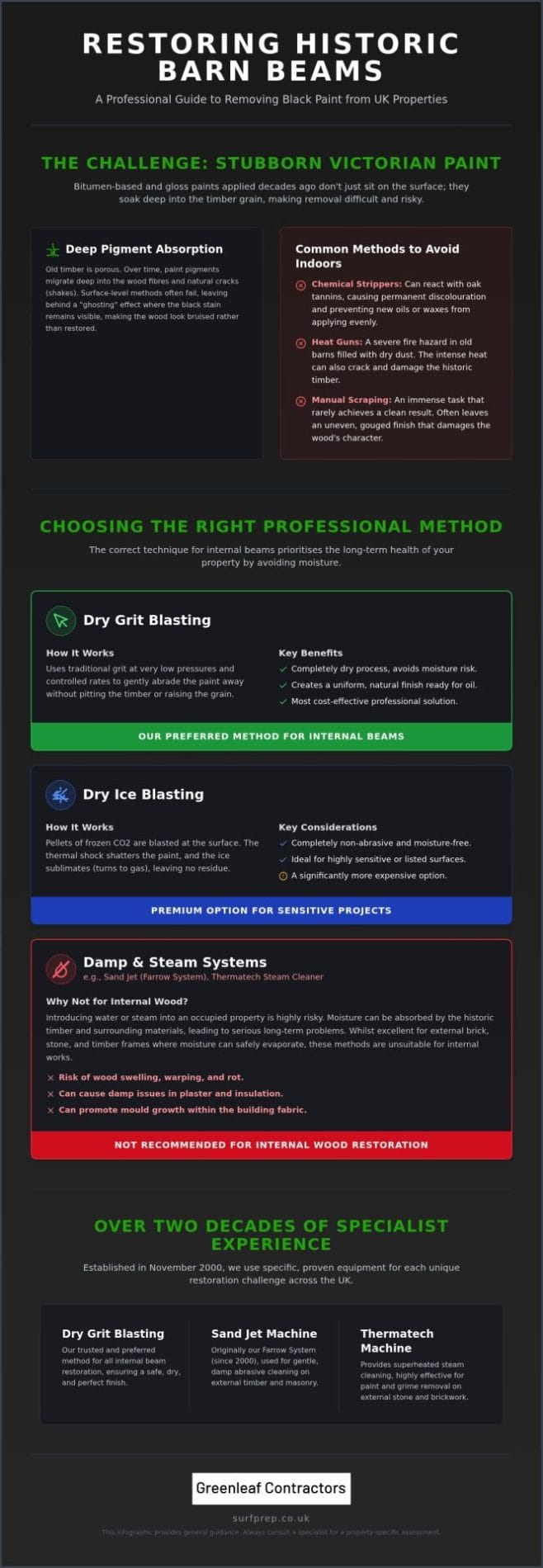
The process of removing black paint from barn beams UK owners often struggle with is rarely a surface-level job. Wood is a naturally porous material. Over time, the pigments in these paints don’t just sit on the top; they migrate deep into the grain and the cracks, known as shakes, of the timber. Whilst there are various paint stripping methods available to the general public, most fail to address the unique biology of old timber. Surface scraping often leaves behind a ghosting effect where the black pigment remains visible in the deeper fibres, leaving the wood looking bruised rather than restored.
The Problem with Chemical Strippers and Scraping
Many people reach for off-the-shelf chemical strippers, but these often create more problems than they solve. Chemical residues can linger in the wood for years, often reacting with the tannins in oak to cause permanent discolouration. These residues also interfere with future finishes; if you plan to use a high-quality wax or oil, any leftover stripper may prevent the finish from soaking in evenly. Beyond the chemistry, the physical toll of manual scraping is immense. Tackling a whole barn’s worth of beams by hand is a Herculean task that often ends in frustration and an uneven, gouged finish.
We also see homeowners attempting to use heat guns. This is a genuine fire hazard. Ancient barns are full of centuries-old dust and cobwebs hidden in voids that can ignite instantly. Extreme heat can also cause the wood to dry out too quickly, leading to structural cracking. This is why we provide Specialist wooden beam cleaning services that prioritise the wood’s integrity. Removing black paint from barn beams UK requires a method that respects the age of the building whilst delivering a clean, natural result.
Professional Methods for Removing Paint from Structural Timbers
Selecting the right removal method is a technical decision that balances efficiency with the long-term health of the timber. Whilst we utilise advanced equipment like our Thermatech machine for external stone and brick, we firmly advise against superheated steam or damp abrasive processes for internal wood. Since our inception in November 2000, we’ve prioritised dry methods for interiors to avoid introducing moisture into the property’s structure. Introducing water into an occupied house can cause swelling, warping, and potential damp issues within the historic fabric that are far harder to fix than the paint itself.
Why Dry Grit Blasting is the Preferred Internal Method
For most projects involving removing black paint from barn beams UK, dry grit blasting is the most reliable and effective solution. By using traditional grit at exceptionally low pressures and carefully controlled abrasive rates, we can gently lift layers of stubborn paint without “pitting” the wood or raising the grain. This method allows us to achieve a uniform, light oak or elm finish that is immediately ready for oiling or waxing. It aligns with SPAB paint advice regarding the preservation of the underlying material’s character. For those with highly sensitive surfaces and a larger budget, dry ice blasting offers a premium, moisture-free alternative, though it remains an expensive option for large-scale conversions.
When to Use Damp Processes (External Barn Timbers)
Damp processes have their place, but typically on the exterior of a building where moisture can evaporate naturally. Our sand jet cleaning system, originally acquired as a Farrow System in November 2000, is a gentle alternative to traditional sandblasting for external timber frames. Similarly, the Thermatech machine effectively removes paint from external stone or brick. However, because these methods involve water, they are unsuitable for indoor use. If you’re unsure which method fits your property, you might want to consult our timber restoration specialists for an honest assessment of your beams.
Choosing a Specialist for Your Barn Restoration Project
Experience is the only real safeguard when dealing with 400-year-old structural timbers. Since we established Surfprep in November 2000, we’ve refined our approach to handle the most challenging heritage projects across Leeds, York, Manchester, and the wider UK. Unlike general builders who might suggest renting a standard sandblaster, we understand that historic oak requires a nuanced touch. Our long-standing heritage in the industry means we don’t just turn up and blast; we evaluate the timber’s species, age, and current moisture levels before any work begins.
A key part of our “Honest Specialist” approach is our Expert Admission regarding methodology. Whilst we own and operate advanced Thermatech and sand jet (Farrow System) equipment, we’ll often advise against using them for removing black paint from barn beams UK residents have inside their homes. If your property is occupied or contains sensitive plasterwork, we’ll suggest dry grit blasting or dry ice blasting instead. We prioritise the structural integrity of your home over a “one size fits all” service, ensuring that our process includes rigorous floor protection, dust management, and a thorough final clean-up.
Preparing Your Property for Beam Restoration
Success depends on careful preparation. Before our team arrives, we recommend a few practical steps to ensure the best result:
- Clear the immediate area of furniture and soft furnishings that might trap dust.
- Seal internal doors with heavy-duty polythene to prevent dust migration.
- Ensure you have checked your Listed Building Consent; removing paint from historic timbers often requires formal approval from your local authority.
Requesting a Professional Assessment
Every barn is different. We evaluate the specific condition of your timber to determine the correct abrasive rate and pressure settings. This prevents the “pitting” often seen with amateur attempts and ensures your beams are returned to their natural, light colour without losing their historic character. If you’re ready to see the true beauty of your woodwork, contact Surfprep for a timber restoration quote and benefit from over two decades of specialist expertise.
Reclaiming the Natural Beauty of Your Historic Timbers
Restoring the original warmth of your barn’s interior is a significant investment in your property’s character and value. As we’ve explored, the process of removing black paint from barn beams UK homeowners face is a technical challenge that demands a balance of precision and patience. By opting for dry grit blasting at low pressures, you ensure a uniform finish whilst avoiding the structural risks associated with introducing moisture into aged oak or elm. This methodical approach protects the wood’s integrity and prepares it perfectly for a final wax or oil finish.
Since we established our business in November 2000, we’ve prioritised honest advice and technically sound methodologies. Whether we’re using our Thermatech machine for external stone or our sand jet (originally the Farrow System) for external timber frames, our goal is always a sympathetic restoration that aligns with Historic England approved methodology. You don’t have to live with dark, suffocating beams when the natural grain is just beneath the surface. Our team is ready to help you navigate the complexities of timber restoration with quiet confidence and proven expertise.
Get an Expert Quote for Timber Restoration
Frequently Asked Questions
Can I use a sandblaster to remove paint from my barn beams myself?
We strongly advise against using a standard rental sandblaster for this task. High-pressure units found at hire shops lack the delicate controls needed to avoid pitting the grain or gouging the wood. Since November 2000, we’ve used specialised, low-pressure equipment that allows for a much gentler touch, ensuring your 400-year-old oak remains intact whilst we lift the paint.
Will removing black paint damage the structural integrity of the oak?
If you use professional dry grit blasting at low pressures, your beams will remain structurally sound. Removing old bitumen paint can actually improve the health of the timber by allowing it to breathe. We always evaluate the wood’s condition first to ensure it can handle the process, prioritising the long-term integrity of your historic home over a quick fix.
How much dust does professional dry grit blasting create inside a barn?
Dry grit blasting is a dusty process, which is why we take property protection so seriously. We seal off the work area using heavy-duty polythene and use protective floor coverings to contain the mess. It’s a significant part of the project, but it’s the most reliable method for removing black paint from barn beams UK homeowners choose for a clean finish.
Do I need listed building consent to remove black paint from my beams?
You generally do need listed building consent for this type of restoration. Altering the appearance of historic timbers in a listed barn is a significant change, and local conservation officers often have specific requirements for the methods used. It’s best to secure written approval before we begin work to avoid any legal complications with your local planning authority.
What is the difference between DOFF and Thermatech for wood cleaning?
While DOFF is a well-known name, we utilise the Thermatech machine for superheated steam cleaning. The primary difference for you is the application; we don’t recommend steam for internal wood restoration. Moisture can cause historic oak to swell or warp, so we typically suggest dry grit blasting indoors and save the Thermatech for external stone or brickwork.
How long does it take to strip the beams in a standard barn conversion?
Most standard barn conversions take between two and five days to complete. The exact duration depends on the number of beams and how many layers of 1970s gloss or Victorian bitumen we need to strip. We’ve been refining our timelines since November 2000, so we can provide a very accurate estimate once we’ve assessed the thickness of the paint.
