
A single afternoon with a high-pressure power washer can cause more damage to heritage sandstone than a century of harsh British weather. It’s a sobering reality for property owners who find their building’s character buried under layers of stubborn carbon staining. You likely want to restore that original honey-coloured glow but fear eroding the delicate “face” of the stone in the process. This guide explains exactly how to clean sandstone buildings uk using specialist restoration techniques that prioritise structural integrity over a quick, aggressive fix.
Drawing on expertise built since November 2000, we’ll show you how to achieve a professional finish that satisfies strict heritage requirements. We will compare the precision of Thermatech superheated steam against the gentle abrasive power of the sand jet, which is a damp process ideal for external masonry. You’ll discover which technologies preserve your stonework and which ones to avoid to ensure your property remains a lasting part of the UK landscape.
Key Takeaways
- Learn why high-pressure washing is dangerous for porous masonry and how to clean sandstone buildings uk using gentle, low-pressure technologies like the sand jet.
- Discover how Thermatech superheated steam at 150°C effectively removes organic growth and atmospheric pollutants without the need for aggressive chemicals.
- Understand the critical importance of conducting a site survey and a professional test patch to assess carbon staining and mortar condition before work begins.
- Identify the best restoration strategies to ensure your building meets local council heritage requirements whilst preserving its structural integrity for decades to come.
Understanding UK Sandstone and the Risks of Improper Cleaning
Sandstone is a sedimentary rock held together by a natural mineral binder, making it inherently porous and susceptible to the UK’s damp climate. It acts like a geological sponge, absorbing industrial pollutants that have settled on our towns and cities for centuries. Common contaminants include heavy carbon crusts from the coal-burning era, modern diesel particulates, and stubborn organic growth like lichen that anchors deep into the stone’s pores.
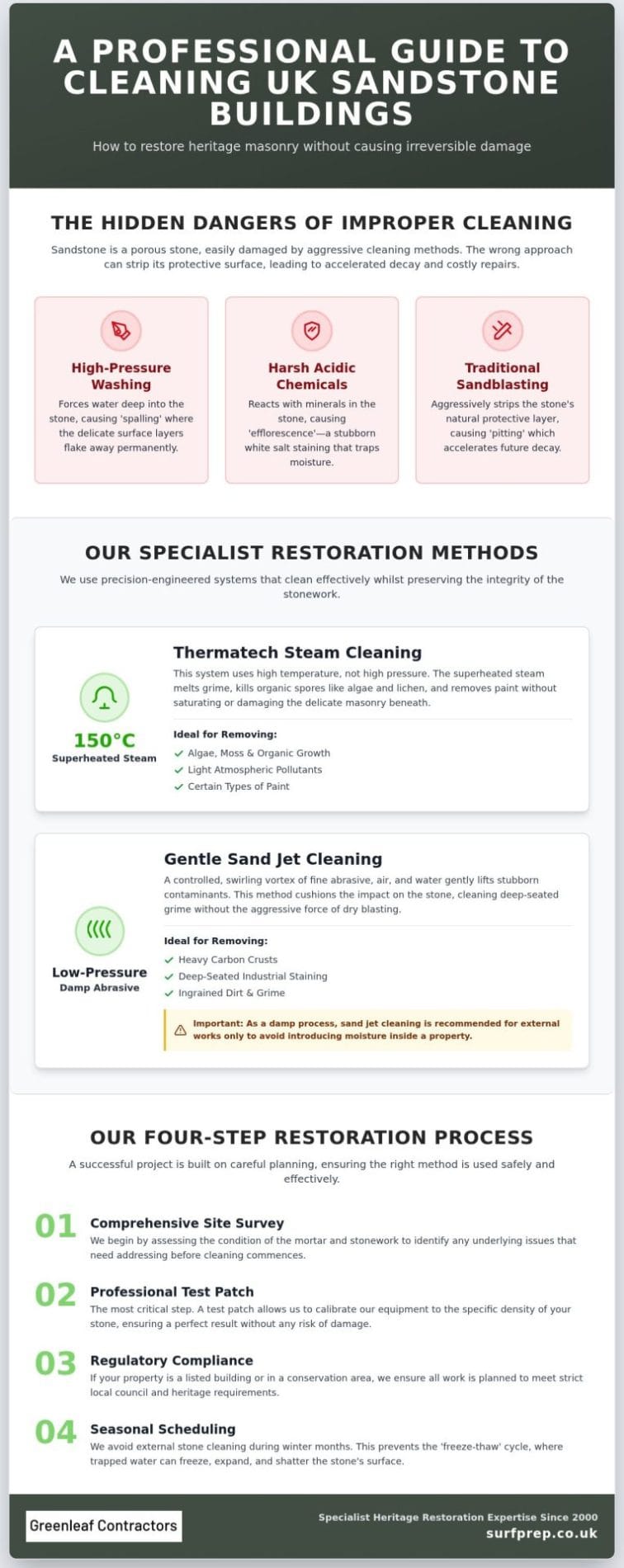
Knowing how to clean sandstone buildings uk effectively starts with acknowledging that the “face” of the stone is its most vital protection. Standard high-pressure jet washing is often disastrous; it forces water deep into the masonry and causes “spalling,” where the surface layers delaminate and flake away. We also advise against aggressive acid-based chemicals. These can react with the stone’s mineralogy to cause efflorescence, a type of salt staining that is notoriously difficult to rectify and can trap damaging moisture behind the surface.
Why Traditional Sandblasting is Often Too Aggressive
Traditional dry grit blasting was developed for industrial metalwork, not fragile heritage facades. It aggressively strips away the “quarry sap,” which is a hardened protective skin that forms naturally as the stone seasons after being quarried. When this layer is compromised, the result is “pitting.” This leaves the stone with a rough, open texture that traps moisture and accelerates future decay. Our approach, honed since November 2000, prioritises gentle restoration over the raw force of industrial cleaning to ensure the stone cleaning process actually extends the life of the building rather than shortening it.
Professional Methods for Safe Sandstone Restoration
When determining how to clean sandstone buildings uk, the choice of technology is the difference between genuine restoration and permanent ruin. We rely on two primary systems: Thermatech superheated steam and the sand jet. Both methods allow us to work with surgical precision, ensuring the underlying masonry remains untouched whilst the surface contaminants are removed.
Whilst many property owners search for “DOFF” cleaning, we utilise Thermatech technology to deliver superheated steam at temperatures reaching 150°C. This intense heat is the secret; it kills organic spores and melts away surface pollutants without the need for high-pressure water impact. It’s an incredibly gentle way to strip away algae and light grime without saturating the masonry or risking the structural damage associated with standard jet washes.
For more stubborn issues like heavy carbon crusts, we employ sand jet cleaning. Originally acquired as a Farrow System in November 2000, this machine uses a damp, low-pressure abrasive stream. Unlike traditional dry grit blasting, which can be far too aggressive for heritage stone, the sand jet provides a controlled, swirling action that lifts dirt whilst cushioning the stone’s surface. Because it is a damp process, we don’t recommend its use for internal works to avoid introducing moisture into a property’s interior.
Thermatech vs. Sand Jetting: Choosing the Right Tool
Thermatech is our preferred choice for removing paint, algae, and light atmospheric soiling. However, when we encounter heavy carbon crusts or deep masonry stains, the sand jet is the superior option. In many comprehensive restoration projects, we combine both methods; steam clears the biological layer, whilst the sand jet tackles the deep-seated industrial residue. If you’re unsure which method fits your project, contact us for a specialist assessment of your building’s specific needs.
Planning Your Sandstone Cleaning Project in the UK
Successful restoration starts long before the machinery arrives on site. A comprehensive site survey is essential to assess the structural integrity of the mortar and identify any underlying masonry issues that might be exacerbated by cleaning. We always insist on a professional test patch, which is arguably the most critical step in any stone cleaning project. This allows us to calibrate our Thermatech or sand jet settings to the specific density of your stone, ensuring we lift the contaminants without eroding the delicate surface.
Understanding how to clean sandstone buildings uk also requires navigating strict local regulations. If your property is a listed building or situated within a conservation area, you must obtain consent from your local planning authority before work begins. Timing is equally vital for a safe result. We generally avoid external stone cleaning during the peak winter months. If water is introduced into the porous sandstone and then freezes, the resulting expansion causes “freeze-thaw” damage, which can lead to the stone face shattering or delaminating.
Selecting a Specialist Restoration Contractor
Planning how to clean sandstone buildings uk involves more than just selecting a date; it requires a strategy for heritage compliance. When vetting a contractor, ask specifically about their experience with heritage materials and the exact machinery they utilise. A “one size fits all” approach is a major red flag; a company that uses the same high-pressure setting for every job isn’t a restorer. Surfprep has been a specialist in this field since November 2000, and we maintain full insurance for all heritage and commercial works. A reliable specialist will always be transparent about the limitations of certain technologies and will prioritise the long-term preservation of your building.
Preserving Your Property for the Next Generation
Restoring heritage masonry requires a balance of technical precision and respect for the material. We’ve explored the risks of aggressive pressure washing and why specialist tools like Thermatech superheated steam or the sand jet are essential for a safe result. Understanding how to clean sandstone buildings uk effectively means prioritising the stone’s long-term health over a quick aesthetic fix. This involves thorough site surveys, test patches, and a deep knowledge of UK heritage requirements.
Since November 2000, we’ve provided this level of care across Leeds, York, and the North of England. With over 25 years of expertise, we’re here to help you navigate the complexities of building restoration with transparency and skill. Contact our specialist restoration team for a sandstone survey to ensure your property remains a proud part of our local landscape for decades to come.
Frequently Asked Questions
Do I need planning permission to clean my sandstone house in the UK?
You typically need listed building consent or planning permission if your property is protected or sits within a conservation area. When researching how to clean sandstone buildings uk, it’s best to check with your local authority first (as unauthorised work can lead to legal action). Councils often view cleaning as a significant alteration to the building’s character.
What is the difference between DOFF and Thermatech for sandstone cleaning?
Both systems utilise superheated steam to remove organic growth and light atmospheric staining. Whilst DOFF is a widely recognised industry name, we specifically utilise Thermatech technology for its reliability. Both achieve the 150°C temperatures necessary to kill biological spores effectively without using the high-pressure water impact that often causes permanent damage to fragile masonry.
Can I use a domestic pressure washer on sandstone window sills?
We strongly advise against using domestic pressure washers on sandstone window sills or any part of a heritage building. These machines rely on high-pressure impact that can easily erode the soft surface of the stone. This leads to “pitting” and “spalling,” which actually makes the stone more porous and susceptible to future decay and organic growth.
How much does professional sandstone building cleaning cost per square metre?
Professional cleaning costs are determined by several factors, including the building’s height, the type of contaminants, and the cleaning method required. Because every project is unique, a specialist will provide a quote after a site survey and test patch. Factors like access requirements and the specific condition of the mortar will also influence the final project investment.
Will cleaning my sandstone building remove the black soot stains?
Yes, professional cleaning can remove stubborn black carbon soot and industrial particulates. When considering how to clean sandstone buildings uk, we often recommend the sand jet for heavy soot deposits. This gentle abrasive method lifts the carbon crust whilst preserving the stone’s integrity, restoring the original colour that has been hidden under decades of UK industrial pollution.
Is sand jetting safe for soft red sandstone found in Northern England?
Sand jetting is specifically designed to be safe for softer materials like the red sandstone common in Northern England. Unlike traditional sandblasting, the sand jet uses a low-pressure, swirling damp stream that cushions the stone. This provides the precision needed to clean delicate heritage surfaces without the risk of aggressive erosion or surface damage common with dry industrial blasting.
