
Could that thick, black bitumen coating on your ceiling actually be hiding a stunning architectural masterpiece? Many owners of heritage homes feel oppressed by dark, heavy beams that make rooms feel gloomy, yet the fear of damaging historic timber with harsh DIY methods often leads to restoration paralysis. We understand that your priority is protecting the building’s soul whilst reclaiming its light. This guide breaks down the financial and technical realities of restoring oak beams in a listed building uk, ensuring you preserve history without risking the structural integrity of your home.
You’ll learn about 2026 pricing trends for specialist labour and why low-pressure dry grit blasting is our preferred internal method, rather than moisture-heavy steam, to safely reveal the natural grain. As specialists established in November 2000, we’ll explain how professional, low-pressure techniques provide a clear path to a breathable, lightened, and heritage-compliant finish.
Key Takeaways
- Understand how 2026 day rates and square metre pricing are influenced by technical factors like beam height and historic paint thickness.
- Learn why damp processes like the sand jet are for external use only, whilst low-pressure dry grit blasting is the safest choice for internal timbers.
- Explore the heritage value and regulatory compliance advantages of restoring oak beams in a listed building uk rather than choosing modern replacements.
- Discover how specialist restoration methods can safely reveal original wood grain without the structural risks of aggressive traditional sandblasting.
Understanding the Costs of Tudor Beam Restoration in the UK
Restoring oak beams in a listed building uk isn’t a task for a general contractor. It requires a level of patience and technical knowledge that only comes with decades of experience. At Surfprep, established in November 2000, we’ve seen how specialist restoration adds far more value than modern “Mock Tudor” plastic alternatives. These plastic imitations often look out of place alongside the traditional methods of building with heavy timbers that define heritage properties. Quotes are usually calculated on a day rate or per square metre basis, reflecting the painstaking nature of the work.
Key Variables That Influence Your Restoration Quote
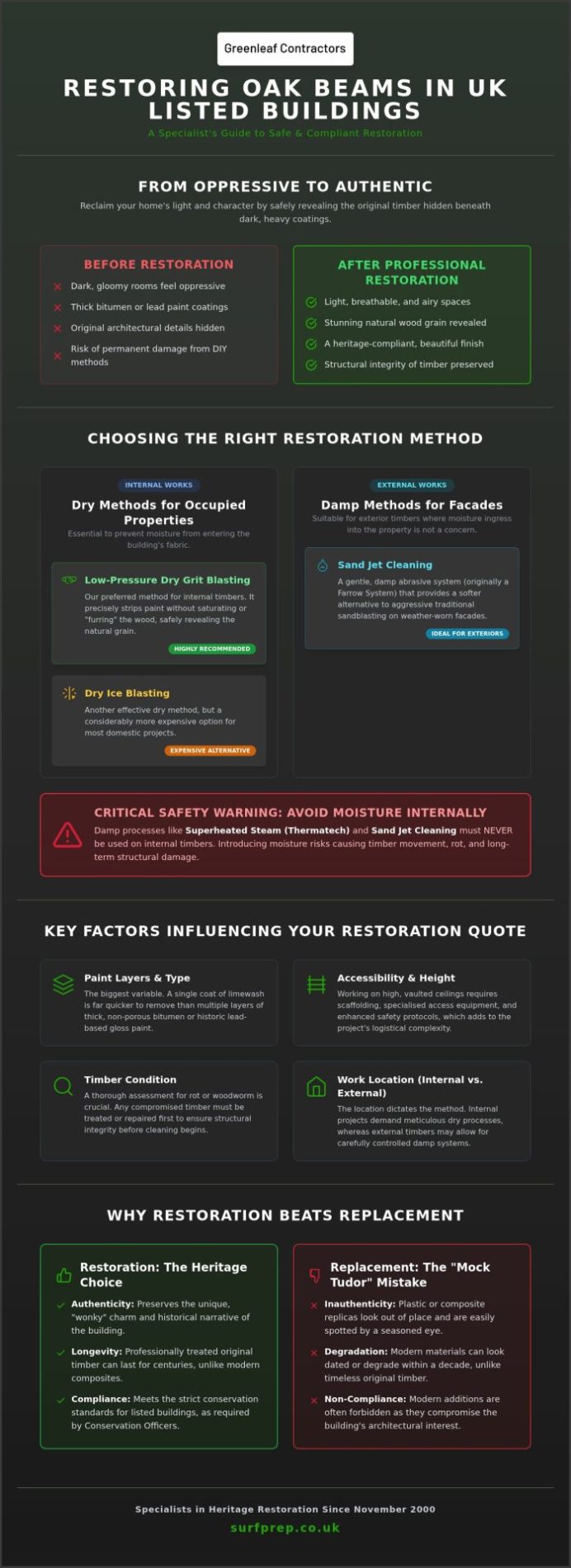
The number of paint layers is often the biggest variable. Stripping away a single coat of porous limewash is relatively straightforward, but tackling thick bitumen or multiple layers of lead-based gloss paint requires significantly more time. Accessibility also dictates the price; working on high vaulted ceilings involves scaffolding and specialist safety equipment that adds to the logistical complexity. We always prioritise transparency, ensuring you understand why a certain timeframe is necessary for restoring oak beams in a listed building uk.
The condition of the timber is another vital factor. Before professional wood restoration can start, we assess the beams for signs of rot or woodworm. If the wood is compromised, preparation work must be completed first to ensure the structural integrity of the building. Finally, the location of the work matters. Internal projects require meticulous dry methods to prevent moisture from entering the property’s fabric, whereas external timbers might allow for damp processes. Every project is unique, and we tailor our approach to provide the most honest and effective solution for your specific home.
Professional Methods: From Thermatech Steam to Dry Grit Blasting
Choosing the correct restoration method is the difference between a delicate reveal and permanent damage to historic fabric. Whilst the Thermatech machine is the industry standard for masonry, we admit it isn’t the right choice for internal woodwork. The Society for the Protection of Ancient Buildings (SPAB) advocates for conservative repairs, a principle we’ve followed since our inception in November 2000. Our team has been refining these processes for over two decades, ensuring every beam is treated with the respect a listed property deserves.
For external timbers, our Sand Jet cleaning system, which we originally acquired as a Farrow System, offers a gentle, damp abrasive alternative to aggressive traditional sandblasting. It’s ideal for weather-worn facades but remains unsuitable for interiors due to its damp nature. Safely restoring oak beams in a listed building uk demands a controlled, dry environment to protect the surrounding structure.
We recommend low-pressure dry grit blasting using minimal abrasive rates to strip bitumen or lead paint from internal wood. This method provides the precision needed to lighten the grain without the risk of saturating the timber. Dry ice blasting is another effective dry method, though it remains an expensive option for most domestic projects compared to our tailored grit blasting techniques.
Internal vs External Restoration: Safety Constraints
Moisture is the primary enemy inside an occupied property. We never recommend superheated steam or the damp sand jet for internal rooms because introducing water risks timber movement and rot. Instead, low-pressure dry grit blasting removes paint without “furring” the wood. For larger projects, our guide on cleaning structural timbers in a barn conversion offers tailored advice. You can also discuss your project with a specialist to find the safest, most honest route forward for your home.
Why Restoration Beats Replacement for Historic UK Properties
Regulatory compliance is another critical factor. Grade II listed buildings, which make up 91.7% of all listed buildings in England, are subject to strict conservation standards. Local authority Conservation Officers often forbid plastic replacements or modern “Mock Tudor” additions because they compromise the architectural interest of the property. By choosing a specialist restoration, you’re following a path that heritage bodies actively encourage and respect.
Navigating Heritage Consent and Property Value
Satisfying heritage requirements is easier when you work with an established firm. Since November 2000, we’ve helped homeowners navigate the complexities of listed building consent by providing technical evidence of our low-pressure methods. There’s also an environmental benefit to consider. Restoring existing materials is far more sustainable than manufacturing new plastics, as it reduces waste and preserves the embodied carbon within the original timber.
Choosing restoration over replacement isn’t just a matter of taste; it’s a sound financial decision that protects the long-term market value of your property. If you’re unsure about the state of your woodwork, you can contact our specialists for a bespoke Tudor beam assessment to determine the most appropriate course of action for your home.
Reclaiming the Heritage of Your Timber Frame
Safely restoring oak beams in a listed building uk is a long-term investment that safeguards your property’s history whilst increasing its market value. By choosing specialist dry grit blasting for interiors and our gentle sand jet system for external timber, you avoid the structural risks associated with moisture and aggressive cleaning. We’ve been providing this honest, technical expertise since November 2000, using specialist Thermatech and sand jet equipment to serve homeowners across Leeds, York, Hull, and the wider North. Don’t settle for dark, oppressive beams or modern plastic replicas when the original timber’s natural grain is waiting to be revealed. Our team is ready to help you navigate heritage requirements with confidence and transparency. Request a Professional Beam Restoration Quote today to begin your home’s transformation.
Frequently Asked Questions
How much does it cost to restore Tudor beams per square metre?
Restoration costs are typically calculated based on the thickness of paint layers and the height of the timbers. Most specialists quote using a day rate or a per square metre basis. You should also account for the standard 20% VAT on restoration work for listed buildings. Factors like scaffolding or the need for woodworm treatment will naturally increase the final project quote.
Can you lighten dark Tudor beams without replacing them?
Yes, you can significantly lighten dark beams by removing decades of bitumen, soot, or heavy gloss paint. Restoring oak beams in a listed building uk often reveals a beautiful, natural honey-coloured grain underneath the oppressive black coating. We use low-pressure dry grit blasting for internal works to ensure the wood is lightened without introducing any damaging moisture into the property.
Is sandblasting safe for old oak beams in a listed building?
Traditional high-pressure sandblasting is far too aggressive for heritage timber and often causes permanent surface damage. However, modern low-pressure dry grit blasting is a safe, controlled alternative that preserves the wood’s character. For external timbers, our gentle sand jet machine provides a damp abrasive solution that is much softer than industrial sandblasting, ensuring the historic fabric remains unharmed.
What is the best method for removing black paint from internal beams?
Low-pressure dry grit blasting is the most effective and safest professional method for internal paint removal. We avoid superheated steam from a Thermatech machine or damp sand jetting indoors because introducing moisture can lead to timber movement or rot in occupied homes. Dry grit blasting allows for a meticulous finish, stripping away black bitumen or lead-based paints whilst keeping the property’s interior dry.
How long does the restoration process typically take?
A single room can often be completed within one to two days, but larger projects involving multiple rooms or high vaulted ceilings take longer. The duration depends on the number of paint layers and the level of detail required for a clean finish. It’s a methodical process that shouldn’t be rushed if you want to ensure the timber’s integrity is protected throughout.
Do I need Listed Building Consent for beam restoration?
You’ll almost certainly need Listed Building Consent because removing paint or changing the timber’s appearance is considered an alteration. It’s a criminal offence to carry out work on a listed building without the proper permissions. We always recommend discussing your plans for restoring oak beams in a listed building uk with your local Conservation Officer before any physical work begins on-site.
