
When removing graffiti from concrete, the strongest cleaning method isn’t always the best one. Too much pressure, an unsuitable abrasive or the wrong chemical can leave a lasting mark, even after the paint has gone.
It’s understandable to want a quick fix, particularly when a stain or shadow remains visible. The right approach depends on the concrete’s texture and condition, as well as the type of graffiti. This guide explains how to reduce the risk of surface damage, what to check before you start and why ghosting can persist.
Surfprep provides specialist graffiti removal and industrial surface preparation from its East Yorkshire base. For sites in Hull and nearby areas, a site-specific assessment can help identify a suitable method. Depending on the surface and marking, options may include superheated steam using Doff technology or gentle abrasive cleaning with a sand jet. The sand jet is a damp process and isn’t suitable for indoor work.
Key Takeaways
- Porous, sealed, smooth and weathered concrete can respond differently, so identify the finish before choosing a cleaning method.
- When removing graffiti from concrete, work methodically: assess the surface and paint, test discreetly, then review the result.
- Aggressive pressure, abrasive action or unsuitable chemicals can affect the concrete. Don’t assume the strongest treatment is the right one.
- When residue remains or the surface is sensitive, ask a Hull or East Yorkshire specialist how they’ll assess the concrete and choose a suitable approach.
Removing graffiti from concrete: why the surface changes the method
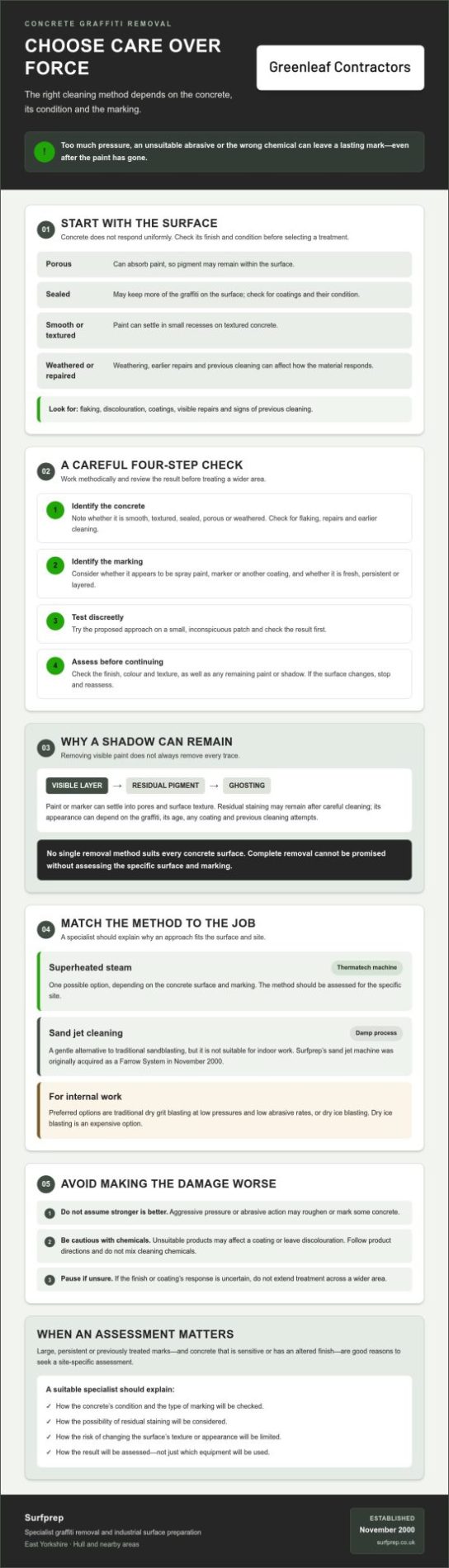
Removing graffiti from concrete means treating the paint or marker while preserving the concrete’s finish. The aim isn’t simply to make the colour disappear. An unsuitable method can roughen the surface, alter its appearance or leave a pale patch where the graffiti was.
Concrete varies. An unsealed, porous surface can absorb paint, while sealed concrete may keep more of the graffiti on the surface. Smooth concrete differs from textured concrete, where paint can settle in small recesses. Weathering, coatings and previous cleaning can also affect how the material responds. Before choosing pressure, an abrasive or a cleaning treatment, consider the concrete’s condition and look for signs of flaking, discolouration or earlier repairs.
Why graffiti can leave a shadow on concrete
Paint and marker can settle into pores and surface texture, leaving pigment behind after the visible layer has been removed. This residual staining, often called ghosting, may remain even after careful cleaning. Its appearance can depend on the graffiti type and age, any coating on the concrete and earlier attempts to clean it. Complete removal can’t be promised without assessing the specific surface and marking.
No single removal method suits every concrete surface. The right choice depends on the material, its condition and the graffiti.
A structured approach to removal is part of a broader graffiti abatement programme, but the cleaning method still needs to suit the site. Surfprep provides specialist graffiti removal and offers gentle abrasive cleaning with a sand jet. This damp process is an alternative to traditional sandblasting and isn’t suitable for indoor work. Read about sand jet cleaning before considering whether it may be appropriate for an outdoor concrete surface.
How to approach concrete graffiti removal without damaging the surface
A careful sequence helps limit the risk of turning a graffiti mark into a larger patch of damaged or discoloured concrete. Before removing graffiti from concrete, work through these checks:
- 1. Identify the surface. Check whether it’s smooth, textured, sealed, porous or weathered. Look for flaking coatings, visible repairs or signs of previous cleaning.
- 2. Identify the graffiti. Note whether it appears to be spray paint, marker or another coating, and whether the mark is fresh, persistent or layered. Don’t assume different marks will respond alike.
- 3. Test discreetly. Before treating the whole area, try the proposed approach on a small, inconspicuous patch. Check the result before extending treatment across the surface.
- 4. Assess the result. Look for changes to the finish, colour or texture as well as remaining paint or shadowing. If the surface is being altered, stop and reassess rather than increasing the force or repeating the treatment.
Aggressive pressure or abrasive action may roughen or mark some concrete, while unsuitable chemicals may affect a coating or leave discolouration. The risk depends on the surface and product, so don’t treat any one approach as universally safe. Follow product directions and avoid mixing cleaning chemicals. If you’re unsure how a coating or finish will respond, pause before treating a wider area.
When DIY cleaning is risky, and when to call a specialist
Large, persistent or previously treated marks are good reasons to seek a site-specific assessment, particularly if earlier cleaning has changed the finish. Surfprep’s sand jet is a damp, gentle alternative to traditional sandblasting, but it isn’t suitable for indoor work. Learn more about sand jet cleaning. For a difficult or sensitive job, you can contact Surfprep about graffiti removal and discuss the surface and marking before a method is chosen.
Choosing a concrete graffiti-removal specialist in Hull and East Yorkshire
A suitable contractor should assess the concrete and the graffiti before recommending a treatment. Ask how they’ll check the surface’s condition, identify the type of marking and account for the possibility of residual staining. Find out how they’ll limit the risk of changing the concrete’s texture or appearance, and how they’ll judge the result. A useful explanation should link the proposed method to the specific surface, rather than simply name a piece of equipment.
Be cautious of a blanket promise that one method will remove every mark, or that the strongest equipment is automatically best. The approach to removing graffiti from concrete should follow a site-specific assessment. Porous or weathered concrete may need different consideration from a smooth, sealed surface, and previous cleaning can affect the options. A specialist should explain why a proposed method suits the site and be clear if complete removal can’t be assured.
Surfprep is based in East Yorkshire and provides graffiti removal for sites in Hull and other locations including Beverley, York, Leeds, Bradford, Nottingham, Manchester, Derby, Lincoln, Newcastle, Durham and Scarborough. Its services include specialist graffiti removal and industrial surface preparation.
What information to share when requesting an assessment
A few practical details can help a contractor understand the job. Share the property location, approximate size of the affected area and whether the concrete is indoors or outdoors. If practical, include clear photos of the graffiti and surrounding surface, along with any known details about previous cleaning or coatings. Mentioning whether the surface is sealed, visibly weathered or textured can also help frame the discussion. Photos won’t replace an assessment, but they can provide useful context.
If you’d like to discuss a concrete graffiti-removal job in Hull or East Yorkshire, contact Surfprep about graffiti removal.
Choose a careful path to cleaner concrete
Successful graffiti removal starts with the concrete, not the strongest available treatment. Its porosity, finish and condition, along with the type of paint and any previous cleaning, all help determine a suitable approach. Test discreetly before treating a wider area, and remember that removing visible paint may not eliminate every trace of staining.
If the mark is large, persistent or on a sensitive surface, a site-specific assessment can help avoid unnecessary damage. Surfprep provides specialist graffiti removal and industrial surface-preparation services. Based in East Yorkshire, the company serves Hull and locations including Beverley, York, Leeds, Bradford, Nottingham, Manchester, Derby, Lincoln, Newcastle, Durham and Scarborough.
Share the location, approximate area and whether the concrete is indoors or outdoors to help start the discussion. Request a site-specific graffiti-removal assessment from Surfprep and take the next step with a considered plan for your surface.
Frequently Asked Questions
Can pressure washing remove graffiti from concrete?
Pressure washing can remove some graffiti from concrete, but it isn’t suitable for every surface or mark. Excessive pressure may roughen the concrete, drive residue further into pores or leave a noticeably cleaner patch. Check the concrete’s condition and test a small, inconspicuous area first. If paint persists or the finish changes, stop and seek a specialist assessment.
How do you remove spray paint from concrete without damaging it?
To remove spray paint without damaging concrete, first identify whether the surface is porous, sealed, smooth or weathered, then choose an approach suited to it. Test discreetly and check for colour or texture changes before treating a larger area. Don’t escalate pressure, abrasive action or chemical use if the first attempt fails. Removing graffiti from concrete may leave shadowing after visible paint lifts.
Does sand jet cleaning work on concrete graffiti?
Sand jet cleaning may be considered for outdoor concrete graffiti, but suitability depends on the surface and marking and should be assessed on site. Surfprep describes its sand jet as a damp, gentle alternative to traditional sandblasting; it isn’t suitable for indoor work. Surfprep is based in East Yorkshire and serves Hull, Beverley, York, Leeds, Bradford, Nottingham, Manchester, Derby, Lincoln, Newcastle, Durham and Scarborough.
Can graffiti leave a permanent stain on concrete?
Yes, a residual stain or “ghost” can remain, and it may be difficult to remove without affecting the concrete’s appearance. Pigment can settle into pores or textured areas; the graffiti type, its age, coatings and previous cleaning may all influence the result. A specialist can assess the surface and discuss realistic outcomes before treatment, rather than promise a completely unmarked finish. To discuss a concrete graffiti-removal job, contact Surfprep.
