
A cleaner-looking facade is not the only measure of a successful clean. Building owners also need to consider whether steam cleaning is suitable for their brick or stone and how the result fits into ongoing maintenance. The long-term benefits of steam cleaning facades depend on the material, its condition and the care taken during cleaning, so it is not a one-size-fits-all solution.
When the method suits the surface, removing soiling can help keep a facade presentable and make changes in its condition easier to spot. It cannot guarantee a fixed lifespan or a maintenance-free period. This article covers the practical benefits, the factors to consider before choosing a method and why a gentle, material-led approach matters for historic details. Surfprep uses Thermatech equipment for superheated steam cleaning and can also use a gentle sand jet outdoors where appropriate.
Key Takeaways
- The long-term benefits of steam cleaning facades depend on the surface and its condition. A cleaner appearance is not a promise of permanent protection.
- Before choosing a method, consider the facade material, visible damage, type of soiling, previous treatments and nearby details.
- Build cleaning into a practical maintenance plan: review the facade, select a suitable method and assess the result.
- Surfprep uses Thermatech superheated steam for brick and stone cleaning, with the method guided by the surface.
What long-term benefits can steam cleaning offer a building facade?
A building facade is more than its visible outer face: it shapes the building’s appearance and forms part of its external fabric. Superheated steam cleaning uses heat and steam to loosen and remove surface soiling. Its practical value is a cleaner, more presentable exterior and a surface that can be reviewed during ongoing maintenance, not a promise that the building will need no further care.
The long-term benefits of steam cleaning facades depend on what is being cleaned and how. Brick and stone vary in condition, and the same approach may not suit every surface. Consider visible wear, the type and build-up of soiling, previous treatments and the condition of details such as mortar joints. Cleaning can improve appearance, but it will not repair underlying damage; when properties require broader remedial work, repainting or full external refurbishment, renovation contractors such as novotechme.com can provide the necessary structural and aesthetic solutions.
Can steam cleaning preserve a facade over time?
Careful cleaning can support a facade’s appearance and make its condition easier to monitor as part of ongoing maintenance. It cannot guarantee a fixed lifespan or a maintenance-free period. Cleaning removes soiling; it is not a protective coating or a repair. The method should suit the material and its condition, rather than treating every facade in the same way. For property managers taking a comprehensive approach to building care—from exterior masonry to interior hygiene and pest prevention—commercial maintenance resources such as servicekingcommercial.co.nz offer useful advice on maintaining safe, sound facilities.
Surfprep uses Thermatech equipment for superheated steam cleaning of brick and stone. Where steam is not the right fit, its outdoor sand jet offers a gentle alternative to traditional sandblasting. The sand jet is a damp process and is not suitable for indoor use. Learn more about sand jet cleaning.
What determines whether steam cleaning benefits your facade?
Superheated steam is not automatically the right choice for every brick or stone facade. Start with the surface, not the name of the cleaning method. A careful assessment considers the material and its present condition, the type of soiling, previous treatments and nearby details such as mortar joints, openings and adjacent finishes. These factors help determine whether steam is suitable and how cautiously the work should proceed.
Is superheated steam suitable for every brick or stone facade?
No single method suits every surface. Weathered masonry, fragile details or residues from an earlier treatment may need a different approach from sound brick with ordinary surface grime. Surfprep uses a Thermatech machine for superheated steam cleaning, but the equipment is only one part of the decision. The aim is to remove unwanted soiling without pursuing the most dramatic visible change at the expense of the facade.
Suitability depends on the facade, not the method’s label. A striking before-and-after result is not the only measure of good cleaning. Building Conservation’s discussion of steam cleaning can help inform a practical facade maintenance plan, including consideration of the method’s advantages and limitations.
For appropriate outdoor work, Surfprep’s sand jet is a gentle alternative to traditional sandblasting. Because it is a damp process, it should not be used indoors. For a material-led approach to masonry, explore Surfprep’s stone cleaning service.
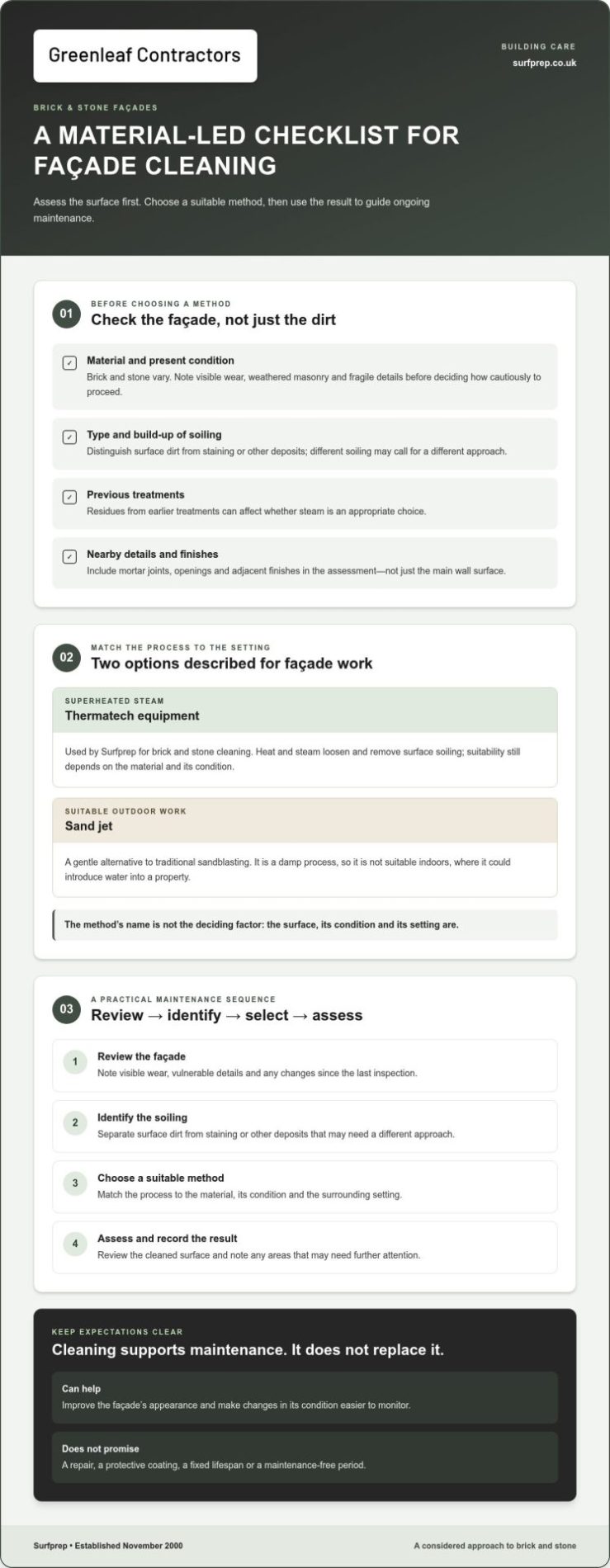
How to make steam cleaning part of a practical facade maintenance plan
Make cleaning one considered part of looking after the building, rather than applying it on a fixed schedule regardless of condition. A practical sequence is:
- Review the facade: note visible wear, vulnerable details and any changes since the last inspection.
- Identify the soiling: distinguish surface dirt from staining or other deposits that may need a different approach.
- Choose a suitable method: match the process to the material, its condition and the surrounding setting.
- Assess the result: review the cleaned surface and record any areas that may need further attention.
For brick and stone, Surfprep uses a Thermatech machine for superheated steam cleaning and selects the approach according to the facade, rather than treating steam as a blanket solution. For historic masonry, the National Park Service’s guidelines for historic masonry cleaning discuss the importance of a considered approach to cleaning.
When should you consider a different cleaning method?
The alternative depends on the material, setting and condition. For suitable external work, Surfprep’s sand jet offers a gentle alternative to traditional sandblasting. It uses a damp process, so it should not be used indoors, where it could introduce water into a property. Read about the sand jet cleaning method to understand this option. Prioritise the facade’s integrity over the strongest immediate visual change, then use the results to guide future care.
For a broader view of Surfprep’s building cleaning work, visit the Surfprep website.
Make facade care a considered next step
The long-term benefits of steam cleaning facades come from choosing a method that suits the material and its condition, not from pursuing the most dramatic before-and-after result. Cleaning can help a building look well maintained and make changes easier to monitor, but it is not a repair or a lasting protective coating. A practical plan starts by reviewing the surface, identifying the soiling and assessing the result.
Surfprep uses a Thermatech machine for superheated steam cleaning and takes a material-led approach to brick and stone. The method is selected for the facade rather than applied as a blanket treatment.
If you are considering cleaning for your building, discuss your facade cleaning requirements with Surfprep.
Frequently Asked Questions
Does steam cleaning protect a building facade permanently?
No. Steam cleaning can remove surface soiling and improve a facade’s appearance, but it does not create a permanent protective finish or repair damaged masonry. The long-term benefits of steam cleaning facades relate to maintenance, not a guaranteed lifespan or a period without further care. Continue to inspect the surface and address wear separately.
Is superheated steam cleaning suitable for every brick or stone facade?
No. Suitability depends on the material, its condition, the type of soiling, previous treatments and nearby details. Weathered stone or fragile brickwork may need a different approach from a sound, less delicate surface. Surfprep uses a Thermatech machine for superheated steam cleaning, with the method guided by the facade rather than applied as a blanket treatment.
How does steam cleaning support long-term facade maintenance?
When suitable for the surface, steam cleaning removes surface grime, helping a facade present well and making changes in the masonry easier to notice during maintenance. It does not replace inspection or repair. Surfprep provides brick and stone cleaning in Leeds, York, Hull, Bradford, Nottingham, Manchester, Derby, Lincoln, Newcastle, Durham, Scarborough and Beverley.
Can a damp sand jet be used instead of steam cleaning on a facade?
It can be an alternative for suitable external work, but it is not right for every facade. Surfprep’s sand jet is a gentle alternative to traditional sandblasting and uses a damp process, so it should not be used indoors, where it could introduce water into the property. The choice between steam and sand jet depends on the material, condition and setting.
