
Could cleaning a listed façade do more harm than leaving its staining in place? Cleaning listed building brickwork needs careful thought: an unsuitable method can erode brick faces and mortar, while work that affects a building’s historic or architectural character may require consent. Before work starts, establish what is appropriate for the building and its masonry.
This guide explains how to approach the consent question in England and Wales, why a controlled test should come before full-scale work, and how to compare methods such as Thermatech superheated steam and damp sand-jet cleaning. You’ll learn how to choose a proportionate method, protect historic fabric and document the project before work begins. Surfprep provides brick-cleaning services and uses practical experience to help shape a careful approach.
Key Takeaways
- Before cleaning listed building brickwork, establish the building’s status, define the proposed work and seek guidance from the relevant authority.
- Use a small, controlled trial to assess how the brick and soiling respond before settling on a cleaning method.
- Compare methods by their effect on the masonry and moisture requirements; sand-jet cleaning is damp and isn’t recommended indoors.
- Record the agreed work area, method, trial findings and protection measures in a written scope before cleaning begins.
Cleaning listed building brickwork: check consent before work begins
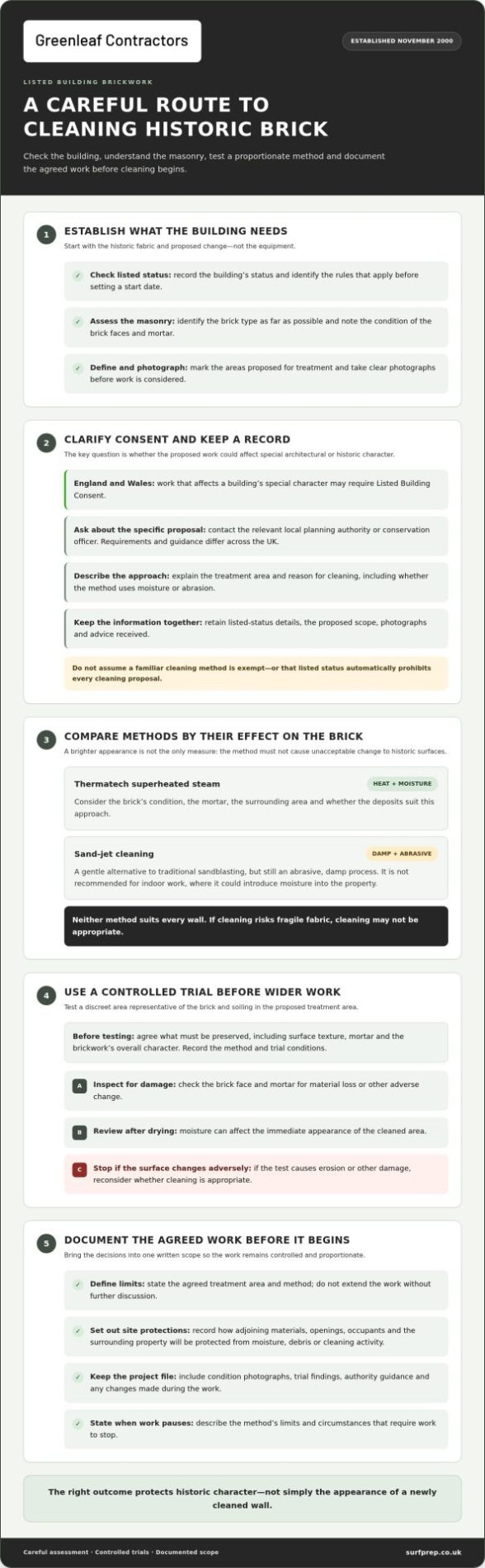
Listed status does not make every cleaning proposal automatically acceptable or prohibited. The key question is whether the proposed work could affect the building’s special architectural or historic character. In England and Wales, work that affects that character may require Listed Building Consent. Requirements and guidance differ across the UK, so establish the rules that apply to the building before setting a start date. Don’t assume that a familiar cleaning method is exempt.
What to establish before proposing listed-brickwork cleaning
Start with the building and the proposed change, not the equipment. Record the building’s listed status, identify the brick type as far as possible, note the condition of the brick faces and mortar, and mark the areas proposed for treatment. Take clear photographs before work is considered. These records help explain the proposal and keep the discussion focused on the historic fabric.
- Describe the work: set out the areas, the reason for cleaning and the proposed approach, including whether it uses moisture or abrasion. For example, describe damp sand-jet cleaning clearly.
- Seek guidance: contact the relevant local planning authority or conservation officer before work begins. Ask whether consent is needed for the specific proposal, rather than relying on general advice or assumptions.
- Keep a record: store the listed-status information, scope, photographs and advice together. This gives you a clear reference if the proposal changes or the work is reviewed later.
Good conservation starts with understanding the significance of what is already there. The overview of conservation and restoration of immovable cultural property discusses principles of intervention that help frame this care. Once you understand the authority’s guidance, develop the cleaning plan around the building, rather than treating appearance alone as the objective.
Compare brick-cleaning methods by testing risk, not by appearance alone
A method that makes a wall look brighter may still remove part of its historic surface. When cleaning listed building brickwork, compare the brick’s condition and the type of soiling with each method’s action, moisture and level of control. The National Park Service Preservation Brief 1 also stresses careful assessment before treating historic masonry.
Thermatech superheated steam cleaning uses heat and moisture. Consider the brick’s condition, the mortar and the surrounding area, as well as whether the deposits are suited to this approach. The sand jet is a gentle alternative to traditional sandblasting, but it remains an abrasive, damp process. It isn’t recommended for indoor work, where it could introduce moisture into the property. Neither method is right for every wall, and cleaning may not be appropriate if it risks damaging fragile fabric.
Compare brick-cleaning methods by their likely effect on the masonry, not by which produces the most dramatic immediate change. A controlled trial helps establish whether the appearance improves without unacceptable changes to the surface.
How a trial patch helps assess listed brickwork
Choose a discreet area that represents the brick and soiling across the proposed work. Before testing, agree what must be preserved, including the brick’s surface texture, mortar and overall character. Record the method and trial conditions so you can assess the result consistently.
- Check the brick face and mortar for material loss or damage.
- Review the cleaned area once it has dried, since moisture can affect its immediate appearance.
- Stop if the test causes erosion or another adverse change, then reconsider whether cleaning is appropriate.
Surfprep provides specialist brick cleaning. Consider the masonry and the trial findings together before deciding how to proceed. Visit Surfprep’s website to learn more about the service.
Plan controlled listed-brickwork cleaning with a documented specialist
A careful project doesn’t end with choosing a method. For cleaning listed building brickwork, the written scope should state what has been agreed, what the trial showed and how the work will be controlled. This record helps keep the cleaning proportionate and provides a reference if site conditions differ from expectations.
What a responsible cleaning plan should record
Bring the key decisions into one project file before work starts. Include condition photographs, trial results, the defined treatment area and any guidance received from the relevant authority. Describe the selected method and its limits. For example, identify areas of the elevation that are excluded and circumstances that would mean work must pause.
- Define the scope: identify the agreed area and method, and make clear that work won’t extend beyond it without further discussion.
- Set out site controls: explain how adjoining materials, openings, occupants and the surrounding property will be protected from moisture, debris or cleaning activity.
- Record decisions: retain photographs and trial findings alongside the scope and authority guidance, then note any changes made during the work.
Surfprep provides brick cleaning and sand-jet cleaning for projects where method selection and control matter. The sand jet is a damp, gentle alternative to traditional sandblasting, so the masonry and site conditions must guide its use. The right method is the one that suits the brickwork and agreed scope, not simply the one that produces the biggest visual change.
For a listed-brickwork project in Leeds, start by discussing the building, its condition and the proposed treatment area with Surfprep. Contact Surfprep about brick cleaning to plan a carefully controlled approach.
Make the next decision with confidence
A listed façade doesn’t have to look newly built to be well cared for. The right outcome addresses the reason for cleaning while retaining the character and surface that give the brickwork its value. If cleaning isn’t necessary, or a proposed treatment raises concerns, pausing is a sound decision, not a setback.
For cleaning listed building brickwork, bring the building’s condition and your aims into a practical project discussion. Surfprep’s brick-cleaning and sand-jet services can help inform a considered approach, with the method matched to the masonry rather than chosen for appearance alone. Discuss your listed-brickwork cleaning project and move forward with care.
Frequently Asked Questions
Does every old brick building have listed status?
No. A building’s age alone doesn’t make it listed. Check the relevant official heritage register or ask the local planning authority to confirm its status before arranging work. This applies to properties in Leeds, York, Hull, Bradford, Nottingham, Manchester, Derby, Lincoln, Newcastle, Durham, Scarborough and Beverley. Don’t rely on appearance or local reputation as proof of listing.
Can inappropriate cleaning damage historic brickwork?
Yes. Abrasive treatment or excessive water pressure can wear away the brick’s outer face and damage mortar joints. This can leave masonry more vulnerable to deterioration, even if the immediate result looks cleaner. With cleaning listed building brickwork, a brighter finish isn’t the only measure of success: retaining sound, original material matters more than removing every mark.
What should I do if cleaning exposes damage or unexpected repairs?
Pause the affected work and document what has appeared with clear photographs and notes about its location. Don’t conceal the issue with further cleaning or repairs before its cause and significance are understood. If the building is listed, seek advice from the relevant local planning authority or conservation officer before changing the agreed work. The method or scope may need to be reconsidered.
