
The obvious first step, cleaning every beam, can be the wrong one. For woodworm treatment preparation for beams, follow the chosen treatment product’s instructions and consider the timber’s condition. Visible flight holes alone don’t confirm an active infestation, and cleaning a beam is separate from treating woodworm.
If you’re preparing exposed beams in Lincoln, you may be concerned about damaging old or structural timber, disturbing the room or introducing moisture. This guide explains how to prepare the area, why the treatment instructions should determine whether dust or coatings need attention, and when a dry cleaning method may be suitable. Established in 2000, Surfprep provides wooden beam cleaning, but the right method depends on the beam, its setting and the work required.
Key Takeaways
- Woodworm refers to the larval stage of wood-boring beetles, so prepare according to the treatment plan rather than the name alone.
- For woodworm treatment preparation for beams, read the product instructions first and plan safe access around the timber.
- Protect nearby belongings, and don’t assume sanding, drilling or removing coatings is always necessary.
- Consider indoor moisture when choosing a cleaning method, and keep cleaning separate from pest treatment.
Woodworm treatment preparation for beams: what needs deciding first?
Preparation means getting the beam and its surroundings ready in line with the instructions for the chosen treatment. Products can differ in what they require of the timber’s surface, so sanding, stripping or removing a coating shouldn’t be automatic first steps. For woodworm treatment preparation for beams, first identify the intended treatment and read its directions for surface preparation and application.
Despite the name, woodworm isn’t a worm species. It’s a common term for the larvae of wood-boring beetles, which live and feed within timber. The Woodworm Overview and Treatment provides general background on their life cycle. For an exposed beam, the practical question is what the visible signs can tell you before work begins, not simply whether holes are present.
Do old flight holes mean the beam needs treating?
No. Holes can remain visible long after beetles have left the timber, so their presence alone doesn’t confirm current activity. Fresh-looking dust near a hole may be relevant, but consider it alongside the beam’s overall condition and any other evidence rather than treating one clue as conclusive.
A visible flight hole is evidence of past emergence, not proof of a current infestation. Note where holes and any dust appear, and avoid disturbing the beam just to investigate. If the timber is structural, such as a roof beam, unnecessary preparation could damage an important part of the building. Assessing the signs carefully helps avoid work that isn’t required.
How to prepare beams before woodworm treatment: a careful checklist
Once you know which treatment is planned, use its instructions to decide what preparation is needed. They explain which parts of the beam need to be accessible and whether cleaning should happen before or after treatment. There’s no universal rule to sand, strip, drill into the timber or remove paint and varnish. Unnecessary work can alter an old beam without helping the treatment process.
Use this checklist to prepare the area:
- Read the treatment instructions. Note the requirements for the beam’s surface and the order of preparation and application.
- Plan access. Make sure the timber can be reached without stretching or working around obstacles.
- Protect the room. Move or cover nearby furniture and belongings that could be affected by dust or debris.
- Record what you can see. Note the location of holes, any dust and the beam’s visible condition before work starts.
What should you clear and check around an exposed beam?
Clear the immediate work area, including items beneath the beam, and plan a stable, unobstructed way to reach it. A simple record of visible marks and the timber’s condition gives you a reference as work progresses. Keep observation separate from diagnosis: preparation should follow the selected treatment’s instructions, not assumptions based on appearance.
If the instructions require access to a particular surface, prepare only what’s needed to provide it. Don’t remove a coating or make holes simply because a general checklist recommends it. Each step should match the chosen product’s directions. Homebuilding & Renovating’s Woodworm Treatment Guide offers wider context on treatment choices. Wooden beam cleaning is a separate task from pest treatment.
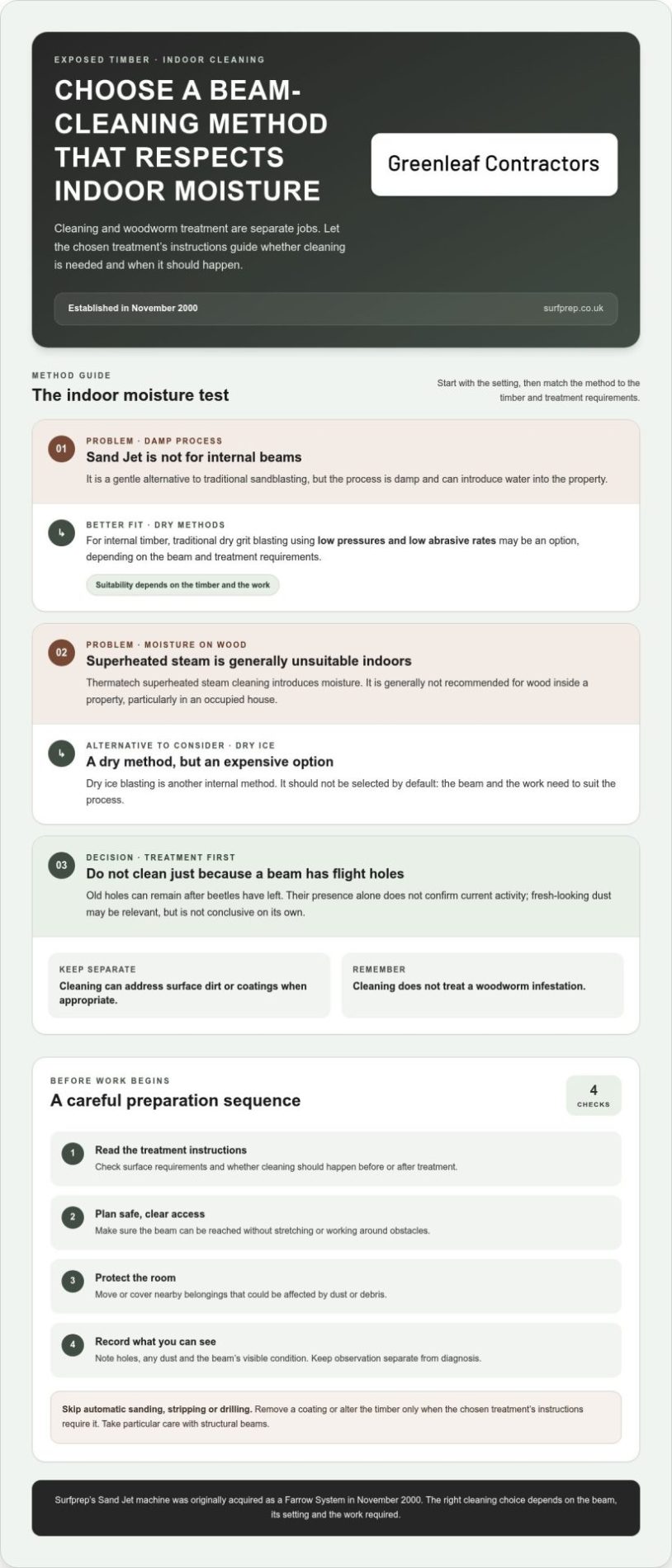
Cleaning wooden beams before treatment: choose a method that respects indoor moisture
Cleaning and woodworm treatment are separate jobs. Cleaning can remove surface dirt or coatings when appropriate, but it doesn’t treat an infestation. For woodworm treatment preparation for beams, don’t assume that cleaning is always the next step. Follow the treatment instructions to establish whether it’s needed and when it should happen.
Moisture matters indoors. Sand Jet is a gentle alternative to traditional sandblasting, but it is a damp process, so it isn’t suitable for cleaning internal beams. Superheated steam cleaning with a Thermatech machine is also generally unsuitable for wood inside a property, particularly in an occupied house, because it introduces moisture.
When can beam cleaning fit around treatment?
Let the treatment instructions determine the sequence. If cleaning is appropriate, traditional dry grit blasting using low pressures and low abrasive rates may be an option for internal timber, depending on the beam and the treatment requirements. Dry ice blasting is another internal method, but it is an expensive option. Neither method should be selected by default: the timber and the work need to suit the process.
Take particular care with structural beams. Avoid unnecessary changes to timber that supports the building, and keep cleaning distinct from pest treatment. Rentokil’s Professional Woodworm Treatment discusses treatment considerations, including structural timber. Surfprep’s wooden beam cleaning focuses on the separate cleaning task. For beam cleaning in Lincoln, get in touch with Surfprep about your project.
Plan the next step with care
Before work starts on an exposed beam, consider the treatment instructions alongside any planned cleaning. This keeps preparation proportionate and helps avoid surface changes the treatment doesn’t require. Thoughtful woodworm treatment preparation for beams also means considering the finish you want to retain, not just what can be removed.
If cleaning is part of your plans, take account of the beam’s setting, access and the finish you hope to preserve. Surfprep provides wooden beam cleaning in Lincoln and across Leeds, York, Hull, Bradford, Nottingham, Manchester, Derby, Newcastle, Durham, Scarborough and Beverley. Contact Surfprep to discuss wooden beam cleaning and plan the right next step for your beams.
Frequently Asked Questions
How can you tell whether woodworm in a beam is active?
Look for recent signs, but don’t treat one clue as conclusive. Fresh-looking bore dust near holes may suggest activity, particularly if it reappears after the area has been cleared, but dust can have other sources and old holes can persist. Record what you observe and where, then consider the evidence together rather than diagnosing from appearance alone.
Should I remove paint or varnish from beams before woodworm treatment?
Only remove paint or varnish if the chosen treatment’s instructions call for it. A coating may affect access to the timber, but stripping it unnecessarily can alter an old beam and create extra dust. Check the product directions before preparing the surface, and don’t assume the same approach applies to every coating, beam or treatment.
Can woodworm treatment be applied to a damp beam?
That depends on the product instructions and the beam’s condition. Don’t assume a treatment is suitable for wet timber: check the label for guidance on surface condition or moisture before application. If the beam is damp, consider whether a leak or another moisture source needs attention, and avoid introducing additional water during preparation.
Does cleaning wooden beams get rid of woodworm?
No. Cleaning addresses material on the beam’s surface; it doesn’t reach or treat wood-boring beetle larvae within the timber. A visibly cleaner beam isn’t evidence that an infestation has been dealt with. Keep cleaning separate from pest treatment, and let the selected treatment instructions determine what surface preparation is appropriate for your woodworm treatment preparation for beams.
