
Existing paint doesn’t automatically rule out a clear anti-graffiti coating. When choosing an anti-graffiti coating, match its properties to the surface and make sure the painted layer is clean, dry and sound before application. A coating that suits masonry may not be the right choice for wood or a painted façade.
It’s sensible to want protection that preserves a surface’s appearance and makes future graffiti removal more manageable. The right anti-graffiti coating depends on the material, the finish you want and how the coating will be cleaned and maintained.
This guide compares clear coatings for wood, masonry and painted surfaces, explains what to consider before application, and outlines how graffiti is removed from protected surfaces. You’ll also find a practical decision guide to help narrow down the right option for your project.
Key Takeaways
- Choose a coating for the actual surface, not just the type of graffiti; the existing finish also affects suitability.
- Compare sacrificial and permanent protection by considering how graffiti will be removed and what upkeep each approach involves.
- Prepare the surface carefully and follow the coating’s application instructions to support an even, clear finish.
- Match the cleaning method to the coating so graffiti can be removed without unnecessarily damaging the protected surface.
Clear coatings for wood, masonry and previously painted surfaces
Choosing an anti-graffiti coating starts with the substrate and its existing finish. Before selecting protection, compare surface compatibility, appearance and moisture requirements.
Wood and masonry surfaces
Wood and masonry need different coatings because they absorb products differently. Before coating brick, stone or concrete, make sure the surface is clean and dry, and pay particular attention to the porosity of masonry. Wood has its own grain and finish, so choose a clear coating intended for that substrate. A coating suitable for masonry is not automatically suitable for wood.
Previously painted surfaces
A clear coating may suit a painted façade, but compatibility with the existing paint is essential. Remove graffiti and contamination, then assess whether the paint is sound and compatible with the protective coating. Some existing finishes may not be suitable for coating. Identifying the existing finish is therefore a practical first step, rather than choosing a product simply because it is clear or labelled for exterior use.
Painted and unpainted surfaces
Some coatings are designed for both painted and unpainted surfaces; others are intended for specific substrates or finishes. Check the product’s stated compatibility and prepare the surface as directed. For a water-based coating, remove dirt and residue, then let the surface dry before application. On unpainted masonry, porosity affects how the coating performs. On painted surfaces, adhesion and the paint’s condition matter too.
Moisture checks before application
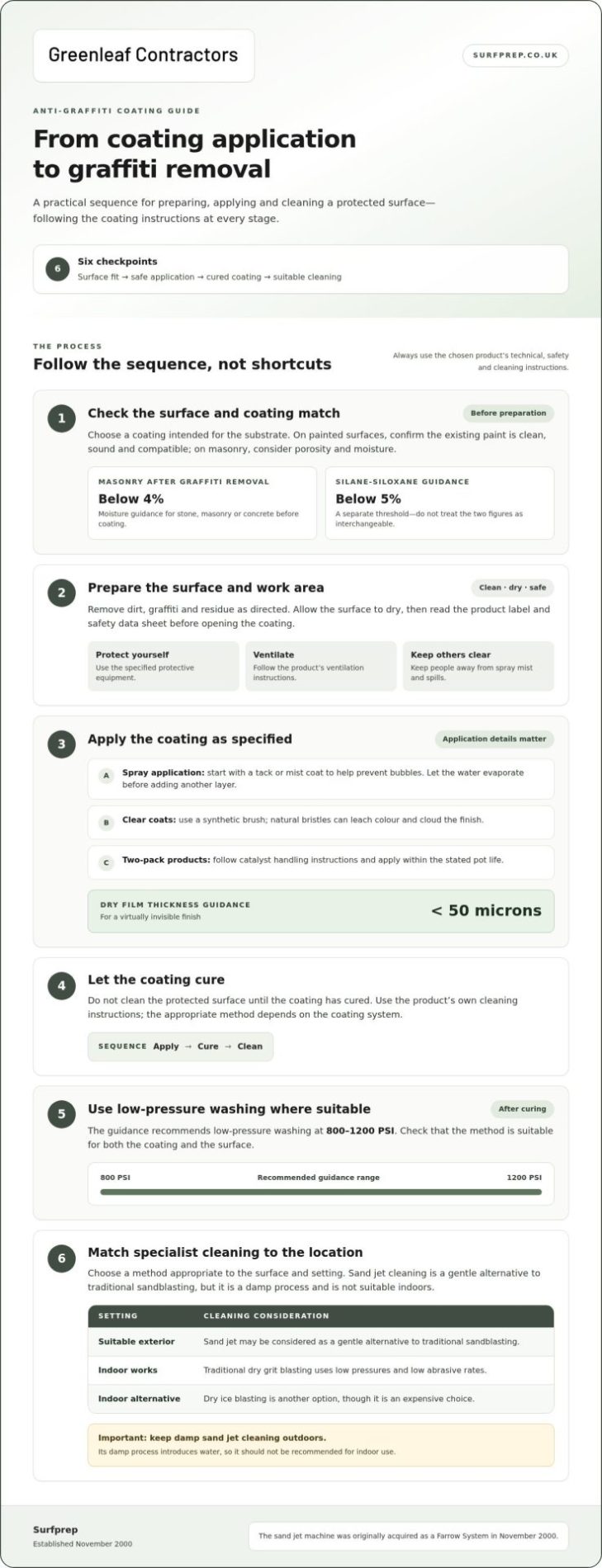
Check moisture after cleaning, since dampness can remain in masonry even when its face looks dry. For stone, masonry or concrete after graffiti removal, the guidance specifies moisture below 4% before coating. Silane-siloxane coating guidance separately recommends below 5%. These are distinct thresholds for different coating guidance, not interchangeable targets. Measure the surface and follow the chosen coating’s instructions before applying it.
| Surface option | Compatibility check | Preparation priority |
|---|---|---|
| Wood | Coating suits wood | Clean, dry surface |
| Masonry | Porosity and moisture | Clean, dry; assess moisture |
| Painted | Existing finish and adhesion | Remove residue; check compatibility |
Choose a coating for the substrate first, then confirm its finish and moisture requirements.
What is an Anti-Graffiti Coating and How Does It Work?
Anti-graffiti coatings make paint and marker easier to remove from a protected surface. The main options are sacrificial systems, which are renewed after cleaning, and permanent barriers.
Sacrificial coating systems
A sacrificial coating is a temporary protective layer, often with a matte polymer- or wax-based finish. Cleaning after vandalism removes both the graffiti and the coating, so reapplication is part of the maintenance cycle. A permanent barrier, by contrast, remains in place after cleaning. Include the renewal step in your cleaning plan and consider how each system affects the building’s appearance.
Non-sacrificial coating systems
A non-sacrificial coating stays on the surface after graffiti removal, avoiding routine reapplication of the protective layer. Permanent anti-graffiti barriers typically last 10 years or more, while sacrificial systems are removed with the graffiti. In the UK, environmental suitability depends on the product formulation and use; follow its safety and application instructions. Check technical information, cleaning methods and warranty scope before purchase. UK coating costs depend on area, preparation, substrate and system, with the price provided after a quote request.
Sacrificial coatings for heritage buildings
Sacrificial coatings are often considered for historic and heritage buildings where preserving the original appearance is important. Because the coating is removed along with the graffiti, it does not leave a permanent barrier on the façade, but it must be reapplied after cleaning. Match the cleaning method to the surface and maintenance plan. For either system, review the manufacturer’s technical documentation and warranty conditions, including which cleaning and reapplication work is covered.
For a project involving graffiti on masonry, graffiti removal guidance can help inform the next steps.
Application and cleaning procedures
Both application quality and later cleaning affect how well a coating performs. Follow the product instructions for the specific surface and coating system.
Coating application
For spray application, begin with a tack or mist coat to help prevent bubbles. Let the water evaporate before adding another layer. Use a synthetic brush for clear coats, as natural bristles can leach colour and cloud the finish. Apply two-pack products within their stated pot-life after catalysing. Follow the specified application instructions, including the dry film thickness: the guidance describes less than 50 microns for a virtually invisible finish.
Application safety precautions
Before opening a coating, read its label and safety data sheet. Use the protective equipment and ventilation specified for the product, and keep people away from spray mist and spills. With two-pack coatings, follow the catalyst handling instructions and do not use the mixture beyond its stated pot life.
Clean coated surfaces only after curing, using the product’s cleaning instructions. The guidance recommends low-pressure washing at 800-1200 PSI. Sand jet cleaning is a gentle alternative to traditional sandblasting, but it is a damp process and isn’t suitable indoors. The machine was originally acquired as a Farrow System in November 2000. For indoor works, traditional dry grit blasting uses low pressures and low abrasive rates; dry ice blasting is another option, though expensive.
For suitable exterior surfaces, explore gentle sand jet cleaning as one possible method.
Surfprep: Brick cleaning
Surfprep was established in November 2000 and provides brick cleaning when masonry needs attention before or after graffiti protection work. Cleaning is a separate task from selecting or applying a coating, and the right approach depends on the surface and material being removed.
For other building materials, Surfprep also provides stone cleaning and wooden beam cleaning. Keeping the cleaning method specific to the material helps address soiling or marks without treating brick, stone and timber as interchangeable surfaces.
If cleaning is the next step for your building, contact Surfprep to discuss the work.
Plan the next step for your surface
Choosing an anti-graffiti coating is only one part of protecting a building. The surface’s condition and any cleaning needed beforehand also shape the work. Before settling on a system, consider what needs cleaning and how the process could affect the material or finish. This gives you a clearer basis for planning protection and future graffiti removal.
Surfprep provides brick cleaning, stone cleaning and wooden beam cleaning. These services can address soiling or marks as part of a wider maintenance plan, with the cleaning approach tailored to the material. For timber inside a property, bear in mind that superheated steam cleaning can introduce moisture and may not be suitable.
To discuss the cleaning work that may sit alongside your coating plan, contact Surfprep about your surface. A considered next step can help you move from coating research to a practical plan for the building.
Frequently Asked Questions
Can you apply anti-graffiti paint over existing paint?
Yes, provided the coating is compatible with the existing paint and the paint is firmly bonded. Peeling or powdery paint can undermine adhesion, even when the clear coating is suitable. Identify the existing finish first: nitrocellulose lacquer cannot be coated. A small test area can help you assess appearance and adhesion before treating the whole façade.
What types of anti-graffiti coatings are available, and how do they work?
The main options are sacrificial coatings, removed during graffiti cleaning, and permanent barriers, which remain after cleaning. Both are designed to make paint and marker easier to remove from the protected surface. Check the coating’s stated effectiveness against solvent-based and water-based paints and markers, then match its approved cleaning method to the graffiti likely to affect the site.
How do sacrificial, semi-sacrificial and permanent anti-graffiti coatings compare?
Sacrificial coatings are renewed after graffiti removal; permanent coatings are designed to remain in place through cleaning. “Semi-sacrificial” describes an intermediate approach, but products using the term may behave differently. Read the instructions to establish whether cleaning removes part of the coating, calls for complete renewal or leaves the protective layer intact. This distinction affects future maintenance planning.
Which anti-graffiti coating is best for brick, stone, concrete, metal and painted surfaces?
No single coating suits every material. For brick, stone and concrete, compare products designed for porous masonry and follow their substrate preparation requirements. Painted surfaces need a coating compatible with the existing finish. For metal, choose a system expressly intended for that substrate, including any required primer. For each surface, the specified graffiti removal method is part of the selection.
How many graffiti removals can a coating withstand before it needs reapplying?
It depends on the coating system: sacrificial protection is removed with the graffiti and needs reapplication after each cleaning. A market-reported figure states that non-sacrificial coatings can withstand more than 500 graffiti-removal events without degrading their protective barrier. Treat that as a claim for the coating described, not a universal performance figure; cleaning technique and product instructions still matter.
