
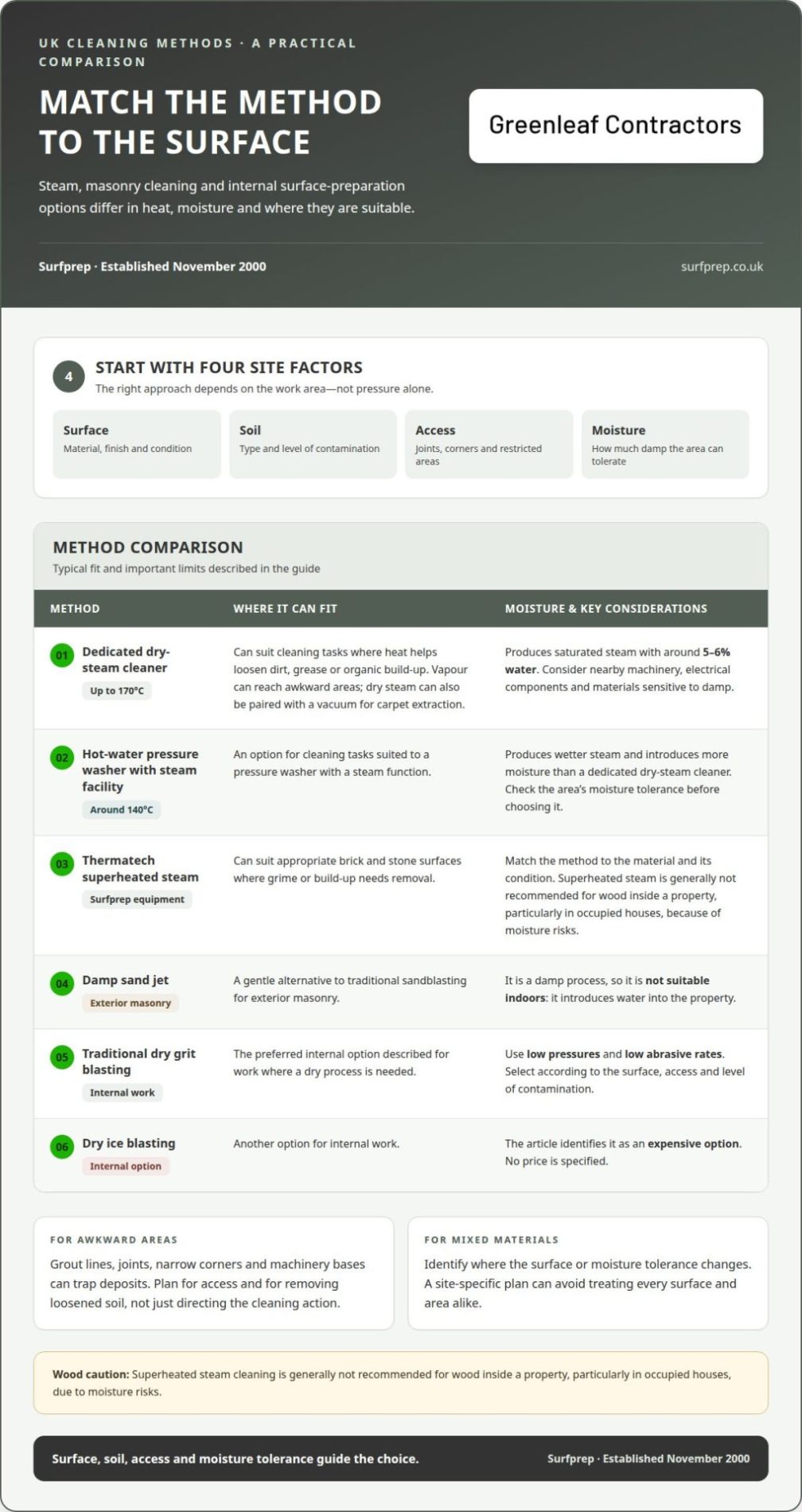
The hottest machine isn’t automatically the right one. Choosing industrial steam cleaning services starts with the surface, the soil and how much moisture your facility can accommodate: dry steam cleaners can produce saturated steam up to 170 ºC, with around 5-6% water, while a hot-water pressure washer with a steam facility produces wetter steam at around 140 ºC. The right option depends on the cleaning task and the area being treated.
Cleaning power matters, but access, surface condition and moisture tolerance matter too. Steam heat can loosen dirt, grease and organic build-up, while vapour can reach awkward areas that are difficult to clean by hand.
This guide explains how to compare cleaning methods, where steam can help and when another approach may be more suitable. It also covers practical benefits and key considerations when planning a clean at a UK facility.
Key Takeaways
- Choose equipment by weighing the surface, the type of contamination and how much moisture the area can tolerate.
- Target grout, joints and awkward corners with a method suited to the material and access, rather than relying on pressure alone.
- Understand how industrial steam cleaning differs from other UK cleaning and surface-preparation methods, and where an alternative may be more suitable.
- See how Surfprep’s Thermatech superheated steam cleaning can support suitable projects involving brick, stone and industrial surfaces.
What are the benefits of steam cleaning services?
Steam uses heat and water to loosen grease and dirt, which can reduce reliance on cleaning chemicals. When choosing equipment, distinguish a dedicated dry-steam cleaner from a hot-water pressure washer with a steam setting. Start with the surface, type of soil, access and moisture tolerance. Equipment designed for a production line may be unnecessary for a small, occasional clean-down.
In food production facilities, begin by identifying the surfaces and equipment to be cleaned, such as floors, work surfaces and machinery exteriors. Note the residues, restricted access and sensitive components before choosing a method. Steam can reach awkward areas, but the equipment must suit the material and surrounding process. A site-specific plan helps avoid treating every surface alike.
Hiring equipment can suit a one-off project or short-term need. Before arranging a hire, clarify whether maintenance, repair cover, operating guidance and replacement arrangements are included. A fault during a planned clean can disrupt work, so understanding the support terms helps facilities plan equipment use.
For exterior masonry, the damp sand jet cleaning method is a gentle alternative to traditional sandblasting, but it isn’t suitable indoors because it introduces water. For internal work, traditional dry grit blasting at low pressures and low abrasive rates is preferred; dry ice blasting is another option, though expensive. Choose between them according to the surface, access and level of contamination.
Cleaning grout, joints, corners and hard-to-reach areas
Grout lines, joints and narrow corners can trap deposits that broad surface cleaning misses. A thorough cleaning plan accounts for access, material and the type of soiling.
Corners and hard-to-reach areas
Narrow gaps at machinery bases, wall-floor junctions and tiled corners can make cleaning difficult. Steam may loosen grime, but the operator also needs room to direct the cleaning action along the joint and remove the loosened soil. Pipe openings, recessed edges and the backs of fixed fittings may need attention too. Mapping these areas helps define the scope and avoid missing sheltered deposits.
Suitable areas and surfaces
Tiles and sound grout can be suitable for steam cleaning, depending on their condition and the task. Brick and stone require an approach suited to their texture and state, particularly where surfaces are worn or uneven. For masonry, a suitable stone cleaning approach takes the material into account. The surface’s finish, joints and access all help determine how the cleaning process should be carried out.
For facilities in Newcastle or Durham, a site plan can show where dirt collects and how staff and equipment move through the area. Mark floor joints, corners behind fixed machinery and narrow service routes. This gives the cleaning team a clearer view of access needs and helps organise the work around the facility’s layout, rather than treating the site as one open surface.
What industrial steam cleaning services are available in the UK?
Facilities across the UK may use steam cleaning on equipment, floors, food-preparation areas and building exteriors. The right method depends on the surface, the contamination and how much moisture the area can tolerate.
Industrial cleaning options include dry-steam equipment and hot-water pressure washers with a steam function. Dry steam can be paired with a vacuum for carpet extraction: vapour loosens soil, and the vacuum removes it. A steam-enabled pressure washer produces wetter steam and introduces more moisture. This distinction matters around machinery, electrical components and materials sensitive to damp.
On exterior surfaces, steam cleaning can tackle dirt, staining, algae and environmental build-up. It can also target moss and algae on roofs, offering a gentler approach than pressure washing. Choose the method according to the material and its condition. Older masonry, for example, may need a more controlled process than robust paving.
Commercial kitchens and food production facilities may need cleaning around benches, floors, extraction areas and fixed equipment. Steam can loosen grease and deposits in awkward spaces, while reducing reliance on cleaning chemicals. A service plan should specify the surfaces to be treated, where dry-steam equipment is needed and where extra moisture could cause problems.
For facilities planning exterior masonry work, consider how stone cleaning methods suit the material and its condition. To discuss a cleaning approach for your site, get in touch about your requirements.
Surfprep: Superheated steam cleaning
Surfprep was established in November 2000 and uses a Thermatech machine for superheated steam cleaning. The method can suit appropriate brick and stone surfaces where grime or build-up needs removal. Surfprep also undertakes industrial surface preparation, with the cleaning approach selected to suit the material and its condition.
For a facility cleaning or surface preparation project, contact Surfprep to discuss the work.
Plan the next cleaning step with confidence
Before arranging industrial steam cleaning services, define the area to be cleaned and the result you need. Describe the surface, contamination, access constraints and working environment to help establish a practical scope. If several materials sit side by side, note where the cleaning method may need to change rather than treating the entire site as one surface.
Surfprep provides brick, stone and wooden beam cleaning, as well as superheated steam cleaning. Matching the method to the material is essential, particularly when moisture sensitivity or surface condition is a concern. A focused discussion can turn a general maintenance issue into a clearly defined cleaning requirement.
Share your facility’s cleaning requirements with Surfprep, and take the next step towards a considered plan.
Frequently Asked Questions
Can steam cleaning be used on exterior surfaces?
Yes, steam cleaning can be used on suitable exterior surfaces, including masonry. Before work begins, identify runoff routes, nearby planting, drains and adjoining materials. These details help plan water management and protect surrounding surfaces. The condition of brick and stone matters too: loose or deteriorating areas need careful assessment before choosing a cleaning method.
What equipment and cleaning methods do industrial steam cleaners use?
Industrial steam cleaning uses specialist equipment to apply hot vapour to the surface. Surfprep uses a Thermatech machine for superheated steam cleaning. A work plan should identify the target material and soil, access around machinery and any nearby sensitive components. This helps determine where steam is appropriate and where another surface-cleaning method may work better.
Which industries and facilities benefit from industrial steam cleaning?
Facilities with hard surfaces or detailed areas to clean can include construction sites, educational premises, heritage buildings and industrial workplaces. For instance, cleaning may remove build-up from an exterior wall during refurbishment or address soiling on building masonry. The task, material and condition guide the method, especially when preserving the underlying surface is important.
How often should industrial premises and equipment be steam cleaned?
Set cleaning frequency according to the type and amount of soil, the affected areas and the facility’s working pattern. A production area with recurring deposits may need cleaning within its routine programme, while an exterior wall may only require attention when staining or build-up appears. Track recurring problem areas and review the schedule when processes or site conditions change.
How can I find industrial steam cleaning services near me in the UK?
For work in Leeds, York, Hull, Bradford, Nottingham, Manchester, Derby, Lincoln, Newcastle, Durham, Scarborough or Beverley, contact Surfprep with details of the surface and location. Describe the material, contamination and whether the area is indoors or outdoors. This helps establish whether superheated steam cleaning or another method is better suited to the task.
