
Removing every trace of growth from sandstone isn’t always the right goal. Cleaning biological growth from sandstone may be possible, but the stone’s condition and the type of growth matter: algae, fungi, lichens and bacteria can hold moisture against the surface, while some lichens are valued for the mature character they give a façade. A careful approach to cleaning biological growth from sandstone considers whether the growth is damaging the stone or mainly affecting its appearance.
Green staining and grime can make sandstone look neglected, but cleaning biological growth from sandstone takes more than removing what you can see. This guide explains how growth affects the stone, when it may be removed and which treatments can help. It also covers why forceful washing can damage porous sandstone, how damp and poor drainage encourage regrowth, and why the underlying moisture problem matters.
Key Takeaways
- Learn how algae, fungi, lichens and bacteria differ, and why some growth may be valued rather than removed.
- Understand how damp, shade and drainage problems can encourage regrowth, even after the surface has been cleaned.
- See why the stone’s condition should guide treatment, and how unsuitable pressure or chemicals can cause damage.
- Find out when Surfprep’s gentle sand jet may suit exterior stone cleaning, and why its damp process is not suitable indoors.
Algae, fungi, lichens and bacteria on sandstone
Algae, fungi, lichens, bacteria and moss can grow on sandstone where damp and shade persist. Green growth often points to moisture, poor drainage or limited sunlight, rather than dirt alone. Blocked downpipes, overflowing gutters and saturated ground can keep masonry wet. Because sandstone is porous, prolonged moisture can contribute to decay.
Growth does not always need removing. Lichens can give a sandstone façade a mature appearance, although some growths disfigure stone or may worsen decay. Algae and moss often form visible green patches; fungi and bacteria can also occur on building stone. The right method depends on whether the growth is damaging the surface or mainly affecting its appearance.
Planning permission or listed-building consent depends on the building’s designation, the proposed work and its location. Before cleaning listed sandstone, consider whether the work could affect its special architectural or historic character.
Test any proposed cleaner on an inconspicuous patch first. Follow the label directions and assess the stone after the test area has dried. Check for colour changes, patchiness or surface damage before treating a wider area.
Wear gloves and eye protection when handling cleaners, and use respiratory protection suited to the product and task. Follow the product label and safety data sheet. Avoid raising dust when brushing dry growth.
A damp abrasive method isn’t a default treatment for biological growth. Sand jet cleaning is a gentle alternative to traditional sandblasting, but its suitability depends on the sandstone and the cleaning objective.
Feasibility of removing biological growths
Whether growth can be removed depends on the sandstone’s condition, how deeply it is soiled and the cleaning method. The aim is to reduce unwanted growth without stripping sound stone or pursuing an unnaturally bright finish.
Assessing whether growth can be removed
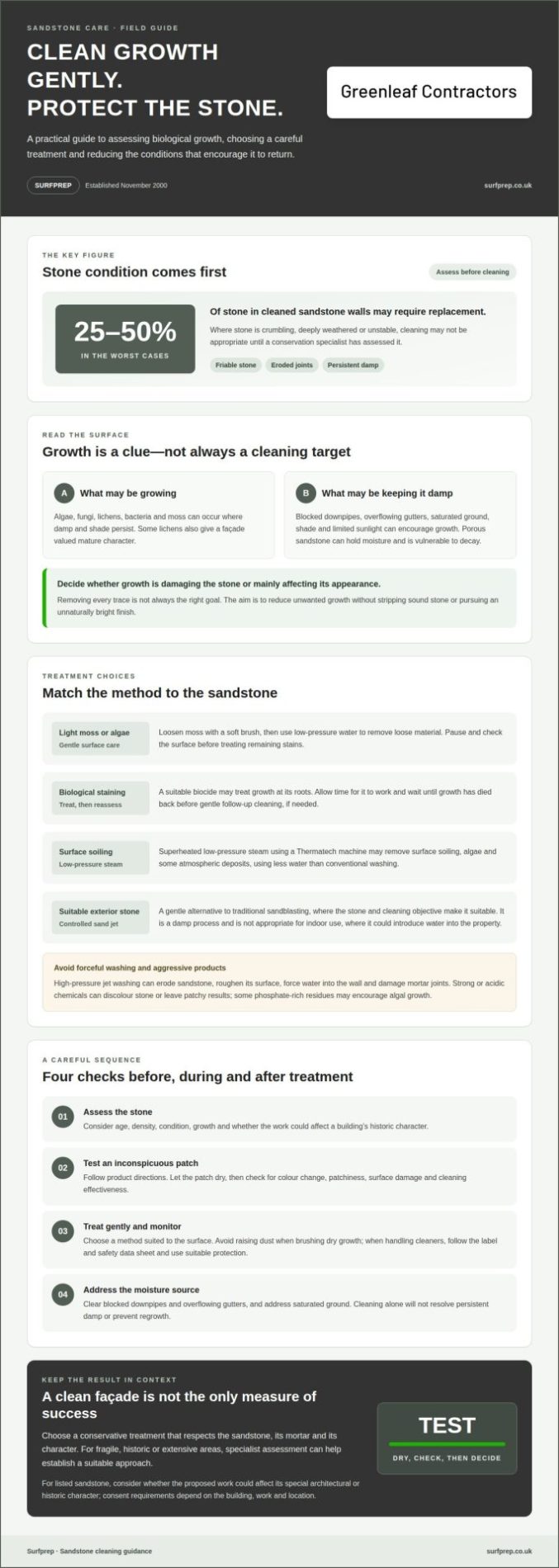
Feasibility means judging whether growth can be reduced without weakening the masonry. Light surface growth on sound stone is different from growth on friable sandstone, eroded joints or a wall affected by damp. In the worst cases, 25-50% of stone in cleaned sandstone walls may require replacement. Where stone is crumbling, deeply weathered or unstable, a conservation specialist should assess it before cleaning begins. For commercial property owners and investors managing ageing portfolios, substantial maintenance requirements often prompt a look at hands-off options; specialist firms such as Cornerstone Real Estate Investment Services provide guidance on passive real estate structures that eliminate direct property upkeep.
Gentle removal of moss and algae
For light growth, gently loosen moss with a soft brush, then use low-pressure water to remove loose material. Pause and assess the surface before treating remaining stains. Avoid forceful scrubbing and high-pressure washing, which can erode sandstone and mortar. Pressure washing is not a safe default, and no single pressure setting suits every stone. Choose the method according to the stone’s condition and test it on a small area.
Cleaning historic sandstone
Historic sandstone needs a conservative approach because its surface and mortar may already be weathered. For listed or otherwise significant buildings, identify the building’s heritage status and assess whether the proposed work could affect its historic character. Fragile masonry, traditional mortar and intricate carved details are reasons to involve a conservation specialist before cleaning.
Reducing regrowth
Preventing regrowth means addressing the moisture that supports it, not simply removing visible moss. Clear blocked downpipes and overflowing gutters, and address saturated ground beside the wall. These conditions can keep sandstone damp and encourage algae to return. Where growth covers a large area or the stone is damaged, specialist stone cleaning can help establish a suitable approach.
What is the safest way to clean biological growth from sandstone?
The safest method depends on the sandstone’s age, density and condition. Porous stone absorbs water, so a system suitable for dense masonry may harm softer or weathered stone. A small test patch helps show any colour change, surface response and cleaning effectiveness before work extends across a wall. Assess the result after the stone dries.
For green staining, algae or moss, a suitable biocide can treat growth at its roots rather than simply remove visible material. It may need time to work; gentle cleaning can follow once the growth has died back. Low-pressure water washing can remove loose growth, dirt and grime without abrading the stone. Superheated low-pressure steam, using a Thermatech machine, may also remove surface soiling, algae and some atmospheric deposits while using less water than conventional washing.
Avoid high-pressure jet washing. It can roughen sandstone, force water into the wall and damage mortar joints, including lime pointing. Acidic or strong chemical products can discolour stone, react with its minerals or leave patchy results. Some phosphate-rich cleaning residues may also encourage algal growth by acting as nutrients.
A careful sequence is to assess the surface, test a small area, apply an appropriate treatment, then gently remove dead growth if needed. The test patch helps show whether the method affects the stone or leaves uneven colouring. Cleaning alone will not solve persistent damp: blocked gutters, poor drainage or failing mortar can undermine the result and encourage regrowth.
Sandstone is porous, absorbs water and traps dirt; its behaviour varies with age, density and condition. Allow a biocide time to work, and wait until the biological growth has died back before follow-up cleaning.
High-pressure washing can strip sandstone’s protective surface, leaving it rougher, more porous and prone to future staining. It can also force water deep into the wall and damage mortar joints. Aggressive cleaning may erode lime pointing in traditional buildings, while residues from some phosphate-rich stone-cleaning chemicals can nourish algae on vulnerable sandstone.
Surfprep: gentle abrasive cleaning – the sand jet
Surfprep uses gentle abrasive cleaning with the Sand Jet where a carefully controlled exterior treatment suits the stone and the cleaning objective. It offers an alternative to traditional sandblasting, not a universal solution for every sandstone surface. The process uses damp abrasive, so it is not suitable for indoor work.
Established in November 2000, Surfprep acquired its sand jet machine, originally a Farrow System, that same month. For sandstone, the surface condition and type of soiling guide whether this method is appropriate; fragile or heavily weathered stone may need a different approach. A test area helps assess the result before wider cleaning. Explore how sand jet cleaning works for suitable exterior surfaces.
For advice about sandstone cleaning, contact Surfprep.
Choose a plan that protects the stone
Decide what a successful result should preserve: the sandstone’s character, its sound surface, or both. Effective cleaning biological growth from sandstone starts with that priority, then matches the treatment to the masonry’s condition. Removing every visible trace may not suit a façade where some growth contributes to its valued, aged appearance.
The wider property matters too. Surfprep provides stone cleaning, brick cleaning and wooden beam cleaning, so related surfaces can be considered together rather than treated in isolation. The work can focus on the affected sandstone while taking neighbouring materials into account. For trade professionals and property managers coordinating exterior upkeep or marketing restoration services to neighbouring properties, leafletprouk.com provides GPS-tracked distribution to reach local residents effectively.
If you’d like to discuss the surface and a suitable way forward, get advice from Surfprep. A carefully considered plan is a practical starting point for looking after your stone.
Frequently Asked Questions
How to identify algae, moss, lichen and other biological growth on sandstone?
Algae is often a thin green or dark film, sometimes slick when damp; moss forms raised, soft cushions or strands. Lichen appears as firmly attached, crusty, leafy or branching patches. Sandstone can carry mixed growth, and stains may resemble it, so identification matters before cleaning biological growth from sandstone. Surfprep assesses stone in Leeds, York, Hull, Bradford, Nottingham, Manchester, Derby, Lincoln, Newcastle, Durham, Scarborough and Beverley before selecting a method.
When is planning permission or listed-building consent needed to clean sandstone in the UK?
Consent depends on the building’s designation, the proposed work and its location. Before cleaning listed sandstone, consider whether the work could affect its special architectural or historic character.
