
A clean-looking surface can still be a poor base for fresh paint or a protective coating. Grit blasting in Thetford by Surfprep removes corrosion, old paint and mill scale by directing abrasive media at the surface, leaving it thoroughly prepared for the next stage.
It’s reasonable to want more than a stripped surface: the method needs to suit the material, the job and the finish required, while spent abrasive and removed coatings need responsible handling. This guide explains where grit blasting works well, what happens during the process, and how cleanup and disposal are managed.
You’ll also learn which applications it suits and when a gentler approach may be more appropriate. The sections that follow cover how the process works, what affects the result, and how waste is dealt with after blasting.
Key Takeaways
- Grit blasting can remove corrosion, paint and mill scale, preparing suitable surfaces for their next treatment.
- The abrasive and blasting method affect how the surface is cleaned and the finish it’s left with.
- Plan waste collection and skip placement as part of the work to help prevent debris and runoff reaching drains or surface water.
- For brick, stone or wooden beams, the right cleaning approach depends on the material and the care it needs.
Cleanup and disposal
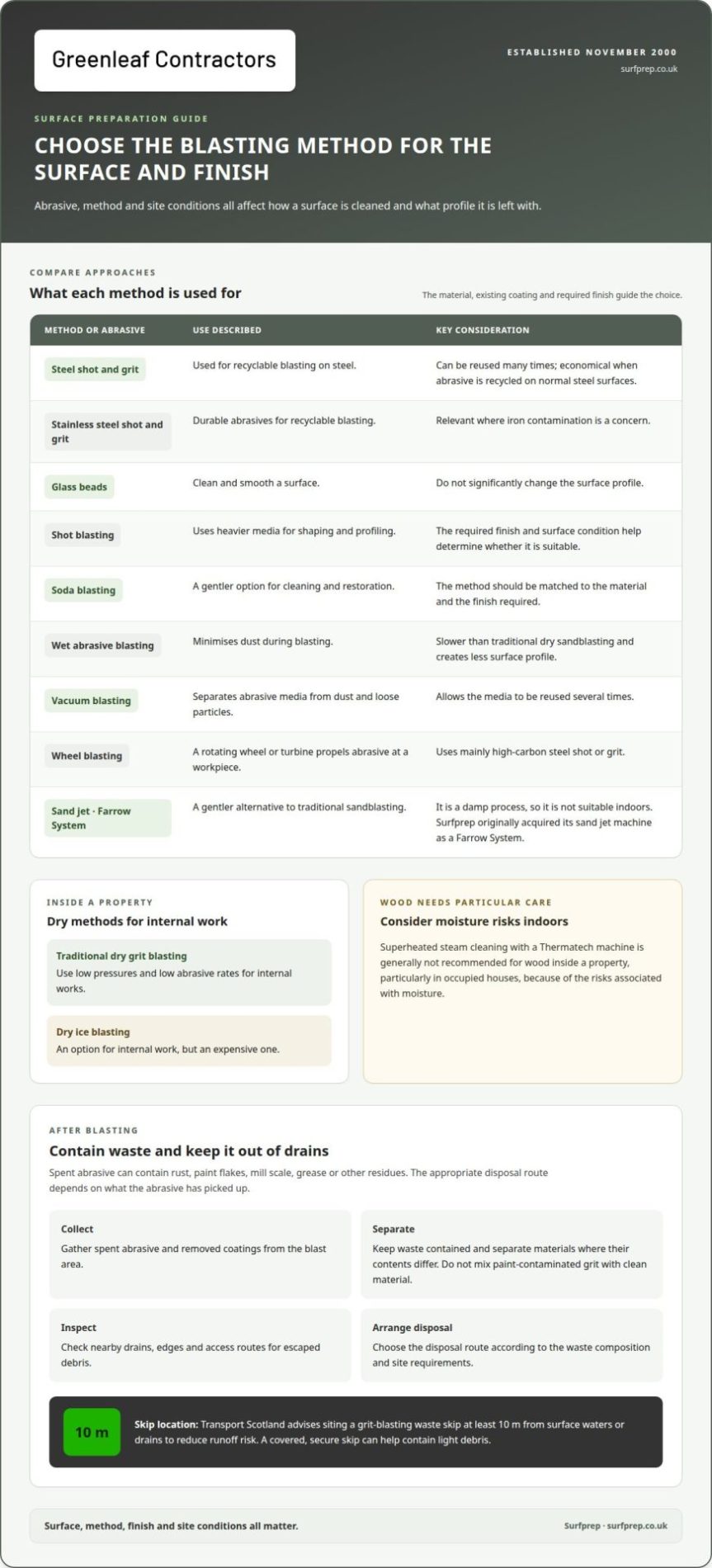
Blasting leaves spent abrasive mixed with whatever came off the surface. That could include rust, paint flakes, mill scale, grease or other residues. Keep this material contained rather than letting it spread across the work area. For example, collect debris from around steelwork before it can be tracked into adjoining areas or washed towards a drain.
For UK projects, plan for dust, runoff and the contents of the waste. The appropriate disposal route depends on what the abrasive has picked up, so keep different waste streams separate where practical. Paint-contaminated grit, for instance, should not be mixed with clean material. The site’s drainage layout and nearby surface water also affect how collection and containment are arranged.
Transport Scotland advises siting a grit-blasting waste skip at least 10m from surface waters or drains to reduce runoff risk. This distance helps lower the chance of rainwater carrying loose waste into a drain or watercourse. A covered, secure skip can also help contain light debris between collection and removal.
A controlled cleanup usually follows a clear sequence:
- Collect spent abrasive and removed coatings from the blast area.
- Keep the waste contained and separate materials where their contents differ.
- Inspect nearby drains, edges and access routes for escaped debris.
- Arrange disposal according to the waste’s composition and the site’s requirements.
These checks matter after blasting a steel frame as much as after removing paint from machinery. Effective containment limits dust and prevents loose grit from becoming a secondary problem. Clear visible blasting residue from the work area before removing equipment and barriers.
Grit blasting for corrosion, paint and mill-scale removal
For grit blasting in Thetford, abrasive media is directed at a surface to dislodge corrosion, paint and mill scale. On a steel beam, blasting can remove rust and old coating, exposing the metal for inspection or a new finish. The result depends on the surface condition, abrasive choice and control of the blast.
A sound process starts by identifying the material and what needs to be removed. The operator selects an abrasive and adjusts the method to suit the surface, aiming to remove unwanted layers without unnecessary damage. After blasting, assess the prepared area for remaining coating, corrosion or debris before beginning the next treatment.
Blasting can create airborne dust, noise and rebounding abrasive. Select suitable PPE for the task and conditions, including protection for breathing, eyes, hearing and exposed skin. The work area also needs controls to limit dust and keep people clear of the blast zone. Measures depend on the site and material.
Mobile blasting can treat fixed equipment or structures at their location, avoiding the need to move large items. For a site in Leeds or a surrounding village, access, space for equipment and containment of abrasive and debris shape how the work is organised. Outdoor access and nearby drains also affect site planning.
Reviews are most useful when they describe comparable work, such as paint removal from steel or corrosion treatment on machinery. Look for detail about the surface, preparation and finished result rather than relying on a general rating alone. Contact information should make clear how to discuss the job and provide its location, material, existing coating and intended finish.
Grit blasting process and applications
The blasting method, abrasive and site conditions all shape the result. Choose an approach based on the material, the coating and the finish required.
How Grit Blasting Works
Abrasive blasting equipment directs media at a surface to remove unwanted layers or clean the material. The abrasive and settings are selected for the job. Steel shot and grit are used for recyclable blasting on steel, while glass beads can clean and smooth without significantly changing the surface profile. Consider the material and desired finish when selecting a method.
Shot blasting uses heavier media for shaping and profiling, while soda blasting is intended for gentler cleaning and restoration. Grit blasting can remove tenacious layers, so the surface condition and required finish help determine the suitable approach.
There’s no single duration or price for a blasting job. Time and cost depend on the item’s size, access, coating thickness, abrasive choice, containment and finish required.
Preparing an Item or Site for Professional Grit Blasting
Before work, provide the item’s location, material, existing coating and intended finish. Clear access helps plan equipment positioning and protect nearby surfaces. Plan containment for abrasive and removed material, consider adjacent drains, and establish whether the item can be moved or must be treated in place. These details help shape the method and work sequence.
Discuss your surface preparation requirements with Surfprep to identify an approach suited to the item and site.
Steel shot and steel grit can be reused many times, making them economical when abrasive can be recycled on normal steel surfaces. Stainless steel shot and grit are durable abrasives for recyclable blasting where iron contamination is a concern. Wheel blasting uses a rotating wheel or turbine to propel abrasive media, mainly high-carbon steel shot or grit, at a workpiece.
Wet abrasive blasting minimises dust but is slower than traditional dry sandblasting and creates less surface profile. Vacuum blasting separates abrasive media from dust and loose particles, allowing the media to be reused several times. Soda blasting can also be used to prepare surfaces for metal fabrication.
Surfprep
Established in November 2000, Surfprep originally acquired its sand jet machine as a Farrow System. The sand jet is gentler than traditional sandblasting but, as a damp process, isn’t suitable indoors. Internal work calls for traditional dry grit blasting at low pressures and low abrasive rates, or dry ice blasting, an expensive option.
Surfprep provides brick, stone and wooden beam cleaning, as well as industrial surface preparation. Its superheated steam cleaning uses a Thermatech machine. This method is generally not recommended for wood inside a property, particularly in occupied houses, because of moisture risks.
Contact Surfprep to discuss your project and decide on a suitable next step for your surface.
Choose the right next step for your surface
Before arranging grit blasting in Thetford, define the result the surface needs and what follows preparation. Keeping the next stage of a restoration or maintenance project in view helps ensure blasting is part of a considered plan, not an isolated task.
Surfprep also provides brick, stone and wooden beam cleaning. Each service suits different surfaces and cleaning needs, so the right approach depends on the material and its condition. If a project includes both preparation and building-surface cleaning, setting out the full scope helps shape a practical plan.
Contact Surfprep to discuss your project and decide on a suitable next step for your surface.
Frequently Asked Questions
Are grit blasting services available in Thetford, Norfolk?
Surfprep provides industrial surface preparation, including abrasive cleaning, for suitable projects. For work in Thetford, Norfolk, share the item’s location, material, existing coating and required finish when discussing grit blasting. These details help establish the scope and practical arrangements. For example, fixed steelwork may need a different plan from a removable component brought to a prepared work area.
What materials and surfaces can grit blasting clean?
Grit blasting is commonly used on robust metal surfaces, including steelwork and machinery, to remove coatings or surface contamination. The suitable abrasive and method depend on the material, its condition and the finish required. Delicate brick, stone or timber needs a cleaning approach suited to the surface, rather than an assumption that conventional grit blasting is appropriate. Surfprep also provides dedicated cleaning for these building materials.
Grit blasting companies near Thetford reviews and contact details
When comparing reviews, look for details about comparable work, such as paint removal from steel or corrosion treatment on machinery, and the finished result. Contact Surfprep to discuss grit blasting in Thetford, sharing the item’s location, material, existing coating and required finish.
