
What can actually be shot blasted, and when is a gentler abrasive clean the better fit? For abrasive blast cleaning in East Yorkshire, metal parts are a clear candidate: shot blasting can remove rust and prepare them for coating. The right process depends on the material and the condition of its surface.
That distinction matters because paint, corrosion, grime and algae need different treatments. Abrasive cleaning directs media at a surface to remove unwanted layers. A gentler cleaning approach may be more suitable for some building surfaces, depending on the material and setting.
This guide explains which materials can be shot blasted, how abrasive methods tackle different deposits, and what affects the choice between on-site and off-site work across Yorkshire. You’ll also see where specialist surface preparation and cleaning can help restore a surface without treating every job as if it were the same.
Key Takeaways
- Shot blasting can remove rust from metal parts and prepare their surfaces for coating; the material and its condition help determine the right approach.
- Paint, corrosion, grime and algae call for a method suited to the surface, rather than a one-size-fits-all abrasive treatment.
- Sand jet preparation is a gentler, damp alternative to traditional sandblasting, but it isn’t suitable for indoor cleaning.
- On-site and off-site blasting options can help make surface preparation practical for different project locations across Yorkshire.
Paint, corrosion, grime and algae removal
Paint, rust, grime and algae create different surface problems. Abrasive cleaning can remove rust and prepare metal parts for coating, while masonry needs a more careful assessment to choose a suitable method.
Paint and corrosion removal
Abrasive cleaning directs selected media at a surface to remove paint, corrosion, grime and debris. The method depends on what lies beneath the coating: steel, brick and stone respond differently to impact. Removing paint from a steel component, for example, is not the same task as cleaning algae from a brick wall. The surface condition and required finish guide the choice.
Rust removal and surface preparation
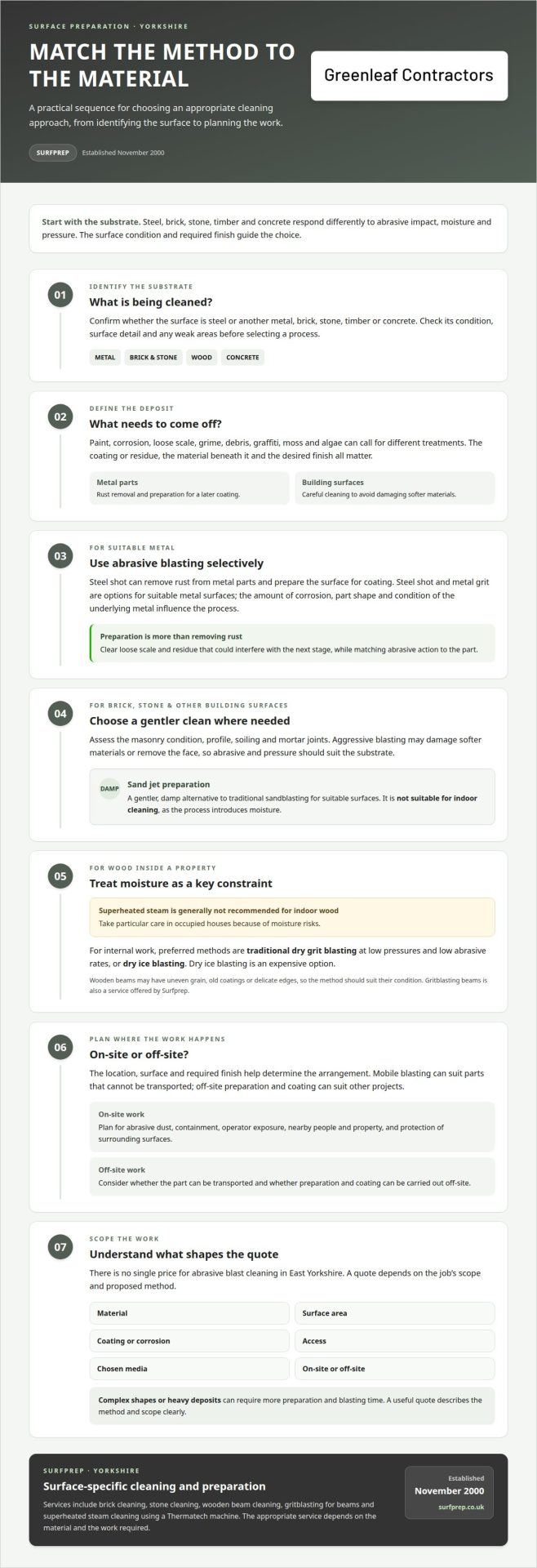
On metal parts, steel shot helps remove rust and prepare the surface for a later coating. Preparation also means clearing loose scale and residue that could interfere with the next stage. The amount of corrosion, the part’s shape and the condition of the underlying metal all affect the process. A detailed assessment helps match the abrasive action to the work, rather than treating every rusty surface alike.
Graffiti, moss and algae removal
Graffiti, moss and algae can cling to building surfaces, but aggressive blasting may damage softer materials. The abrasive and pressure should suit the substrate, especially on brick or stone. Sand jet preparation uses a damp process and offers a gentler alternative to traditional sandblasting for suitable surfaces. Sand jet preparation is not suitable for indoor cleaning. For graffiti, the surface and residue both inform the cleaning method.
Cleaning stone, brick, wood, steel, metal and concrete
The material determines how abrasive cleaning should be carried out. Steel and other metal parts can be treated with abrasive blasting, while brick, stone, timber and concrete need assessment for hardness, condition and surface detail. A method suitable for steel may be too aggressive for softer masonry. Good preparation starts by identifying the substrate and the required finish.
For brick and stone, the aim is to remove unwanted deposits without stripping away the face or damaging mortar joints. The condition of the masonry, its profile and the type of soiling all guide the cleaning choice. A brick cleaning approach can differ from treatment for stone, even when both surfaces carry similar grime. Gentle abrasive cleaning uses a damp process, so it isn’t suitable indoors.
Wood needs particular care because moisture can affect the material. Superheated steam cleaning is generally not recommended for wood inside a property, especially in occupied houses. Wooden beams may also have uneven grain, old coatings or delicate edges, so the method needs to suit their condition. For internal work, dry grit blasting at low pressure and low abrasive rates is preferred; dry ice blasting is another option, though expensive.
Abrasive blasting can suit steel and other metal parts for rust removal and coating preparation. Parts vary in shape and size, so their geometry and corrosion level inform the process. Concrete also needs a surface-specific assessment: exposed aggregate, cracks and previous coatings can affect the finish. Matching the method to the substrate helps avoid treating every material alike.
Abrasive blast cleaning across Yorkshire
Across Yorkshire, the right arrangement depends on the surface, its location and the required finish. On-site and off-site work can suit different projects.
Abrasive media options
Abrasive media vary and must be matched to the substrate and deposits. Steel shot and metal grit are used for suitable metal surfaces; other methods may be more appropriate for delicate materials. Abrasive blasting removes deposits through impact, while chemical stripping uses chemicals to loosen coatings. Shot blasting is one form of abrasive blasting, and soda blasting uses soda media as a separate process.
Choosing a reliable contractor
Ask how the contractor will match the method to your material, coating and desired finish. A sound project plan should explain whether work is on-site or off-site, how dust and surrounding surfaces will be managed, and what preparation follows. In East Yorkshire, available work can include mobile blasting for parts that can’t be transported, alongside off-site surface preparation and coating.
Health and safety requirements
For blasting work in the UK, the plan should address abrasive dust, operator exposure, containment and nearby people or property. Dust can affect visibility and leave residue; impact can damage a weak surface or remove more material than intended. Containment, suitable protective equipment and a method matched to the substrate help manage these risks. Controls should reflect the material and work location.
Costs and quote factors
There is no single price for abrasive blast cleaning in East Yorkshire. A quote depends on the material, surface area, coating or corrosion, access, chosen media and whether work is on-site or off-site. Complex shapes or heavy deposits can require more preparation and blasting time. A useful quote describes the proposed method and scope, so the cost is clearly tied to the work.
For a gentler approach on suitable surfaces, explore sand jet cleaning options.
Surfprep
Established in November 2000, Surfprep brings long-standing practical experience to cleaning and surface preparation projects. Its sand jet machine was originally acquired as a Farrow System in November 2000, reflecting the business’s roots in specialist abrasive cleaning.
For building surfaces, Surfprep provides brick cleaning, stone cleaning and wooden beam cleaning, alongside superheated steam cleaning using a Thermatech machine. Surfprep also offers gritblasting for beams. The appropriate service depends on the material and the work required, so describing the surface and its condition is a useful starting point.
To discuss your project and possible next steps, contact Surfprep.
Plan the right next step for your surface
Before arranging abrasive blast cleaning in East Yorkshire, identify the surface material, what needs removing and the finish you want. These details help establish whether abrasive treatment is appropriate or whether another method better suits the material. For building surfaces, Surfprep provides brick, stone and wooden beam cleaning across East Yorkshire and nearby locations such as Hull, Beverley, York, Leeds and Bradford.
Share the project details and the main concern, such as a coating, corrosion or weathered deposits. That gives the conversation a practical starting point and helps keep the chosen method focused on the surface, not just the visible dirt. If you’re ready to discuss your requirements, contact Surfprep about blast cleaning. A clear description of the work is a good first step towards deciding how to proceed.
Frequently Asked Questions
What can be shot blasted?
Shot blasting is chiefly used on metal parts, including components with rust or old coatings that need removing before further treatment. Steel shot strikes the surface to dislodge deposits. The part’s shape, condition and intended finish help determine whether this process is suitable. Delicate or softer materials need a different assessment because shot blasting can damage their surface.
What is sandblasting?
Sandblasting is a form of abrasive cleaning that directs media at a surface to remove unwanted material. The media can include metal grit, silica or other abrasives; the term doesn’t mean every job uses sand. For example, a coating on a metal component may need a different abrasive approach from grime on masonry. The substrate and the material being removed matter.
Which abrasive blast cleaning companies serve Hull and East Yorkshire?
Surfprep is based in East Yorkshire and provides cleaning and surface preparation services, including brick and stone cleaning, wooden beam cleaning, graffiti removal and industrial surface preparation. Its service locations include Hull, Beverley, York, Leeds, Bradford, Nottingham, Manchester, Derby, Lincoln, Newcastle, Durham and Scarborough. For building cleaning, the suitable method depends on the material and the deposits present.
What materials and surfaces can abrasive blasting clean?
Metal is a common candidate for abrasive blasting, especially when rust or coatings need to be removed. Brick, stone, wood and concrete may also need cleaning, but abrasive impact is not automatically suitable for every surface. A weathered stone façade, for instance, needs a different approach from a steel component. Surface condition, texture and the desired result all affect the method.
How does professional abrasive blast cleaning work, and what should clients do to prepare a surface?
A professional assesses the substrate, deposits, access and desired finish before selecting a method and abrasive. The work then focuses on treating the surface while managing debris and protecting nearby areas. Clients can help by sharing what the material is, what needs removing and whether the item can be moved. Don’t apply coatings or attempt abrasive cleaning beforehand, as this may affect the assessment.
