
A routine exterior wash can be the wrong starting point for a brick façade. The right approach to brick cleaning longlands depends on the brickwork, its condition and what has marked the surface, not simply how dirty it looks. An unsuitable method can erode the brick face or damage mortar, especially on older or weathered walls.
Greenleaf Contractors Ltd has provided cleaning and surface-preparation services since November 2000. Its methods include Thermatech superheated steam and Sand Jet, a low-pressure damp abrasive system. Each has different applications: Sand Jet, for example, is not suitable for indoor work because it introduces moisture. This guide explains what affects method selection, how specialist brick cleaning differs from general exterior washing, and what information helps plan a project in Longlands.
Key Takeaways
- For brick cleaning longlands, note the brick type, its condition, any existing coatings and the visible soiling.
- Cleaning methods act differently on surfaces, so the right choice depends on the masonry, the deposit and whether the work is indoors or outdoors.
- Identify the affected areas and the result you want before planning the work.
- Specialist brick cleaning considers the condition of the masonry rather than treating every façade like a routine pressure-washing job.
Brick cleaning in Longlands: what the brickwork needs before choosing a method
Properties in Longlands can have very different brickwork, so the location alone does not tell you how a wall should be cleaned. Brick type, surface condition, previous coatings and the material causing the marks all affect the choice. A weathered face or friable mortar needs a different assessment from sound brickwork with a localised stain.
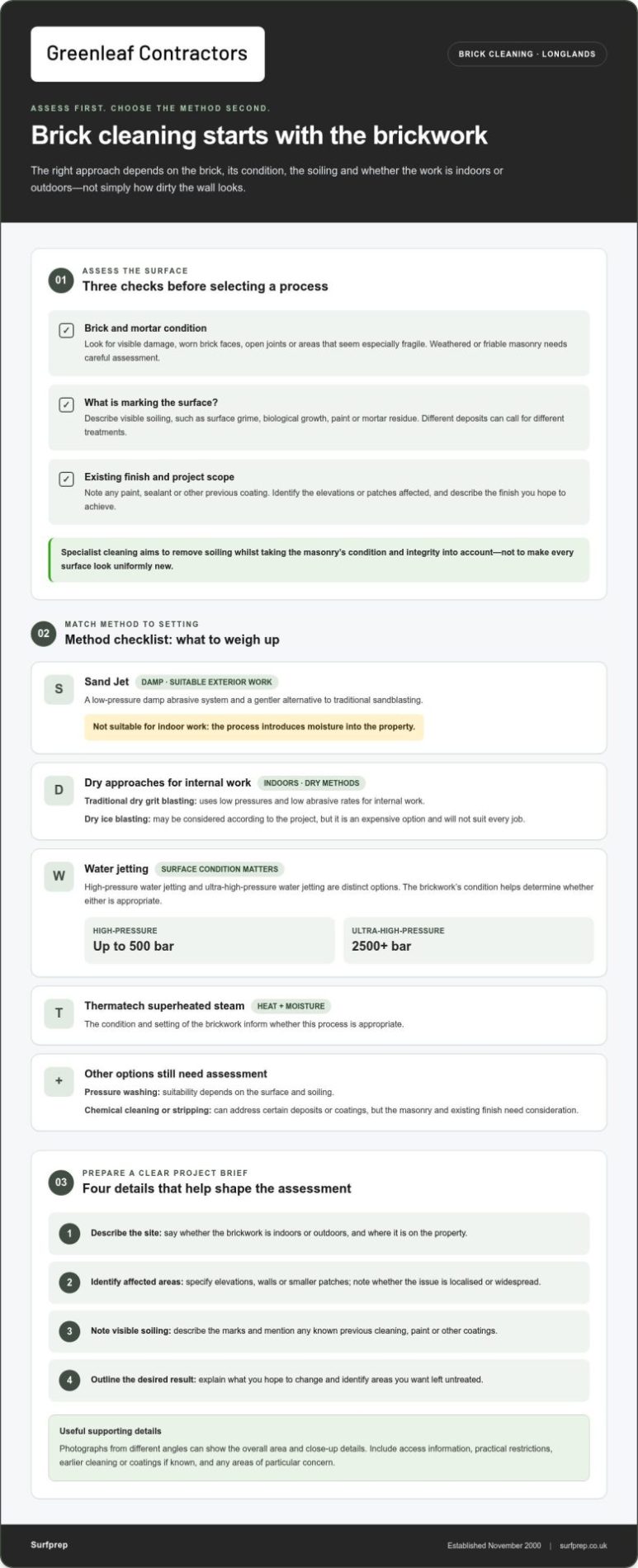
Specialist brick cleaning means choosing a process that removes soiling while taking the masonry’s condition and integrity into account. The aim is not to make every surface look uniformly new. The appropriate treatment depends on what the brick can tolerate and the result the project requires.
What should a brick-cleaning assessment consider?
Start by describing the brickwork and the areas that need attention. Note what the marks look like, where they occur, and whether the wall has paint, sealant or another previous finish. Photographs can show the scale of the work and whether soiling is concentrated around details, joints or a particular elevation.
- Brick and mortar: Look for visible damage, worn faces, open joints or areas that seem especially fragile.
- Soiling: Describe what you can see, such as surface grime, biological growth, paint or mortar residue.
- Scope: Identify the affected elevations or patches and explain the finish you hope to achieve.
Different deposits can call for different treatments. For instance, Hydrochloric acid in brick cleaning is relevant background when considering chemical action on mortar residue, but it does not mean a chemical treatment is suitable for every brick. The material and its condition still matter. Greenleaf’s brick cleaning service is planned around the project, because no single process suits every surface.
Choosing a brick-cleaning method in Longlands without overlooking the risks
For brick cleaning in Longlands, method selection should account for both the deposit and the surface beneath it. A process that removes one type of staining may be unsuitable for fragile brick, worn mortar or a wall with an existing finish. The gentlest effective approach is a sensible starting point when the masonry’s condition is a concern. The National Park Service’s guidance on repointing mortar joints in historic buildings also emphasises care around historic masonry.
- Sand Jet: A low-pressure damp abrasive system and a gentler alternative to traditional sandblasting. Because it is a damp process, it is not suitable for indoor work.
- Traditional grit blasting: An abrasive method. For internal work, dry grit blasting uses low pressures and low abrasive rates.
- Water jetting: High-pressure water jetting, up to 500 bar, and ultra-high-pressure water jetting, at 2500 + bar, are distinct options. The brickwork’s condition matters when deciding whether either is appropriate.
- Pressure washing: A separate cleaning approach. Its suitability depends on the surface and the soiling, not the method’s name alone.
- Thermatech superheated steam: Uses heat and moisture, so the condition and setting of the brickwork inform whether it is appropriate.
- Chemical cleaning or stripping: Can address certain deposits or coatings, but the masonry and existing finish need consideration.
How do damp and dry cleaning approaches differ?
The key distinction is whether the process introduces moisture. Sand Jet is a damp method, making it an option for suitable exterior work, not interior walls. For internal work, traditional dry grit blasting at low pressures and low abrasive rates, or dry ice blasting, may be considered according to the project. Dry ice is an expensive option and will not suit every job. The property setting and the brickwork help determine the appropriate approach. Read more about the Sand Jet cleaning method and how it differs from traditional blasting.
Planning brick cleaning for a Longlands property with Greenleaf Contractors
A clear project brief gives the assessment a practical starting point. Surfprep works with a range of brick-cleaning methods, including Sand Jet, traditional grit blasting, high-pressure and ultra-high-pressure water jetting, pressure washing, Thermatech superheated steam and chemical cleaning or stripping. The right option depends on the brickwork and the work required, rather than the location alone.
Surfprep works across Leeds, York, Hull, Bradford, Nottingham, Manchester, Derby, Lincoln, Newcastle, Durham, Scarborough and Beverley. Wherever the property is, describe the surface and the problem as specifically as possible. To prepare a useful outline:
- Describe the site: Say whether the brickwork is indoors or outdoors and where it is on the property.
- Identify affected areas: Specify the elevations, walls or smaller patches that need attention. Note whether the issue is localised or widespread.
- Note visible soiling: Describe the marks and mention any known previous cleaning, paint or other coatings.
- Outline the desired result: Explain what you hope to change and identify any areas you want left untreated.
What details help shape a Longlands brick-cleaning project?
Photographs from different angles can show both the overall area and close-up details. Include access information, where the surface is situated and any practical restrictions on reaching it. Mention earlier cleaning or coatings if known, and identify areas of particular concern. These details help focus the project discussion on the actual scope and condition, rather than relying on a broad description alone.
Surfprep’s brick cleaning services are planned around the property and the work involved. The Sand Jet cleaning method is one option within its wider range of approaches. The expected result and timescale depend on the specific brickwork and project requirements, so they should be considered in that context rather than assumed in advance.
Take the next step with confidence
Before arranging brick cleaning in Longlands, consider what matters most about the finished appearance: removing a distracting mark, improving the look of a frontage or preparing brickwork for another stage of property work. It is also useful to decide whether the priority is one patch or a broader area, so the project discussion can focus on the scope that suits your property.
Bring together your observations and photographs, then discuss the site and your intended result with Greenleaf Contractors. This gives the project a practical starting point and helps shape next steps around the actual brickwork, rather than assumptions about what it needs. Talk with Greenleaf Contractors about your brick-cleaning project to discuss the right approach for your property.
Frequently Asked Questions
Can brick cleaning remove paint from brickwork?
Paint can sometimes be removed from brickwork, depending on the coating and the condition of the surface beneath it. Chemical cleaning or stripping may be considered, but the treatment needs to suit both the paint and the masonry. For a Longlands property, describe whether the paint covers a whole elevation or appears in isolated patches. That helps clarify the extent of the work.
Could brick cleaning damage bricks or mortar?
An unsuitable cleaning process can harm brick faces or mortar joints, particularly if the masonry is already deteriorated. Powdery brick surfaces, loose mortar or flaking areas are useful warning signs to mention before work is planned. A careful assessment helps inform method selection, but cleaning cannot repair existing damage. The aim is to address the soiling without treating vulnerable brickwork as if it were sound.
How long does brick cleaning take?
There is no fixed duration for a brick-cleaning job. The time depends on the area being treated, access to the wall, the type and extent of soiling, and the process selected. A small, accessible section differs from a large façade with several types of deposits. Sharing photographs and outlining the scope helps Greenleaf Contractors understand the project and plan the work.
