
White deposits on brickwork often point to moisture, not ordinary dirt. Efflorescence forms when moisture moves through masonry, dissolves naturally occurring salts and leaves them on the surface as it evaporates. For brick cleaning in Leeds, identifying whether marks are salt, pollution, carbon deposits or organic growth helps determine the right approach; efflorescence may return if the source of moisture remains.
It’s understandable to want stained masonry cleaned without harming the brick beneath it. The right method depends on the building and the surface, so older or softer brickwork may need a gentler approach than robust modern masonry. This article explains what causes efflorescence, how cleaning methods suit different buildings, and how dirt, pollution and carbon staining can be removed. It also looks at cleaning brick alongside stone and other surfaces, so you can understand what a careful assessment considers before work begins.
Key Takeaways
- Learn how to distinguish pollution and carbon staining from algae, moss and other surface deposits before deciding on treatment.
- See why cleaning pressure and technique should suit the brick’s age, condition and mortar.
- Understand what to consider when cleaning stone as well as brick, including the sensitivity of natural surfaces.
- Find out when superheated steam cleaning can help restore stained masonry and when another approach may be more suitable.
Removal of dirt, pollution and carbon staining
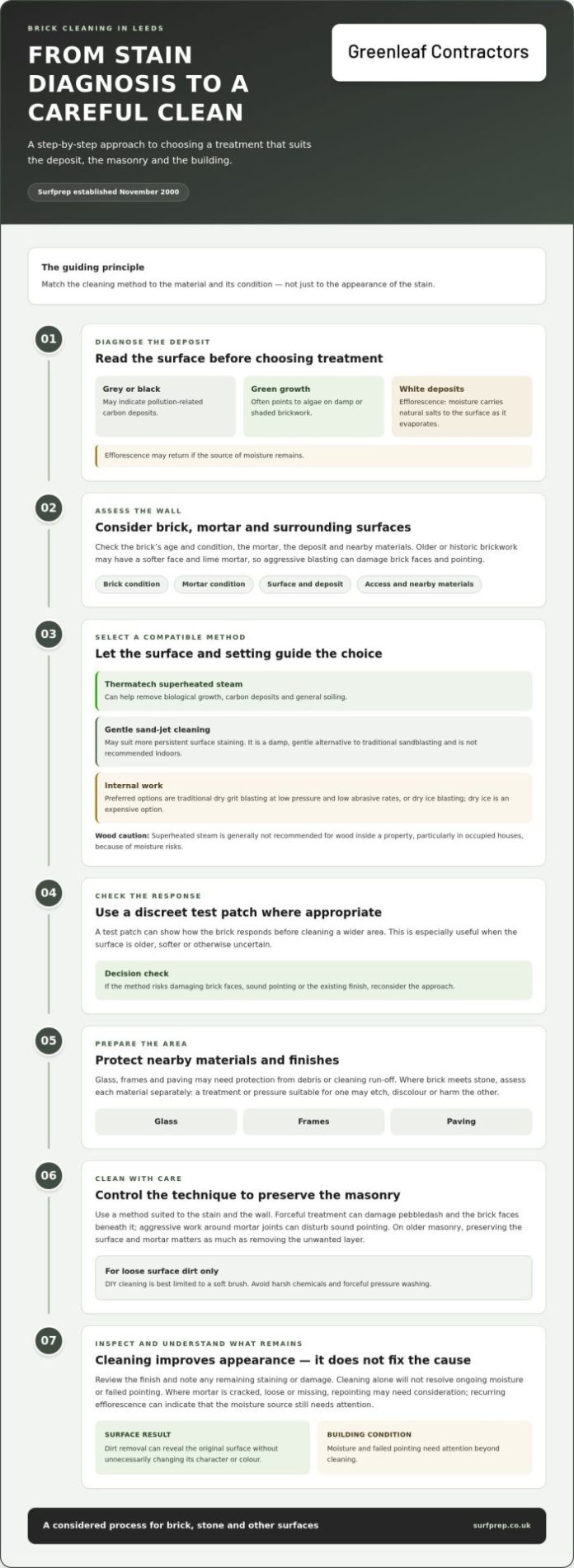
When planning masonry restoration, identify the stain before choosing a treatment. Grey or black deposits may be pollution-related carbon, while green growth often points to algae on damp or shaded brickwork. Efflorescence is different: moisture travels through masonry, dissolves naturally occurring salts, then leaves them on the surface as it evaporates. Cleaning can improve the appearance, but salts may return if the moisture source remains.
Moss and other biological growth can build up as environmental conditions affect the wall. Superheated steam cleaning with a Thermatech machine can help remove biological growth, carbon deposits and general soiling. For more persistent surface staining, gentle abrasive cleaning with a sand jet may be suitable. This damp process isn’t recommended for indoor work. The method must suit the brick, not just the stain.
Paint, render, pebbledash and old mortar need careful assessment before removal. Forceful treatment of pebbledash can damage the brick faces beneath it, while aggressive work around mortar joints can disturb sound pointing. On older masonry, preserving the brick’s surface and existing mortar matters as much as removing the unwanted layer. Brick restoration should reveal the masonry without stripping away its character or changing its colour unnecessarily.
A practical cleaning service considers the deposit, the brick condition and the surrounding surfaces before work starts. Glass, frames and paving may need protection from debris or run-off. See the brick cleaning approach for an overview of methods used on masonry. This helps set realistic expectations: removing dirt can reveal the original surface, but cleaning alone won’t resolve ongoing moisture or failed pointing.
Choosing a cleaning method for the brick and building
For old and historic brickwork, choose a low-pressure method suited to softer bricks and lime mortar. Aggressive blasting can damage brick faces and pointing, particularly where weather has weakened the surface. Superheated steam cleaning or carefully controlled gentle abrasive cleaning may suit different deposits, but the wall’s condition should guide the choice.
DIY cleaning is best limited to loose surface dirt: use a soft brush and avoid harsh chemicals or forceful pressure washing. For paint, soot or algae across a larger area, a professional assessment can match the method to the stain and masonry. A test patch can show how the brick responds before cleaning a wider area.
In Leeds, consent depends on more than location. Listed status, conservation controls and whether the proposed work changes a building’s character all matter. Establish the property’s designation and seek relevant local guidance before starting.
Brick cleaning in Leeds should account for brick type, mortar condition, access and the cause of staining. A suitable process can remove surface deposits, but it won’t repair failed pointing or stop moisture entering through damaged joints. Consider repointing where mortar is cracked, loose or missing.
Customer reviews can describe individual experiences, but they don’t establish which method suits a particular wall. Read them alongside evidence that the approach considers the brick, pointing and building period. A brickwork cleaning assessment can help identify suitable treatment before work proceeds.
Surfprep uses low-pressure methods on Victorian and Edwardian properties to help avoid damaging softer lime mortars and handmade bricks. The right choice depends on the building materials, brick colour, age, condition and environmental considerations.
Cleaning brick, stone and other surfaces
Brick and stone need cleaning methods suited to their material and existing finish. Natural stone can react badly to acids, pressure or abrasive tools, while older brick may have a softer, more porous face. A specialist assesses the surface, deposit and condition before choosing a method, rather than applying one treatment to every exterior.
A practical process starts by identifying the stain and inspecting the wall, mortar and nearby materials. Next, select a compatible method and, where appropriate, test a discreet area. Superheated steam can lift biological growth and general soiling; a carefully selected chemical treatment may suit particular deposits. Gentle abrasive cleaning is another option, but it removes some surface material, so it must be suitable for the masonry.
The time needed for brick cleaning depends on the area, access, deposits and method. Work typically involves assessment, preparation and cleaning, followed by inspection of the finish. A large façade with stubborn staining takes longer than a small, accessible section with light soiling; drying and any repairs also affect the overall schedule.
For a frontage combining brick and stone, treat each material separately. A chemical that suits one may etch or discolour the other, and pressure tolerated by sound brick may harm delicate stone. Protecting nearby glass, frames and paving also helps prevent marks from cleaning run-off.
Choose professional brick cleaning when the masonry is historic, fragile, heavily stained or difficult to access. The useful takeaway is simple: match the cleaning method to the material, not just the appearance of the dirt.
Surfprep: Brick cleaning
Established in November 2000, Surfprep provides brick cleaning for stained masonry, matching the treatment to the brick and deposits present. For biological growth and general soiling, superheated steam cleaning with a Thermatech machine can offer a controlled approach; the suitable method depends on the surface condition. Surfprep also cleans stone and wooden beams, each requiring a considered treatment.
If efflorescence keeps returning, cleaning can remove visible salts, but the underlying moisture source needs attention too. Where brickwork is fragile, heavily stained or difficult to assess, Surfprep can help determine a suitable approach before work begins, considering the masonry’s condition as well as its appearance.
To discuss stained brickwork, contact Surfprep about brick cleaning.
Plan the next step for your masonry
Before arranging brick cleaning in Poplar, consider the finish you want and which areas need attention. Clear photographs of the stained sections, access points and any nearby stonework can help describe the work. For older masonry, the aim is not simply to change its appearance, but to choose an approach that respects its condition and finish.
Surfprep works with brick and stone, and also cleans wooden beams. That range can be useful when a property has more than one surface requiring care, though each material needs an appropriate approach. If you’re ready to discuss the masonry, contact Surfprep about brick cleaning. A considered first conversation can help you move from visible staining towards a suitable next step.
Frequently Asked Questions
What causes efflorescence on bricks?
Efflorescence appears when water carries soluble salts towards a brick’s surface, then evaporates and leaves a pale, powdery deposit. Its crystalline or dusty appearance is a useful clue, unlike the soft green texture of algae. Gently brush a small dry area to inspect it. If deposits keep reappearing, look for damp patches, leaking gutters or other moisture routes.
What is the brick cleaning cost per square metre in Poplar?
There isn’t one reliable rate for every Poplar property. The price depends on the job and is provided after a quote request. Factors include the area to clean, access, brick type, masonry condition and suitable method. A narrow rear passage or complex façade may involve different requirements from an open, accessible wall.
What affects brick cleaning quotes?
Quotes reflect the surface area, access, brick type, masonry condition and treatment needed. Stubborn paint, soot or layered deposits may require a different method from ordinary surface dirt. Share clear photographs and explain which elevations need attention to describe the scope; a site assessment can establish details that photographs cannot show.
Do I need planning permission or listed-building consent to clean brickwork in Poplar?
Check the property’s listed status and any conservation controls, and consider whether the work would change its character. Seek relevant local guidance before starting.
