
The best anti-graffiti protection for a brick wall may be no coating at all. If graffiti is affecting your property, it’s understandable to want a lasting fix, but the right choice depends on the brick, its finish and how it can be cleaned in future. For brick graffiti removal leeds property owners need a method that addresses the paint without causing avoidable surface damage.
This article explains what to consider when comparing sacrificial and permanent coatings with specialist removal alone, and what details to gather before commissioning work. You’ll learn why coating compatibility and future maintenance matter, and why the cleaning method should suit the wall and its setting. Surfprep provides brick cleaning and graffiti removal, using methods that may include superheated steam cleaning with Doff technology. Coating supply and application aren’t confirmed services, so before deciding how to proceed, ask a coating supplier to explain what is suitable for your wall.
Key Takeaways
- Check the brick’s condition, existing finish and desired appearance before deciding whether a protective coating is suitable.
- Ask the coating supplier to confirm compatibility, any change to the wall’s appearance, maintenance needs and how future graffiti will be removed.
- For brick graffiti removal leeds, gather photographs, the site location, any details you know about the brick and information about access.
- Surfprep can discuss brick cleaning and graffiti removal options, but coating supply or application isn’t a confirmed service.
Brick graffiti removal in Leeds: when should you consider a coating?
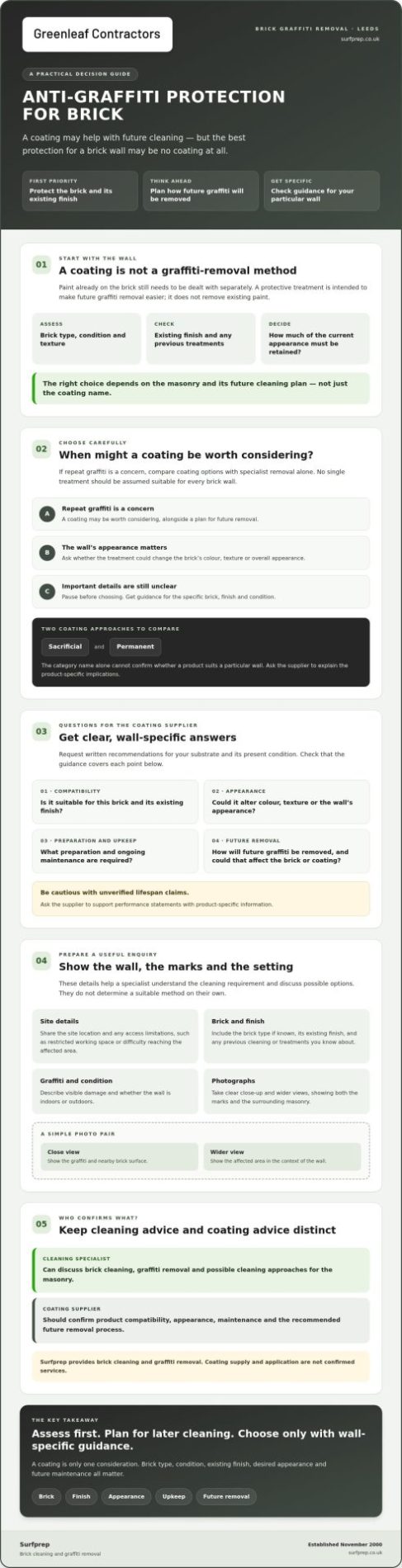
An anti-graffiti coating is a protective treatment intended to make future graffiti removal easier. It isn’t a removal method: paint already on the wall still needs to be dealt with separately. A coating may be worth considering if repeat graffiti is a concern, but it isn’t automatically the right next step for every brick building.
The right option depends on the wall and its future cleaning plan, not the coating name. Brick type, condition and existing finish all matter, as does the appearance you want to retain. A treatment that changes the look of the masonry may not suit a wall where preserving its current finish is a priority. The anti-graffiti coating overview describes sacrificial and permanent approaches, but a category name alone can’t confirm suitability for a particular wall.
For brick graffiti removal leeds property owners should consider both the immediate cleaning and what would happen if the wall is targeted again. Surfprep provides brick cleaning and graffiti removal, and can discuss possible cleaning approaches for the masonry. You can read more about its brick cleaning services; coating supply or application isn’t a confirmed service.
Can every brick wall take an anti-graffiti coating?
No single treatment should be assumed suitable without assessing the substrate and its condition. Brick can vary in texture, porosity and existing finish, and damage or previous treatments may affect how a coating behaves. Ask the coating manufacturer to confirm compatibility for the specific brick and finish, whether the treatment will alter the wall’s appearance, what maintenance it requires and how future graffiti removal is expected to work.
If those details aren’t clear, pause before choosing a coating. A cleaning specialist can discuss the brick and removal options, while the manufacturer should confirm coating-specific claims.
How to compare anti-graffiti coatings for brick walls in Leeds
Judge a coating by how it suits the specific masonry and how the wall can be cleaned later, not by broad claims on a label. For a Leeds site, gather the brick type if known, details of its existing finish and clear photographs. This gives the coating supplier useful context for written product guidance, rather than a general assurance that may not apply to your wall.
Ask the supplier to explain how the proposed treatment could affect the brick’s appearance, what preparation it requires and what upkeep is recommended. Most importantly, establish how future graffiti would be removed and whether that process could affect the brick or coating. The National Park Service’s Removing Graffiti from Historic Masonry offers additional background on the care needed when treating masonry; it is a US reference, not UK-specific guidance.
What should you ask before choosing a brick coating?
Request written recommendations for your particular substrate and its present condition. Check that the guidance covers:
- Compatibility with the brick and any existing finish.
- The likely change to the wall’s colour, texture or appearance.
- Preparation and ongoing maintenance requirements.
- The recommended method for removing future graffiti, including any effect on the treatment.
Check the brick, finish, appearance, upkeep and future removal method before choosing a coating. Avoid relying on an unverified lifespan claim; ask the supplier to support any performance statements with product-specific information.
For practical context on cleaning masonry, see Surfprep’s brick cleaning service. Surfprep provides brick cleaning and graffiti removal, and can discuss the wall and possible cleaning approaches. To talk through a brick cleaning or graffiti removal enquiry, contact Surfprep. Coating supply and application aren’t confirmed services.
The next step for graffiti removal from brick in Leeds
A clear enquiry helps a specialist understand the wall before discussing suitable cleaning options. For brick graffiti removal leeds, share the site location, the brick type if you know it, and photographs showing the graffiti and the surrounding masonry. Include any access limitations, such as restricted working space or difficulty reaching the affected area.
What information helps assess graffiti on a brick wall?
Note whether the wall is indoors or outdoors, describe any visible damage, and mention previous cleaning or treatments if known. Take clear photographs from close up and further back, so the marks and the wider condition of the brick can both be seen. These details help Surfprep discuss the cleaning requirement, though they can’t determine a suitable method on their own.
Depending on the brick, its condition and the setting, a specialist may assess whether superheated steam cleaning with Doff technology or gentle abrasive cleaning using the sand jet is appropriate. Neither method is guaranteed to suit every wall, and the sand jet should not be used indoors.
Share the details and ask what cleaning approach may be suitable for your wall. Surfprep can discuss its brick cleaning and graffiti removal services; coating supply or application isn’t confirmed. To start the conversation, contact Surfprep about brick graffiti removal.
Choose the next step with confidence
A coating isn’t automatically the best answer for graffiti on brick. The wall’s condition, existing finish and desired appearance should guide the decision, alongside a clear plan for future cleaning. Before committing to a treatment, ask the supplier to confirm compatibility, maintenance needs and the recommended removal method in writing.
For brick graffiti removal leeds, share the site location, photographs, known brick details and any access constraints so the cleaning requirement can be discussed. Surfprep is based in East Yorkshire and provides brick cleaning and graffiti removal. The team can discuss those services, though coating supply and application aren’t confirmed offerings.
Ready to discuss the wall and possible cleaning options? Contact Surfprep about brick graffiti removal in Leeds. A clear assessment is a sensible first step towards choosing an approach that respects the brick. Surfprep also serves properties in York, Hull, Bradford, Nottingham, Manchester, Derby, Lincoln, Newcastle, Durham, Scarborough and Beverley.
Frequently Asked Questions
Can anti-graffiti coating be used on every type of brick?
Not necessarily. Suitability depends on the brick’s type, its condition and any existing finish, as well as the coating’s written product guidance. Before treatment, ask the manufacturer to confirm compatibility for the specific wall and explain any likely change to its appearance or maintenance needs. If the brick is damaged or has been treated before, include that information in the assessment.
Is anti-graffiti coating better than removing graffiti from brick?
Neither option is universally better: graffiti removal deals with marks already on the wall, whilst a coating is a protective treatment intended to affect future cleaning. For brick graffiti removal leeds, consider the brick’s condition and whether repeat incidents justify planning protection. Compare likely maintenance and the future removal process, then choose what suits the wall rather than assuming every brick needs a coating.
How do I choose an anti-graffiti coating for a brick wall in Leeds?
Ask the supplier to confirm in writing that the coating is compatible with your brick and its existing condition. Check what finish or appearance changes to expect, what upkeep is recommended and how future graffiti would be removed. Share photographs and details of any previous treatments so the wall can be assessed. Don’t rely on broad claims without product-specific guidance.
Can Surfprep apply anti-graffiti coating to my brick wall?
Anti-graffiti coating application isn’t a confirmed Surfprep service. Surfprep does provide brick cleaning and graffiti removal. Share the location, clear photographs, brick details if known, whether the wall is indoors or outdoors, and any access constraints to discuss the cleaning requirement. Based in East Yorkshire, Surfprep serves Leeds, York, Hull, Bradford, Nottingham, Manchester, Derby, Lincoln, Newcastle, Durham, Scarborough and Beverley.
