
Brick can be painted, but only when it’s clean, dry and in sound condition. A fresh coat won’t remove dirt, algae or loose mortar. It may instead adhere poorly and make underlying problems harder to see. That’s why you shouldn’t paint over dirty brick: proper preparation gives the coating a clean, stable surface to bond to.
Painting can change the look of brick, but it also covers some of its natural texture and requires upkeep over time. This guide explains when brick is suitable for painting, how to prepare it and what to consider when choosing compatible, breathable masonry paint. You’ll also learn why damp, damaged or crumbling brick needs attention before any coating is applied.
Key Takeaways
- Brick can be painted, but the surface needs to be clean, dry and sound before coating begins.
- Choose masonry paint that suits the brick, existing finish and exposure to British weather, while allowing moisture vapour to pass through.
- Repair damaged mortar and address damp before painting; a coating can conceal defects rather than fix them.
- Match the cleaning and preparation method to the brick’s condition to avoid damaging the surface before painting.
Choosing compatible, breathable masonry paint
Brick can be painted, but the coating must suit the masonry and its existing finish. Paint applied over dirt, dust, soot or algae can adhere poorly and leave a patchy appearance. That’s why you shouldn’t paint over dirty brick.
Brick breathability and moisture release
Brick breathability is its ability to let moisture vapour pass through the masonry and escape from the surface. A coating that restricts this movement can trap moisture in the wall instead of allowing it to evaporate. This matters on exposed brickwork, where trapped moisture can contribute to deterioration, particularly when it freezes.
Consider the wall’s age, condition and exposure before choosing a finish. Older walls benefit from breathable, flexible coatings, while sandstone is often better left unpainted so it can breathe. The existing coating matters too: a new paint system must be compatible with it to avoid uneven adhesion.
Breathable paint options
Breathable masonry paint is formulated for brick and allows moisture vapour to pass through the coating. For exterior walls, choose paint designed for outdoor use and suited to British weather, including rain, frost and temperature changes. Match it to the existing finish rather than choosing by colour alone.
Limewash, made from lime putty, water and pigment, allows brick to breathe. Milk paint is another natural, mineral-based option used on older brick buildings. Mineral paints bond chemically to brick without forming a film, helping preserve breathability. Each gives a different appearance, so consider how much of the brick’s character and texture you want to retain.
Before choosing a coating, use suitable brick cleaning to remove surface deposits and prepare the masonry for painting.
Can brick be painted?
Yes, brick can be painted, but the wall must be dry and in sound condition first. Avoid painting historic or listed brickwork until its condition, existing finish and effect on its character have been assessed.
Moisture trapped beneath paint
Paint can trap moisture in porous brick by restricting the release of water vapour. If moisture remains inside the wall, freezing conditions can cause the brick’s outer layer to flake or crack. Exterior walls face rain and changing temperatures, so a coating that limits drying can increase the risk of deterioration.
Look for blistering or bubbling paint and eroded mortar joints. These signs can point to water damage beneath the coating, though they don’t identify its source. Painting over damp brick can also leave the new finish peeling or bubbling. Resolve the damp problem and let the masonry dry before applying paint.
Checking brick for damp
A damp check involves looking for signs of moisture and assessing whether the brick is dry enough to coat. Inspect the wall for peeling or blistered paint, crumbling mortar and patches that remain damp. Check both the exterior surface and accessible interior areas, since moisture may affect more of the wall than the visible patch.
Don’t treat paint as a repair for damp or damaged masonry. If you’re looking to prepare a brick surface, appropriate brick cleaning can remove surface contamination, but it won’t resolve an underlying moisture problem. Once the cause is addressed, allow the wall to dry completely before painting.
Preparing brick before painting
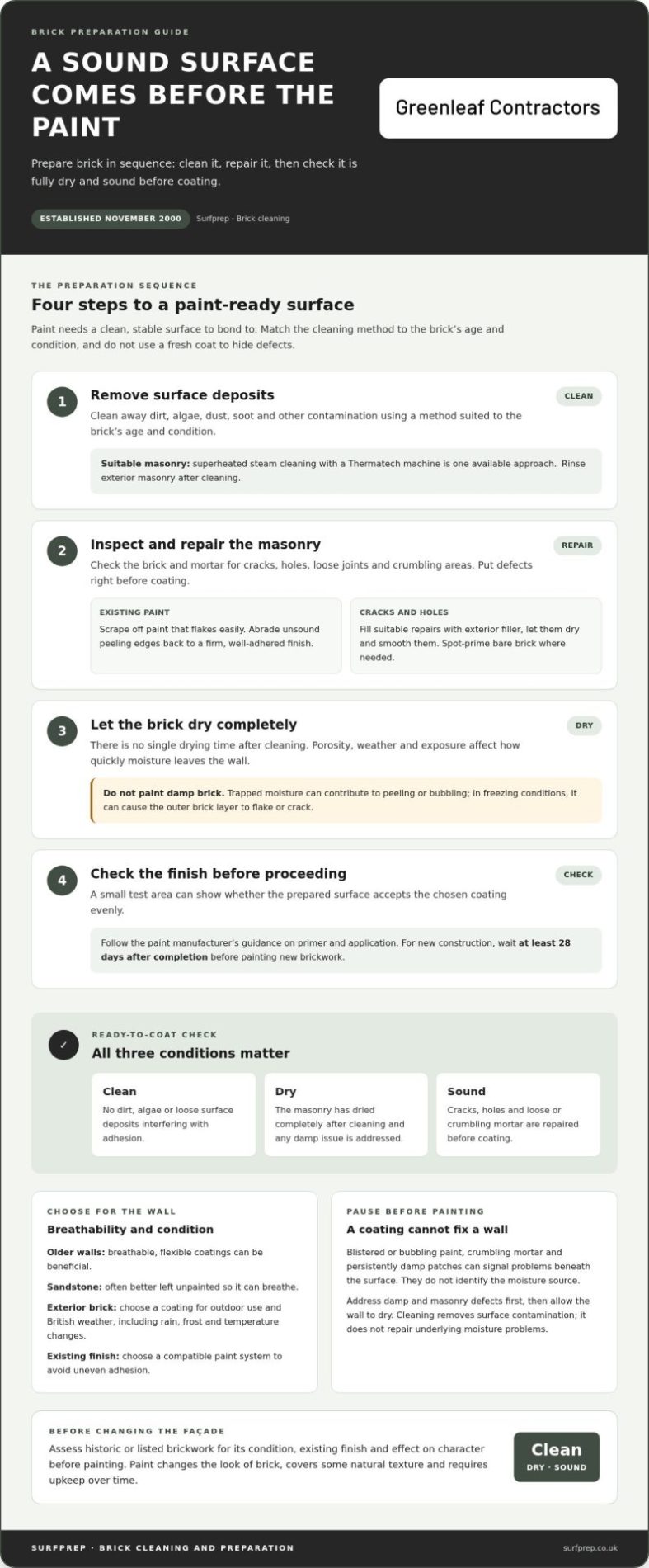
Preparation means removing contamination, correcting defects and creating a stable surface for paint. Dirt, algae, pollution and loose coatings can interfere with adhesion, so painting over them risks an uneven finish rather than a sound result.
Work through the wall methodically:
- Remove dirt, algae and other surface deposits using a method suited to the brick’s age and condition. Rinse exterior masonry after cleaning, then let it dry completely.
- Inspect the brickwork and mortar. Repair cracks, holes and loose or crumbling joints before coating; paint cannot strengthen damaged masonry.
- Scrape away paint that flakes easily. Where existing paint peels, abrade unsound edges back to a firm, well-adhered finish.
- Fill suitable cracks and holes with an exterior filler, allow it to dry, then smooth the repair. Spot-prime bare brick with a masonry primer where the surface needs it.
How long should brick dry after cleaning before painting? There’s no single drying time: wait until the brick is completely dry. Porosity, weather and exposure affect how quickly moisture leaves the wall, so don’t rely on a fixed number of hours.
New brickwork also needs time to settle before painting. For new construction, wait at least 28 days after completion. A small test area can help reveal whether the prepared surface accepts the chosen coating evenly; follow the paint manufacturer’s guidance on primer and application.
For help preparing a brick surface for painting, explore brickwork cleaning and preparation.
Surfprep: Brick cleaning
Established in November 2000, Surfprep cleans brickwork to remove surface contamination that could interfere with a coating’s adhesion. The method should suit the brick’s condition and the deposits present, preparing the surface without causing avoidable damage. For suitable masonry, superheated steam cleaning with a Thermatech machine is one available approach.
Cleaning is preparation, not a fix for damp, loose mortar or crumbling brick. Those issues need attention before paint is applied, and the wall must dry completely after cleaning. This helps distinguish a clean surface from underlying problems that a fresh coat could conceal.
If you’re planning to paint brick and need help with its preparation, contact Surfprep.
Make the next step a considered one
Before changing a brick façade, decide whether a painted finish suits the building’s character and the upkeep you’re prepared to manage. The practical reason why you shouldn’t paint over dirty brick is simple: a coating needs a properly prepared surface to adhere well. Covering contamination doesn’t solve the underlying problem.
If brick needs cleaning before you choose a finish, Surfprep provides brick and stone cleaning, as well as wooden beam cleaning. The right approach depends on the material and its condition, so preparation starts with the surface itself, not a coat of paint.
For guidance on your next step, contact Surfprep for painting advice. A considered decision now can help you protect the masonry and choose a finish you’re comfortable living with.
Frequently Asked Questions
What happens to the building when you paint it?
Painting changes a building’s appearance and can make its brickwork look more uniform. The original variation in colour and texture becomes less prominent, though the brick’s surface detail may still show through. Paint can also make mortar joints harder to inspect, so defects may be less visible beneath the finish. Expect to maintain the painted surface over time, especially where soot or weather marks affect its appearance.
Why should you clean brick before painting it?
Cleaning removes deposits that can prevent paint from bonding evenly to brick. Algae on a shaded garden wall or soot around a chimney, for example, can leave areas with different surface conditions. If these deposits remain, the coating may look patchy or fail to adhere properly. Cleaning also makes it easier to spot defects that need attention before painting, rather than finding them after the new finish is applied.
How do you clean brick before painting in the UK?
Choose a cleaning method that suits the brick’s age, hardness and condition. Remove surface deposits without excessive pressure or force, as unsuitable pressure washing or scraping can damage brickwork. Rinse exterior masonry after cleaning and let it dry fully before coating. For brickwork in Leeds, York, Hull, Bradford, Nottingham, Manchester, Derby, Lincoln, Newcastle, Durham, Scarborough or Beverley, the same principle applies: match the method to the masonry, not just the visible stain.
How can you tell if brickwork is damp or affected by efflorescence?
Damp brickwork may show persistent dark patches, peeling paint or bubbling, while efflorescence usually appears as a pale, powdery deposit on the surface. Efflorescence is caused by salts carried towards the face of the masonry as moisture moves through it. These signs can overlap, so a white deposit alone doesn’t prove the wall is dry. Note whether marks return after cleaning or worsen in particular areas.
Can paint trap moisture in brick and cause damage or peeling?
Yes. A coating that restricts moisture movement can trap water within porous brick. In cold conditions, that moisture may freeze and contribute to flaking or cracking on the brick’s outer face. Moisture beneath paint can also cause blistering, bubbling or peeling. These symptoms point to a problem beneath the finish, so repainting over them can conceal rather than resolve the cause.
