
A chemical-free clean can still damage brick, stone or timber if the method is too forceful or introduces moisture where it shouldn’t. The right chemical-free alternatives to pressure washing depend on the surface, its condition and the setting, not simply on avoiding cleaning products.
If you’re comparing steam, damp abrasive cleaning and other options, consider two separate factors: whether cleaning chemicals are used, and how much pressure, abrasion or moisture reaches the material. This practical UK guide explains what to check for brick, stone and timber, why a method that sounds gentle isn’t automatically suitable, and when specialist advice can help you avoid preventable damage.
Surfprep provides brick and stone cleaning, wooden beam cleaning using superheated steam (Doff) technology, and gentle abrasive cleaning with a sand jet. The right method depends on the surface and site, so an assessment should come before choosing a process. Here’s how to compare the options and what information to gather before asking for advice.
Key Takeaways
- “Chemical-free” describes the cleaning products used, not the full environmental impact. Pressure washing can use water alone.
- Compare chemical-free alternatives to pressure washing by material, location and surface condition, rather than assuming any method suits every surface.
- For indoor cleaning, consider whether a damp method could introduce unwanted moisture. Low-pressure, low-abrasive dry grit blasting or dry ice blasting may be worth discussing with a specialist.
- Before requesting an assessment, note the material, location, staining and any previous treatments so the method can be considered in context.
Chemical-free alternatives to pressure washing: what the phrase really means
“Chemical-free” usually means a cleaning method avoids added cleaning chemicals. It doesn’t guarantee zero environmental impact: water use, debris and runoff still matter. Nor does pressure washing necessarily involve chemicals. The term describes how water is applied, not what’s added to it. Pressure washing uses a pressurised water jet to clean surfaces and can be carried out with water alone.
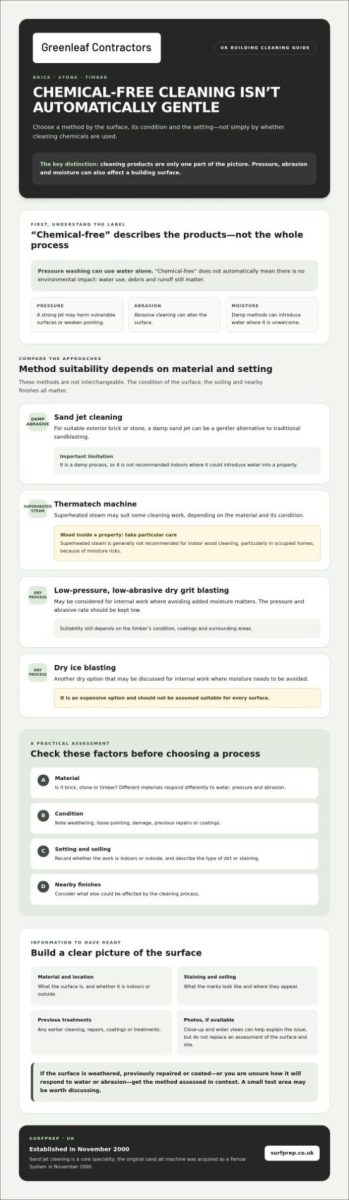
That distinction matters when choosing between chemical-free alternatives to pressure washing. Avoiding a cleaning agent may address concerns about chemical use, but force, abrasion and moisture can still affect a building. A strong jet may harm a vulnerable surface or weaken pointing. Abrasive cleaning can alter the surface, while damp cleaning can introduce moisture where it’s unwelcome. The risks depend on the method, how it’s applied and the material’s condition.
Does chemical-free automatically mean safer for a building?
No. Chemical use is only one part of the decision. Before choosing a method, consider:
- Material: Brick, stone and timber respond differently to water, pressure and abrasion.
- Condition: Weathering, loose pointing, previous repairs or coatings can affect how a surface responds.
- Soiling and setting: The type of dirt, and whether the work is indoors or outdoors, can change what’s suitable.
There’s no single cleaning method that’s appropriate for every surface. A useful assessment considers the material and the site, including the condition of the surface and any nearby finishes that could be affected. When comparing options, ask what the method will expose the material to, not just whether it uses cleaning products. The next step is to compare the methods against the surface you need cleaned rather than relying on the “chemical-free” label alone.
How to choose a chemical-free cleaning method for brick, stone or timber
Start with the material, then check its condition, the type of soiling and whether the work is indoors or outside. A sound exterior surface may respond differently from weathered brickwork, friable stone or timber inside an occupied home. The chemical-free alternatives to pressure washing aren’t interchangeable. Before selecting a process, identify what needs cleaning and whether the surface has repairs, coatings or areas of damage.
Which methods may suit exterior brick, stone and interior timber?
For suitable exterior brick or stone, a damp sand jet can offer a gentler alternative to traditional sandblasting. It still uses abrasive material and introduces water, so it isn’t recommended indoors. Ask how the method would be matched to the material and its condition. Read about sand jet cleaning and why the method needs to suit the surface and site.
Superheated steam cleaning using Doff technology may suit some cleaning work, depending on the material and its condition. It shouldn’t generally be used on wood inside a property, particularly an occupied home, where added moisture is a concern. For timber, see Surfprep’s wood cleaning information, bearing in mind that suitability still depends on the specific setting.
For internal work where moisture needs to be avoided, low-pressure, low-abrasive dry grit blasting may be considered. Dry ice blasting is another dry option, but it’s expensive. Neither should be treated as automatically safe: the timber’s condition, any coatings and the surrounding areas all affect the choice. Ask a specialist to explain the risks and whether a test area is appropriate.
Surfprep offers brick and stone cleaning, wooden beam cleaning, superheated steam cleaning and sand jet cleaning. When comparing its cleaning services with other options, focus on how the method will suit the material and site rather than choosing by label alone.
When to ask a UK cleaning specialist about pressure-washing alternatives
Ask for an assessment if the surface is weathered, previously repaired or coated, or if you’re unsure how it will respond to water or abrasion. Before making an enquiry, note whether it’s brick, stone or timber, where it’s located, what the staining looks like and what treatments have already been used. Include close-up and wider photos if available. They can help explain the issue, but don’t replace an assessment of the surface and site.
What should you ask before work begins?
Ask the contractor to explain why the proposed method may suit the material and its condition. Useful questions include whether a small test area is appropriate, how the work will account for nearby finishes, and how indoor moisture or other site conditions will be managed. If the work is inside, clarify whether the method introduces moisture and what that means for the material and surrounding area.
For brick projects, review the available brick cleaning service information; stone needs its own assessment too. The right approach depends on the specific surface, so a method that suits one building may not suit another.
Surfprep is based in East Yorkshire and provides cleaning and restoration services for properties and sites in Leeds, York, Hull, Bradford, Nottingham, Manchester, Derby, Lincoln, Newcastle, Durham, Scarborough and Beverley. Its work includes brick and stone cleaning, wooden beam cleaning, superheated steam cleaning using Doff technology, and sand jet cleaning. Sharing the material, location, staining and any previous treatments helps the team understand the job before considering which chemical-free alternatives to pressure washing may be suitable.
Choose a cleaning approach that suits your property
The best chemical-free alternatives to pressure washing are chosen for the surface and setting, not just the absence of added cleaning products. Pressure, abrasion and moisture can all affect brick, stone and timber, so don’t assume a method is suitable without considering the material’s condition. A damp sand jet may suit some exterior work, but it isn’t recommended indoors. Superheated steam also needs careful consideration around timber inside a property.
Surfprep’s cleaning and restoration services include brick and stone cleaning, wooden beam cleaning using superheated steam (Doff) technology, and sand jet cleaning. The suitability of any method depends on the specific surface and site, so share the details before settling on an approach.
To discuss a particular surface and arrange an assessment, contact Surfprep.
Frequently Asked Questions
Is pressure washing chemical-free?
Pressure washing can be chemical-free if it uses water alone, but the method doesn’t automatically exclude cleaning agents. The term describes the water-based cleaning approach, not whether detergents are added. Even without chemicals, pressure and runoff can affect surfaces and surroundings, so consider the material, its condition and where the water will go before choosing this method.
What is the best chemical-free alternative to pressure washing brick?
There isn’t one best method for every brick surface. For suitable exterior brickwork, options may include superheated steam cleaning using Doff technology or damp sand jet cleaning, a gentler alternative to traditional sandblasting. The sand jet isn’t recommended indoors because it introduces water. Brick condition, pointing, staining and previous treatments should guide the choice.
Can superheated steam be used to clean wooden beams indoors?
It’s generally not recommended for wood inside a property, particularly in an occupied home, because the process introduces moisture. The right approach depends on the timber’s condition and setting, so don’t assume a method suitable for exterior masonry will suit indoor beams. Ask a specialist to assess the wood and discuss an appropriate option before work begins.
How do I choose a chemical-free cleaning method for stone?
Choose by considering the stone’s type and condition, the soiling, previous treatments and whether it’s indoors or outside. Chemical-free alternatives to pressure washing can still involve pressure, abrasion or moisture, so no process is automatically safe. Surfprep provides stone cleaning in Leeds, York, Hull, Bradford, Nottingham, Manchester, Derby, Lincoln, Newcastle, Durham, Scarborough and Beverley. Suitability should be assessed for the specific site. To discuss your stone surface, contact Surfprep.
