
A pressure washer can damage softer outdoor stone, so the safest choice depends on the stone’s sensitivity and condition. Knowing how to choose a stone cleaning method starts with identifying the material, then using the gentlest effective approach: for routine care, use warm water and a pH-neutral cleaner.
It’s tempting to use stronger products or more pressure when dirt won’t shift, but either can mark or wear some stone surfaces. This guide explains how to choose a stone cleaning method, recognise sensitive stone and clean it routinely without damaging softer outdoor surfaces. You’ll also learn when specialist cleaning is more suitable for ingrained contamination.
Key Takeaways
- Avoid pressure washing softer outdoor stone, as forceful water can damage the surface.
- For routine care, start with warm water and a pH-neutral cleaner rather than acidic or bleach-based products.
- Identify the stone and assess its finish before choosing a cleaning method; a gentle approach is the safer starting point.
- For ingrained dirt or a delicate surface, specialist stone cleaning can help match the process to the material.
1. Avoiding high-pressure washing on softer outdoor stones
High-pressure washing can erode softer stone, loosen weak joints and change the finish. Limestone and sandstone need particular care because forceful water can remove surface material along with algae or dirt. Start with a gentle application of water and a suitable detergent, not the washer’s strongest setting. Wire brushes, abrasive powders and stiff brushes can scratch or wear stone, so use a soft cloth or brush instead.
Acidic chemicals are another risk. Marble and limestone are calcareous, so vinegar, lemon juice, bleach-based products and limescale removers may etch, dull or mark them. Steel wool and abrasive pads can also leave scratches, especially on polished stone. A plastic scraper may help lift a stuck deposit, but use light pressure and avoid scraping the finish.
In the UK, follow detergent labels and safety information, and never mix cleaning chemicals. COSHH is relevant to the professional handling of cleaning products. Keep people clear of spray, and don’t direct high-pressure water at friable stone.
Test a method on a small, inconspicuous patch using the intended detergent, tool and pressure. Let the area dry, then compare its colour and finish with the surrounding stone before treating a visible area.
Algae, moss, dark rainwater streaks or a dull, patchy appearance can indicate that cleaning is needed. Cleaning removes surface deposits; sealing protects suitable stone once it is clean and fully dry. Etching or deep stains may require restoration rather than more washing.
Where stone is fragile or heavily soiled, a specialist assessment can help match the cleaning application to the material and finish. Explore specialist stone cleaning for surfaces that need a more controlled approach.
2. Routine cleaning with warm water and pH-neutral cleaner
For everyday care, use warm water and a pH-neutral cleaner on stone surfaces. Neutral products are suitable for routine maintenance, including polished or sealed finishes, because they clean without strong acid or alkali. Choose a product labelled for natural stone and follow the manufacturer’s dilution and application instructions.
pH-neutral cleaners are neither acidic nor alkaline. Acidic products can etch calcareous stone such as marble and limestone, while alkaline cleaners are used to break down grease and stubborn organic dirt. For routine cleaning, a neutral detergent is a sensible starting point; stronger chemicals can affect the finish or leave residue.
Use this sequence for a stone floor, worktop or outdoor paving:
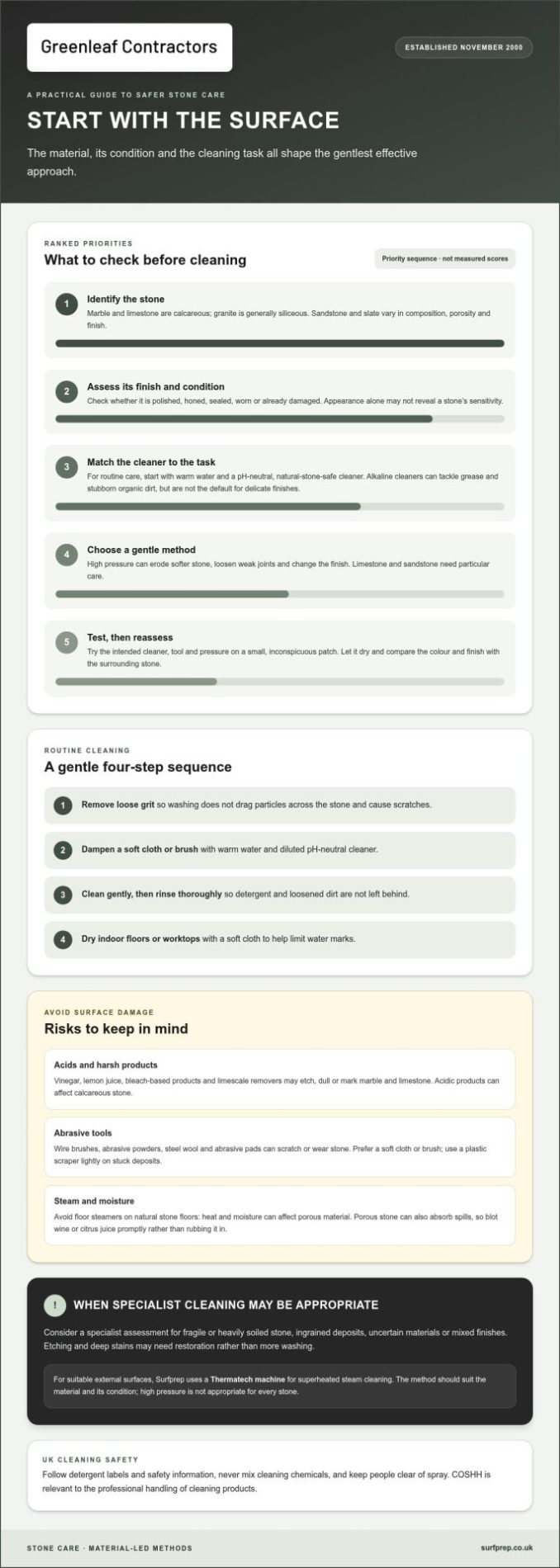
- Remove loose grit first, so washing doesn’t drag particles across the surface and cause a scratch.
- Dampen a soft cloth or brush with warm water and diluted neutral cleaner.
- Clean gently, then rinse thoroughly so detergent and loosened dirt aren’t left behind.
- Dry an indoor worktop or floor with a soft cloth; this helps limit water marks.
For limestone, choose a stone-safe, neutral product instead of vinegar, lemon juice or an acidic all-purpose detergent. Porous stone can absorb spills, so blot wine or citrus juice immediately rather than rubbing it in. If the surface is sealed, use a cleaner compatible with the treatment and avoid abrasive pads.
Regular light washing helps prevent stains and deposits becoming ingrained. For larger or heavily soiled stone surfaces, specialist stone cleaning can address contamination that routine maintenance won’t shift.
3. Identifying surface material and sensitivity
Identify the stone before choosing a cleaner: marble and limestone are calcareous, while granite is generally siliceous. Sandstone and slate vary in composition, porosity and finish, so appearance alone may not reveal their sensitivity. Check installation or product records, then note whether the surface is polished, honed, sealed, worn or already damaged.
For marble and limestone, use a neutral, stone-safe cleaner and avoid acidic products. Granite also needs a neutral cleaner because it may contain acid-sensitive minerals. Take a gentle approach with slate and sandstone too: porous areas absorb moisture and residue more readily. Avoid floor steamers on natural stone floors, as heat and moisture can affect porous material.
Match the cleaner to both the surface and the task. A neutral detergent suits routine dirt; alkaline cleaners can tackle grease and stubborn organic contamination, but aren’t the default for delicate finishes. Surfactants help water loosen and carry away soil. On mixed surfaces, such as stone beside metal or timber, apply cleaner only to compatible materials and prevent run-off.
For shared stone touchpoints, first clean visible soil, then use a disinfectant labelled as suitable for that surface. Follow the instructions for application and dwell time; incorrect use can leave residue or affect the finish.
Use pressure washing only where the stone is sufficiently robust; softer stone needs a gentler method. A specialist cleaner is appropriate for ingrained deposits, uncertain materials or mixed finishes. For tailored help with difficult stone surfaces, explore Surfprep’s stone cleaning.
Surfprep: Stone cleaning
Surfprep provides brick and stone cleaning when routine washing hasn’t shifted ingrained dirt or contamination. The method should suit the material and its condition: high pressure isn’t appropriate for every stone, and specialist cleaning can help protect a vulnerable finish.
For suitable external surfaces, Surfprep uses a Thermatech machine for superheated steam cleaning. The company also cleans wooden beams, but superheated steam is generally not recommended for interior wood, particularly in occupied homes, because of moisture risks. The right process depends on the surface and setting, rather than applying one method to every job.
Surfprep was established in November 2000. If you’re considering specialist cleaning for brick or stone, contact Surfprep or visit surfprep.co.uk.
Plan the next step with confidence
Before arranging work, record the stone’s location, visible condition and previous treatments. A clear photograph in natural light can show changes in colour, staining or finish, while notes about past cleaning products can help explain how the material may respond. Keep this information together so the surface can be assessed in context, rather than by appearance alone.
Knowing how to choose a stone cleaning method also means recognising when a surface needs more than routine care. If the material is uncertain, the finish is worn or a mark persists after gentle cleaning, don’t move to stronger chemicals or equipment without a clear reason. A considered next step helps protect the stone and set practical expectations for the work.
For advice on a stone-cleaning project, contact Surfprep about your stone surface. A clear description of the material and its condition is a useful place to begin, and can help you move towards a suitable approach with confidence.
Frequently Asked Questions
Can I use a pressure washer on stone surfaces?
Use pressure washing only on stone that can withstand the force of the water; softer stone and weak mortar joints can be damaged. On paved areas, check for loose joints, flaking or crumbling before considering pressure washing. If the surface is weathered or the material is uncertain, avoid directing a concentrated jet at it and choose a gentler approach.
What type of stain is it?
Identify the mark before treating it: greasy patches, rust-coloured marks, organic growth and pale mineral deposits may each need a different response. Note its colour, location and whether it changes after ordinary cleaning. For example, a mark beneath a metal planter may be rust, while green growth on a persistently damp path may be biological.
What are the best cleaning agents for stone?
A stone-safe, pH-neutral cleaner is a suitable starting point for routine soil on many natural stone surfaces. Don’t choose a product solely because it is labelled “powerful”: ingredients designed for bathroom limescale or general stain removal may harm sensitive stone. Check the label for material compatibility, and don’t combine cleaning products, as their ingredients can react.
Which cleaner should be used for each task?
To choose a stone cleaning method, match the cleaner to the deposit and surface. Use a neutral stone cleaner for everyday dust and light marks, following the product label. Grease or persistent organic dirt may need a compatible alkaline cleaner, while acid-based products can etch calcareous stone. For rust or an unknown stain, identify the deposit before selecting a treatment.
How do you identify the type of natural or engineered stone before cleaning?
Knowing how to choose a stone cleaning method starts with identifying the material. Check building records, invoices or leftover samples for the stone or engineered product name. Compare a hidden edge with the visible face: natural stone often has mineral variation, whilst manufactured surfaces may show a more uniform pattern. Product records are a useful first reference across the UK.
