
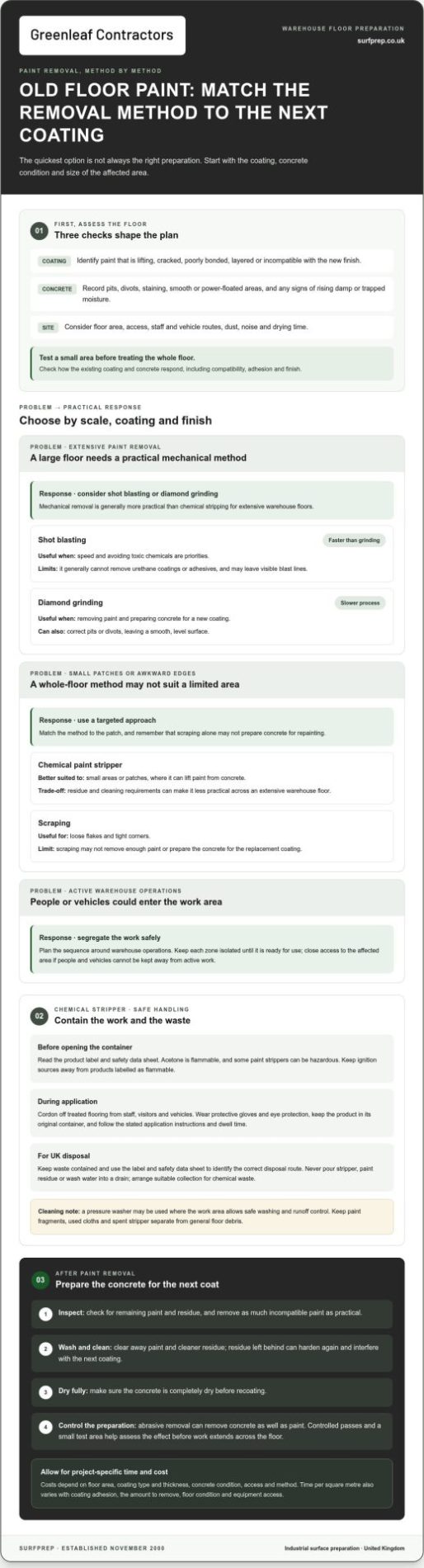
The quickest way to remove floor paint is not always the best way to prepare a warehouse floor for its next coating. Paint stripper may suit small areas, while shot blasting or diamond grinding is generally more practical for extensive removal. If the concrete will be repainted, diamond grinding can remove old paint and prepare the surface for a new coating.
Flaking or incompatible paint can undermine the finish and performance of a new coating, so scraping alone may not be enough. The right method depends on the floor’s condition, the coating and the scale of the work.
This guide explains how inspection helps determine the removal method, what to consider when using chemical stripper and how to prepare concrete afterwards. It also covers why the surface must be clean and fully dry before recoating, and when specialist industrial surface preparation may help.
Key Takeaways
- Before choosing a removal method, assess the coating, concrete condition and size of the affected area.
- Keep areas treated with chemical stripper cordoned off, and use suitable protective gear when handling it.
- Match the removal approach to the floor: scraping can help in tight spaces, while mechanical methods suit broader preparation work.
- After removal, clean, degrease and fully dry the concrete before applying a new coating.
Chemical paint stripper safety
Chemical stripper can lift paint from a small section of concrete, but it must be handled carefully. Acetone is flammable, and some paint strippers can be hazardous. Read the product label and safety data sheet before use, and follow the stated application and handling instructions. Keep ignition sources away from products labelled as flammable.
Prepare the work area before opening the container. Cordon off the treated floor so warehouse staff, visitors and vehicles cannot cross wet stripper. Wear protective gloves and eye protection, and keep the product in its original container. Apply it only to the intended area and follow the specified dwell time, which may range from a few minutes to a few hours.
- Scrape away softened paint and stripper without spreading residue into nearby traffic routes.
- Use a pressure washer to clean the treated area, where the work area allows safe washing and runoff control.
- Keep paint fragments, used cloths and spent stripper separate from general floor debris.
How should paint stripper and paint waste from a warehouse floor be disposed of in the UK? Keep waste contained, and use the product label and safety data sheet to identify the correct disposal route. Never pour stripper, paint residue or wash water into a drain. Arrange suitable collection for chemical waste.
After removal, inspect the concrete for paint and residue before deciding on the next preparation step. Chemical stripping is better suited to limited areas than extensive warehouse floors, where the volume of residue and cleaning needed can make mechanical removal more practical.
Site inspection and method selection
Inspect the coating, the concrete and the intended finish before selecting equipment. The results will guide the removal plan and site arrangements.
Comparing paint removal methods
For warehouse floor paint removal, shot blasting is faster than diamond grinding and avoids toxic chemicals, but it generally cannot remove urethane coatings or adhesives. It may leave visible blast lines. Diamond grinding is slower, but can remove paint and correct pits or divots in the concrete, leaving a smooth, level surface. Chemical stripping is more suitable for smaller areas.
Test a small area before treating the whole floor. This helps assess compatibility, adhesion and finish, and shows how the existing coating and concrete respond.
Removing paint without closing the site
Paint removal may be possible without closing the entire warehouse if the work area is safely segregated. Before dividing the floor into zones, consider staff and vehicle routes, dust, noise, equipment access and drying. If people or vehicles cannot be kept away from active work, close access to the affected area.
Plan the work sequence around warehouse operations, and keep each zone isolated until it is ready for use.
A warehouse floor paint removal plan should account for the concrete as well as the coating. Smooth or power-floated concrete may need mechanical preparation to create a key for new paint. Check whether the floor is suitable for coating, since rising damp or trapped moisture can affect some products. Record staining and surface defects during inspection, then use those findings to select the removal method and prepare for the new finish.
Preparation and removal of old, flaking or incompatible paint
A quick scrape may not be enough to help a new finish bond evenly. Remove loose material, then prepare the exposed concrete for the replacement coating.
Removing old or flaking paint
First, identify areas where the existing paint is lifting, cracked or poorly bonded. Scraping can remove loose flakes and reach tight corners, but may not prepare the concrete for repainting. A suitable stripper can loosen paint on small patches; extensive removal usually calls for diamond grinding or shot blasting. Remove as much incompatible paint as practical to reduce the risk of discolouration, unevenness or poor drying beneath the new coat.
After removal, wash the surface to clear paint and cleaner residue, then let it dry fully. Residue left behind can harden again and interfere with the next coating.
Removal costs and timing
Professional costs depend on the floor area, coating type and thickness, concrete condition, access, and removal method. The price is determined for the individual project and provided after a quote request.
Time per square metre varies with coating adhesion, the amount of paint to remove, floor condition and equipment access. Stubborn or layered coatings need more preparation than loose flakes, while tight corners can require slower manual work. The method also affects how much cleaning and surface preparation follows.
Risks of concrete damage
Abrasive removal can take concrete away as well as paint, especially if the surface receives excessive or uneven treatment. Controlled passes and a small test area help assess the effect before extending work across the floor. Grinding can also produce dust containing crystalline silica particles small enough to inhale and harmful to health, according to the Health and Safety Executive.
For warehouse floor paint removal that needs a considered preparation plan, discuss industrial surface preparation.
Surfprep: Brick cleaning
Surfprep provides brick cleaning for warehouse buildings where exterior masonry also needs attention. Established in November 2000, the company also cleans stone and wooden beams, with superheated steam cleaning using a Thermatech machine. These services address building surfaces, not the removal of warehouse floor coatings, so they’re relevant when the wider property needs cleaning alongside floor works.
Choosing a cleaning approach depends on the material and setting. Superheated steam cleaning is generally unsuitable for indoor wood, particularly in occupied homes, because of moisture risks. For masonry, Surfprep can help restore the appearance of brick or stone surfaces.
Contact Surfprep to discuss brick or stone cleaning for your property.
Plan the next stage for your warehouse floor
Use the removal work as a chance to plan how the floor will perform under everyday warehouse traffic. Consider the coating you intend to apply, the areas that need to remain accessible, and how the prepared surface fits into your maintenance routine. A clear plan helps connect warehouse floor paint removal with the work that follows, rather than treating it as an isolated task.
Surfprep offers industrial surface preparation, which can help address surface-readiness needs as part of a wider property project. For other areas of the building, its services also include brick cleaning, stone cleaning and wooden beam cleaning.
Contact Surfprep about paint removal to discuss the preparation your project requires. A practical next step can put your warehouse floor on a clearer path to its new finish.
Frequently Asked Questions
How to Remove Floor Paints and Sealers?
Common removal methods include scraping, chemical stripping, shot blasting and diamond grinding. Scrapers can handle tight corners or isolated flakes, while mechanical methods cover broader concrete areas. For floor-tape adhesive rather than paint, a hand scraper may suit small residues; grinders or buffers can help remove larger amounts of adhesive and even the surface. The coating and substrate determine the appropriate method.
What methods are used to remove paint from warehouse floors?
Start with a small test patch and note how the coating responds. Mark defects and keep the work zone separate from active warehouse routes. Remove the coating using the selected method, then clear residue without spreading it onto prepared concrete. Clean and degrease the floor, allow it to dry fully, and check its moisture suitability before applying a new coating in line with the product data sheet.
How do you remove paint from a concrete warehouse floor step by step?
The equipment needed depends on the removal method and floor condition. A small patch may require hand scrapers and suitable stripper; broader mechanical work uses shot-blasting or diamond-grinding equipment. Cleaning tools remove loosened paint and residue, and barriers help mark off the work area. Where grinding creates dust, suitable dust controls are important: the Health and Safety Executive warns that concrete grinding can produce respirable crystalline silica.
What equipment is needed to remove industrial floor paint?
Plan controls around the product and removal process: consult the stripper’s label and safety data sheet, use appropriate protective gear, and keep people out of treated zones. Keep ignition sources away from acetone, which is flammable. Mechanical grinding also requires dust controls because inhaled crystalline silica can harm health, according to the Health and Safety Executive. Manage wash water and waste so they do not enter drains.
What health and safety rules apply to removing floor paint in UK workplaces?
Plan controls around the product and removal process: consult the stripper’s label and safety data sheet, provide appropriate protective gear, and keep people out of treated zones. Keep ignition sources away from acetone, which is flammable. Mechanical grinding also needs dust controls because inhaled crystalline silica can harm health, according to the Health and Safety Executive. Manage wash water and waste so they don’t enter drains.
