
Removing failed cavity wall insulation is often only half the battle; the real work begins when you’re left with a “peppered” facade that has lost its ability to breathe. If your home is currently sporting hundreds of unsightly drill holes or white salt staining (known as efflorescence) caused by trapped moisture, you’re likely feeling more frustrated than when the damp first appeared. We understand that cleaning brickwork after insulation removal is about more than just aesthetics; it’s about restoring the structural health of your property. Since we established our business in November 2000, we’ve seen how residual dust can clog brick pores, leading to long-term decay if not handled with professional care.
This 2026 guide explains how to restore the original colour of your masonry whilst ensuring the wall remains fully breathable. We’ll explore specialist methods like Thermatech superheated steam and our gentle Sand Jet system to increase your property’s kerb appeal and ensure your home is ready for a potential sale.
Key Takeaways
- Learn why professional cleaning brickwork after insulation removal is essential to restore wall breathability and prevent moisture from being trapped in the masonry face.
- Discover how Thermatech superheated steam safely dissolves extraction residues at 150°C, providing a thorough clean without the abrasive risks of traditional high-pressure washing.
- Explore the advantages of the Sand Jet system as a gentle, sympathetic alternative for exterior restoration that preserves the original character of your home’s brickwork.
- Understand the critical distinction between external and internal works, including why damp processes are unsuitable for indoor use and which dry alternatives offer the best results.
Restoring Kerb Appeal and Breathability Post-Insulation Removal
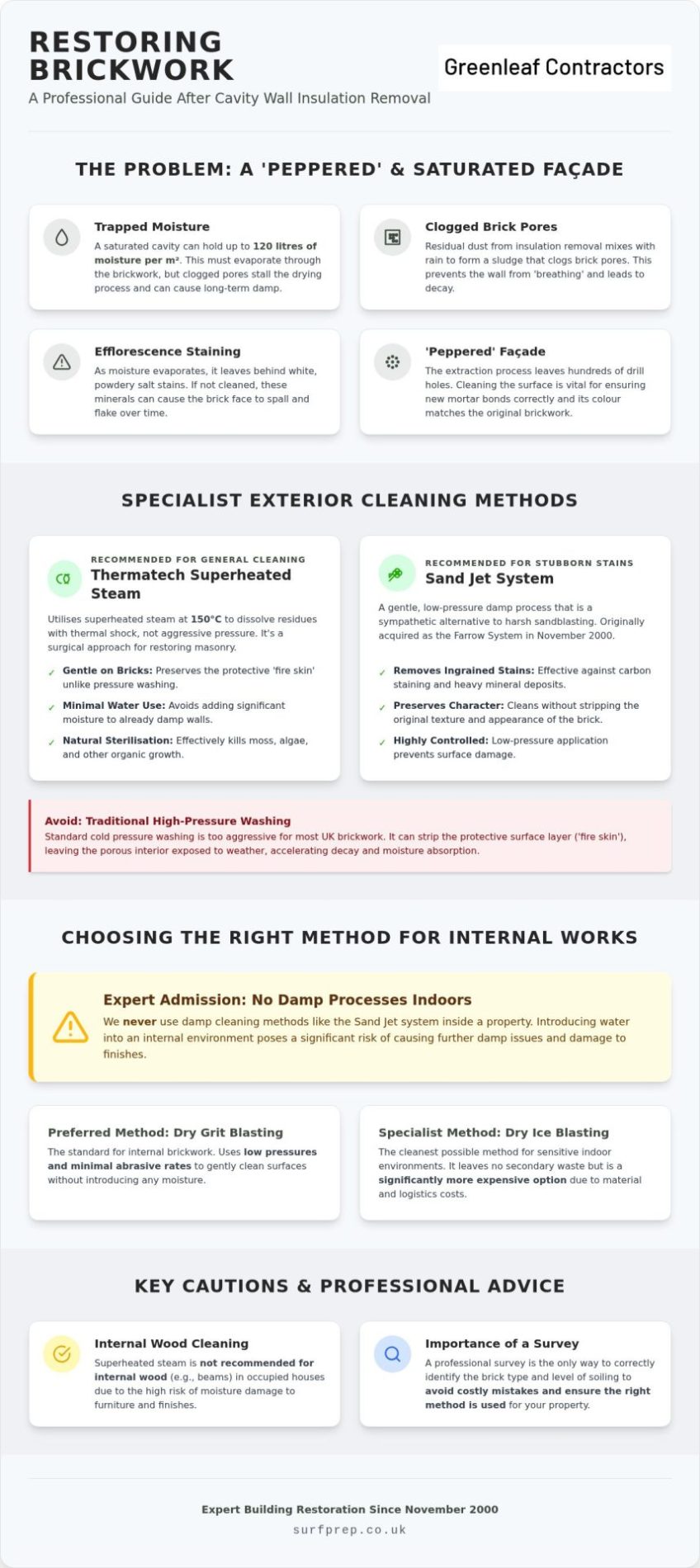
Successfully removing failed cavity wall insulation is a significant milestone, but it’s often just the beginning of the “extraction reset.” While the wet materials are gone, the underlying Masonry remains saturated. Industry data suggests a saturated cavity can hold as much as 120 litres of moisture per square metre. This volume of water must evaporate through the brickwork to prevent long-term damp. Specialist cleaning brickwork after insulation removal is required because if the pores are clogged with debris, the wall cannot “breathe,” which stalls the drying process.
You’ll likely notice white, powdery salt stains appearing on your facade shortly after the work finishes. This efflorescence occurs as moisture travels to the surface, carrying dissolved minerals with it. Without proper cleaning brickwork after insulation removal, these salts crystallise and can eventually cause the brick face to spall or flake. We’ve specialised in brick cleaning since November 2000, and we know that clearing these mineral deposits is vital for restoring both aesthetics and structural health whilst the property dries out.
Addressing the ‘Peppered’ Facade and Residual Debris
The extraction process typically leaves behind a “peppered” look from hundreds of drill holes. If residual insulation dust isn’t cleared, it mixes with rainwater to form a stubborn, greyish sludge that stains the brickwork. Matching the mortar colour for these holes is a challenge; a clean surface ensures the new mortar bonds correctly and blends in. Additionally, if you plan to apply masonry protection creams or water repellents, the brick must be free from debris to allow for proper absorption and long-term effectiveness.
Specialist Cleaning Methods: Thermatech Steam and Sand Jetting
We’ve championed specialist restoration since November 2000, and our experience shows that cleaning brickwork after insulation removal requires a surgical approach. We rely on two primary systems: Thermatech and the Sand Jet. The Thermatech system utilises superheated steam at 150°C to dissolve extraction residues and atmospheric pollutants without the mechanical force that typically damages masonry. If you’re dealing with stubborn carbon staining or heavy mineral deposits, we might recommend Sand Jet cleaning. Originally acquired as the Farrow System, this is a gentle, low-pressure damp process that provides a sympathetic alternative to harsh traditional sandblasting.
Choosing the right method depends on the brick’s condition and the specific residue left behind. Steam is often the first choice for general soot and dust, whilst the Sand Jet excels at removing ingrained surface staining that steam alone cannot shift. Both methods prioritise the material’s integrity, ensuring your property’s facade is restored rather than just scrubbed. If you’re unsure which method fits your project, you can always reach out for expert advice on the best approach for your specific brick type.
Why Superheated Steam Beats Traditional Pressure Washing
Standard “cold” pressure washing is often too aggressive for UK brickwork. It can easily strip the protective “fire skin” from the brick, leaving the porous interior exposed to the elements. In contrast, superheated steam cleans through thermal shock rather than high pressure. This process uses minimal water, which is crucial when cleaning brickwork after insulation removal, as it avoids adding to the saturation already present in the cavity. It also provides natural sterilisation, killing off moss, algae, and spores that frequently thrive on damp, post-extraction walls. In cases where this moisture has caused deeper issues within the property, MouldMen can provide expert inspection and removal to ensure a healthy living space.
Professional Brick Restoration: Avoiding Common Post-Extraction Pitfalls
While much of the focus is on the facade, cleaning brickwork after insulation removal often extends to internal masonry affected by dust or moisture. We’re transparent about the limitations of certain technologies here. Our “Expert Admission” is simple; we never recommend using the Sand Jet inside a property. Because it’s a damp process, it introduces unwanted water into your living space. For internal brickwork, we instead utilise traditional dry grit blasting at low pressures or dry ice blasting. Dry ice is an expensive option (due to the specialised logistics involved), but it remains the cleanest method for sensitive indoor environments.
Similarly, we advise against using superheated steam cleaning for internal wood or beams in occupied houses. The moisture risk to existing furniture and finishes is simply too high. Since establishing our business in November 2000, we’ve found that a professional survey is the only way to avoid these pitfalls. Regional brick types vary significantly across Leeds, York, and Hull; what works for a hard-fired industrial brick in West Yorkshire may not suit a softer, handmade variety found elsewhere. Local expertise ensures the cleaning brickwork after insulation removal process respects the specific material of your home.
The Importance of Specialist Mortar Matching and Finishing
The extraction process leaves hundreds of drill holes that require plugging. A common mistake is using “off-the-shelf” mortar, which rarely matches the original colour or texture. This results in a permanent “polka dot” effect across your walls. Our specialist brick cleaning services for period properties ensure that the surface is perfectly prepared before any pointing begins. A clean, pH-neutral surface is a prerequisite for successful masonry protection. A final inspection ensures your walls are both aesthetically restored and functionally breathable for the 2026 season, allowing the structure to dry out naturally without further risk of damp.
Restoring Your Property’s Health and Character
Restoring your home after failed cavity wall insulation requires a methodical approach that prioritises long-term breathability. We’ve shown how specialist cleaning brickwork after insulation removal clears clogged pores and erases the “peppered” scarring of the extraction process. By choosing sympathetic systems like Thermatech or the gentle Sand Jet, you protect your masonry from the damage caused by aggressive pressure washing. We’ve been expert masonry restorers since November 2000, and our team has spent over 25 years serving Yorkshire and the North. We understand the nuances of regional brickwork and how to avoid common pitfalls like internal moisture ingress. Your home’s kerb appeal and structural integrity are too important to leave to chance. Request a specialist brick restoration survey from the Surfprep team today to begin your property’s recovery. We’re here to help you achieve a clean, beautiful finish.
Frequently Asked Questions
How long should I wait to clean my brickwork after insulation removal?
You should ideally wait a few days for any mortar repairs in the extraction holes to cure before starting the full cleaning process. However, removing surface dust and debris should happen as soon as possible to prevent grey staining from setting in. In cities like Leeds and York, where rainfall is frequent, clearing residue quickly prevents it from mixing with water and clogging pores.
Will professional brick cleaning help my house dry out faster?
Yes, professional cleaning brickwork after insulation removal is vital for accelerating the drying process. By removing mineral salts and extraction dust, we restore the natural breathability of the masonry. This allows the significant volume of moisture trapped in the cavity to evaporate through the brick face rather than being blocked by surface debris or salt crusts.
Can I use a domestic pressure washer to clean the brickwork myself?
We strongly advise against using domestic pressure washers on period or damp brickwork. These machines often rely on high-pressure cold water which can strip the protective fire skin from the bricks. This damage is irreversible and makes the wall more porous. Our Thermatech system uses superheated steam at 150°C, which cleans effectively with much lower pressure and minimal water saturation.
What is the difference between sandblasting and the Sand Jet system?
The Sand Jet, originally the Farrow System, is a gentle, low-pressure damp process designed for delicate restoration. Unlike traditional sandblasting, which can be incredibly aggressive and abrasive, the Sand Jet uses a swirling action to lift stains without gouging the masonry. It’s a sympathetic alternative we’ve used since November 2000 for historic buildings in Hull, Beverley, and across the North.
Is it safe to clean the brickwork if I still have damp patches inside?
Is it safe to clean the brickwork if I still have damp patches inside?
