
A blackened stone façade isn’t always simply dirty. Cleaning carbon sulphation from stone can involve a professional ammonium carbonate poultice to treat deposits, while chemical cleaning can remove surface carbon staining. The right approach depends on the stone and the condition of its surface.
Pollution staining can look cosmetic, but carbon deposits may also affect the masonry beneath. This guide explains how sulphurous pollution forms deposits on stone, how cleaning methods work and what to consider when choosing a suitable treatment. Careful assessment helps distinguish surface staining from deeper deposits, so the method can be matched to the building rather than applied as a one-size-fits-all solution.
Key Takeaways
- Look for dark deposits in sheltered areas and consider whether the staining may be more than surface dirt.
- Understand how pollution can form a crust that affects the stone beneath, not just its appearance.
- See why chemical treatments, including poultices, need to be matched to the stone and deposit.
- Learn what signs can help distinguish gypsum crusts from carbon deposits before planning cleaning.
Chemical removal of surface carbon staining
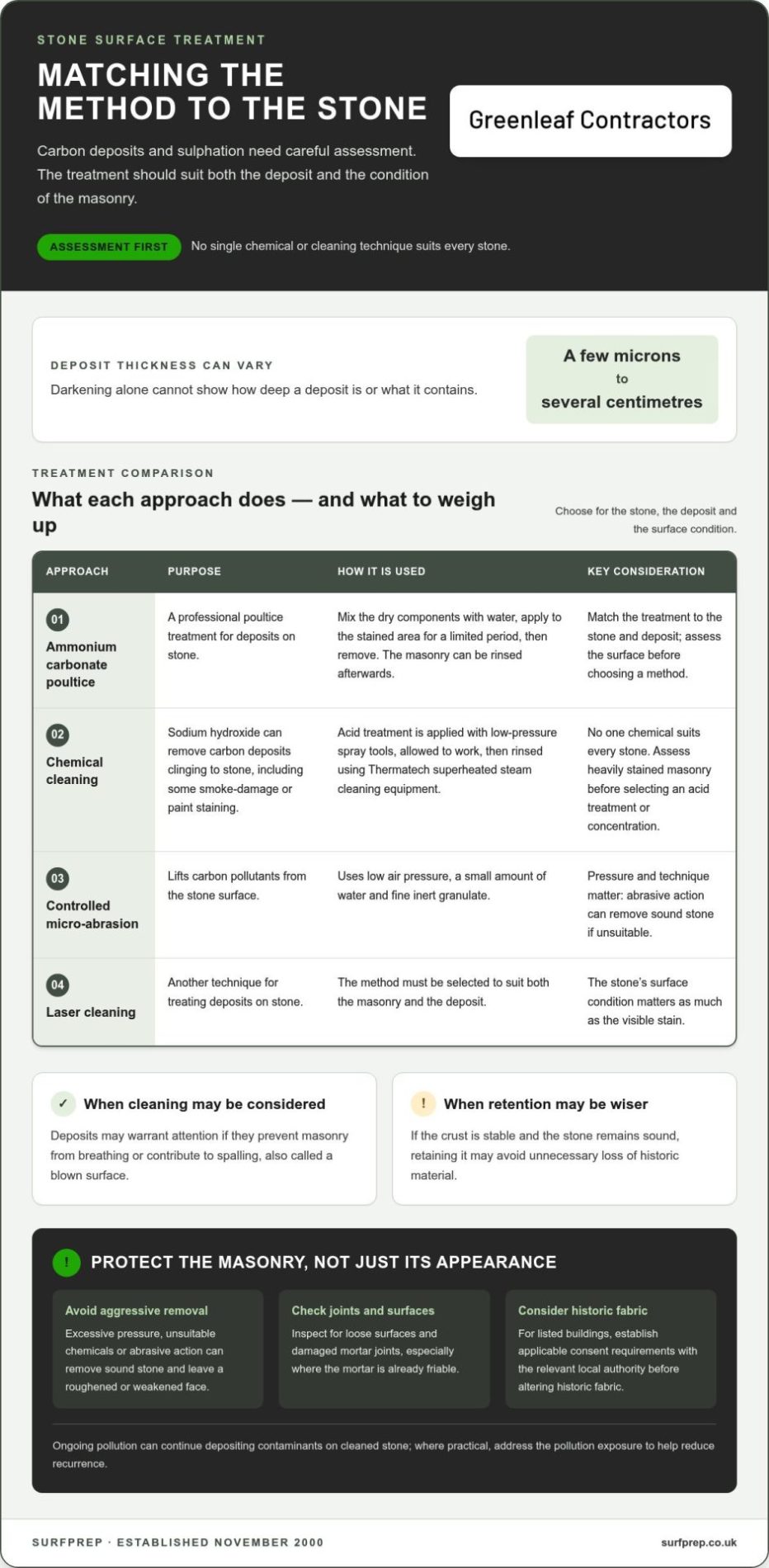
Which methods remove sulphation from stone? Ammonium carbonate poultices and controlled micro-abrasion can treat deposits, while steam may rinse masonry after treatment. Laser cleaning is another technique, but the method must suit both the stone and the deposit. When cleaning carbon sulphation from stone, the surface condition matters as much as the visible stain.
A poultice is prepared by mixing its dry components with water. Apply it to the stained area for a limited period, then remove it. This lets the treatment work at the surface before rinsing. The masonry can then be rinsed using superheated steam cleaning equipment.
Which chemicals are suitable for cleaning sulphated limestone and sandstone? No single chemical suits every stone; the choice depends on the material and its condition. Sodium hydroxide can remove carbon deposits clinging to stone, including staining after smoke damage or from certain paints. Ammonium carbonate is used in professional poultice treatments. Assess heavily stained stonework before selecting an acid treatment or concentration.
Acid cleaning requires controlled application. Protect surrounding masonry and surfaces with acid- and water-resistant covering. Apply the treatment with low-pressure spray tools, allow it to work, then rinse with superheated steam. This wash-off technique can reduce dwell time to seconds; abundant rinse water leaves residual acid very weak. It is used to target small carbon deposits on the surface.
Choosing a technique for cleaning carbon sulphation from stone means matching the treatment to both the deposit and the masonry. Micro-abrasion uses low air pressure, a small amount of water and fine inert granulate to lift carbon pollutants.
For stone surface cleaning, the treatment should reflect the stone’s condition and the deposit’s characteristics.
In the described chemical-cleaning method, a solution for stone masonry is combined with warm water and rinsed off the building to remove grime and pollution. The treatment must suit the stone and the deposit.
Carbon sulphation and pollution staining on stone
Pollution deposits form through chemical reactions and collect unevenly across masonry. Their appearance, depth and effect on the stone help determine whether cleaning is appropriate.
Identifying gypsum crusts and carbon deposits
Acidic sulphurous gases from burning coal and other fossil fuels react with carbonate in masonry, producing calcium sulphate and carbon particulates. These deposits tend to bind in sheltered areas, so compare protected surfaces with exposed stone. Crusts can range from a few microns to several centimetres thick; darkening alone doesn’t reveal their depth or composition.
Choosing whether to clean sulphation
Cleaning may be worth considering when deposits prevent masonry from breathing or contribute to spalling, also called a blown surface. If the crust is stable and the stone remains sound, retaining it may avoid unnecessary loss of historic material. Where practical, address the pollution exposure to help reduce recurrence. Ongoing emissions can continue depositing contaminants on cleaned stone.
Safe cleaning of historic stone
The safest approach starts by identifying the stone and deposit, then selecting a controlled treatment that minimises loss of original surface. For historic masonry, assess the likely effect before choosing a poultice or another method; pressure and technique matter. On a listed building, establish applicable consent requirements with the relevant local authority before altering historic fabric. Stone surface cleaning should be planned around the masonry’s condition.
Potential damage to stone and mortar
Excessive pressure, unsuitable chemicals or abrasive action can remove sound stone along with the deposit, leaving a roughened or weakened face. Cleaning can also disturb mortar joints, especially when the material is already friable. Since carbon sulphation can contribute to spalling, inspect for loose surfaces and damaged joints before treatment. Aggressive removal may worsen existing deterioration rather than simply clear staining.
How can you identify gypsum crusts and carbon deposits on stone?
Begin with a visual survey in consistent daylight. Carbon-rich deposits usually appear dark, while exposed gypsum can look pale or grey; soot embedded in the crust may obscure the colour. Note changes in tone, texture and coverage across individual stones rather than judging the whole façade from a distance.
Look closely at ledges, window reveals and carved details. Record whether the deposit forms a hard, raised layer or loose surface grime, and whether its edges follow stone joints or cross them. A torch held at a shallow angle can reveal surface relief that frontal light hides. Avoid scraping, which can remove original stone and obscure the deposit’s natural boundary.
Compare adjacent areas made from the same stone, including a sheltered recess and a more exposed face. Photograph each location from the same distance and angle, then note colour, crust thickness and any flaking or powdering. A deposit’s appearance can vary across one elevation, so map separate patches rather than assuming every dark mark has the same cause.
Check the masonry around the staining for open joints, loose flakes and a rough, granular face. Those details matter because a crust may sit over weakened stone rather than sound masonry. Keep the survey descriptive: location, colour, texture and visible condition. This gives a stone-cleaning assessment a clear starting point. Arrange an assessment of your stonework to discuss the surface condition and suitable cleaning approach.
Carbon sulphation deposits on masonry can range in thickness from a few microns to several centimetres. The difference between a thin surface film and a substantial raised layer may be hard to judge from a distance, so inspect the edge and relief at close range.
Record the apparent thickness at separate patches and compare it with the visible condition of the underlying stone. This keeps the assessment grounded in observations, not colour alone.
Surfprep: Brick cleaning
Established in November 2000, Surfprep provides brick cleaning and stone cleaning for buildings affected by staining and accumulated grime. Where carbon deposits or gypsum crusts are present, the masonry’s condition helps determine a suitable cleaning approach.
For suitable exterior surfaces, Surfprep provides superheated steam cleaning using the DOFF™ system. The treatment is selected to suit the deposit and surface, rather than assuming steam will remove every sulphation crust.
If you’re considering cleaning stained stone or brick, contact Surfprep to discuss stone cleaning and the condition of your building’s surfaces.
Plan the next step for your stonework
A considered approach to cleaning carbon sulphation from stone starts with the building’s needs, not a preset treatment. Decide what matters most: removing staining, protecting fragile masonry or retaining a historic surface as it stands. That priority helps shape a practical scope for the work.
Surfprep provides stone and brick cleaning, as well as wooden beam cleaning. Discussing the surface, its condition and the appearance you want to achieve can help establish a suitable way forward. Cleaning may not be appropriate for every affected area, particularly if removing deposits could disturb vulnerable stone.
If you’re ready to talk through the masonry and possible cleaning approaches, contact Surfprep about stone cleaning. A clear conversation is a useful first step towards deciding what your building needs.
Frequently Asked Questions
What is carbon sulphation on stone and how does it form?
Carbon sulphation is a pollution-related deposit formed when sulphurous emissions react with carbonate-bearing masonry, leaving gypsum and carbon material on the stone. Limestone contains calcium carbonate, which also occurs in mortar. This helps explain why both stone faces and joints can show staining. Deposits are often most noticeable where building details shelter masonry from direct exposure.
How do you test a stone-cleaning method on a small area first?
Choose a discreet patch of the same stone, away from prominent edges and fragile details. Photograph it first, then apply the proposed method to a small area, following the intended process. Compare the treated patch with nearby untreated stone after it dries. Look for colour change, surface roughening, loosened grains or altered mortar, and record the result before extending treatment.
