
What if the cleaning method leaves a historic wall looking worse than the graffiti? Removing paint from old brick or stone takes more than pressure: the wrong approach can scar the surface or leave a stubborn shadow. If you’re researching how to clean historic graffiti, protecting the original masonry must come first.
It’s understandable to want the paint removed while avoiding damage and respecting heritage requirements. The right plan starts with identifying the surface and graffiti, checking whether consent is needed, and testing a suitable method in a small area. This guide explains how controlled Thermatech superheated steam or gentle sand jet cleaning may be used on exterior masonry, and why different materials need different care. Surfprep provides brick and stone cleaning and graffiti removal, using methods selected for the surface rather than relying on force by default.
Key Takeaways
- Learn how to clean historic graffiti by matching the removal method to the masonry and paint, rather than relying on force.
- Consider listed-building status and consent requirements before cleaning begins.
- Compare Thermatech superheated steam with the damp, gentle sand jet method for exterior masonry.
- Give porous stone, historic brick and timber different treatment to help prevent surface damage and lingering shadows.
The Risks and Regulations of Historic Graffiti Removal
Historic graffiti cleaning is a restoration task, not simply a matter of stripping paint. The priority is to remove unwanted material while preserving the masonry’s fired “skin” and patina, which contribute to old brick and stone’s character. Abrasive pressure or unsuitable chemicals can erode that surface, leaving permanent marks that are harder to remedy than the graffiti.
Off-the-shelf chemical removers can be unpredictable on porous masonry. A product may soak into the brick or stone along with the paint, leaving a shadow or residue instead of a clean surface. Chemicals and excess moisture may also contribute to salt crystallisation, which can disrupt masonry. General overviews of graffiti removal techniques show why the method needs to suit the surface. Historic materials need particular care.
Before work begins on a listed building, establish whether listed building consent is required for the proposed cleaning. Requirements depend on the building and the work, and unauthorised cleaning can have legal consequences. Do not assume graffiti removal is automatically exempt. Contact the local planning authority before starting, including before carrying out a cleaning trial.
Consulting Conservation Officers and Heritage Standards
For a historic building in Leeds, York or elsewhere in the UK, contact the relevant local planning authority before starting cleaning trials. Historic England’s guidance, Graffiti on Historic Buildings: Removal and Prevention, sets out conservation-focused principles for assessing removal and prevention.
Start with a small, inconspicuous trial. Once the area is dry, check for colour change, surface loss, residue and shadowing. Compare the treated patch with the surrounding masonry in good light. A trial helps show whether the method is suitable before work proceeds across a larger area. Surfprep’s brick and stone cleaning approach focuses on choosing a suitable method for the material and its condition.
Specialised Techniques to Clean Historic Graffiti Safely
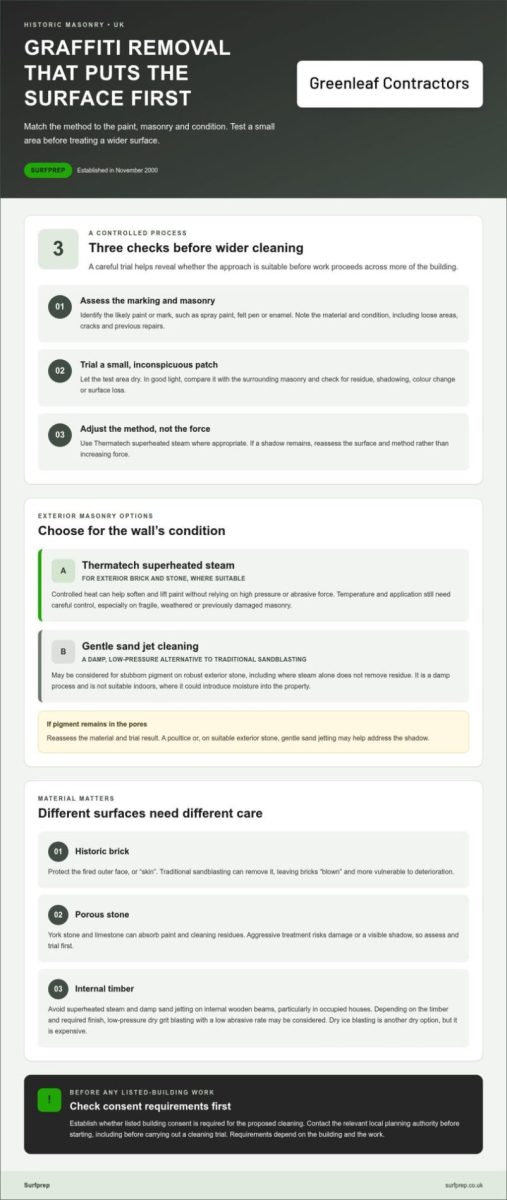
Choosing how to clean historic graffiti means matching the technique to both the paint and the masonry. For exterior brick and stone, Surfprep uses a Thermatech machine for superheated steam cleaning. The heat can help soften and lift paint without relying on high pressure or abrasive force. Temperature and application still need careful control: a method that suits sound stone may not suit fragile, weathered or previously damaged masonry.
For stubborn pigment on robust exterior stone, gentle sand jet cleaning offers a damp, low-pressure alternative to traditional sandblasting. The sand jet can be considered where steam alone does not remove the residue, but it is not suitable indoors because the damp process can introduce moisture into a property. The NPS Preservation Brief 38 also explains why identifying the surface and graffiti is important before selecting a removal method.
The Process: From Initial Trial to Shadow Removal
- Assess: Identify the likely paint or marking, such as spray paint, felt pen or enamel. Note the masonry type and condition, including loose areas, cracks and previous repairs.
- Trial: Test the proposed method in a small, inconspicuous area. Let the patch dry, then check the result for residue, shadowing, colour change or surface loss before treating a wider area.
- Adjust: Use Thermatech superheated steam where appropriate. If a shadow remains, reassess the surface and method rather than increasing force. A poultice or, on suitable exterior stone, gentle sand jetting may help address pigment in the pores.
There is no single method for every wall. Surfprep provides brick and stone cleaning and graffiti removal, selecting an approach to suit the surface. Explore Surfprep’s cleaning services to learn more.
Substrate-Specific Restoration for Brick, Stone, and Timber
The same cleaning method can produce very different results across historic materials. Porous York stone and limestone façades, including those found in Durham, can absorb paint and cleaning residues. Treating them too aggressively risks damaging the stone or leaving a visible shadow. Assess the surface and trial the method first, then check the result once dry before progressing. Read more about historic stone cleaning.
Older brick presents a different concern. Traditional sandblasting can remove the fired outer face, leaving bricks “blown” and more vulnerable to deterioration. On a historic building in Leeds, for example, the goal is to lift the graffiti without stripping away that protective surface. The right approach depends on the brick’s condition as well as the paint, so avoid treating all elevations or repairs as though they will respond identically.
Internal Heritage Works and Long-Term Protection
Inside a barn conversion or another heritage property, keep moisture away from timber. Superheated steam and damp sand jetting are not suitable for internal wooden beams, particularly in an occupied house. Depending on the timber and the required finish, low-pressure dry grit blasting with a low abrasive rate may be considered. Dry ice blasting is another dry option, although it is expensive.
Dry methods can help where moisture must be avoided, but no technique is automatically right for every beam. Assess the wood, its condition and the finish required before deciding how to proceed. Our guide to cleaning structural timbers in a barn conversion explores the considerations. For masonry, the National Park Service guidelines on graffiti removal offer further advice on testing and choosing suitable methods.
On vulnerable sites at risk of repeat graffiti, a sacrificial anti-graffiti coating may make future removal easier. Its appearance and compatibility with the historic surface need careful consideration before application. For heritage masonry, begin by assessing the surface and testing how the cleaning method affects it. Explore Surfprep’s cleaning services.
Protect Historic Masonry with the Right Cleaning Approach
Knowing how to clean historic graffiti starts with protecting the surface, not simply removing the paint. A careful assessment, small-scale trial and method suited to the material can help prevent masonry damage and reduce the risk of lingering shadows. Exterior brick and stone may suit controlled Thermatech superheated steam or, on robust stone, gentle damp sand jetting. Internal timber needs a dry approach. No single technique suits every substrate.
Surfprep provides brick and stone cleaning, graffiti removal and superheated steam cleaning for properties across Leeds, York, Hull, Bradford, Nottingham, Manchester, Derby, Lincoln, Newcastle, Durham, Scarborough and Beverley. If graffiti is affecting a historic building, start with a plan that accounts for the material, its condition and any consent requirements. Request a heritage-sensitive graffiti removal quote from Surfprep.
Frequently Asked Questions
Is it legal to remove graffiti from a listed building myself?
It depends on the building and the proposed work, so do not assume you can proceed without consent. Cleaning that affects a listed building’s character may require listed building consent from the local planning authority, and unauthorised work can have legal consequences. Before attempting removal or a trial, speak to the relevant planning office and establish what permissions apply.
Can superheated steam like Thermatech damage old heritage bricks?
Yes, if the method is unsuitable or poorly controlled. Thermatech superheated steam applies heat, but that does not mean every brick should receive the same treatment. Assess the brick’s condition and test a small, inconspicuous area first. Once it has dried, check for changes in colour, surface texture or the fired face. The aim is to lift paint without eroding the masonry or changing its appearance.
How do I remove graffiti from internal structural wooden beams?
Keep moisture away from internal beams: do not use superheated steam or the damp sand jet indoors. First assess the wood and the paint, then consider low-pressure dry grit blasting with a low abrasive rate. Dry ice blasting is another option where water must be avoided, although it is expensive. Superheated steam cleaning is generally not recommended for wood inside a property, particularly in an occupied house.
What is the most gentle way to remove spray paint from historic sandstone?
There is no single method for every sandstone surface. Start with an inconspicuous trial and assess the result once dry. Controlled Thermatech superheated steam may suit some exterior masonry, while gentle, damp sand jetting is for robust stone and is not suitable indoors. Surfprep provides heritage-sensitive cleaning across Leeds, York, Hull, Bradford, Nottingham, Manchester, Derby, Lincoln, Newcastle, Durham, Scarborough and Beverley.
