
Could the quickest cleaning method leave brick or stone more damaged than the smoke marks themselves? Dark staining may be soot, smoke residue or another deposit, and porous masonry can be vulnerable to harsh treatment. Cleaning smoke damage from exterior walls starts with identifying the surface and residue, then choosing a controlled method suited to the wall.
This guide explains how to assess smoke-marked brick and stone, compare cleaning approaches and recognise when a DIY attempt could cause more harm than good. You’ll also learn how Surfprep’s exterior brick and stone cleaning can help, including the use of a Thermatech machine for superheated steam or a sand jet machine for suitable exterior work. The sand jet is a damp process, so it is not suitable for indoors.
Key Takeaways
- Soot and smoke residue can affect brick and stone differently. The wall’s age, mortar joints and previous treatments all matter.
- Thermatech superheated steam and damp sand jet cleaning are different options. The right method depends on the masonry and residue.
- For cleaning smoke damage from exterior walls, document the marks and avoid aggressive DIY methods before planning a suitable clean.
- Surfprep cleans brick and stone across East Yorkshire, including Hull and Beverley, as well as other locations across the UK.
Cleaning smoke damage from exterior walls starts with identifying the residue
Dark marks after a fire may be loose, powdery soot, a more bonded film of smoke residue or a mixture of deposits. Their appearance alone does not show whether the masonry beneath is sound or how safely the marks can be removed.
Brick and stone differ in porosity, hardness and finish. Older or weathered masonry, open or deteriorating mortar joints, and previous coatings or treatments can all affect how residue sits and how the wall responds to cleaning. A method suitable for one elevation may be too aggressive for another. Cleaning smoke damage from exterior walls should therefore start with the material and its condition, not just the colour of the stain.
What should you check before cleaning a smoke-stained wall?
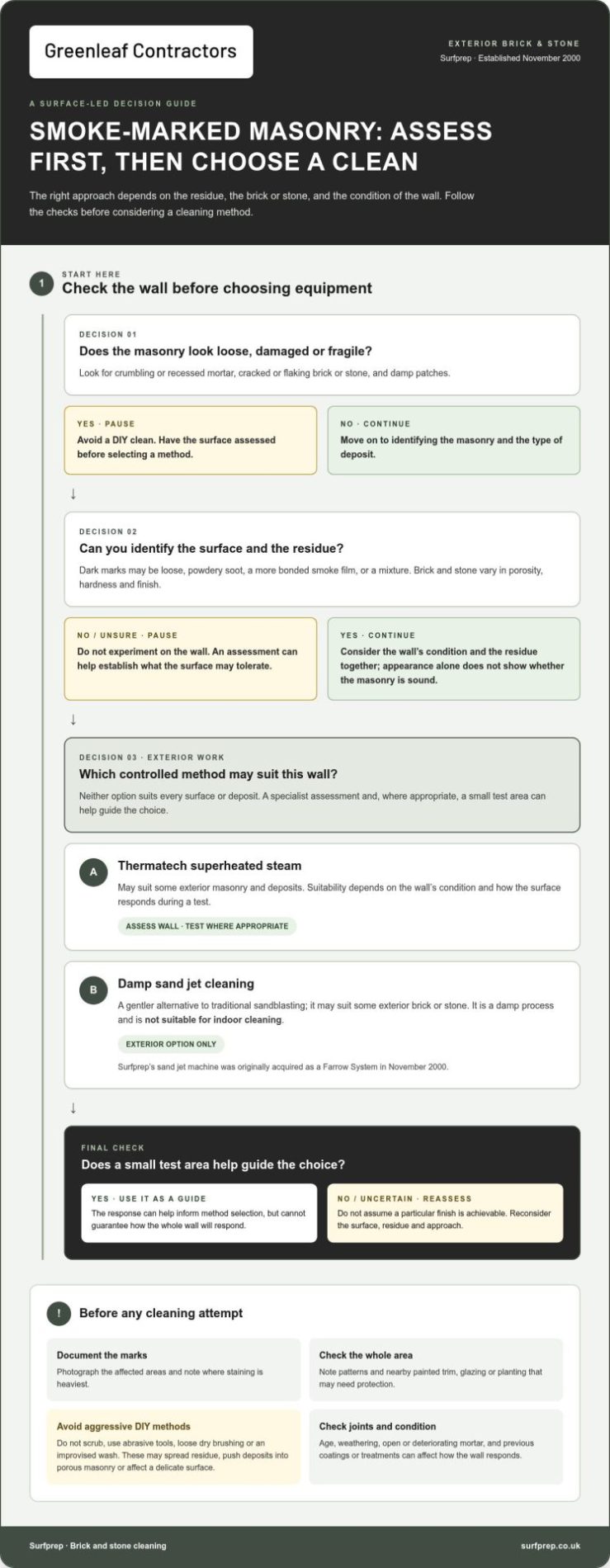
Look over the whole affected area. Note where the staining is concentrated, whether it follows a clear pattern, and whether it is close to painted trim, glazing or planting that may need protection. Check for crumbling or recessed mortar, cracked or flaking brick or stone, and damp patches. Avoid loose dry brushing or an improvised wash: brushing can spread fine residue, while water or unsuitable products may push deposits into porous masonry or affect a delicate surface.
If the masonry is loose, damaged or difficult to identify, pause rather than trying a cleaning method on the wall. An assessment can help establish what the surface may tolerate and whether options such as sand jet cleaning are suitable. Surfprep provides specialist brick and stone cleaning, with the method selected according to the surface and residue.
Compare exterior smoke-damage cleaning methods without risking the masonry
No single method suits every smoke-marked wall. The right choice depends on the residue, the type and condition of the brick or stone, and the state of its joints and surface. For cleaning smoke damage from exterior walls, assess these factors before selecting equipment. Where appropriate, a small test area can help guide the next step, although it cannot guarantee how the whole wall will respond.
- Assess the wall first: Check the masonry and residue before cleaning. This helps avoid applying unnecessary force or moisture to a vulnerable surface.
- Thermatech superheated steam: This may suit some exterior masonry and deposits. Its suitability depends on the wall’s condition and how the surface responds during a test.
- Damp sand jet cleaning: Surfprep uses a sand jet machine, originally acquired as a Farrow System in November 2000. It is a gentler alternative to traditional sandblasting and may suit some exterior brick or stone. Because it is a damp process, it is not suitable for indoor cleaning.
Why is the least aggressive suitable method not always the same?
Firm, well-maintained masonry and a delicate or weathered surface will not necessarily tolerate the same approach. Residue varies too: loose deposits and tenacious staining may respond differently. The aim is not to choose the mildest method regardless of whether it works, but to select a controlled approach suited to the specific masonry. Surfprep assesses the surface and uses the response of a test area to help guide method selection, without assuming a particular finish is achievable.
Explore sand jet cleaning to learn more about this exterior option and its limitations.
Plan the next steps for smoke-damaged brick or stone in East Yorkshire
A measured plan helps protect the masonry and clarify what needs attention. Start with these steps:
- Document the marks: Photograph the affected areas and note where the staining is heaviest.
- Avoid aggressive DIY cleaning: Do not scrub, use abrasive tools or apply an improvised wash that could spread residue or harm the surface.
- Assess the masonry: Check the brick or stone, mortar joints and any signs of looseness or deterioration.
- Plan a suitable clean: Choose an approach based on the material, its condition and the type of residue.
Surfprep provides exterior brick and stone cleaning for property owners in Hull, Beverley and across East Yorkshire. The company also serves Leeds, York, Bradford, Nottingham, Manchester, Derby, Lincoln, Newcastle, Durham and Scarborough. The wall is assessed before a suitable method is selected, as the result depends on the surface and deposits present. Read more about professional brick cleaning and how material-led cleaning can help inform the next step.
When should you arrange specialist exterior-wall cleaning?
Arrange a specialist assessment if staining covers a large area, the masonry looks fragile, mortar is deteriorating or you are unsure what the surface is made from. These conditions can make a DIY attempt difficult to control. An assessment can help identify an appropriate approach to cleaning smoke damage from exterior walls, recognising that different marks and surfaces may respond differently.
Contact Surfprep about exterior cleaning to discuss smoke-affected brick or stone and plan a suitable next step.
Take a careful next step with smoke-marked masonry
Cleaning smoke damage from exterior walls starts with understanding the residue and the condition of the brick or stone, not reaching for the harshest method. An assessment helps determine whether Thermatech superheated steam or the sand jet system may be suitable. Neither approach is right for every surface.
Surfprep specialises in brick and stone cleaning, using a considered approach based on the masonry and the deposits present. If smoke marks are widespread, the surface looks fragile or you are unsure how to proceed, avoid experimenting with aggressive DIY cleaning.
Discuss smoke-marked brick or stone with Surfprep and take a measured step towards planning a suitable clean.
Frequently Asked Questions
Can you clean smoke damage from exterior brick walls?
Yes, smoke-marked exterior brick can often be cleaned, but the appropriate method depends on the brick’s condition, mortar joints and residue. Soot and smoke staining may sit differently on porous or weathered surfaces, so the marks alone do not show what treatment is suitable. An assessment and, where appropriate, a test area can help guide the approach, but cannot guarantee a particular result.
Is pressure washing suitable for smoke-damaged exterior walls?
Not automatically. Pressure washing can be too forceful for soft, aged or damaged masonry, and water may spread residue or drive it further into porous brick or stone. The wall’s condition and the type of deposit should guide the decision. Avoid trying a high-pressure wash as a quick fix, particularly if mortar is crumbling or the surface is fragile.
How do professionals clean smoke damage from exterior walls?
Professionals assess the residue, masonry and joints before selecting a suitable method. Depending on the surface, options may include superheated steam using a Thermatech machine or damp sand jet cleaning. Surfprep provides specialist brick and stone cleaning in Leeds, York, Hull, Bradford, Nottingham, Manchester, Derby, Lincoln, Newcastle, Durham, Scarborough and Beverley. The method is selected for the wall, not by applying a one-size-fits-all rule.
Can a sand jet be used to clean smoke damage indoors?
No. The sand jet is a damp process and should not be used indoors because it introduces water into the property. For internal cleaning, preferred options are traditional dry grit blasting at low pressures and low abrasive rates, or dry ice blasting, which is an expensive option. The method should suit the material and its condition rather than simply transferring an exterior process indoors.
