
Can a weekend of DIY effort truly match the precision of a specialist who has been refining their craft since November 2000? It’s a question many period property owners face when confronted with blackened, paint-caked timbers. You likely want to reveal that natural grain, yet the fear of causing irreversible damage, or creating a dust cloud that settles for months, is enough to make anyone hesitate. We understand that the DIY vs professional wooden beam restoration choice isn’t just about cost; it’s about stewardship of your home’s history.
In this guide, we’ll explain why common advice (like using superheated steam or damp sand jets) can be a recipe for disaster indoors. You’ll discover the critical differences between amateur attempts and specialist methods to ensure your structural timbers are preserved safely. We’ll also preview why low-pressure dry grit blasting is often the superior choice over more expensive alternatives like dry ice.
Key Takeaways
- Identify why hand-sanding often creates an uneven “pillowed” finish, potentially ruining the sharp, original edges of your historic timbers.
- Understand the critical differences in DIY vs professional wooden beam restoration, focusing on how low-pressure dry grit blasting protects the wood’s surface.
- Learn why specialist damp systems like the Sand Jet or Thermatech machines are best kept for external masonry to avoid introducing moisture indoors.
- Discover how professional intervention preserves the authentic patina of your beams, which is essential for maintaining the value of barn conversions and period homes.
Common DIY Pitfalls in Wooden Beam Restoration
Choosing between DIY vs professional wooden beam restoration often starts with a trip to the local hardware shop, but the results can be permanent for all the wrong reasons. Chemical strippers are a frequent culprit; whilst they seem effective, these caustic liquids often seep deep into the porous oak common in traditional timber framing. Once absorbed, they leave residues that can react with future finishes or even leach out over time, damaging the wood’s structural integrity from within.
Homeowners frequently underestimate the physical toll on the timber itself. We’ve seen countless projects where aggressive DIY scraping has permanently scored the grain, leaving unsightly gouges that no amount of wax can hide. Other common mistakes include:
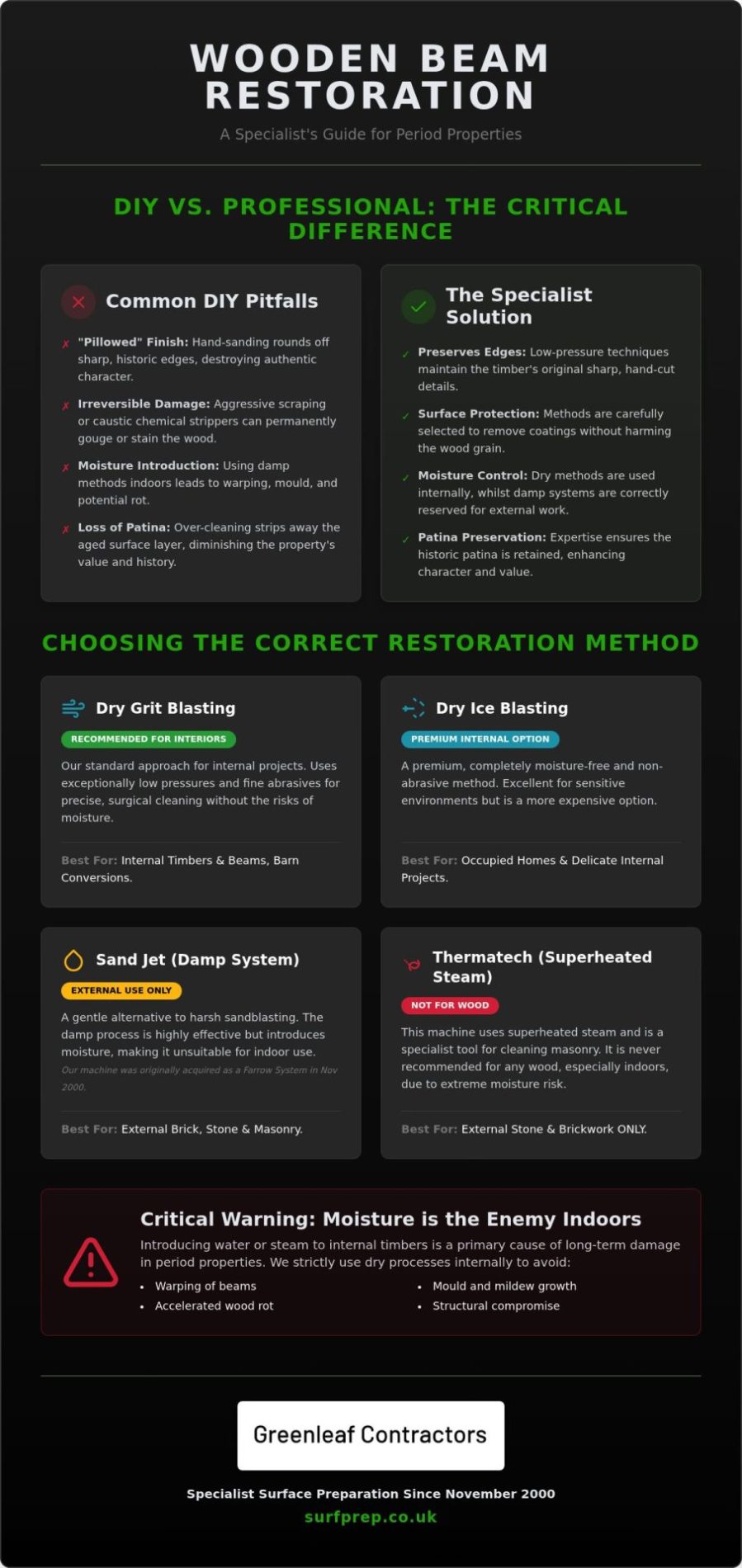
- The “Pillowed” Finish: Hand-sanding often rounds off the sharp, authentic edges of a beam, creating a soft, manufactured look that ruins the historic character.
- Heat Gun Hazards: Using heat to strip paint carries a hidden risk of scorching the timber or, worse, igniting old dust and debris trapped behind the beams.
- Loss of Patina: Over-sanding removes the aged surface layer that gives period timber its value and aesthetic appeal.
The Problem with Moisture and Indoor Timbers
Introducing water to an internal space is a mistake we’ve seen many times. Whether it’s a DIY pressure washer attempt or aggressive scrubbing, trapped moisture is the primary enemy of period properties. It leads to warping, mould, and eventually, rot. Whilst we utilise the Thermatech machine for its superheated steam capabilities on stone, we never recommend it for internal wooden beam cleaning. Moisture cannot escape easily from timber tucked into ceilings or walls, creating a damp environment that compromises the very structures holding up your home.
Professional Methods: Thermatech vs Sand Jet vs Dry Grit
Choosing the right technology is where the distinction in DIY vs professional wooden beam restoration becomes most apparent. Since our establishment in November 2000, we’ve utilised the Sand Jet (originally the Farrow System) as a gentle alternative to traditional sandblasting. It’s ideal for outdoor restoration where a damp abrasive can safely lift layers of grime. However, we strictly reserve our Thermatech superheated steam machine for brick and stone. Introducing steam to internal wood, particularly in occupied homes, creates significant moisture risks that we simply won’t take.
Whilst the debate over DIY vs professional wooden beam restoration often focuses on cost, we believe the real value lies in selecting the process that suits the specific timber species and its location. For internal professional historic wood restoration, we prioritise dry methods. Our standard approach involves traditional dry grit blasting at exceptionally low pressures and low abrasive rates. This allows for surgical precision without the risk of warping. If the environment is particularly sensitive, we offer dry ice blasting; it’s a premium, moisture-free option, though it is notably more expensive than grit-based alternatives.
Matching the Method to the Environment
The choice of equipment depends entirely on the building’s current state. Barn conversions often allow for more robust grit blasting before floors are laid, whereas occupied homes require a more contained, delicate touch. We always recommend specialist wooden beam cleaning that puts the building’s fabric first. By using dry processes internally, we ensure that your property remains structurally sound and free from damp-related issues. If you’re unsure which method fits your project, our team can provide a tailored assessment of your timber’s needs.
Evaluating the Investment: When to Call the Specialists
The debate surrounding DIY vs professional wooden beam restoration often centres on the initial quote, yet the true cost of an amateur mistake can be far higher. For complex projects like barn conversions, a specialist team can achieve in days what might take a homeowner months of frustrating trial-and-error. Since November 2000, we’ve focused on delivering results that respect the building’s history rather than just stripping it bare. Professional intervention is vital for preserving antique wood, as we understand exactly how to lift layers of modern paint without removing the centuries-old patina that defines a period property’s character and resale value.
Our approach is rooted in transparency; if a particular method isn’t right for your timber, we’ll tell you. With nearly 25 years of operational history, we’ve seen the long-term damage caused by “giving it a go” with aggressive chemicals or high-pressure tools. We prioritise safety and structural integrity, ensuring that our low-pressure dry grit systems clean the wood without the scoring or “pillowing” effects that often ruin original features.
Planning Your Restoration Project
Successful restoration requires careful coordination to manage the logistics of an occupied home. Before our team arrives, ensure the work area is clear of furniture and that any sensitive fixtures are adequately protected from dust. When selecting a contractor, look for a specialist who understands the nuances of UK building regulations and has a proven portfolio of similar period work. They should be transparent about their equipment, such as their specific use of Thermatech for masonry or dry grit systems for internal timber. If you’re ready to discuss your project’s specific requirements, you can contact us for a specialist assessment.
Securing the Future of Your Historic Timbers
Restoring a period home is a significant undertaking. The DIY vs professional wooden beam restoration decision boils down to the long-term safety and aesthetic value of your property. Whilst DIY attempts often result in grain damage or moisture traps, specialist dry grit methods preserve the wood’s authentic patina. Our Yorkshire-based team has been refining these delicate processes since November 2000, ensuring every timber is treated with respect.
We use our expertise in Thermatech and Sand Jet systems to provide honest advice on what’s best for your home. Don’t leave structural integrity to chance. You can request a professional timber assessment from Surfprep to safeguard your property’s heritage. We’re here to help you achieve a finish that honours the past whilst standing the test of time.
Frequently Asked Questions
Can I use a pressure washer to clean my internal beams?
You should never use a pressure washer or any high-volume water system on internal timbers. Introducing liquid water into the building fabric of a period property in York or Leeds is a recipe for long-term disaster. Moisture becomes trapped behind the wood, leading to rot, mould, and structural warping. Whilst we use the Sand Jet for external masonry, internal works require dry methods to protect your home’s integrity.
How much does professional beam restoration cost compared to DIY?
When weighing up DIY vs professional wooden beam restoration, consider the hidden costs of amateur mistakes. DIY materials are inexpensive, but the risk of ruining original features or causing structural damage is high. Professional restoration preserves the timber’s value and saves significant time on complex projects. We provide transparent advice based on our experience as specialists established in November 2000, ensuring you don’t pay for unnecessary repairs later.
What is the cleanest method for removing paint from beams indoors?
Traditional dry grit blasting, using exceptionally low pressures and low abrasive rates, is the most effective and precise method for indoor paint removal. It avoids the moisture risks associated with steam or damp systems like the Sand Jet. For highly sensitive environments, dry ice blasting is a premium, moisture-free alternative. However, dry ice is an expensive option compared to our standard surgical-precision dry grit techniques.
Will professional cleaning damage the original character of my timber?
