
The quickest way to permanently ruin a historic building is to let an inexperienced contractor loose on your masonry with a high-pressure sandblaster. You likely know that once the delicate “fireskin” (the protective outer layer of a brick) is stripped away, the damage is irreversible. It’s exhausting to deal with conflicting advice regarding caustic chemicals versus aggressive blasting when you just want gentle paint removal from old brickwork. Since we established our restoration business in November 2000, we’ve seen how the wrong approach leads to moisture traps and crumbling walls.
This guide explores how to safely restore your property using low-impact technology. You’ll discover how Thermatech superheated steam (often searched for as DOFF) and our damp sand jet system, originally acquired as a Farrow System in 2000, safely strip masonry paint while keeping bricks breathable. We’ll explain which methods protect your heritage home and why specialist expertise is vital for reclaiming its original aesthetic.
Key Takeaways
- Learn why preserving the brick’s “fireskin” is essential to prevent long-term moisture damage and structural decay in historic buildings.
- Understand the specific applications of Thermatech superheated steam and the sand jet system for achieving gentle paint removal from old brickwork.
- Discover why damp cleaning processes are strictly for external use, whilst internal brickwork requires dry grit or dry ice blasting to protect your property.
- Find out how to correctly plan your restoration project, including why a professional test patch is the only way to ensure a safe and aesthetic result.
The Risks of Traditional Blasting: Why Gentle Paint Removal is Essential
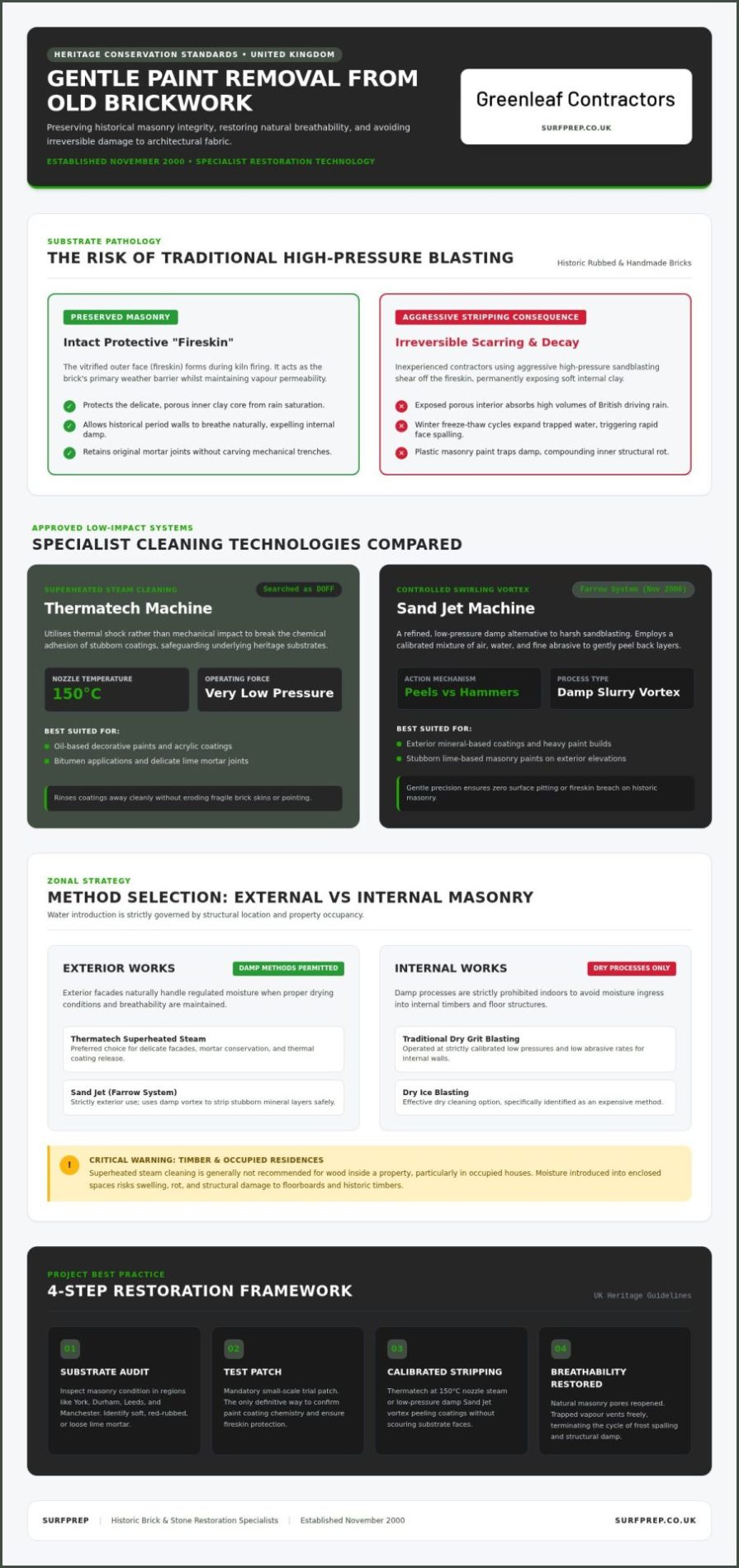
True restoration relies on the principle that gentle paint removal from old brickwork should be a controlled, surgical process. We define this approach as stripping unwanted coatings without compromising the fired “face” of the brick. Many contractors rely on traditional abrasive blasting at high pressures, which often causes irreparable “scarring.” This is a significant risk for the soft, red-rubbed, or handmade bricks common across Northern England. Once the hardened outer glaze is breached, the soft, porous interior is left vulnerable to the British weather.
Removing the brick face triggers a cycle of moisture absorption and structural decay. When water enters the exposed core, it expands during winter frosts, causing the brick to spall or flake away. Our team has operated since November 2000, and we’ve frequently been called to properties where aggressive cleaning has caused more harm than the original paint. Protecting the substrate is always our primary objective.
The Importance of Masonry Breathability in UK Period Homes
UK period homes were built to breathe, yet modern plastic-based masonry paints often trap moisture within the walls. These impermeable layers cause the underlying brick to stay damp, leading to internal rot and external crumbling. A gentle restoration method reopens the masonry’s pores without carving deep channels that invite water ingress. In historic centres like York or Durham, Conservation Officers typically mandate these sensitive techniques. Our brick restoration expertise ensures that the building’s natural moisture-wicking properties are restored, preventing the long-term decay associated with trapped dampness.
Gentle Paint Removal Technologies: Thermatech vs. Sand Jet Systems
Selecting the correct technology for gentle paint removal from old brickwork depends on the specific chemistry of the coating and the fragility of the substrate. We primarily utilise two specialist systems to ensure the masonry remains unharmed. The Thermatech machine is our preferred choice for superheated steam cleaning. By reaching temperatures of 150°C at the nozzle, it breaks the chemical bonds of oil-based, acrylic, or bitumen paints. This thermal shock allows coatings to be rinsed away at very low pressures, preserving the mortar and the brick face.
Whilst some contractors use “sandblasting” as a generic term, our sand jet (originally the Farrow System) is a far more refined alternative. It creates a low-pressure, swirling vortex of air, water, and fine abrasive that “peels” paint away rather than hammering it. This controlled action is essential for heritage projects; an authoritative National Park Service analysis of masonry deterioration highlights how high-impact cleaning can permanently ruin a building’s fireskin, leading to rapid decay.
The Sand Jet (Farrow System): A Specialist Exterior Solution
Our experience with the sand jet cleaning system dates back to November 2000. It is exceptionally effective for exterior walls where stubborn mineral or lime-based paints have bonded with the brickwork. Because this is a damp process, it’s strictly an outdoor solution. We don’t use it indoors to avoid introducing moisture into floorboards or structural timbers. If you’re unsure which method fits your project, our brick restoration specialists can provide an honest assessment based on your specific masonry type and the layers of paint present.
Planning Your Project: Internal vs. External Brick Restoration
Property owners in Leeds, Manchester, and the wider North should begin by assessing the current state of their masonry. Look for signs of previous aggressive cleaning or loose lime mortar. We recommend consulting SPAB’s guidance on repairing old brick walls to understand the conservation standards required for period properties. Before starting any project, we insist on a professional test patch. This small-scale trial ensures that the chosen method provides gentle paint removal from old brickwork without damaging the underlying substrate. You can view successful transformations on our brick cleaning service page.
Special Considerations for Internal Brickwork and Timber
Internal restoration demands a cautious approach. We never recommend superheated steam or damp sand jets for indoor feature walls or fireplaces, particularly in occupied properties. Introducing moisture into an enclosed space risks damaging floorboards and structural timbers. Instead, we advocate for traditional dry grit blasting at carefully calibrated low pressures. Dry ice blasting is another effective internal alternative, though it remains an expensive option due to logistical costs.
For those undertaking barn conversions, there is often a natural synergy between brick and wood restoration. Since establishing our business in November 2000, we’ve helped owners across the North integrate these processes safely. We act as honest advisors; if a method isn’t suitable for your specific interior, we’ll tell you why and offer a safer alternative. Avoid the DIY route with wire brushes and harsh chemicals, as these often lead to permanent staining and pitted surfaces that ruin the aesthetic you’re trying to reclaim.
Reclaiming the Character of Your Heritage Masonry
Restoring a historic building is a significant undertaking that requires a balance of advanced technology and traditional respect for materials. We’ve shown that success lies in protecting the brick’s fireskin by avoiding aggressive, high-pressure methods. Whether your project requires the superheated steam of the Thermatech system or the controlled swirl of our sand jet (originally the Farrow System), the goal is always a breathable, aesthetic finish. Since we established our business in November 2000, we’ve focused on providing honest, specialist advice to property owners across Leeds, York, Hull, and the wider North. Achieving gentle paint removal from old brickwork isn’t just about cleaning; it’s about ensuring the structural longevity of your home for decades to come.
Contact our specialists today for an expert assessment and quote for your brick restoration project. We look forward to helping you reveal your property’s true potential.
Frequently Asked Questions
Is it safe to remove paint from old brickwork without damaging the mortar?
Yes, it’s entirely safe if you use low-pressure, specialist systems like Thermatech or the sand jet. These methods are designed to strip paint whilst leaving the lime mortar and the brick’s protective fireskin intact. In heritage-rich cities like York and Durham, we use these technologies to ensure the masonry isn’t scarred. High-pressure alternatives often blast away the mortar joints, leading to expensive repointing costs.
How much does professional paint removal from brickwork cost in the UK?
UK industry averages for paint removal typically range from £20 to £55 per square metre for standard coatings, whilst lead-based paint requires specialist handling that can increase costs significantly. You should also budget for scaffolding, which often costs around £300 per week across the North of England. We provide bespoke quotes based on a physical assessment and a necessary test patch to determine the best approach.
Can you use a pressure washer to remove paint from old bricks?
You shouldn’t use a standard industrial pressure washer for gentle paint removal from old brickwork. High-pressure water jets often force moisture deep into the substrate and strip the brick’s face, causing permanent damage. Our superheated steam system operates at much lower pressures, using thermal shock at 150°C to melt the paint binders rather than relying on mechanical force to blast them off.
What is the difference between DOFF and Thermatech for steam cleaning?
DOFF and Thermatech are both market-leading superheated steam systems that reach 150°C to clean delicate masonry. Whilst DOFF is a widely recognised brand name, our business has utilised Thermatech technology since our early years to achieve identical restoration results. Both systems are highly effective for removing oil-based or acrylic paints without the need for harsh chemicals or aggressive abrasives on your property.
Will removing paint from my house solve damp issues?
Stripping non-breathable masonry paint is a vital step in resolving damp issues in period homes. Modern plasticised paints trap moisture within the walls, leading to internal damp and external spalling. By removing these layers, you allow the brickwork to breathe again. This process is particularly beneficial for solid-wall properties in damp climates like Manchester or Hull, where moisture management is essential for structural health.
