
Removing the paint is only half the job; protecting the sandstone matters just as much. Because this porous stone can absorb paint or ink, graffiti removal from sandstone needs more care than simply applying pressure or a strong cleaning product. A quick attempt could trade a visible mark for lasting changes to the surface.
Start by assessing the stone and the graffiti before choosing a method. This guide explains what to check, which approaches to avoid and when a specialist assessment may help protect the surface. Surfprep provides stone cleaning and graffiti removal in East Yorkshire and across locations including Hull, York, Leeds, Beverley and Scarborough. Depending on the surface, options may include superheated steam using Doff technology or a sand jet, a gentle alternative to traditional sandblasting that uses a damp process and isn’t recommended indoors. The right approach depends on the stone’s condition, not just the mark.
Key Takeaways
- With graffiti removal from sandstone, both the stone’s condition and the type of mark matter. Visible paint may not show whether residue has penetrated further.
- Before seeking advice, record the affected area, the stone’s condition, the graffiti and any previous treatments.
- Avoid trying household chemicals or pressure on a prominent area before the surface has been assessed.
- Consider a professional assessment for valuable, weathered or historic stone, extensive graffiti, or when earlier treatments are uncertain.
Why graffiti removal from sandstone needs a careful approach
Sandstone varies in texture, condition and porosity. On a more open or weathered surface, paint may sit on the face in one area but leave staining or residue in another. The visible mark does not necessarily show how far the graffiti has affected the stone.
Choose a treatment for the specific stone and its condition. A method that suits one sandstone wall may change the appearance of another. Assess both the graffiti and the surface before deciding what to try, and be realistic that removing a mark may not leave the stone looking exactly as it did before.
What makes paint difficult to remove from porous sandstone?
The stone’s texture and weathering, as well as the type of graffiti, all affect the assessment. Paint, marker ink and older residue may respond differently. On an already worn or uneven surface, a change in colour or texture can be especially noticeable. Aggressive scrubbing or an untested cleaning product may create a new visible patch rather than resolve the original mark.
General graffiti removal methods provide background, but they cannot determine the right treatment for an individual sandstone surface. Surfprep provides stone cleaning and graffiti removal, with the approach considered in relation to the material. See the stone cleaning service for related information about surface care.
How to assess sandstone graffiti before choosing a removal method
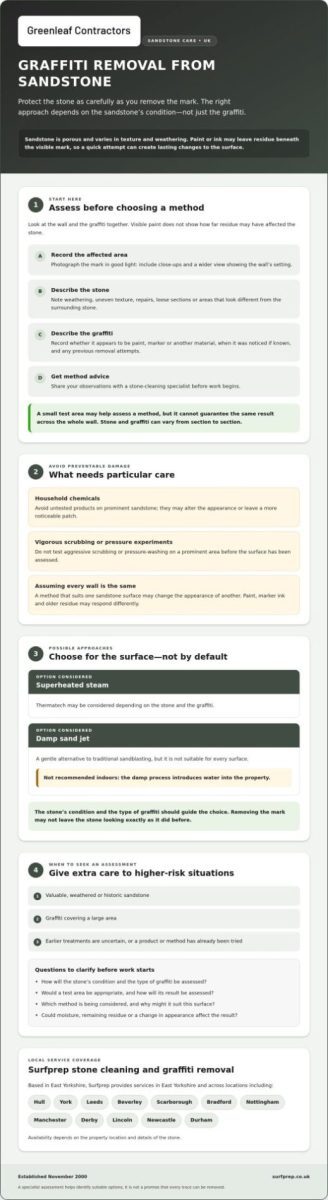
A useful assessment starts with the wall, not with a preferred cleaning method. Before cleaning, make a clear record of the affected area and its condition:
- Record the area: note where the graffiti begins and ends, and take photographs in good light. Include a wider view to show the wall’s setting as well as close-ups of the mark.
- Describe the stone: note visible weathering, uneven texture, repairs, loose sections or areas that look different from the surrounding stone.
- Note the graffiti: record whether it appears to be paint, marker or another material. Include when it was noticed, if known, and whether anyone has already tried to remove it.
- Seek method advice: share these observations with a stone-cleaning specialist before work begins.
A small test area can help assess a method, but it cannot guarantee the same result across the whole wall. Stone condition and graffiti can vary from section to section. Ask where a test would be carried out and how the result will be assessed before deciding whether to proceed with wider treatment.
Which cleaning methods need particular care on sandstone?
Avoid household chemicals, vigorous scrubbing or pressure-washing experiments on a prominent area before specialist assessment. These may change the stone’s appearance or make the affected patch stand out. Guidance from the Building Conservation Directory on professional graffiti removal on historic surfaces also highlights the need to consider masonry carefully before selecting a method.
Surfprep’s damp sand jet is a gentle alternative to traditional sandblasting, but it is not suitable for every surface and should not be used indoors because it introduces water. Superheated steam using Doff technology may also be considered, depending on the stone and the graffiti. For information about the sand jet option, see Surfprep’s sand jet cleaning service. In either case, assess the surface before choosing a method for graffiti removal from sandstone.
When to arrange professional sandstone graffiti removal in the UK
Arrange a specialist assessment before cleaning valuable, weathered or historic sandstone, or if graffiti covers a large area. It is also sensible to seek advice if someone has already tried a product or cleaning method and you are unsure what was used. With graffiti removal from sandstone, understanding the surface can help avoid making an existing stain or change in appearance more noticeable.
Surfprep provides stone cleaning and graffiti removal from its base in East Yorkshire. Its local service locations include Hull, York, Leeds, Beverley and Scarborough, as well as Bradford, Nottingham, Manchester, Derby, Lincoln, Newcastle and Durham. If your property is in one of these areas, enquire with the site location and details of the stone to discuss whether support is available. An assessment is an opportunity to consider suitable options, not a promise that every trace can be removed.
What should you ask a sandstone cleaning specialist?
Before work starts, ask clear questions and make sure you understand the proposed approach:
- How will the stone’s condition and the type of graffiti be assessed? Would a test area be appropriate?
- Which method is being considered, and why might it suit this particular surface?
- Could moisture, remaining residue or a change in appearance affect the result?
Surfprep’s sand jet cleaning information explains this method. It is a gentle alternative to traditional sandblasting, uses a damp process and is not recommended indoors. To discuss a sandstone site in Surfprep’s service area, contact Surfprep with its location, photographs and details of any previous treatment.
Protect sandstone with an informed next step
Sandstone varies in texture and condition, so graffiti can affect each surface differently. Start by documenting the mark and the stone, avoid untested chemicals or pressure, and seek advice before choosing a cleaning method. A small test can inform the assessment, but it cannot guarantee the same result across the whole wall.
For valuable, weathered or historic stone, extensive graffiti, or surfaces with uncertain previous treatments, a specialist assessment can help clarify the options and possible risks to the stone’s appearance. Surfprep provides stone cleaning and graffiti removal, including superheated steam cleaning and its damp sand jet method. The appropriate option depends on the surface being assessed.
If you are considering graffiti removal from sandstone, share the site location and details of the wall to start a practical conversation. Discuss sandstone graffiti removal with Surfprep.
Frequently Asked Questions
Can graffiti be removed from sandstone without damaging it?
Graffiti can sometimes be removed without visible damage, but no method can guarantee that result on every sandstone surface. Stone condition, texture and the type of graffiti all affect the outcome. Avoid scrubbing or applying household chemicals, and ask a specialist to assess the wall first. A test area may help guide the choice, but the full surface can respond differently.
Is a sand jet suitable for removing graffiti from sandstone?
A sand jet may be suitable for some sandstone, but it is not the right choice for every surface. Surfprep’s sand jet is a gentle alternative to traditional sandblasting, and its suitability depends on the stone’s condition and the graffiti. It uses a damp process, so it should not be used indoors. Ask a specialist to assess the wall before deciding on this or another method.
Can you use superheated steam to remove graffiti from sandstone?
Superheated steam may be considered for graffiti removal from sandstone, but only after assessing the stone and the mark. Surfprep provides superheated steam cleaning using Doff technology; this does not mean it is automatically suitable for every wall. Ask how the method may affect the stone’s appearance and whether a test area is appropriate before work begins.
What should I do if graffiti has stained a sandstone wall?
Do not assume the remaining colour is removable paint or keep applying products. Photograph the area, note any previous treatments and arrange a specialist assessment to discuss possible residue and realistic outcomes. Surfprep provides stone cleaning and graffiti removal across East Yorkshire and local locations including Hull, York, Leeds, Bradford, Nottingham, Manchester, Derby, Lincoln, Newcastle, Durham, Scarborough and Beverley. Contact the company with your site location to ask about support.
