
That high-pressure jet wash you’re planning is likely the biggest threat to your home’s historic masonry. Whilst it’s tempting to blast away stubborn carbon staining, using the wrong approach for how to clean stone window frames often leads to permanent scarring. You want your window surrounds to look sharp, but the fear of causing irreversible salt damage is a sign of a responsible homeowner. We’ve seen far too many beautiful sills ruined by a “quick fix” that ignores the stone’s natural need to breathe.
This guide explains how to restore masonry whilst protecting its structural integrity. Since starting Surfprep in November 2000, we’ve championed gentle restoration over destructive scrubbing. We’ll walk you through identifying stone types, safe domestic techniques, and why specialist tools like Thermatech (commonly known as DOFF) or a damp sand jet are the safest options for exterior restoration with intact mortar lines.
Key Takeaways
- Identify your specific masonry substrate and surface contaminants to ensure you don’t use a cleaning method that causes more harm than good.
- Discover how to clean stone window frames safely by following a methodical inspection and protection process that shields glass, timber, and lead flashing.
- Master the criteria for choosing between gentle domestic washing and professional intervention for stubborn carbon staining or impervious masonry paints.
- Understand the benefits of Thermatech superheated steam and low-pressure sand jet systems in preserving historic masonry details whilst maintaining the stone’s essential breathability.
Understanding Stone Window Frames: Substrates, Soiling, and Common Risks
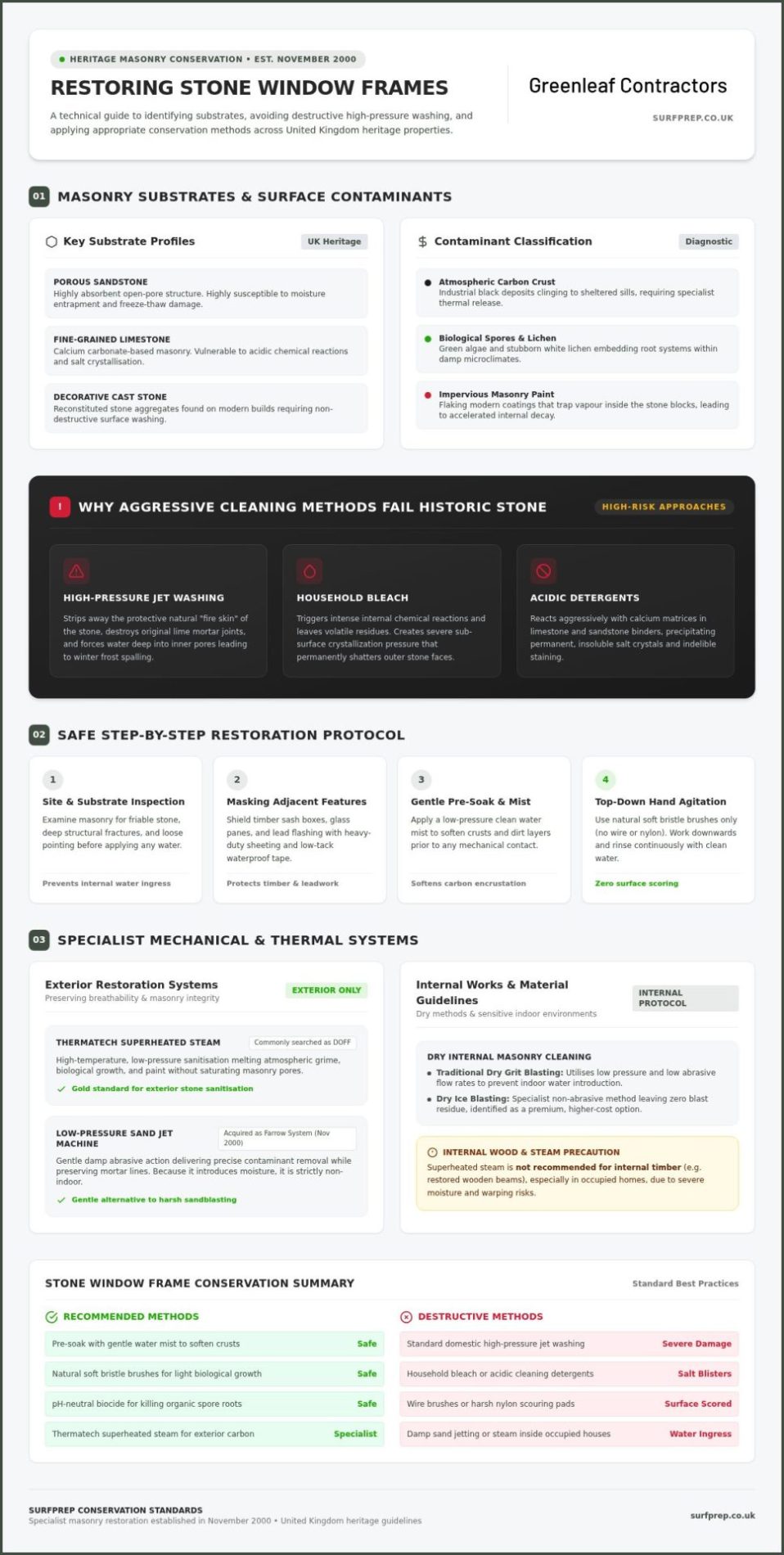
Before you learn how to clean stone window frames, you must understand what you’re actually cleaning. Most UK heritage properties feature porous sandstone or fine-grained limestone, whilst modern builds often use decorative cast stone. Each material has a unique relationship with moisture. Identifying these substrates is the first step in avoiding a costly restoration error. The history of Stonemasonry shows that stone must remain breathable; sealing it with the wrong chemicals or paint is a recipe for disaster.
Diagnostics involve looking for specific soiling types. Black crust atmospheric carbon often clings to sheltered areas, whilst damp-facing sills attract green algae and stubborn white lichen. You might also find layers of flaky masonry paint that trap moisture inside the block. Standard domestic pressure washers are the enemy here. They don’t just remove dirt; they strip away the stone’s protective “fire skin,” leading to face spalling and the rapid deterioration of original mortar lines. Since our establishment in November 2000, we’ve prioritised substrate integrity over aggressive washing.
The Vulnerability of Historic Sandstone and Limestone Window Surrounds
Historic window surrounds are surprisingly delicate. High water pressure forces moisture deep into stone pores, which then expands during winter frosts. This cycle causes the stone surface to shatter or “spall.” Similarly, acidic detergents often recommended by general cleaners react with the stone to cause insoluble salt crystallisation. This leads to deep staining that’s almost impossible to shift. We always advise protecting adjacent timber sash boxes and lime pointing before any work begins. For a truly safe restoration, exploring specialist stone cleaning methods is essential to preserve the building’s fabric.
How to Clean Stone Window Frames: Practical Step-by-Step Guidance
Before reaching for any tools, execute a thorough site inspection. Check the window surrounds for loose pointing, friable stone, or deep structural cracking. Washing compromised masonry will only force water into your property’s interior walls. Once the substrate is deemed stable, preparation is key. Mask off the glass panes, timber sash boxes, and surrounding lead flashing using heavy-duty, waterproof sheeting and low-tack tape. This prevents chemical run-off from damaging non-stone components.
When considering how to clean stone window frames without causing damage, pre-soaking is a vital preparatory step. Applying a gentle water mist softens hardened dirt crusts before any agitation takes place. Always use soft, natural bristle brushes rather than nylon or wire alternatives, which can score the surface. Work methodically from the top down, rinsing frequently with clean water to prevent dirt from re-depositing into the stone’s pores. If you encounter structural issues during your inspection, it’s wise to seek professional advice before proceeding.
Safe Cleaning Methods for Light Soiling and Biological Growth
For light dirt and early biological growth, a clean water misting system combined with patient hand-scrubbing is usually highly effective. If green algae or lichen persist, apply a specialist pH-neutral biocide. These professional formulations kill organic spores without leaving behind harmful salt deposits that cause sub-surface decay. Understanding how to clean stone window frames involves a strict rule: never use household bleach, as the resulting chemical reaction creates internal pressure that shatters stone faces. As detailed in the NPS Preservation Brief 1, using the gentlest effective method is the only way to avoid the irreversible damage caused by aggressive cleaning.
Specialist Restoration: When to Commission Professional Stone Cleaning
Domestic methods have clear limitations when you’re battling decades of industrial carbon crusting or impervious masonry paints. These heavy contaminants aren’t just unsightly; they actively trap moisture, accelerating the decay of the underlying substrate. When faced with these challenges, understanding how to clean stone window frames requires a shift from manual scrubbing to specialist thermal and abrasive intervention. The Natural Stone Institute stain removal guide illustrates that specific chemical and organic stains demand precise treatment to avoid permanent masonry damage.
Thermatech Steam and Sand Jet Technology for Architectural Stonework
Thermatech represents the gold standard in gentle masonry sanitisation. Whilst DOFF is a widely recognised industry term that customers often search for, we specifically utilise Thermatech superheated steam systems. By delivering vapour at 150°C whilst maintaining remarkably low pressure, this technology melts away biological growth and atmospheric grime without the mechanical force that causes surface pitting. It’s a methodical, non-destructive approach that leaves the stone intact and breathable.
For more stubborn encrustations or historical coatings, our sand jet system offers a controlled solution. Originally acquired as a Farrow System in November 2000, this machine is a gentle alternative to traditional sandblasting, using a damp abrasive mix to strip away neglect without eroding delicate masonry profiles. It’s important to remember that the sand jet is strictly an exterior damp process; we don’t recommend it for indoor use to prevent water ingress. Instead, we offer professional stone cleaning services for period homes across Yorkshire and the North, utilising dry grit or dry ice blasting for internal restoration projects where moisture must be avoided, though dry ice remains a significantly more expensive option.
Securing the Future of Your Heritage Masonry
Understanding how to clean stone window frames is ultimately about balancing aesthetic results with long-term structural health. You’ve seen that whilst manual washing handles light biological growth, stubborn carbon crusts and old paint layers require a specialist touch to avoid irreversible face spalling. Protecting the breathability of your sandstone or limestone ensures the masonry remains dry and sound for decades to come. Since our establishment in November 2000, we’ve focused on precision restoration using advanced Thermatech superheated steam and our gentle sand jet system. These methods provide the deep clean you need without the destructive force of traditional sandblasting. Speak with our team for expert architectural stone cleaning across Yorkshire and the North. Your stone surrounds are a defining feature of your home; give them the specialist care they deserve.
Frequently Asked Questions
Can I use a domestic pressure washer to clean stone window frames?
You shouldn’t use a domestic pressure washer for how to clean stone window frames. High-pressure water jets force moisture deep into the porous structure of sandstone and limestone, leading to surface spalling and eroded mortar joints. Across regions like York and Hull, we often see historic sills ruined by aggressive DIY washing. It’s better to use low-pressure methods that preserve the stone’s integrity.
What is the safest cleaning solution for natural sandstone window sills?
The safest approach for natural sandstone involves using clean water and pH-neutral, HSE-approved biocides. Avoid household bleach or acidic cleaners, as these cause insoluble salt crystallisation and permanent staining. When considering how to clean stone window frames safely, specialists prioritise non-reactive solutions that kill organic spores without altering the stone’s chemical composition or natural breathability.
How do specialists remove stubborn paint from architectural stone frames?
Specialists remove stubborn masonry paint using controlled, low-pressure abrasive systems. For exterior frames in Leeds or Scarborough, we utilise a gentle sand jet machine, originally acquired as a Farrow System in November 2000. For internal works, we switch to dry grit blasting or dry ice blasting to avoid introducing moisture into the property; dry ice is typically a more expensive option.
What is the difference between Thermatech superheated steam and standard jet washing?
Standard jet washing relies on high mechanical pressure to blast away dirt, which often damages delicate stone. Thermatech superheated steam cleaning uses high heat (150°C) and very low pressure to melt away contaminants. This thermal action effectively removes carbon staining and biological growth whilst protecting the substrate. Whilst DOFF is a common search term, our Thermatech system offers superior precision for heritage restoration.
