
A brown mark on brick isn’t always ordinary rust. Removing metallic stains from masonry starts with identifying the metal and its source: iron, manganese and vanadium can stain brickwork, while moisture carrying soluble salts leaves efflorescence as it evaporates. Colour offers a clue, but the type of masonry matters too.
It’s tempting to reach for a strong cleaner straight away, but the wrong treatment can mark or damage masonry. This guide explains how to distinguish metallic stains from rust, efflorescence and other common marks, then choose a suitable next step.
Learn what different stains can look like, how to trace their likely causes and why gentle, material-aware cleaning is a sensible starting point.
Key Takeaways
- Use a stain’s colour and pattern as clues, but distinguish metallic marks from salt deposits and organic growth before choosing treatment.
- Trace the source of the discolouration, such as corroding metal or moisture movement, to help prevent the mark returning.
- Match the cleaning method to both the stain and the masonry; start gently and avoid treatments that could damage the surface.
- For brick or stone that needs careful cleaning, choose an approach suited to the material and the condition of the staining.
What Causes Masonry Stains?
Test a masonry cleaner on a small, inconspicuous patch first. Follow the product instructions, then check the area after rinsing and drying for colour changes, surface damage or residue before treating a wider area.
For historic or listed masonry, consult a specialist before applying chemicals or abrasive cleaning. Older brick, soft mortar and acid-sensitive stone can be permanently altered by an unsuitable method.
- Identify the mark and surface. Match the method to both the stain and the material. Brick, concrete, mortar and natural stone react differently to cleaners, so don’t assume a product suitable for concrete is safe on limestone.
- Start with the mildest cleaning method. Remove loose powder with a soft brush, then use clean water where appropriate. Increase treatment strength only if needed, since aggressive pressure washing can damage brick faces and mortar joints.
- Choose a cleaner for the stain. A proprietary rust remover may suit iron staining, but acidic ingredients such as oxalic or phosphoric acid can harm some masonry. Follow the label, protect nearby surfaces, and rinse thoroughly with clean water.
- Treat organic growth according to its cause. Moisture, shade and airborne spores encourage algae, moss and mould. Use a masonry cleaner or biocide designed for organic growth, allow its stated dwell time, then rinse as directed.
- Protect yourself and nearby areas. Wear gloves, goggles and suitable clothing when handling cleaners; respiratory protection may be needed in dusty or chemical-rich conditions. Never mix acidic cleaners with bleach or chlorine products, and shield plants and metal fixtures from splashes.
Causes of metallic staining on masonry
To reduce repeat staining, prevent corroding metal and its runoff from reaching the masonry. Check how rainwater flows from fittings, plaques or planters, then separate the source from the wall or redirect the runoff. Addressing the cause can prevent the need for another cleaning treatment.
- Map where each mark begins. Note whether a stain starts directly below a fixture, follows a joint or spreads across a broader patch. A narrow trail beneath a metal fitting suggests runoff; a mark centred around a fixing may point to corrosion at the contact point.
- Inspect bronze and copper items. Plaques, planters and light fittings can leave coloured deposits where weather runoff reaches stone or brick. Compare the stain’s path with the exposed metal above it, rather than relying on colour alone.
- Check the brick’s original finish. Some metallic marks relate to minerals or colouring agents within the brick, rather than an object attached to the wall. If staining appears across several bricks with no clear runoff path, avoid assuming that a nearby fixture is responsible.
- Look for changes after wet weather. Record whether fresh streaks appear below the same source after rain. This helps distinguish an active route from an old, isolated mark and informs the next step in removing metallic stains from masonry.
- Control contact and runoff. Keep corroding metal components from resting against masonry, and direct water away from stained areas where practical. Once the source is controlled, choose a cleaning approach suited to the affected material, rather than repeatedly treating marks while the cause remains active.
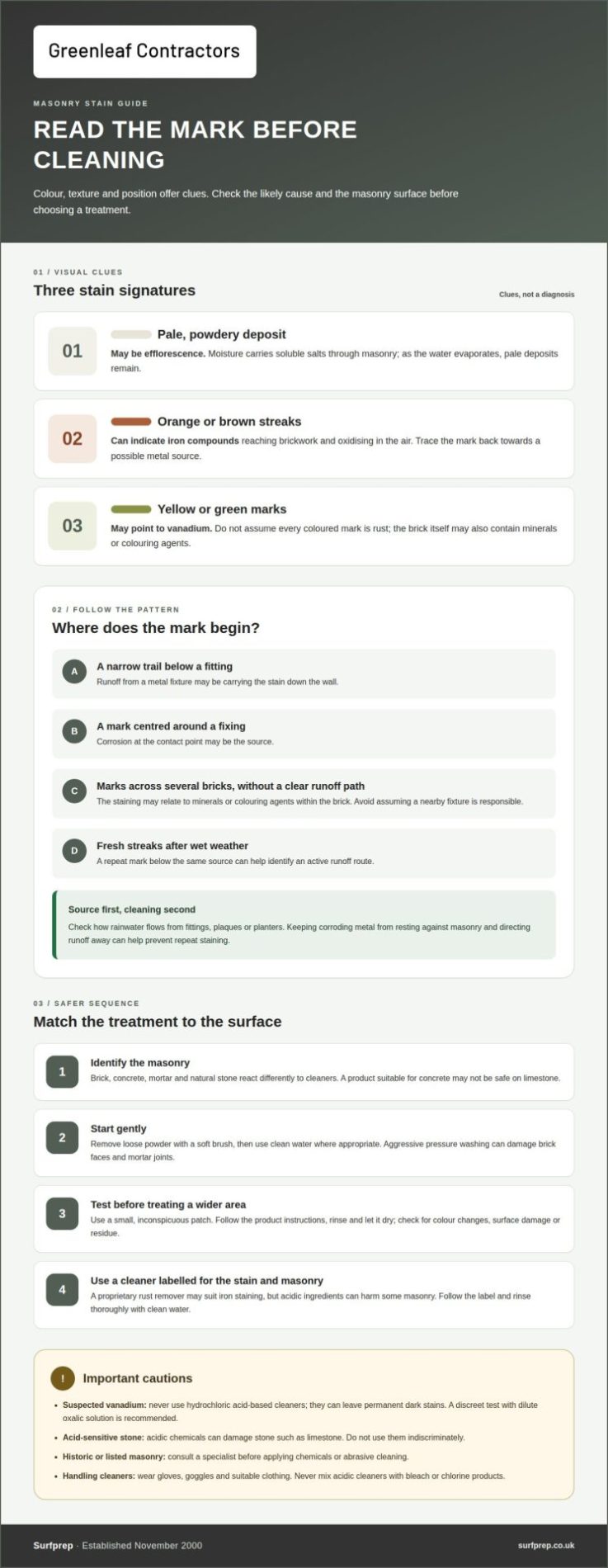
Identifying efflorescence, rust and other masonry stains
Compare the mark’s colour, texture and position before choosing a treatment. Moisture patterns and nearby metal fixtures can help distinguish rust from salt deposits or other stains.
- Check the stain’s appearance. Efflorescence leaves pale, powdery deposits as water evaporates from masonry. Orange or brown streaks can indicate iron compounds reaching the brickwork and oxidising in air; yellow or green marks may point to vanadium.
- Inspect nearby metal fixtures. Look for corrosion on railings, grates, fixings or planters, then trace where rain or sprinkler water runs across the surface. Cleaning the fixture alone won’t stop rust transferring onto masonry if the runoff continues.
Remove rust stains from masonry
Find and address the source of the rust before treating the mark. Choose a proprietary rust remover labelled as suitable for the masonry and follow the manufacturer’s instructions. Acidic chemicals can damage acid-sensitive stone, including limestone, so don’t use them indiscriminately. Rinse treated areas thoroughly with clean water.
Remove rust stains from brick
Use a proprietary brickwork cleaner intended for rust, follow its instructions and test it discreetly first. Iron and manganese stains may weather away naturally, while a brickwork cleaning solution can speed up removal. Never use hydrochloric acid-based cleaners on suspected vanadium marks, as they can leave permanent dark stains. A discreet test with dilute oxalic solution is recommended for vanadium.
- Choose a suitable cleaning approach for the affected brickwork. If rust marks cover a broad area or sit alongside other surface contamination, professional brick cleaning can help match the treatment to the material and stain.
Surfprep: Brick cleaning
Surfprep provides brick and stone cleaning for masonry affected by staining and other surface contamination. Established in November 2000, the business assesses the material and the condition of the marks before choosing a suitable cleaning approach. This matters because a treatment that lifts rust from robust brickwork may not be appropriate for more delicate stone.
If stains keep returning, identifying their source is essential: cleaning alone won’t address ongoing corrosion or moisture movement. For marks across brickwork or staining on stone that needs careful assessment, professional cleaning can help restore the surface without relying on an unsuitable treatment. Surfprep also cleans wooden beams; the right method depends on the material and setting.
Contact Surfprep to discuss your masonry cleaning needs.
Plan the next step for your masonry
Before arranging treatment, note where the staining appears, whether it changes after wet weather, and whether there is nearby metalwork or water runoff. These observations can help narrow down the cause and give a cleaning specialist a clearer starting point. A measured approach to removing metallic stains from masonry can help prevent treatments that are too harsh for the surface.
Surfprep provides brick cleaning and stone cleaning, as well as wooden beam cleaning. The right service depends on the material and the condition of the affected area, rather than the stain’s colour alone. If the marks are extensive, recurring or on delicate masonry, a professional assessment can help establish a suitable way forward.
Contact Surfprep to discuss masonry cleaning and take the next step towards a cleaner, well-cared-for surface.
Frequently Asked Questions
What is metallic staining?
Metallic staining is discolouration caused by metal compounds depositing on or moving through masonry. It can come from corroding fixings, runoff from metalwork or minerals within the brick itself. The mark’s appearance depends on the metal and the path of moisture: a streak below a fixing, for example, suggests a different source from an even patch across a wall.
What causes metallic stains on brick, stone and other masonry?
Metal stains develop when water carries metal compounds onto masonry or brings minerals within the material to its surface. A rusty railing can leave orange marks below it, while copper runoff may create green staining on stone. Brick ingredients can also contribute: manganese used in production may cause dark discolouration when exposed to water or acid.
How can you identify rust, copper, iron and other metal stains on masonry?
Use colour and position as clues, then inspect nearby metalwork and water paths. Iron rust usually appears orange or brown, while copper deposits can look green or blue-green. Dark brown or black marks may indicate manganese, and vanadium may appear yellow or green. Pale, powdery efflorescence differs from these coloured stains and often brushes away when dry.
What is the safest way to remove rust stains from brick or stone?
First stop the source of the rust, then select a remover labelled for the specific masonry. Treating stone requires particular care: limestone can be permanently damaged by acidic cleaners. Test a discreet patch and follow the product directions, including rinsing. For fragile, historic or extensively stained surfaces, professional cleaning can help avoid damage from unsuitable chemicals or overly aggressive treatment.
Which commercial rust removers are suitable for masonry in the UK?
Choose a proprietary rust remover whose label specifically says it is suitable for masonry and the material being treated. Some products use oxalic or phosphoric acid, but these can harm acid-sensitive stone. Check the manufacturer’s instructions, test a hidden patch and rinse thoroughly. Avoid generic strong acids, especially on limestone or unidentified historic masonry.
