
Could your weekend attempt at improving your home’s kerb appeal actually be the very thing that destroys your driveway’s structural integrity? It’s a question we hear often from concerned homeowners: is pressure washing bad for block paving? Whilst the immediate blast of water might strip away the moss and grime, it frequently takes the essential jointing sand with it, leaving you with wobbly blocks and a surface that’s more susceptible to weed growth than before you started.
We understand the frustration of watching an expensive driveway slowly lose its finish to pitting and “blown” pavers. Since we established our business in November 2000, we’ve advocated for a more measured, specialist approach that prioritises the longevity of the material. This guide will show you why traditional high-pressure methods often do more harm than good and introduce you to the professional alternatives that preserve your stone whilst delivering a superior, long-lasting finish.
We’ll explore the technical advantages of superheated steam cleaning using Thermatech (also widely recognised as the DOFF system) and our gentle sand jet machine, which we originally acquired as a Farrow System. You’ll learn how to achieve a pristine finish without the structural risks, ensuring your driveway remains a durable asset rather than a maintenance headache.
Key Takeaways
- Understand the structural risks of high-PSI cleaning and why experts often conclude that is pressure washing bad for block paving when it strips away essential surface fines and jointing sand.
- Explore the benefits of superheated steam cleaning using Thermatech (the DOFF system) to eliminate moss and algae spores without damaging the paver’s integrity or making it more porous.
- Learn how the damp abrasive process of a sand jet machine, our specialised Farrow System, provides a gentle alternative for removing stubborn carbon or paint from outdoor blocks.
- Discover why a professional restoration requires more than just water, involving careful stain treatment and the essential replacement of kiln-dried sand to ensure long-term stability and kerb appeal.
The Hidden Risks: Why High-Pressure Jet Washing Can Be Bad for Block Paving
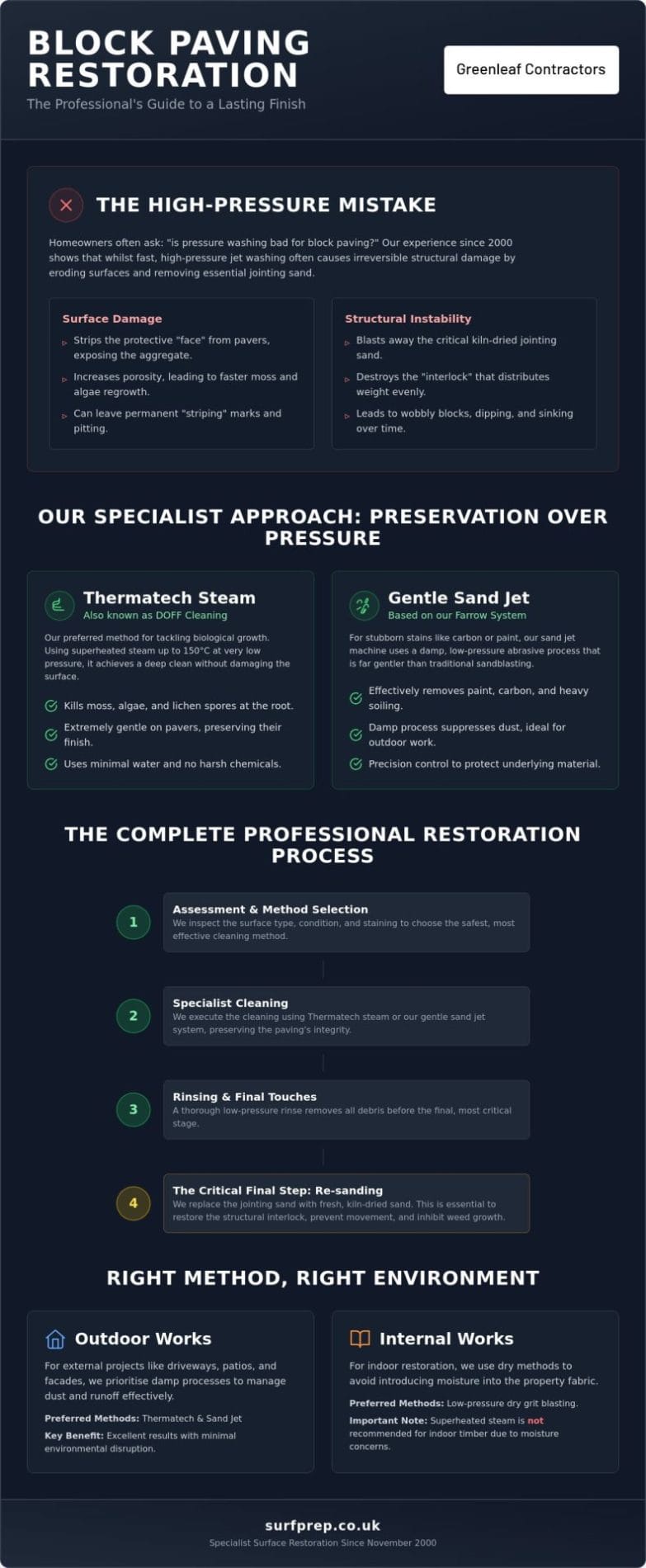
Many homeowners assume a high-pressure jet wash is the only way to shift stubborn winter grime. It’s a common misconception. When considering if is pressure washing bad for block paving, we have to look at the physical impact on the material itself. High-PSI water doesn’t just clean; it erodes. Since we began our work in November 2000, we’ve seen the long-term consequences of aggressive cleaning methods that prioritise speed over the health of the stone.
Surface Abrasion and Pitting
Concrete block paving is designed with a factory-finished “face” that protects the structural core of the block. We’ll make an expert admission here: whilst a high-pressure blast provides an instant “wow” factor, it’s often stripping away the top “fines” of the concrete. This process exposes the internal aggregate and makes the stone significantly more porous. Once that protective layer is gone, the surface becomes a magnet for organic growth. You’ll find that moss and algae return much faster because they have a rougher, pitted surface to cling to. We’ve even seen cases where DIY lances have permanently etched “striping” marks into the driveway, damage that’s often impossible to reverse without replacing the blocks.
Joint Integrity and Structural Stability
The most critical part of any driveway isn’t actually the blocks; it’s the sand between them. This kiln-dried sand creates an “interlock” that allows the pavers to distribute weight evenly across the surface. When high-pressure jets blast out this sand, often reaching the bedding course itself, the entire system is destabilised. Without that sand, the blocks lose their friction-based support and start to move. This leads to wobbly pavers and eventually causes “dipping” where car tyres regularly sit. It’s why we often recommend a more controlled, gentle abrasive approach or superheated steam to ensure the structural “skeleton” of your driveway remains intact whilst the surface is restored.
Professional Alternatives: Why We Favour Thermatech and Sand Jetting
When property owners ask if is pressure washing bad for block paving, they are usually reacting to the damage caused by high-pressure cold water. We believe in a different approach. Rather than relying on “brute force” that can etch stone and destabilise joints, we utilise technical precision to achieve a superior finish. A critical factor in our choice of equipment is moisture management; we distinguish clearly between external restoration and internal works to protect the building’s fabric. For properties amongst the historic streets of Leeds and York, prioritising pavement preservation is essential to maintaining the value of the home.
The Power of Thermatech (DOFF) Steam
Our preferred method for tackling biological growth outdoors is Thermatech (widely recognised by the industry term DOFF). This system produces superheated steam at temperatures reaching 150°C. While a standard jet wash just moves spores around, superheated steam kills lichen and “black spot” algae at the root without needing high mechanical pressure. It’s a gentle yet highly effective process we also employ for delicate brick cleaning. We’ll admit that steam cleaning can sometimes take longer than a high-pressure blast, but we never recommend superheated steam for indoor wood or masonry in occupied houses due to moisture concerns.
The Sand Jet Machine for Stubborn Restoration
For driveways with heavy carbon build-up or old paint spills, steam may not be enough. This is where our sand jet machine comes into play. Originally acquired as a Farrow System when we established the business in November 2000, this machine uses a damp abrasive process that’s far gentler than traditional sandblasting. This damp process is preferred for outdoor work because it naturally suppresses dust. For internal works, however, the preference shifts to dry methods to avoid introducing water into a property. We typically use traditional dry grit blasting at low pressures and low abrasive rates for these applications. Whilst dry ice blasting is an alternative, it’s a significantly more expensive option. If you’re worried about the state of your driveway but want to avoid the risks of aggressive jetting, contact our team for a specialist assessment to see which restoration method is right for your paving.
The Professional Restoration Process: Beyond Simple Cleaning
A truly effective restoration involves a methodical, multi-stage approach that begins long before any machinery is turned on. We start by removing loose surface debris and treating specific oil or petrol stains with professional-grade detergents. This chemical preparation is vital. If you simply blast an oil stain with high-pressure water, you risk forcing the contaminant deeper into the porous block, making it nearly impossible to remove later. Our process ensures that the surface is chemically prepared to release deep-seated grime before we apply any thermal or abrasive cleaning methods.
The question of whether is pressure washing bad for block paving often boils down to the steps taken after the water stops flowing. One of the most significant mistakes we see in DIY tutorials is the rush to finish the job in a single afternoon. We insist on a mandatory drying period. Attempting to replace jointing sand whilst the blocks or bedding courses are still damp is a recipe for long-term failure. Patience is a technical requirement, not a suggestion.
Re-sanding and Joint Stabilisation
Kiln-dried sand is the “glue” that maintains the structural interlock of your driveway. If you attempt to re-sand whilst the area is wet, the sand clumps together. This prevents it from flowing to the bottom of the joints, leading to air pockets and poor drainage. Over time, these gaps allow the blocks to shift under the weight of a vehicle. We prioritise transparency in our service; if your driveway joints are still stable and don’t require a full re-sand, we will tell you. We don’t believe in charging for unnecessary materials or labour, and encourage homeowners to research Project-based flooring installation and restoration fees to better understand the value of specialist restoration work.
Long-Term Maintenance and Kerb Appeal
Once the blocks are clean and the joints are fully stabilised with dry sand, you might consider an optional sealant. This can help protect the restored colour and inhibit future weed growth by hardening the top layer of the jointing sand. For our commercial clients in Manchester or Hull, this level of detail is essential for improving business curb appeal. Whether it is a domestic driveway or a large industrial forecourt, a professional finish adds tangible value and ensures the surface remains safe and slip-resistant for years to come.
Protecting Your Driveway with Specialist Restoration
A driveway is a significant investment in your property’s value. We’ve explored how aggressive cleaning often leads to long-term erosion, but with the right methods, your paving can be restored safely. The real answer to whether is pressure washing bad for block paving depends on the tools used. By choosing superheated steam via Thermatech or the controlled, damp abrasion of our sand jet machine, you avoid surface pitting and keep the jointing sand intact.
Since establishing our business in November 2000, we’ve prioritised transparency and technical precision. We serve Leeds, York, Hull, and homeowners across Northern England, offering honest advice on the best restoration path for your specific materials. If your driveway needs a professional touch without the structural risks, contact our East Yorkshire team for a professional surface assessment. We look forward to helping you achieve a finish that adds genuine kerb appeal and durability to your home.
Frequently Asked Questions
Does pressure washing cause more weeds to grow in block paving?
Yes, aggressive jetting often accelerates weed growth by stripping away the protective jointing sand and creating a porous, pitted surface. When people ask if is pressure washing bad for block paving, they’re often seeing the result of high-pressure DIY lances that leave the blocks vulnerable. Without the sand to block light and space, seeds find a perfect anchor in the damp gaps between the pavers.
How often should I have my block paving professionally cleaned?
Most driveways benefit from a specialist deep clean every two to three years depending on the level of shade and organic debris. Whilst a typical DIY job might only look clean for three to six months, our professional restoration results generally last between 12 and 18 months. This longevity is due to the use of superheated steam which kills the biological spores that cause rapid regrowth.
Can Thermatech steam cleaning remove oil stains from a driveway?
Thermatech (or the DOFF system) is highly effective at lifting oil because the 150°C steam helps to emulsify the grease. We’ll admit that for deep or historic petrol spills, steam alone might not be enough to achieve a perfect result. In those specific instances, we apply professional-grade detergents to draw the oil to the surface before the steam cleaning begins to ensure a thorough restoration.
Is it necessary to re-sand block paving every time it is cleaned?
Re-sanding is almost always necessary to restore the structural interlock of the paving system. If a cleaning process removes even a small amount of kiln-dried sand, the blocks can begin to shift under the weight of a vehicle. We always ensure a full drying period before applying new sand; clumping is a common mistake that prevents the sand from reaching the bottom of the joints.
