
The very tool you think is “restoring” your property might actually be stripping away its future. Many homeowners assume high pressure is the only way to shift stubborn grime; however, using a standard jet wash on period masonry often leads to “blown” brick faces and unwanted water ingress. If you’re wondering, is steam cleaning better than pressure washing for brick, the answer depends on your property’s age and the specific contaminants you’re facing.
At Surfprep, we’ve been advising clients across the UK since November 2000 on how to achieve a restored facade without risking structural damage. You likely want to remove unsightly white salts whilst ensuring your home stays watertight. In this specialist comparison, we’ll explain why superheated steam from a Thermatech machine is often the superior choice for preservation. We’ll also explore where our sand jet system fits in and how August 2026 GB CLP regulations affect professional cleaning standards.
Key Takeaways
- Understand why high-pressure kinetic energy often “blows” brick faces and how superheated steam offers a safer, thermal-based alternative for older masonry.
- Discover if steam cleaning is better than pressure washing for brick by comparing how each method tackles common issues like efflorescence and moss.
- Learn why Thermatech systems are the preferred choice for heritage buildings and removing stubborn oil-based paints without needing harsh chemicals.
- Identify when a hybrid approach, such as using a gentle sand jet for heavy carbon deposits, provides a more thorough restoration than steam alone.
Understanding the Mechanics: Steam vs. Pressure Washing
To understand why specialists often prefer steam, we must look at the physics. Pressure washing relies on mechanical kinetic energy, measured in PSI, to physically blast dirt from a surface. Whilst effective for concrete, it’s often too aggressive for friable brick. Conversely, superheated steam uses thermal energy to break the bond between contaminants and the brick face. At Surfprep, established in November 2000, we’ve found that this gentler approach to brick cleaning prevents the structural trauma associated with high-pressure impact.
If you’re asking is steam cleaning better than pressure washing for brick, the answer lies in “thermal shock.” Our Thermatech system produces superheated steam at temperatures reaching 150°C. This intense heat kills biological spores like algae and moss at the root, preventing rapid regrowth. Whilst DOFF is a term many customers search for, we specifically utilise Thermatech for its precision and reliability in masonry restoration. Unlike cold water jetting, which merely trims the surface of organic growth, steam ensures a deeper clean without the need for high-volume water impact.
Why High Pressure Can Be Destructive to Masonry
High pressure carries a high risk of “etching,” where the water stream permanently scars the brick’s protective outer layer. This damage is irreversible and compromises the building’s aesthetic. While high pressure is unsuitable for delicate brickwork, it remains a standard solution for more resilient surfaces; for instance, Snugs Services employs professional pressure cleaning to maintain structural integrity in industrial environments like parking garages. On masonry, however, high-pressure systems often cause:
- Mortar Damage: Standard jet washes can easily rake out soft lime mortar joints common in historic UK properties.
- Water Drive: Brute force pushes moisture deep into the substrate, causing internal damp.
- Efflorescence: Excess water triggers the emergence of white salts as the masonry dries.
When is Steam Cleaning the Superior Choice for Your Brickwork?
Steam is non-negotiable for heritage and listed buildings where conservation officers mandate non-abrasive methods. Using steam cleaning for conservation ensures that delicate, aged surfaces remain intact whilst removing decades of pollutants. If you are weighing up is steam cleaning better than pressure washing for brick, consider its ability to lift oil-based paints and bitumen without relying on harsh chemical strippers. For properties in Leeds and Manchester, where industrial history has left heavy carbon crusting, steam provides the necessary thermal energy to dissolve these deposits safely. Superheated steam leaves the brickwork breathable and dry within minutes, avoiding the deep saturation caused by high-volume pressure washing.
Thermatech vs. Traditional Jet Washing: A Performance Comparison
The difference in water consumption is stark. A Thermatech machine uses significantly less water than a standard jet wash, which is crucial in the UK to avoid freeze-thaw damage during winter months. Beyond moisture control, the heat provides a sterilisation benefit that cold water cannot match. By killing biological spores, steam prevents the immediate regrowth of green algae and moss. We must offer an expert admission here; for heavy industrial soiling on modern engineering bricks, a controlled pressure wash may suffice. However, for those seeking a premium aesthetic finish, steam remains the gold standard. If you are unsure which method suits your property, our team can provide a specialist brick assessment to guide your decision.
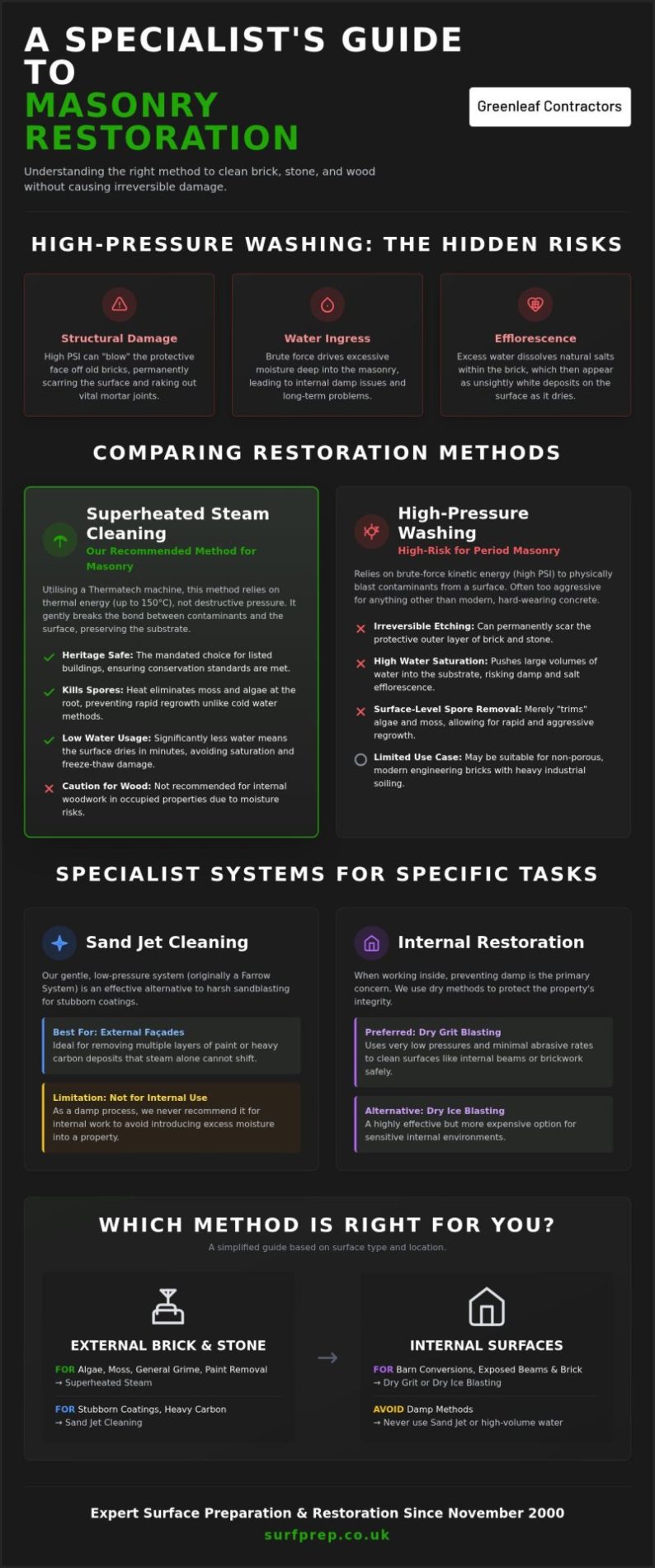
Selecting the Right Restoration Method for Your Property
Choosing the correct restoration method isn’t about picking a favourite machine; it’s about understanding the substrate. The final decision rests on three critical factors: the age of the brickwork, the type of contaminant present, and the specific finish you want to achieve. For properties in York or Hull, where local clay bricks vary significantly in density and porosity, a professional assessment is essential to avoid using a method that’s either too weak or dangerously aggressive.
When considering is steam cleaning better than pressure washing for brick, it’s vital to acknowledge that some pollutants require more than just heat. For stubborn coatings that steam cannot shift, we utilise our sand jet cleaning machine. This system, which we’ve operated since November 2000, was originally acquired as a Farrow System. It offers a gentle, low-pressure alternative to traditional sandblasting, allowing us to strip away layers without pitting the brick face.
When to Consider Sand Jetting or Dry Blasting
Whilst the sand jet is remarkably effective for external facades, it’s an honest specialist’s duty to note its limitations. Because it’s a damp process, we never recommend it for internal use. For internal restoration, such as barn conversions, we prefer traditional dry grit blasting using low pressures and minimal abrasive rates. This keeps the property dry and protects the structural integrity of the building. For particularly delicate internal timber or brick, dry ice blasting is a premium, moisture-free option, though it’s significantly more expensive than other methods.
Restoring Your Building with Confidence
Choosing the right restoration method is the difference between a revived facade and permanent structural damage. Whilst traditional jet washing relies on aggressive force, superheated steam from a Thermatech machine offers a non-abrasive solution that preserves the delicate face of historic masonry. For more stubborn industrial coatings, our gentle sand jet system provides a middle ground that pressure washing simply cannot match. This approach ensures your property remains breathable and free from the risks of water drive.
Deciding is steam cleaning better than pressure washing for brick requires a specialist’s eye, particularly when dealing with the varied clay bricks found across Leeds, York, Hull, and Manchester. Since November 2000, Surfprep has combined technical precision with honest advice to ensure every project receives the safest treatment possible. Contact our specialist team for a brick cleaning assessment in the North to discover the most effective path for your property’s restoration. Your building’s character is safe in our hands.
Frequently Asked Questions
Is steam cleaning more expensive than pressure washing for brickwork?
Steam cleaning is typically a more significant investment than standard pressure washing. The specialised Thermatech machinery requires high-temperature fuel and a slower, more methodical pace to ensure the brickwork isn’t damaged. Whilst it costs more than a basic jet wash, it prevents the expensive structural repairs often needed after “blown” brick faces or ruined mortar joints caused by aggressive high pressure.
Will steam cleaning remove old paint from my bricks?
Superheated steam is exceptionally effective at removing many old paints, including lead-based and bitumen coatings. The 150°C heat creates a thermal shock that breaks the bond between the paint and the masonry. If you’re dealing with thick, modern plastic-based paints, we might suggest our sand jet system as a gentler abrasive alternative to ensure a completely clean finish without scarring the brick.
Can I use a steam cleaner on the interior brickwork of my house?
We don’t recommend using superheated steam for interior brickwork, particularly in occupied houses. The process generates a large volume of vapour that can lead to condensation and moisture issues indoors. For internal projects in Leeds or Manchester, we prefer dry grit blasting at low pressures or dry ice blasting, which is an expensive but moisture-free option for delicate indoor restoration.
Is the Thermatech system the same as DOFF cleaning?
Both systems operate on the same scientific principles of superheated steam. Whilst DOFF is a name many customers recognise, we utilise the Thermatech system for its exceptional reliability and temperature control. Both are accepted as the industry standard for heritage restoration in the UK, ensuring that delicate masonry is cleaned without the abrasive damage associated with traditional sandblasting or high-pressure jetting.
How long does it take for bricks to dry after superheated steam cleaning?
Bricks usually dry within minutes after being treated with superheated steam. Unlike traditional jetting that saturates the substrate with high volumes of water, the Thermatech system uses very little moisture. This rapid drying is a major factor when deciding is steam cleaning better than pressure washing for brick, as it significantly reduces the risk of efflorescence and freeze-thaw damage in the UK climate. For those interested in professional concrete cleaning, you can visit Ehrman’s Power Wash to see how experts manage these more durable surfaces.
