
An operating site doesn’t automatically rule out masonry blast cleaning. Wet or dust-controlled methods can reduce airborne dust and disruption, but the right approach depends on the surface, the material to remove and the work happening nearby.
Pressure washing can suit general dirt, while abrasive blasting is often more effective for paint, graffiti and ingrained contamination. That extra cleaning power needs careful control: brick, concrete and stone vary in condition, so the abrasive and pressure must be matched to the material to limit surface damage. This guide compares the two methods, explains what affects the risk to masonry and outlines what to consider when work needs to continue on site. You’ll see where a gentler abrasive approach may fit, and when another cleaning method is more suitable.
Key Takeaways
- Match the cleaning method to the masonry’s material, age and condition to help limit surface damage.
- Abrasive cleaning can tackle paint, graffiti and ingrained build-up; pressure washing is often better suited to general dirt.
- Choose the abrasive and pressure carefully, especially on worn or detailed brick, concrete and stone.
- On operating sites, wet or dust-controlled methods can help reduce dust and disruption, but the setting and surface still matter.
Can blast cleaning damage concrete, brick, or stone?
Yes. Abrasive cleaning can scar brick faces, erode mortar or roughen stone if the media or pressure is unsuitable. Masonry blast cleaning can remove paint, graffiti, cement, moss and algae, but the method must suit the surface’s age, condition and finish. Corrosion staining around metal fixings also calls for care to avoid damaging the surrounding masonry.
Removing masonry paint from stone walls calls for particular care: a worn face may be softer than its coating. On brickwork, removing paint and grime can prepare the surface for new coatings, but blasting also changes its texture. A freshly shot-blasted surface can help paint adhere, though excessive abrasion may expose or weaken the brick face. The brickwork cleaning process should account for the condition of the masonry.
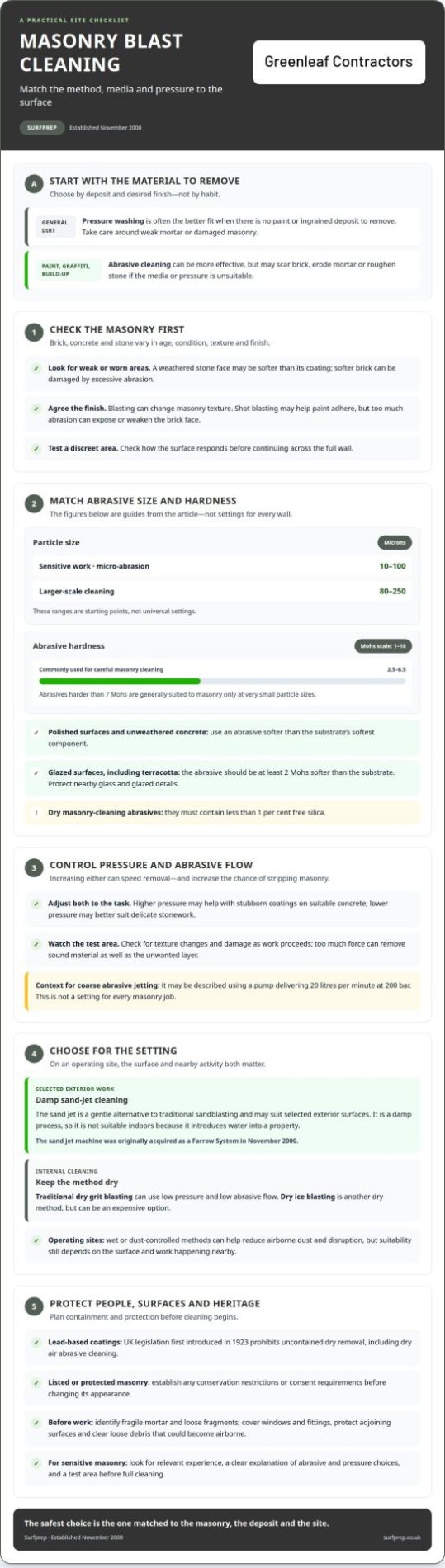
For sensitive work, micro-abrasion uses particles of 10-100 microns; larger-scale cleaning commonly uses 80-250 microns. These ranges are starting points, not settings for every wall. Dry masonry-cleaning abrasives must contain less than 1 per cent free silica.
UK legislation first introduced in 1923 prohibits uncontained dry removal of lead-based coatings, including dry air abrasive cleaning. Listed or protected masonry may also have conservation restrictions, so establish any consent requirements before changing its appearance.
To find a qualified contractor, look for relevant masonry experience, a clear explanation of abrasive and pressure choices, and a test area before full cleaning. Ask how the operator will protect adjoining surfaces and manage dust, particularly around windows and occupied areas.
Abrasive blast cleaning
For brick and stone in the UK, options include controlled dry abrasive cleaning, micro-abrasion and damp abrasive jetting. The right choice depends on the substrate, coating or deposit, and whether introducing moisture is suitable.
Controlling Pressure and Abrasive Flow
Pressure and abrasive flow work together. Increasing either can speed paint removal, but may also strip the masonry’s surface. The operator should adjust both to the material and task rather than treating every wall alike. A small test area helps show how the surface responds before cleaning continues across the brick or stone.
For internal cleaning, dry grit blasting at low pressure and low abrasive flow avoids adding water. Dry ice blasting is another dry method, but it can be an expensive option.
Matching Abrasive Hardness to the Substrate
Hardness affects how an abrasive acts on the substrate. The Mohs scale runs from 1 to 10, with higher readings indicating harder materials. Abrasives used for careful masonry cleaning commonly fall between 2.5 and 6.5 Mohs. Abrasives harder than 7 Mohs are generally suited to masonry only at very small particle sizes.
For polished surfaces and unweathered concrete, choose an abrasive softer than the substrate’s softest component. This helps limit surface alteration while removing deposits.
Abrasive Choices for Different Materials
There is no single abrasive for every material. The operator considers the masonry’s condition, texture and finish, then matches particle size and hardness to the task. Delicate stone detailing, for example, needs a different approach from removing paint across robust, unpolished concrete.
Glazed surfaces, including terracotta, need particular care: the abrasive should be at least 2 Mohs softer than the substrate. Protect nearby glass and glazed details during cleaning, even when the main surface is brick or stone.
Abrasive Jetting and Slurry Blasting
Abrasive jetting propels particles towards a surface; slurry blasting combines abrasive with water. Coarse abrasive jetting is described using a pump delivering 20 litres per minute at 200 bar, but that is not a setting for every masonry job. The sand jet machine, originally acquired as a Farrow System in November 2000, is a gentle alternative to traditional sandblasting, but isn’t suitable indoors because it introduces water.
For exterior work, the damp sand-jet cleaning method may suit selected surfaces. The cleaning method should reflect the site as well as the material.
Blast cleaning compared with pressure washing
Pressure washing is suited to general dirt, while abrasive techniques can be more effective on paint, graffiti and ingrained contamination. Let the surface and the finish you want guide the choice.
Selecting Media and Pressure for Stone
Stone varies in hardness, texture and wear, so blast media must suit the particular surface. Delicate carved details need a different approach from a broad, robust stone wall. The operator should also consider whether the task is removing a coating or ingrained grime. A controlled test area helps assess the result before cleaning the full surface.
Adjusting Pressure to Protect Masonry
Pressure determines how forcefully abrasive strikes the masonry. Too much can remove sound material along with unwanted layers, especially on weathered stone or softer brick. Adjust pressure and abrasive flow to the surface and task, then monitor the test area for changes. Pressure washing also needs care, as water can affect weak mortar or damaged masonry.
High- and Low-Pressure Blasting
High- and low-pressure blasting describe different levels of force, not universal settings for every project. Higher pressure can help remove stubborn coatings from suitable concrete, while lower pressure may better suit delicate stonework. Shot blasting can prepare a surface for coatings, but its impact may alter the texture. Traditional sandblasting is not automatically the most suitable choice for every wall.
Preparing and Protecting Masonry
Before blasting, identify fragile mortar, loose fragments and nearby materials that need protection. Cover windows and fittings, and clear loose debris that could become airborne during the work. Agree on the cleaning area and desired finish, then test a discreet section. For general dirt without paint or ingrained deposits, pressure washing may be more appropriate.
Discuss your masonry cleaning project and the right approach for its surface.
Surfprep
Established in November 2000, Surfprep helps you choose a suitable cleaning approach for brick and stone, taking the surface condition and type of contamination into account. Its brick cleaning and stone cleaning services address soiling and staining, while superheated steam cleaning using a Thermatech machine can provide an alternative where abrasive methods are unsuitable. The right technique depends on the masonry and the finish you want to retain; aggressive blasting isn’t the answer for every surface.
When considering masonry cleaning, share the material, what needs removing and whether the work is indoors or outside. Surfprep also cleans wooden beams, although superheated steam cleaning is generally not recommended for wood inside a property, especially in occupied homes, because of moisture risks.
Contact Surfprep to discuss your masonry cleaning requirements.
Plan the right next step for your masonry
Before arranging masonry blast cleaning, decide what the finished surface needs to achieve. You may want to reveal a façade’s original character, prepare masonry for a new coating or improve its appearance. Being clear about your priority helps shape a practical discussion about the work and the finish.
Surfprep provides brick and stone cleaning, as well as wooden beam cleaning. The material and setting matter: a method suitable for an exterior stone wall may not suit an interior surface or timber. Sharing the surface type, its condition and what you want removed gives the discussion a practical starting point.
Contact Surfprep about your masonry cleaning to discuss the right approach for your property. A well-considered plan is a positive first step towards a cleaner, carefully restored surface.
Frequently Asked Questions
Can blast cleaning be done while a site is still operating?
Work can sometimes take place while a site remains open, with planning to manage dust, access and nearby activities. Wet or dust-controlled blasting can reduce airborne dust and disruption, but work areas still need suitable separation. At an operating site in Leeds, for example, cleaning can be scheduled around busy entrances or deliveries to help keep essential routes accessible.
How is it done?
Blast cleaning directs abrasive material at a surface to remove deposits or prepare it for another finish. Work typically starts with an assessment of the masonry and the material to remove, followed by a controlled test. The operator then cleans in manageable passes, checking the result as work progresses and adjusting the approach if the surface responds unexpectedly.
Is blast cleaning better than pressure washing?
Neither method is universally better. Pressure washing can suit ordinary outdoor dirt, such as soil on a garden wall, while abrasive cleaning can be more effective on paint or persistent graffiti. The choice also depends on the desired finish: preparing a surface for repainting differs from removing grime while retaining its existing appearance.
Is blast cleaning safe to use on buildings and structures?
Masonry blast cleaning can be suitable when the method matches the building material and its condition. Delicate details, weak mortar, glazing and adjoining finishes need consideration because abrasive impact can alter or damage surfaces. On older façades, a small trial area helps show how the masonry responds before work extends across larger sections.
What is blast cleaning used for on commercial sites?
Commercial uses include removing graffiti or coatings from façades, cleaning architectural features, and preparing concrete in car parks for further work. It can also help restore signage structures and other exterior assets. In Hull, York or Bradford, the right method depends on the surface, the contamination and whether the site needs to remain operational during cleaning.
