
A clean façade doesn’t have to bring a busy building to a standstill. Minimising business disruption during facade cleaning starts with matching the work plan to how the site operates, especially in occupied shops, offices, apartment blocks and schools. Phased work, agreed schedules and clearly marked access routes can help keep essential areas in use while cleaning progresses elsewhere.
It’s understandable to be concerned about entrances, deliveries, staff and visitors sharing space with cleaning operations. This guide explains how to tailor schedules to each setting and use a site plan to map access routes, restricted areas and practical controls. Before work begins, consider busy periods, building access and how to communicate changes, so everyone using the building understands the programme.
Key Takeaways
- Make cleaning dates, working hours and affected elevations clear so staff, tenants and visitors know what to expect.
- Shape the schedule around each building’s busiest periods, from customer footfall and deliveries to school arrival times.
- Map entrances, emergency exits, pedestrian routes and restricted work areas before cleaning begins, then plan suitable alternatives where access is affected.
- A phased programme can help keep parts of an occupied building accessible while work moves through other sections.
Minimising business disruption during façade cleaning
Noise, water and chemical impacts can be managed by choosing a suitable cleaning method, controls and schedule for the building. A test area helps assess the practical effects before work continues across other elevations.
Communicating work dates and affected elevations
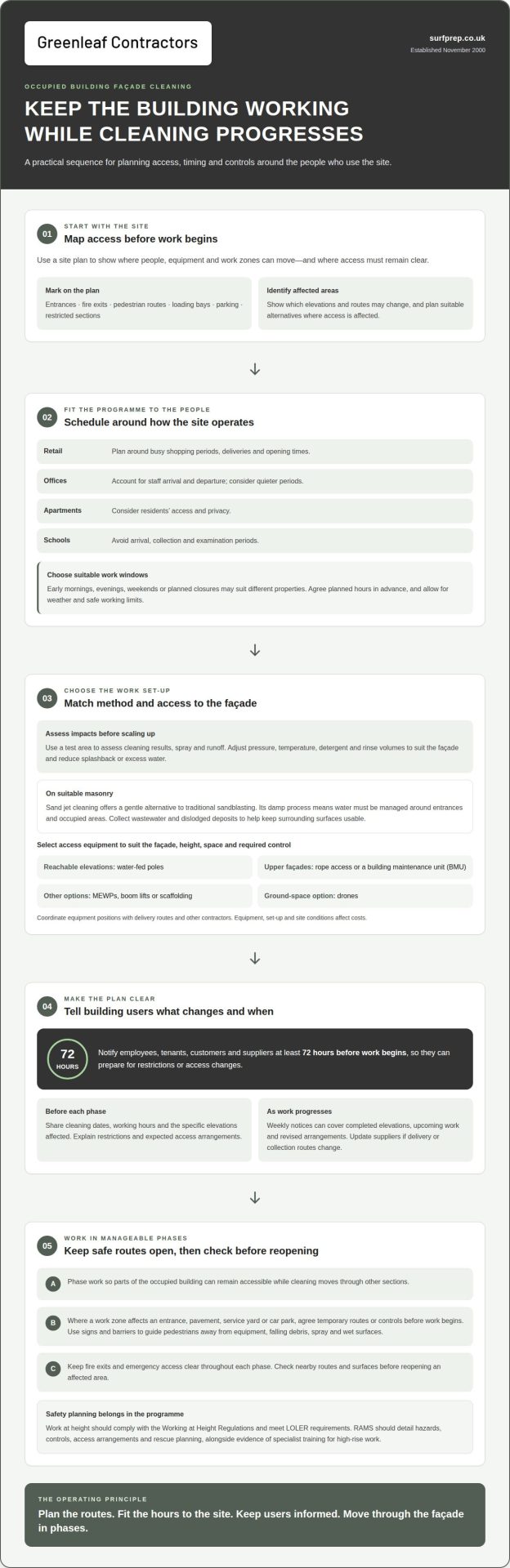
A clear programme sets out cleaning dates, working hours and the elevations scheduled for each phase. Sharing this information helps building teams plan around entrances, deliveries and pedestrian activity. Notify employees, tenants, customers and suppliers at least 72 hours before work begins, so they can prepare for access restrictions or changes. For a large building, identify each affected section separately rather than describing the whole façade as one work area. If conditions require a change, discuss its operational impact with the site team before revising the programme wherever possible.
Keeping building users informed
Occupant communication means giving relevant people timely information about the work and its progress. Employees, tenants and customers need to know which sections are affected, what restrictions apply and when access is expected to return. Suppliers also need updates if delivery points or collection routes change. Weekly notices can summarise completed elevations, upcoming work and revised arrangements. This gives reception teams and building managers current, practical information to share.
Managing noise, water and chemical impacts
Noise, water and chemical controls help limit effects on building users and nearby activity. Where practical, schedule noisy tasks away from sensitive work, and use a test area to assess spray, runoff and cleaning results before proceeding. Adjust pressure, temperature, detergent and rinse volumes to suit the façade and reduce splashback or excess water. On suitable masonry, sand jet cleaning offers a gentle alternative to traditional sandblasting. Its damp process requires water to be managed around entrances and occupied areas. Collecting wastewater and dislodged deposits helps keep surrounding surfaces usable.
Tailoring cleaning schedules to retail, office, apartment and school settings
Schedule façade cleaning around opening times, footfall and essential activities, using quieter periods or planned closures where suitable. Allow for weather and safe working limits too, especially when working at height.
Scheduling around opening hours and footfall
Scheduling around opening hours means matching each work phase to how people use the property. This helps keep customer entrances, staff access and operations clear. A retail property may need work planned around busy shopping periods and deliveries, while an office schedule can account for staff arrival and departure. At apartments, consider residents’ access and privacy; at schools, avoid arrival, collection and examination periods.
Using quieter periods and closures
Quieter-period scheduling moves disruptive activity outside a building’s busiest hours where practical. Early mornings, evenings, weekends and planned closures may suit different properties, but the schedule should reflect how the site operates. A closed retail unit, for example, may offer a suitable window for work near its main entrance, while an office may benefit from phased cleaning during a quieter period. Agree the planned hours before work begins so building users can prepare for restrictions.
Allowing for weather and safe working limits
Weather-aware scheduling allows work to be rearranged when conditions could make façade cleaning unsafe or increase disruption. Wind around taller buildings can affect access equipment, visibility and water-runoff control, so work at height may need to pause when conditions exceed safe limits. Rain or poor drainage can also make entrances and pedestrian routes harder to manage. Identify suitable alternative sections in the programme, so work can continue safely without forcing activity into unsuitable conditions.
Using a site plan to identify access routes and restricted areas
A site plan shows where cleaning equipment, work zones and people can move. It helps protect building access and keep surrounding facilities usable.
Mapping access routes and restricted areas
Mark entrances, fire exits, pedestrian routes, loading bays, parking and restricted sections on the plan. This shows tenants and site teams where access may change and which emergency routes must remain clear. For façade cleaning, work should comply with the Working at Height Regulations and meet LOLER requirements. RAMS should detail hazards, controls and access arrangements, as well as rescue planning and evidence of specialist training for high-rise work.
Coordinating access equipment
Choose access equipment to suit the façade material, building height, available space and required control. Water-fed poles may suit reachable elevations; rope access or a building maintenance unit (BMU) can serve upper façades. Mobile elevating work platforms (MEWPs), boom lifts, scaffolding and drones each have different effects on ground space and site access. The access method, setup and site conditions affect costs. Coordinate equipment positions with delivery routes and other contractors to avoid clashes and unexpected restrictions.
Managing entrances and pedestrian access
If a work zone affects an entrance, pavement, service yard or car park, agree temporary routes or controls before work begins. Use signs and barriers to guide pedestrians away from equipment, falling debris, spray and wet surfaces. Keep fire exits and emergency access clear throughout each phase. Tell each tenant which entrance to use and when restrictions apply, then check nearby routes and surfaces before reopening the area.
Plan façade cleaning access around the building’s routes, equipment positions and restricted areas.
Surfprep
Established in November 2000, Surfprep brings long-standing experience to cleaning brick and stone façades, where the surface and site conditions guide the approach. Discussing the materials and operational constraints helps shape work around the property’s needs. A method suited to brick may not suit every stone façade.
Surfprep cleans wooden beams and provides superheated steam cleaning using a Thermatech machine. Superheated steam is not generally recommended for indoor wood, particularly in occupied homes, due to moisture risks. Share the areas to be cleaned and any access constraints so the work can be planned in context.
Contact Surfprep to discuss cleaning for your property.
Set the next cleaning project up for success
A site plan works best as a live operational document, not a drawing filed away once work begins. Use it as a shared reference for building management, facilities teams and the cleaning team, updating it when site activity or access conditions change. This keeps decisions grounded in how the property is being used, rather than assumptions made during initial planning. A considered approach to minimising business disruption during facade cleaning also helps teams set clearer expectations for future maintenance.
For buildings with brick, stone or wooden beams, Surfprep provides cleaning suited to those materials. The right conversation starts with the surfaces to be cleaned and the practical conditions around the work. Contact Surfprep to plan façade cleaning for your property. A clear starting point can make the next stage easier to organise.
Frequently Asked Questions
What kinds of buildings benefit?
Occupied commercial properties benefit from phased façade cleaning when work could affect staff, visitors or day-to-day access. Shops, offices, apartment blocks and schools can all use phased plans, particularly where entrances are busy or outdoor space is limited. In central Leeds, for example, a property may need to coordinate loading activity with pedestrian access; a school schedule should account for the school day.
What are the best times of day or days of the week for commercial façade cleaning in the UK?
There’s no single best time to clean; the right window depends on the property’s activity and access needs. Early mornings, evenings, weekends or planned closures can suit work that would otherwise conflict with customer footfall or deliveries. A shop may favour a quieter trading period, while an office may be easier to clean during a scheduled closure. Leave room to rearrange the programme if conditions change.
How far in advance should tenants, staff and customers be notified about façade cleaning?
Notify building stakeholders 72 hours before façade cleaning begins. Include the expected work dates, hours, affected areas and any access changes, rather than sending a date alone. A tenant using a ground-floor entrance needs different details from an employee working on an upper floor. Share updates if the sequence changes, so people can adjust arrangements and direct visitors accurately.
How can contractors keep entrances, footpaths and deliveries accessible during façade cleaning?
Agree alternative routes and delivery arrangements before equipment occupies an entrance, pavement or service yard. Barriers and clear signs should guide pedestrians around the work zone while keeping emergency access available. If cleaning affects a shop’s main entrance, for example, a signed alternative entrance and revised delivery point can help maintain access without directing people through the work area.
What weather conditions can delay façade cleaning, and how can businesses plan around them?
Wind, rain and poor drainage can affect safe access, water control and the usability of surrounding routes. Wind exposure matters particularly for high-rise work, where it can affect equipment stability and runoff control. Build flexibility into the programme by identifying other suitable elevations or tasks that can proceed if one area is postponed. Keep building users informed when the sequence changes.
