
Most woodworm treatments fail before the first spray even touches the timber. If your historic home is filled with beams coated in decades of heavy wax or Victorian soot, any chemical application will simply sit on the surface rather than reaching the larvae buried deep inside. You’re likely wondering how to lighten dark oak beams without stripping away their character or creating a house-wide mess with aggressive sandblasting. It’s a common frustration for UK homeowners, especially when you’re desperate to protect the structural integrity of your property whilst modernising its aesthetic.
We understand the anxiety of balancing restoration with preservation. This guide explains why professional surface preparation is the non-negotiable first step for successful eradication. You’ll discover how low-pressure dry grit blasting creates perfectly porous timber ready for treatment. We will also explore the specialist methods we’ve refined since November 2000 to ensure your beams look naturally lighter and remain pest-free for the long term.
Key Takeaways
- Effective woodworm eradication requires porous timber; discover why stripping back old waxes is the only way to ensure chemical treatments reach deep-seated larvae.
- Master how to lighten dark oak beams safely by using low-pressure dry grit blasting to lift decades of soot and stains whilst preserving the wood’s original texture.
- Learn the critical difference between dry and damp cleaning methods and why we strictly avoid using the sand jet or superheated steam inside occupied properties.
- Ensure your restoration project runs smoothly by correctly sequencing your specialists, starting with professional surface preparation before the pest control treatment begins.
Why Surface Preparation is Vital for Effective Woodworm Treatment
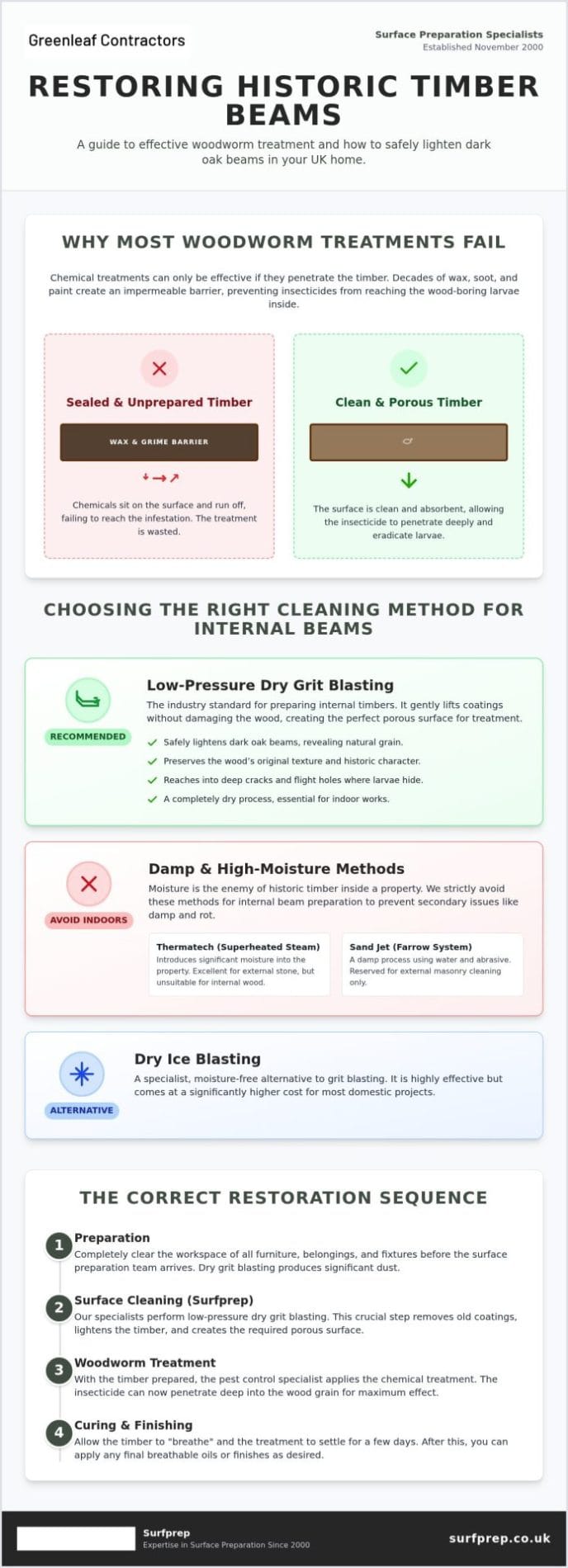
Wood-boring larvae spend the majority of their life cycle tunnelled deep within structural timber. To be truly effective, chemical applications must penetrate the grain rather than simply coating the exterior. Since we established Surfprep in November 2000, we’ve seen countless instances where expensive treatments failed because the wood was effectively “waterproofed” by centuries of grime. Professional cleaning ensures that the insecticide reaches the heart of the infestation.
Decades of dark stains, heavy waxes, and Victorian soot create an impermeable seal that causes modern sprays to run off. Understanding how to lighten dark oak beams starts with recognising that these coatings aren’t just an aesthetic issue; they’re a physical barrier to wood preservation techniques. Lightening the timber is a natural secondary benefit of removing these layers to reveal the original grain. Timber porosity is the essential state where wood fibres are open to absorb fluids.
Identifying Barriers to Chemical Penetration
Many UK period homes feature beams coated in bitumen, lead-based paints, or thick beeswax. These substances are notoriously difficult to remove without specialist intervention. You can check the condition of your own structural timbers using a simple water-droplet test. If a drop of water beads on the surface rather than soaking in, the grain is sealed. Our specialist wooden beam cleaning services focus on reopening these pores. This process is the most reliable way to achieve a lighter finish whilst guaranteeing that any subsequent woodworm treatment actually reaches its target.
Professional Methods for Lightening and Preparing Structural Beams
Dry grit blasting is the industry standard for preparing internal timbers. By utilising low pressures and controlled abrasive rates, we can gently lift dark coatings without scouring the wood fibres. This mechanical approach is the most effective answer to how to lighten dark oak beams whilst ensuring the surface is perfectly porous for wood-boring beetle control treatments. It’s a precise process that requires a seasoned hand to avoid damaging the underlying timber.
Whilst our Thermatech superheated steam machines are exceptional for stone restoration, we never recommend them for internal wood preparation. Moisture is the enemy of historic timber, especially in occupied properties where it can lead to secondary damp issues. Similarly, although we’ve operated a sand jet machine (originally acquired as a Farrow System in November 2000) for over two decades, we reserve this damp process for external masonry only. For those with specific requirements, dry ice blasting offers a moisture-free alternative, but it remains a significantly more expensive option for most domestic restoration projects.
Dry Grit Blasting vs. Manual Sanding
Manual sanding often fails to reach the deep fissures and flight holes where woodworm larvae reside. It’s also incredibly labour-intensive and risks flattening the unique “waney edge” of 17th-century beams. In contrast, low-pressure dry blasting cleans at a uniform depth, reaching into every crevice to remove soot and wax. This method is far safer for fragile structural timbers than aggressive DIY methods that can strip away the wood’s historic character. If you’re planning a restoration, our specialist beam cleaning services provide the ideal foundation for a successful finish.
How to Organise Your Wood Restoration and Lightening Project
Correct project sequencing is the difference between a successful restoration and a wasted investment. You must ensure that mechanical cleaning is carried out before the pest control specialist arrives to apply woodworm treatments. By removing old surface coatings first, we open the grain, allowing chemical sprays to penetrate deep into the timber rather than just sitting on top of a layer of wax. This is the most practical solution for how to lighten dark oak beams whilst preparing them for long-term preservation.
Logistically, dry grit blasting is a disruptive process that produces significant dust. We’re always honest about this; whilst we use heavy-duty sheeting to protect your property, it’s best to handle this work early in a renovation. You should clear the workspace entirely before we arrive. Once the restoration is finished, allow the timber to “breathe” for a few days to settle before applying breathable oils. You can learn more about our specialist wooden beam cleaning services to see how we manage these complex projects.
Working with Surfprep Across the North of England
Established in November 2000, we’ve spent over 25 years refining our approach to sensitive barn conversions and listed building restorations. Our local teams across Leeds, York, and Hull understand the unique challenges of historic structural timber integrity in the North. We don’t just provide a cleaning service; we offer site-specific advice on how to lighten dark oak beams without compromising the heritage of your home. Whether you’re dealing with a single room or a full-scale renovation, our veteran specialists provide the grit and precision required for high-quality results.
Secure Your Timber’s Future and Restore Its Natural Beauty
Successful woodworm eradication starts with a clean slate. By removing decades of wax and soot, you aren’t just improving the look of your home; you’re ensuring that your structural timbers are porous enough to absorb life-saving treatments. We’ve spent over 25 years refining our low-pressure dry grit blasting techniques, providing the most reliable answer to how to lighten dark oak beams whilst protecting their historic character. It’s a methodical process that prioritises the long-term health of your property over a quick fix.
Established in November 2000, Surfprep brings veteran expertise to projects across Leeds, York, Manchester, and the wider North of England. We’re here to provide the honest, practical advice you need to restore your home safely. Contact the Surfprep specialists for a professional beam restoration assessment and take the first step toward a brighter, pest-free home. Your historic timbers are in safe hands.
Frequently Asked Questions
Can I treat woodworm without removing the old paint or varnish first?
You cannot effectively treat woodworm through old paint or varnish because these coatings act as a waterproof barrier. For the insecticide to reach the larvae, the timber must be porous. This preparation is also the primary step in how to lighten dark oak beams, as removing these dark, non-porous layers reveals the natural wood beneath whilst ensuring the treatment can penetrate deep into the grain.
Is dry grit blasting safe for very old or fragile structural oak beams?
Low-pressure dry grit blasting is exceptionally safe for historic beams when performed by specialists. Unlike traditional, aggressive sandblasting, our controlled method gently lifts surface contaminants without scouring the underlying timber. We’ve used this precise approach since November 2000 to preserve the unique “waney edges” and tool marks that give historic structural oak its irreplaceable character and value.
How long after professional cleaning can I apply the woodworm treatment?
You can usually apply woodworm treatments within 24 to 48 hours of a professional dry clean. Because dry grit blasting doesn’t introduce moisture into the wood, there is no lengthy drying period required. This efficiency is one reason why homeowners looking for how to lighten dark oak beams prefer dry methods, as it allows the pest control phase of the restoration to proceed without delay.
Why shouldn’t I use superheated steam cleaning for my indoor beams?
We don’t recommend superheated steam cleaning, such as Thermatech, for internal wood because it introduces significant moisture into the property. Whilst it’s a superb tool for masonry, using it on indoor beams can cause the timber to swell or encourage fungal growth in enclosed spaces. We prioritise dry grit blasting for internal works to keep your home dry and protect the structural integrity of the wood.
