
Most property owners assume a high-pressure jet wash is the best way to tackle green growth, but for delicate Yorkstone, it’s often the quickest way to cause permanent damage. You’ve likely noticed unsightly green stains ruining your kerb appeal or creating slippery surfaces underfoot during a damp British winter. It’s frustrating to see expensive masonry lose its character, especially if you’re worried that harsh chemicals might ruin the finish. Understanding how to remove algae from stone requires a move away from brute force towards specialised, low-pressure technology.
This guide explains professional methods that prioritise the integrity of your masonry whilst ensuring a deep, lasting clean. We’ll explore the science of thermal kill-rates using Thermatech superheated steam and why our sand jet system, a gentle evolution of the Farrow System we’ve used since November 2000, offers a superior finish to aggressive grit blasting. You will gain the knowledge needed to restore your stone surfaces and, crucially, keep them clear of biological growth for years to come.
Key Takeaways
- Learn how to distinguish between surface green growth and embedded black spores; this is essential for choosing the correct cleaning approach for porous UK masonry.
- Discover how to remove algae from stone using Thermatech superheated steam to achieve a deep clean at 150°C without the erosive force of high-pressure jet washing.
- Understand the benefits of the sand jet, a system we have utilised since November 2000, as a damp and gentle alternative for exterior restoration where traditional blasting is too aggressive.
- Identify the importance of stone breathability and effective drainage to prevent biological regrowth and ensure your restoration results last for years to come.
Identifying and Understanding Algae Growth on UK Stone
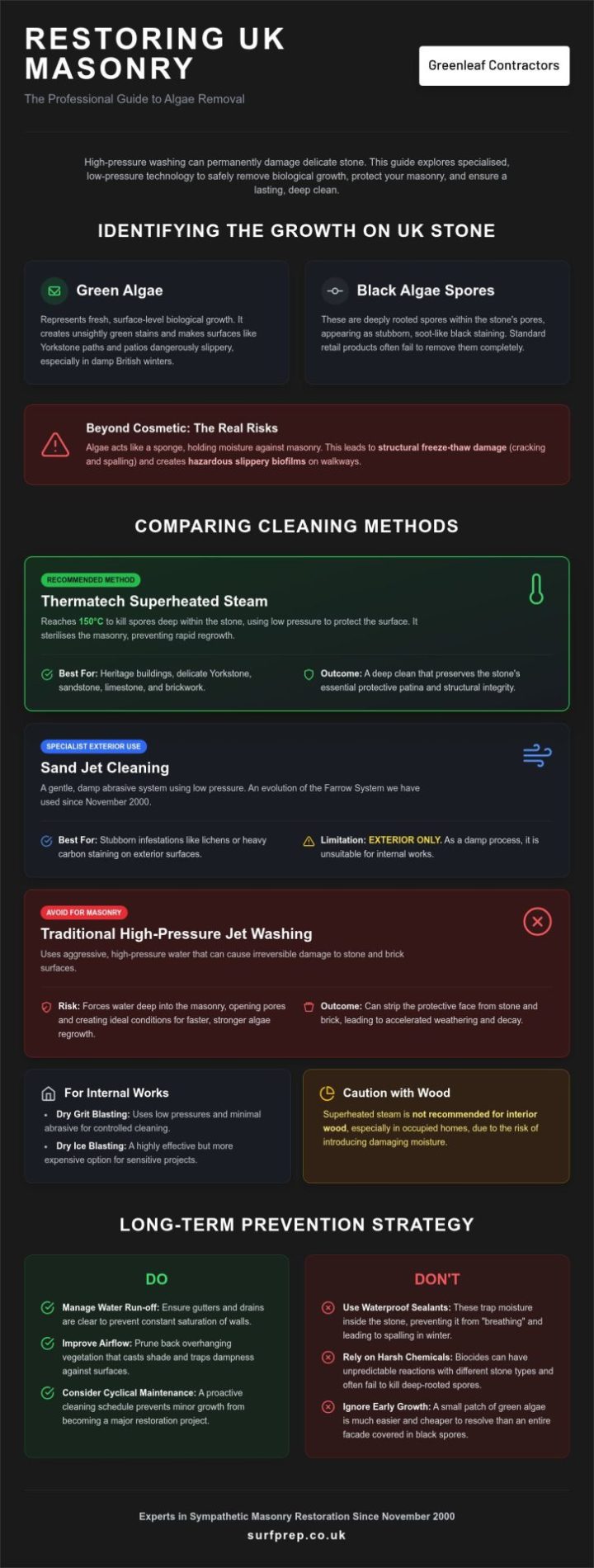
Algae isn’t merely a cosmetic blemish; it’s a living, non-vascular plant that thrives on porous masonry across the damp UK climate. Whilst the vibrant green variety is often fresh growth, the stubborn, soot-like staining found on many heritage buildings is typically black algae. These spores are deeply rooted within the stone’s pores, which is why property owners often struggle when researching how to remove algae from stone using standard retail products. Unlike surface dirt, these organisms are biological invaders that require a specific technical approach to eradicate completely.
The presence of algae poses a genuine risk to structural integrity. It acts as a biological sponge, holding moisture against the masonry and facilitating biological weathering processes that degrade the stone’s surface over time. In the North of England, this saturation leads to devastating freeze-thaw damage, where expanding ice causes the stone to flake and spall. Additionally, the development of a slippery biofilm on walkways and commercial entrances creates a significant safety hazard that requires professional intervention.
Why Algae Thrives on Yorkshire and North-East Masonry
Buildings in Leeds, York, and Hull frequently utilise Yorkstone, sandstone, or limestone, all of which are naturally porous and susceptible to colonisation. The combination of northern shade, high humidity, and residual urban pollution provides a rich environment for these plants to flourish. A biofilm is a resilient colony of microorganisms that secretes a protective glue, effectively shielding the algae from wind, rain, and basic domestic detergents. Understanding this biological shield is vital when determining how to remove algae from stone effectively without resorting to aggressive pressure that scars the masonry. Since our inception in November 2000, we’ve seen how these factors converge to ruin even the most prestigious stone facades if left unmanaged.
Professional Methods for Removing Algae Safely
When considering how to remove algae from stone, the primary goal is total eradication of the biological root system without compromising the substrate. We utilise the Thermatech superheated steam system, which is often searched for as DOFF, as our preferred method for sensitive masonry. By reaching temperatures of 150°C, the steam kills algae spores instantly. This thermal shock is far more effective than chemical treatments, which The Geological Society on biological weathering suggests can interact unpredictably with certain mineral compositions. Because it relies on heat rather than volume, it avoids the erosive force of high-pressure water.
For more stubborn infestations, such as established lichens or heavy carbon staining, we specialise in the sand jet. Originally acquired as a Farrow System in November 2000, this technology provides a gentle alternative to traditional sandblasting. It uses a low-pressure, damp abrasive mix to lift contaminants whilst keeping the stone’s delicate “face” intact. However, because this is a damp process, we never recommend it for internal works to avoid introducing moisture into the property. For those exterior projects requiring a meticulous finish, our sand jet cleaning ensures a sympathetic restoration.
Thermatech vs. Traditional Pressure Washing
Standard jet washing often does more harm than good. High-pressure streams can force water deep into the stone, opening up the pores and creating even better conditions for future biological colonisation. Our expert admission is that whilst abrasive methods have their place, superheated steam is almost always the superior choice for heritage stone. It preserves the protective patina of the masonry, ensuring the surface remains as resilient as the day it was laid. This approach keeps the face of the brick and stone intact, preventing the accelerated weathering that follows aggressive cleaning. Just as exterior surfaces require specialist care, interior soft furnishings also benefit from professional attention; for instance, Darcy Bespoke Cleaning provides expert carpet and upholstery services to maintain the high standards of your property’s interior.
Once you’ve mastered how to remove algae from stone, the priority shifts to long-term suppression. A frequent error property owners make is applying “waterproof” sealants that inhibit the stone’s natural breathability. These coatings often trap moisture within the masonry, which leads to internal pressure and surface spalling during winter. Effective prevention is usually simpler: ensure gutters are clear to manage water run-off and prune back overhanging vegetation to improve airflow. For commercial property portfolios in Leeds and Manchester, we recommend cyclical maintenance to catch biological growth before it becomes an expensive structural issue.
Distinguishing between a surface clean and a full restoration is vital. If the masonry is already pitted or the staining has migrated deep into the pores, a standard wash won’t suffice. Since our establishment in November 2000, we’ve prioritised transparency by providing honest assessments of stone condition. We won’t sell a cleaning service if the stone requires professional stone restoration to remain stable. This approach builds the long-term trust our clients expect from a seasoned specialist.
Specialist Stone Restoration Across the North of England
Handling listed buildings in heritage centres like York and Hull requires a meticulous understanding of material history. Our team evaluates every facade individually to determine the safest intervention. For internal works, where we must avoid introducing water, we pivot away from our damp sand jet technology. In these occupied or sensitive spaces, we utilise dry grit blasting at low pressures or dry ice blasting. It’s important to recognise that dry ice blasting is a significantly more expensive option, though it remains unmatched for cleaning delicate surfaces without moisture. For a detailed consultation on your specific project, feel free to contact us today.
Restoring Your Property’s Heritage Finish
Effective masonry restoration requires a shift in perspective. Instead of aggressive pressure, successful results depend on using specialist technology to achieve a deep, safe clean. We’ve explored the importance of thermal kill-rates and why stone breathability is essential to prevent structural decay. Mastering how to remove algae from stone isn’t about brute force; it’s about preserving the masonry’s face whilst eradicating the biological root system.
Surfprep has been a reliable veteran in the industry since November 2000. We utilise Thermatech and sand jet technology to deliver heritage-safe results across Leeds, York, Hull, and the wider North of England. You can request a professional stone cleaning assessment from Surfprep to ensure your property receives an honest evaluation. Your stone surfaces can look as good as the day they were first laid.
Frequently Asked Questions
Will removing algae damage the surface of my stone walls?
No, provided you avoid high-pressure jet washing and acidic chemicals. We use Thermatech superheated steam at 150°C, which kills biological growth without eroding the masonry’s face. Since November 2000, we’ve focused on heritage-safe methods that preserve the stone’s protective patina whilst ensuring a deep clean. This approach is far safer than aggressive scrubbing or brute-force pressure.
Is superheated steam cleaning better than using chemical algae removers?
Superheated steam is generally superior because it provides an instant biological kill-rate without altering the stone’s pH. Chemicals often leave residues that can react with the substrate or harm surrounding garden life. When considering how to remove algae from stone, steam offers a neutral, environmentally friendly solution that reaches deep into the pores without the risks associated with chemical run-off or staining.
How long does it take for algae to grow back after professional cleaning?
Regrowth typically depends on your property’s specific microclimate and drainage efficiency. Whilst professional cleaning with Thermatech kills the spores, algae will eventually return if the stone remains damp and shaded. By improving airflow and managing water run-off, most property owners in Leeds and York find their surfaces remain clear for several seasons. Cyclical maintenance is the best way to maintain a pristine finish. This focus on long-term property health is universal; for homeowners in the south, WellPlumbed provides expert boiler installation bognor regis to keep internal systems running as efficiently as your external masonry.
We don’t recommend the sand jet for indoor use because it’s a damp process that introduces water into the property. For internal stone cleaning, we prefer dry grit blasting at low pressures or dry ice blasting. Note that dry ice is a significantly more expensive option. These dry methods ensure your interiors remain moisture-free whilst achieving the same high-standard restoration results.
