
Table of Contents
Understanding the Risks: Why Metal Shutter Graffiti Requires a Specialist Approach
Professional Removal Techniques: Superheated Steam vs. Chemical Solvents
Protecting Your Assets: Anti-Graffiti Coatings and Maintenance
Understanding the Risks: Why Metal Shutter Graffiti Requires a Specialist Approach
Removing graffiti from a commercial roller shutter isn’t as simple as applying a generic paint stripper. The surface itself—whether it’s galvanised steel, powder-coated aluminium, or a custom factory finish—is surprisingly delicate. A misstep with the wrong chemical or excessive force can cause irreversible damage, turning a simple clean-up into a costly replacement.
This is our expert admission: whilst many off-the-shelf chemicals can remove spray paint, they often ‘burn’ the shutter’s finish if left on for even a few minutes too long. This can strip away protective coatings, dull the original colour, and leave a permanent, unsightly mark. Furthermore, there’s the common problem of ‘ghosting’, where the pigment from the spray paint migrates deep into the microscopic pores of the shutter’s surface, leaving a faint but permanent shadow of the original tag.
For commercial sites, particularly in urban centres like Leeds or Manchester, the environmental impact of DIY chemical applications is also a serious consideration. Uncontrolled runoff containing harsh solvents can contaminate drains and local waterways, posing a risk to the environment and potentially violating local regulations.
The Vulnerability of Powder-Coated Finishes
Powder-coated shutters are prized for their durability and smooth, consistent colour. However, this finish is highly susceptible to damage from aggressive solvents. These chemicals can dissolve the resin binder that holds the coating together, breaking it down and resulting in a dull, chalky appearance that cannot be polished back to its original lustre. This is why ‘painting over’ graffiti is a tactical error; it rarely matches the factory finish, creates an uneven texture, and often begins to peel and flake within months, making the problem look far worse than the original graffiti.
Identifying Substrate Damage and Corrosion
With galvanised steel shutters, the primary defence against rust is a microscopic layer of zinc. Aggressive scrubbing or harsh chemical treatments can inadvertently remove this protective layer, exposing the raw steel underneath to the elements and initiating a cycle of corrosion. The critical point is reached when the surface moves from simply being ‘dirty’ to being ‘compromised’—where the integrity of the underlying material or its protective coating has been damaged, requiring professional restoration rather than just a simple clean.
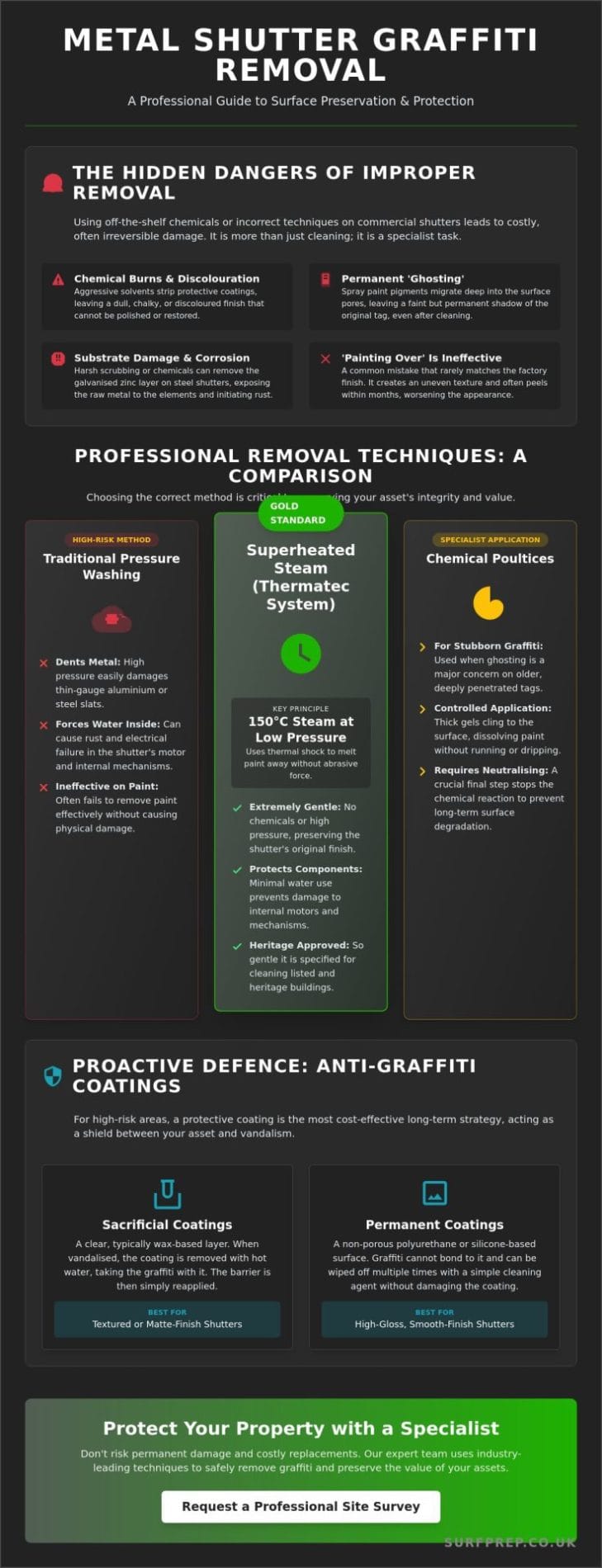
Professional Removal Techniques: Superheated Steam vs. Chemical Solvents
The professional approach to removing graffiti from metal shutters prioritises the preservation of the surface. This involves choosing the right tool for the job, weighing the benefits of superheated steam against the targeted use of specialist chemical solvents.
Superheated Steam (sometimes specified as DOFF): This method uses superheated steam, heated to 150°C at the nozzle, combined with very low pressure. The intense heat melts the spray paint, breaking its bond with the metal without relying on abrasive force or harsh chemicals.
Traditional Pressure Washing: High-pressure cold water systems are a significant risk for metal shutters. They can easily dent thin-gauge aluminium slats and, more critically, force water deep into the shutter’s internal mechanism and motor, leading to rust and electrical failure.
Specialist Chemical Poultices: For older, more stubborn graffiti where ghosting is a major concern, professionals may use ‘non-shadowing’ chemical poultices. These are thick gels designed to cling to the surface, dissolving the paint without running, before being carefully neutralised and rinsed away.
Superheated Steam: The Gold Standard for Industrial Shutters
Our Thermatec system represents the gold standard for industrial and commercial shutter cleaning. Its power lies in thermal shock; the superheated steam causes the paint to expand and lift away from the cooler metal surface beneath it. Because it uses minimal water and operates at low pressure, it is exceptionally gentle, preventing physical damage and protecting sensitive internal components. This gentle yet effective nature is why the Doff system is often specified for cleaning listed and heritage buildings, demonstrating its suitability for even the most delicate surfaces. For industrial clients across the North, this technology is central to our core restoration services.
When to Use Specialist Solvents Safely
In cases where steam alone is not enough, specialist solvents have their place, but their application must be methodical and controlled. We always adhere to the ‘test patch’ rule, applying the chemical to a small, inconspicuous area first to verify its compatibility with the shutter’s finish. Once the graffiti has been lifted, it is crucial to apply a neutralising agent. This stops the chemical reaction completely, ensuring the solvent doesn’t continue to slowly degrade the powder coating or galvanised layer long after the job is finished.
Protecting Your Assets: Anti-Graffiti Coatings and Maintenance
For businesses in high-risk areas, a proactive defence is often the most cost-effective strategy. Anti-graffiti coatings act as a shield, creating a barrier between your shutter and any potential vandalism. This is particularly valuable for property portfolios in busy city centres, where a robust graffiti management plan can deliver a significant return on investment by reducing long-term cleaning and repair costs.
The first step in developing such a plan is a professional site survey. This allows a specialist to assess the shutter material, its condition, and the level of risk to recommend the most appropriate protective solution.
Sacrificial vs. Permanent Protective Barriers
Anti-graffiti coatings are generally available in two forms:
Sacrificial Coatings: These are typically clear, wax-based coatings. When graffiti is applied, the coating itself is removed using hot water, taking the graffiti with it. The coating is then simply reapplied. They are ideal for textured or matte-finish shutters.
Permanent Coatings: These are polyurethane or silicone-based coatings that create a non-porous surface. Graffiti cannot bond to it and can be wiped off multiple times with a simple cleaning agent without damaging the coating itself. These are best suited for high-gloss, smooth-finish shutters.
Creating a Rapid Response Graffiti Plan
A key element in deterring vandals is speed. Experience shows that removing graffiti tags within 24-48 hours significantly discourages repeat attacks, as it denies the vandal the visibility they seek. Having a plan in place is vital. In severe cases where the shutter is already heavily damaged, a full restoration may be necessary. This could involve stripping the entire surface back to bare metal to meet specific industrial benchmarks, such as Sa 2.5 surface preparation standards, before it is professionally re-coated.
Frequently Asked Questions (FAQs)
**Will removing graffiti from my metal shutters damage the paint underneath?
**
It can if the wrong method is used. DIY chemical strippers and high-pressure washing are high-risk and can easily dull, strip, or damage the original factory finish. Professional methods like superheated steam are designed to lift the graffiti paint without harming the substrate.
**Is it better to use steam or chemicals for shutter graffiti removal?
**
For most modern powder-coated or galvanised shutters, superheated steam (like the Thermatec system) is superior. It is non-abrasive and chemical-free. Chemicals are reserved for specific situations, such as removing very old or stubborn tags, and should only be applied by a trained professional after a test patch.
**How much does professional graffiti removal cost for a commercial shopfront?
**
The cost in the UK can vary significantly based on several factors. These include the size of the area affected, the type of graffiti paint used (some pigments are harder to remove), the type of shutter surface, and site accessibility. Reputable firms will provide a detailed quote after a site assessment rather than giving a flat rate.
**Can I use a domestic pressure washer to remove spray paint from metal?
**
We strongly advise against it. Domestic pressure washers lack the temperature control of professional systems and can easily be too powerful. You risk denting the shutter slats, forcing water into the motor, and stripping the protective finish, which can lead to rust.
**What is an anti-graffiti coating and is it worth the investment?
**
An anti-graffiti coating is a clear, protective layer applied to a surface to make graffiti removal faster and easier. For businesses in areas prone to vandalism, it is an excellent investment. The long-term savings on repeated professional cleaning costs often far outweigh the initial outlay for the coating.
**How do I deter vandals from targeting my warehouse shutters in the first place?
**
Beyond rapid removal and anti-graffiti coatings, deterrents include improving lighting around the property, installing visible CCTV cameras, and planting thorny shrubs near walls. A well-maintained, clean exterior suggests the property is closely monitored, which can discourage opportunistic vandals.
