
With the annual cost of graffiti removal in the UK now exceeding £1 billion, property managers are facing a relentless financial drain that goes far beyond simple aesthetics. It’s frustrating to watch your maintenance budget vanish into repeat call-outs, especially when aggressive cleaning leaves behind permanent “ghosting” or damages the delicate face of historic masonry. You need a way to break the cycle of vandalism without devaluing the asset you’re tasked to protect.
This guide explains how to balance the ongoing costs of removing spray paint from brick uk against the investment of specialist anti-graffiti coatings. Since our founding in November 2000, we’ve seen how the wrong approach can trap moisture and cause structural decay. We’ll examine how to select breathable barriers and why precision tools like Thermatech superheated steam or the gentle sand jet are the only honest ways to restore a surface whilst preserving its integrity.
Key Takeaways
- Calculate the break-even point where a professional anti-graffiti coating becomes more cost-effective than the recurring expense of removing spray paint from brick uk.
- Learn why vapour permeability is a critical requirement for protective coatings to prevent moisture entrapment and frost damage in porous UK brickwork.
- Identify how pH-neutral cleaning with Thermatech superheated steam prepares masonry surfaces for successful coating application without risking structural integrity.
- Adopt a strategic 24-hour removal rule to deter vandals and preserve the long-term market value of your commercial or residential property assets.
The Financial Logic: Balancing Removal Costs against Protective Coatings
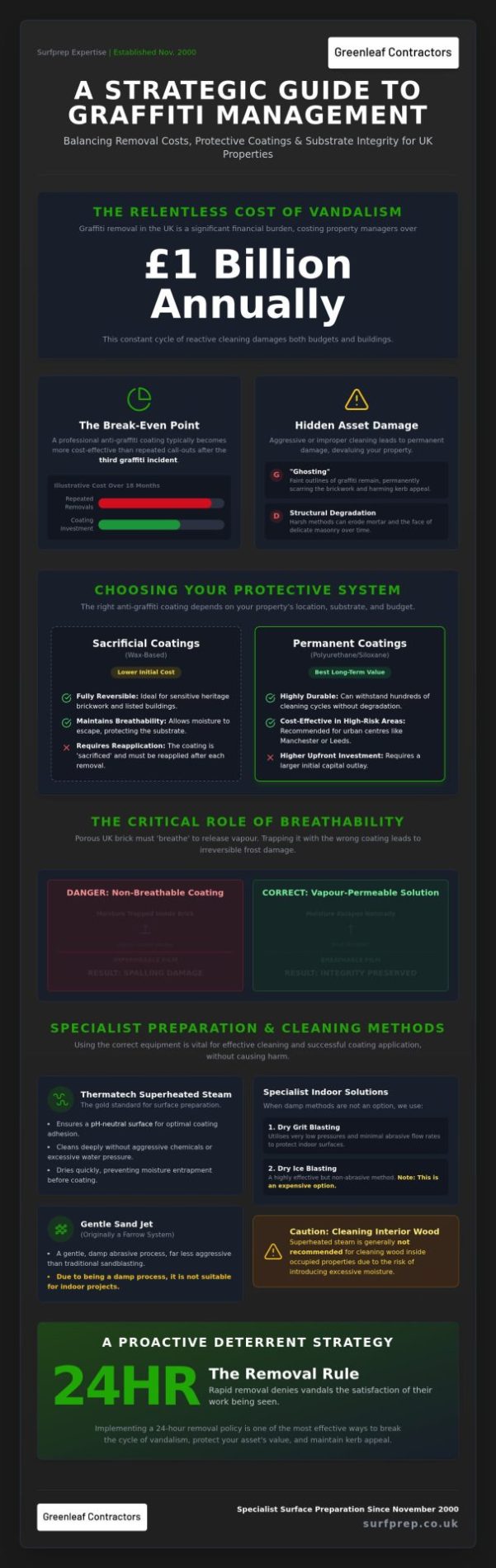
Since we established Surfprep in November 2000, we’ve seen property managers struggle with the constant drain of maintenance creep. When you’re consistently removing spray paint from brick uk, the invoices for reactive call-outs quickly stack up. We’ve found that the “break-even” point usually arrives by the third time a specific wall is targeted. Investing in a specialist anti-graffiti coating upfront might seem like a significant capital outlay, but it’s often more economical than paying for repeated emergency clean-ups over an eighteen-month period.
Beyond the direct costs, there’s the issue of property devaluation. Traditional cleaning methods, if applied too aggressively (particularly by inexperienced contractors), can leave “ghosting”, a permanent shadow of the original tag, which ruins the brick cleaning results and harms kerb appeal. Quick removal is also a psychological deterrent; leaving graffiti visible invites further vandalism. Using a pH-neutral preparation via Thermatech or a gentle sand jet before applying a coating ensures the bond is secure, allowing for rapid removal that keeps your building from looking like an easy target.
Sacrificial vs Permanent Systems: Which Suits Your Budget?
Choosing the right system depends on your site conditions and long-term strategy. We typically categorise these into two main types:
- Sacrificial wax-based coatings: These have a lower entry price and are often preferred for heritage bricks because they’re fully reversible. However, they’re “sacrificed” during the cleaning process, meaning you’ll need to pay for reapplication after every removal.
- Permanent polyurethane or siloxane systems: These require a higher upfront investment but can withstand hundreds of cleaning cycles without needing a top-up.
For high-traffic urban centres like Manchester, Leeds, or Hull, we almost always recommend permanent protection for removing spray paint from brick uk. The frequency of tags in these areas makes sacrificial systems a logistical headache. It’s about choosing the most honest solution for your specific location rather than just the cheapest initial quote.
Substrate Integrity and the Vital Importance of Breathability
UK bricks are inherently porous. They need to “breathe” to release moisture. If you apply a non-breathable coating after removing spray paint from brick uk, you risk trapping water behind a plastic-like film. In Northern England, where winters are damp and freezing, this is a recipe for disaster. Trapped water expands when it freezes, causing the brick face to shatter or “spall”. This damage is irreversible; it’s why brick cleaning projects must prioritise vapour permeability. Following best practice for graffiti removal means protecting the masonry’s long-term health.
Successful coating application depends entirely on the surface preparation. We use Thermatech superheated steam to ensure the substrate is clean and pH-neutral. This is vital because chemical residues from previous attempts at removing spray paint from brick uk can prevent protective films from adhering correctly. By using steam (which dries quickly) rather than aggressive chemicals, we prepare a “clean canvas” that doesn’t compromise the brick’s natural structure. This method avoids introducing the excessive moisture that traditional pressure washing might.
Why Heritage Masonry Requires a Specialist Vapour-Permeable Solution
We have an “Expert Admission” for you: some listed buildings or soft red bricks shouldn’t be coated with permanent films at all. If the masonry is too fragile, even a “breathable” film might cause issues. For properties in historic centres like York or Lincoln, we often evaluate silane-based coatings. These protect against paint whilst allowing the stone cleaning substrate to remain fully vapour-permeable. It’s essential to check compatibility with traditional lime mortars before proceeding. If you’re unsure about your building’s specific requirements, you can speak to our specialists for a substrate assessment.
Strategic Graffiti Management: Implementation and Specialist Application
Managing a property’s exterior is about more than reactive repairs; it’s a core part of improving business curb appeal. We always advocate for the 24-hour removal rule. If you remove tags within a day, you deny the vandal the “glory” of their work being seen. This approach offers several advantages:
- Deters repeat offences by making the location unrewarding for vandals.
- Prevents spray paint from curing deeply into the porous brickwork.
- Maintains a professional, well-managed image for tenants and customers.
Maintaining this professional image extends beyond the facade; for commercial properties in the Bristol area, That’s Cleaning offers the regular cleaning services required to keep every part of a business environment in top condition.
Anti-graffiti coatings make this logistically possible. Instead of a full-scale restoration project, removing spray paint from brick uk becomes a simple maintenance task that your team can often handle with low-pressure water. A common pitfall we see with DIY applications is the “milky” finish. This occurs when a coating is applied to damp masonry or in high humidity. The moisture gets trapped under the film as it cures, resulting in an unsightly white haze that’s incredibly difficult to remove. Professional application ensures the dew point and moisture levels are correctly monitored before a single drop of sealant touches the brick. Avoiding this ensures that removing spray paint from brick uk remains a straightforward process rather than a secondary restoration headache. For property managers looking to maintain high standards across their entire site, BeVa Cleaning Solutions offers the commercial janitorial services needed to complement professional exterior masonry care.
Since we acquired our first Farrow System in November 2000, we’ve championed the sand jet as the superior choice for surface preparation. Unlike traditional sandblasting, which can be far too aggressive for old UK bricks, the sand jet is a gentle, damp abrasive process that cleans without scouring the substrate. However, we’re honest about its limitations. Because it’s a damp process, we never recommend it for internal works, where dry grit or dry ice blasting (though the latter is an expensive option) are better fits. For external coatings, timing is everything. We never apply protection to saturated brickwork following heavy rain. You must allow the wall to dry out. If you need a site-specific plan, you can contact us for a specialist assessment across Yorkshire and the North West.
Protecting Your Property Investment with Specialist Masonry Care
Breaking the cycle of vandalism requires a shift from reactive cleaning to strategic protection. By balancing the long-term ROI of breathable coatings against the escalating costs of removing spray paint from brick uk, you can safeguard both your maintenance budget and your building’s structural health. Success depends on vapour permeability and pH-neutral preparation; skipping these technical steps often leads to irreversible frost damage or unsightly “ghosting”.
Established in November 2000, Surfprep brings over two decades of practical experience to every project. We’re specialists in Thermatech superheated steam restoration and sand jet cleaning across Leeds, York, Hull, and the wider North of England. Our team prioritises the right solution over a quick sale, ensuring your masonry remains protected for the long term. Request a Specialist Quote for Anti-Graffiti Protection today to secure your property’s future.
Frequently Asked Questions
How much does anti-graffiti coating cost per square metre in the UK?
The cost for professional anti-graffiti coating varies significantly based on the type of system chosen and the condition of the substrate. Permanent siloxane systems typically require a higher initial investment than sacrificial wax-based coatings. You must also factor in the cost of preparation; removing spray paint from brick uk to create a pH-neutral surface is essential for a successful, long-lasting application.
Will an anti-graffiti coating change the colour or texture of my brickwork?
Modern anti-graffiti systems are designed to be nearly invisible, though the choice between sacrificial and permanent systems affects the final finish. Sacrificial wax-based coatings are generally matte and preserve the natural texture of the brick. Permanent siloxane or polyurethane systems can offer a slight sheen, but high-quality vapour-permeable options maintain the substrate’s original appearance without the plastic look of cheaper alternatives.
Can I apply anti-graffiti coatings to a listed building or heritage stone?
Yes, but we advise caution. Sacrificial wax-based coatings are the preferred choice for listed buildings because they’re fully reversible and vapour-permeable. Permanent films can trap moisture within heritage stone, leading to structural decay over time. Since our founding in November 2000, we’ve helped owners of historic properties select systems that protect against paint whilst respecting the building’s original fabric and breathability.
How long does a permanent anti-graffiti coating typically last on an external wall?
A high-quality permanent anti-graffiti coating can last between 10 and 20 years, depending on environmental exposure and the frequency of cleaning. These systems are engineered to withstand hundreds of wash cycles without degrading. Unlike sacrificial coatings, which require reapplication after every single removal, permanent systems provide long-term protection. They’re a more durable investment for high-traffic urban areas prone to frequent vandalism.
