
Did you know that the annual cost of graffiti removal in the UK is now estimated to exceed £1 billion? For headteachers and site managers, this isn’t just a national statistic; it’s a daily battle to protect the visual integrity of their learning environment. When offensive tags appear on a historic stone facade, the pressure to act is immense, yet rushing into a fix often leads to “ghosting” or permanent masonry scarring. Professional graffiti removal for schools uk requires a specialist touch that balances rapid response with the delicate preservation of the building’s fabric.
This guide explains how to safely eliminate graffiti using technology like Thermatech superheated steam and gentle sand jet systems (a damp process we prefer for external masonry). You’ll learn how to restore your campus without damaging brick or stone, keeping your school welcoming whilst avoiding the pitfalls of aggressive sandblasting. Since 2000, we’ve provided these specialist restoration services to ensure educational environments remain professional and clean.
Key Takeaways
- Learn how rapid response and the “Broken Windows” theory help maintain a professional reputation whilst deterring further anti-social behaviour on campus.
- Discover why Thermatech superheated steam is a superior, low-pressure solution for removing paint from sensitive historic masonry without using harsh chemicals.
- Understand the benefits of using a sand jet as a gentle, damp-process alternative to traditional sandblasting for external graffiti removal for schools uk.
- Avoid the permanent “ghosting” and surface damage caused by DIY attempts by implementing a specialist, proactive maintenance strategy.
Graffiti Removal for Schools: Protecting Reputation and Safeguarding
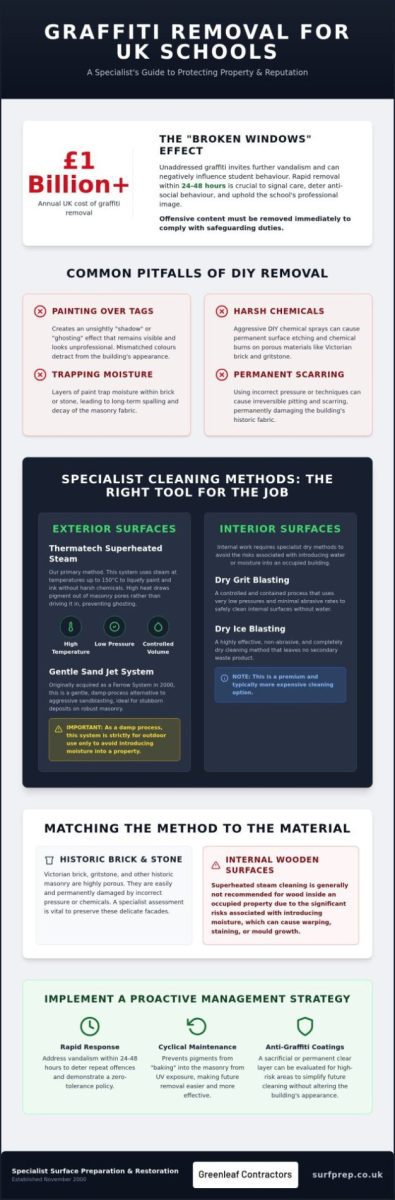
Immediate action is essential for effective graffiti removal for schools uk. Leaving a tag in place often invites more vandalism; it’s a psychological trigger known as the “Broken Windows” theory. When students see a neglected environment, it can negatively influence their behaviour and respect for the premises. Understanding the history and context of graffiti helps us realise that many tags are communicative. Removing them within 24 to 48 hours breaks this cycle and signals that the school takes pride in its grounds.
UK schools face strict legal and safeguarding duties. Under the Anti-social Behaviour Act 2003, local authorities can issue notices for removal. More importantly, hate-based or offensive content must be prioritised to protect pupils and staff. Many schools try “painting over” tags to save money, but this is a false economy for several reasons:
- It creates a “shadow” or “ghosting” effect that remains visible.
- Layers of paint trap moisture within the brick or stone, leading to spalling.
- The mismatched colours look unprofessional and temporary.
The Impact of Vandalism on Educational Facilities
Visual standards directly affect parental trust and school inspections, such as those by Ofsted or the ISI. A campus covered in shadows or poorly matched paint patches looks unmanaged. Before any work begins, we identify the specific substrate. Whether it’s soft Victorian brick or porous gritstone, using the wrong pressure can cause permanent scarring. Our experience since 2000 shows that a specialist approach preserves the building’s life whilst maintaining that vital first impression for visitors. This standard of care should also extend to outdoor athletic facilities, where X3 System provides professional cleaning for tartan tracks and artificial turf.
Safe and Effective Cleaning Methods for Educational Facilities
Achieving professional graffiti removal for schools uk requires a focus on precision rather than brute force. We primarily utilise Thermatech superheated steam technology. This system reaches temperatures up to 150°C, allowing us to liquefy paint and ink without relying on harsh chemicals. By keeping pressures low, we protect the structural integrity of the substrate. This is vital for avoiding “ghosting”, which is the faint shadow left behind when pigment is pushed deeper into the stone. Key factors we control include:
- Temperature: High heat draws paint out of the masonry pores rather than driving it in.
- Pressure: Low PSI prevents the “pitting” or scarring of soft bricks.
- Volume: Controlled water flow ensures a thorough rinse without saturating the building fabric.
For stubborn deposits on external elevations, we use a specialist sand jet, which we originally acquired as a Farrow System in November 2000. It’s a gentle alternative to traditional sandblasting. Because this is a damp process, it must remain an outdoor-only solution to avoid introducing moisture into the building. For internal works, we suggest dry grit blasting (using low pressures) or dry ice blasting, though dry ice is typically an expensive option.
Gentle Restoration for Historic School Brickwork and Stone
Many educational sites across Leeds and York feature Victorian brick or gritstone facades. These materials are highly porous; they’re easily damaged by DIY chemical sprays that can cause permanent surface etching. A proactive graffiti management strategy ensures the right method is matched to the material. For those seeking specialist graffiti removal for schools uk, our sand jet cleaning service offers a non-destructive way to restore masonry to its original condition whilst protecting the school’s professional image.
Implementing a Proactive Graffiti Management Strategy
Relying on in-house staff for graffiti removal for schools uk often leads to unintended damage. DIY chemical cleaners can cause severe surface etching or chemical burns on porous stone, especially when used without specialist training. When paint isn’t lifted correctly from the substrate, it leaves permanent shadows that are significantly harder to remove during later attempts. Organising cyclical maintenance allows site managers to catch vandalism before UV rays “bake” the pigment deep into the masonry. For high-risk areas like perimeter walls, we can evaluate anti-graffiti coatings. These aren’t a universal fix, but they provide a sacrificial layer that simplifies future cleaning without altering the building’s appearance.
Professional Restoration vs. Quick-Fix Solutions
An “Honest Specialist” approach prioritises the building’s longevity over a quick sale. We often find that Thermatech superheated steam is a better first step than abrasive cleaning because it’s less intrusive on delicate brickwork. However, if the surface is heavily textured or the paint is particularly stubborn, our sand jet cleaning (originally Farrow System) might be the more effective alternative. We understand that school life is busy and safeguarding is paramount. We coordinate works during half-terms or weekends to ensure zero disruption to students. Our team has been operating since November 2000, providing the specific insurance and credentials required for work on educational sites. If you need a dependable partner for your campus, contact us for a straightforward, professional assessment.
Restoring a Clean and Welcoming Learning Environment
Managing vandalism is about more than simple aesthetics; it’s a critical part of school safeguarding and long-term building preservation. By choosing specialist restoration methods like Thermatech superheated steam or the gentle sand jet over aggressive sandblasting, you ensure that historic brick and stone remain undamaged. Professional graffiti removal for schools uk prevents the permanent shadows and surface scarring that can diminish a campus’s reputation and invite further anti-social behaviour.
Established in November 2000, we bring decades of masonry expertise to every project across Leeds, York, Hull, and the wider North. Our “Honest Specialist” approach ensures we only recommend the technology that’s right for your specific substrate, whether it’s a Victorian facade or modern brickwork. Contact Surfprep for a specialist school graffiti removal quote to restore your grounds. A clean, professional campus is just a specialist assessment away.
Frequently Asked Questions
Is professional graffiti removal safe for old school buildings?
Yes, provided specialist equipment is utilised. We use Thermatech superheated steam to liquefy paint at low pressures, which prevents the surface of old bricks from “blowing” or pitting. For tougher external tags on Leeds or York heritage sites, our sand jet offers a gentle abrasive alternative. This approach preserves the substrate’s integrity, which is vital for maintaining the historic character of older educational facilities.
How quickly should graffiti be removed from school property?
Ideally, graffiti should be removed within 24 to 48 hours of discovery. Rapid response is a core part of effective graffiti removal for schools uk, as it discourages vandals from returning to a “clean” target. Quick action also prevents the sun’s UV rays from baking the pigment into porous masonry. This makes the eventual cleaning process much simpler and reduces the risk of permanent shadows.
Can you remove graffiti from sandstone without leaving a shadow?
Yes, we can achieve shadow-free results on sandstone by using superheated steam. Sandstone is highly porous, meaning ink often sinks deep into the stone. Traditional washing just cleans the surface, leaving a “ghost” behind. Our Thermatech system uses high temperatures to draw the pigment out from within the pores. This ensures a clean finish that restores the stone’s original colour without leaving outlines.
Why is superheated steam better than pressure washing for graffiti?
Superheated steam relies on high temperatures rather than brute force to remove paint. Standard pressure washing uses high-volume, high-impact water that can easily erode mortar joints or etch the surface of soft bricks. Thermatech uses very little water at low pressure, making it far safer for delicate school facades. It’s a precise restoration tool that protects the building whilst delivering a superior, chemical-free clean.
