The preservation of our architectural heritage is a profound responsibility, requiring a blend of historical respect and technical expertise. When the time comes to clean centuries of grime, paint, or biological growth from historic stone and brick, the chosen method becomes a pivotal decision. Two techniques dominate this specialist field: the gentle steam of DOFF cleaning and the more robust approach of sandblasting. Selecting the correct process is fundamental to protecting the integrity and character of a listed building or period property for generations to come.
Understanding DOFF Cleaning: Precision Through Steam
DOFF cleaning has established itself as a benchmark for delicate building restoration. This process utilises a system that delivers low-pressure, superheated steam to thermally degrade contaminants. It is highly effective against algae, moss, lichen, and surface grime without employing abrasive materials that can damage substrates. The technique is so favoured for its gentle touch that conservation officers frequently specify DOFF cleaning by name for sensitive listed projects, valuing its ability to sterilise surfaces and inhibit biological regrowth.
It is important to clarify that DOFF is a trademarked system, and equivalent results are achieved using similar advanced technology. The process, while exceptionally thorough, is also methodical. Its primary strength lies in safeguarding soft brick and historic mortar, making it the default choice for projects where preserving the original surface patina is non-negotiable.
Examining Sandblasting: Power and Control
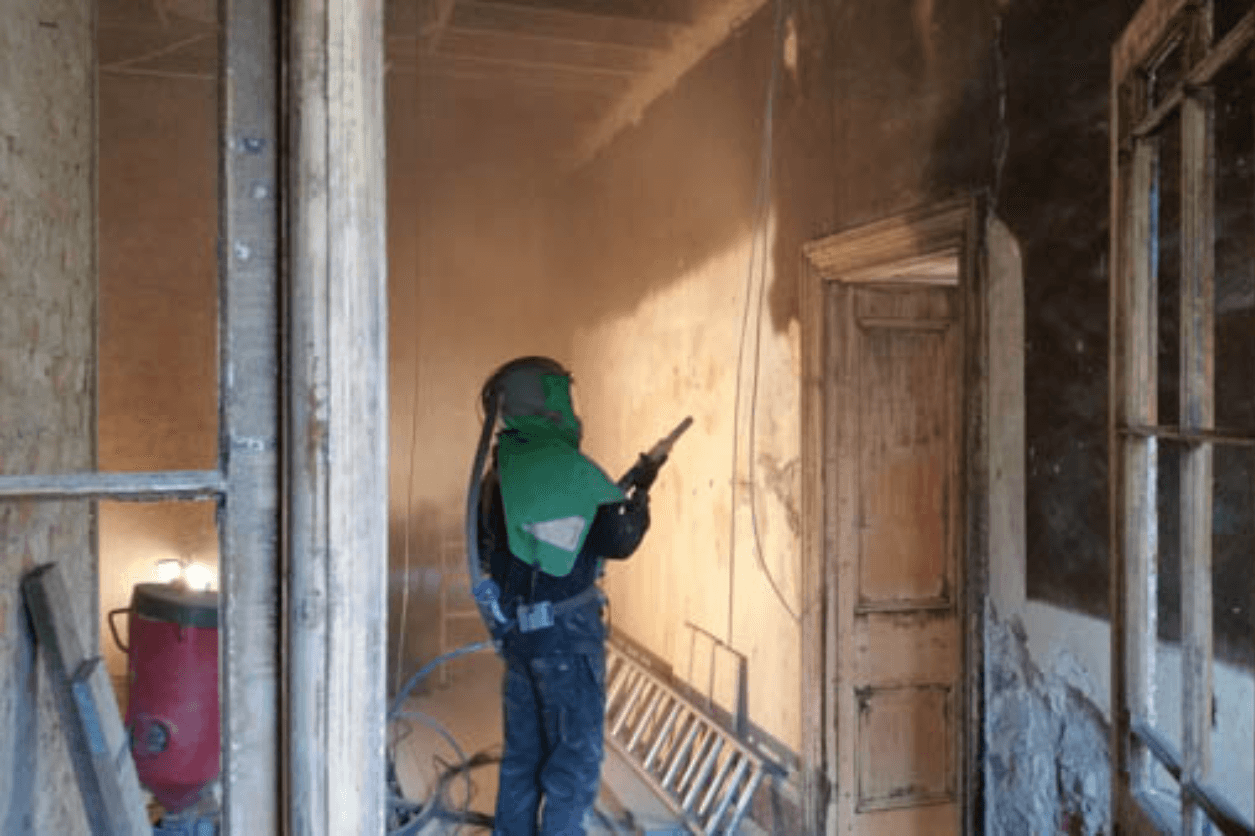
The term sandblasting encompasses a wide spectrum of abrasive cleaning techniques. Traditional dry sandblasting, which employs high-velocity grit, is notoriously aggressive and is generally unsuitable for heritage masonry. Its force can erode stone, scar surfaces, and gouge mortar joints, resulting in irreversible damage and loss of historic fabric.
In contrast, modern damp blasting or sand jetting represents a refined evolution of this technology. By introducing water to the abrasive stream, dust is suppressed and the process can be finely calibrated. This allows for controlled pressure and abrasive flow, enabling the cleaning of more stubborn contamination, such as multiple paint layers, on suitable robust masonry. When executed with expert precision, this gentler form of sandblasting can be a viable tool within a conservation strategy, though it demands a deep understanding of material tolerances.
Making the Informed Choice for Historic Fabric
The decision between DOFF cleaning and a carefully controlled sandblasting method is a technical judgement. The overriding principle in conservation is to always begin with the least invasive effective technique. For the vast majority of heritage cleaning scenarios, particularly those involving fine stone, terracotta, or early brickwork, DOFF cleaning is the unequivocally safer and preferred option.
A tuned sandblasting or sand jetting approach may be considered for specific challenges, such as tenacious industrial soiling on hardy brickwork. The critical factor is the application of profound skill and experience to ensure the process is subservient to the material, not the other way around. Often, the most successful restorations employ a sequential methodology, where the majority of the facade is treated with steam, and any resilient areas are later addressed with pinpoint abrasive accuracy to achieve a harmonious finish.
Conclusion: A Philosophy of Care
The restoration of a heritage building is an act of custodianship. The choice between DOFF cleaning and sandblasting is not merely a commercial selection but a philosophical commitment to preservation. By prioritising methods that cleanse without compromising, we honour the craftsmanship of the past and ensure its legacy endures. For a consultation on your sensitive restoration project, please contact Greenleaf Contractors, our team of specialists.