
The familiar DOFF name doesn’t automatically make it the better choice for your brick or stonework. In the Thermatech vs doff system comparison, the key questions are how the equipment is set up and how the operator controls heat, water and pressure around vulnerable masonry.
It’s understandable to be cautious: a method that removes years of grime shouldn’t leave old brick scarred or stonework compromised. Heritage projects may also need input from a conservation officer. This guide explains how the two superheated-water systems compare, what they have in common and why preparation and operator judgement matter as much as equipment. Surfprep uses a Thermatech machine for superheated steam cleaning, applying its restoration expertise to assess which method suits each façade.
Key Takeaways
- Understand how superheated steam cleans masonry with heat and controlled pressure, and why careful technique matters for older surfaces.
- In the Thermatech vs doff system comparison, the brand name matters less than the equipment setup and the operator’s judgement.
- Superheated steam isn’t suitable for every surface, particularly wooden beams inside occupied properties where moisture is a concern.
- Use the practical guidance in this article to assess which cleaning approach may suit your brick or stone restoration project.
Understanding Superheated Steam: The Science of Thermatech and DOFF
Superheated steam cleaning uses water heated to up to 150°C and applied at low pressure. Heat helps loosen biological growth, paint and bitumen, often without chemical cleaners. Controlled application limits the force directed at the masonry. The Steam Cleaning overview explains the wider principles behind using heat and steam to clean surfaces.
This differs from standard pressure washing, which relies mainly on the mechanical force of water. The distinction matters for brick and stone: intense pressure can scar softer red bricks or erode weathered heritage stone, even when the aim is to remove stubborn deposits.
Why Temperature Trumps Pressure in Masonry Restoration
Heat can soften and lift ingrained grime, including carbon staining, without relying on a forceful jet. The aim is to remove soiling while retaining the original surface, not to make the masonry look newly manufactured. Assessment and controlled application are essential because no cleaning method is automatically safe for every substrate—an ethos prioritised by historic restoration specialists such as Progressive Contracting NY Corp when preserving delicate stone and brick facades.
In the Thermatech vs doff system comparison, the shared cleaning principle is more useful than assuming one brand is the only suitable choice. Surfprep uses a Thermatech machine for superheated steam cleaning on masonry where the method is appropriate. For a listed building, the proposed method and any consent requirements should be considered for that specific property. Superheated steam is not automatically the only acceptable approach, so the cleaning plan should reflect the surface’s condition and character. For more context on the material, see our brick cleaning approach.
Thermatech vs DOFF: Key Differences and Commonalities
DOFF is the more widely recognised name, but it isn’t the only system used for superheated-water cleaning. Thermatech is an alternative, and Surfprep uses a Thermatech machine for suitable masonry work. Both systems can deliver water at up to 150°C. In practice, the choice may depend on the machine configuration, the operator’s experience and the surface being cleaned, rather than the brand name alone.
Results can’t be assumed to be identical on every building. They depend on the masonry’s condition, the type of soiling and how the equipment is handled. With an appropriate setup and skilled operation, either system can achieve effective cleaning. The conservation principle is to remove soiling without harming the original fabric, as discussed in Steam Cleaning Masonry and Brickwork. For material-specific considerations, see Surfprep’s brick cleaning information.
Heritage and Listed Building Considerations in the UK
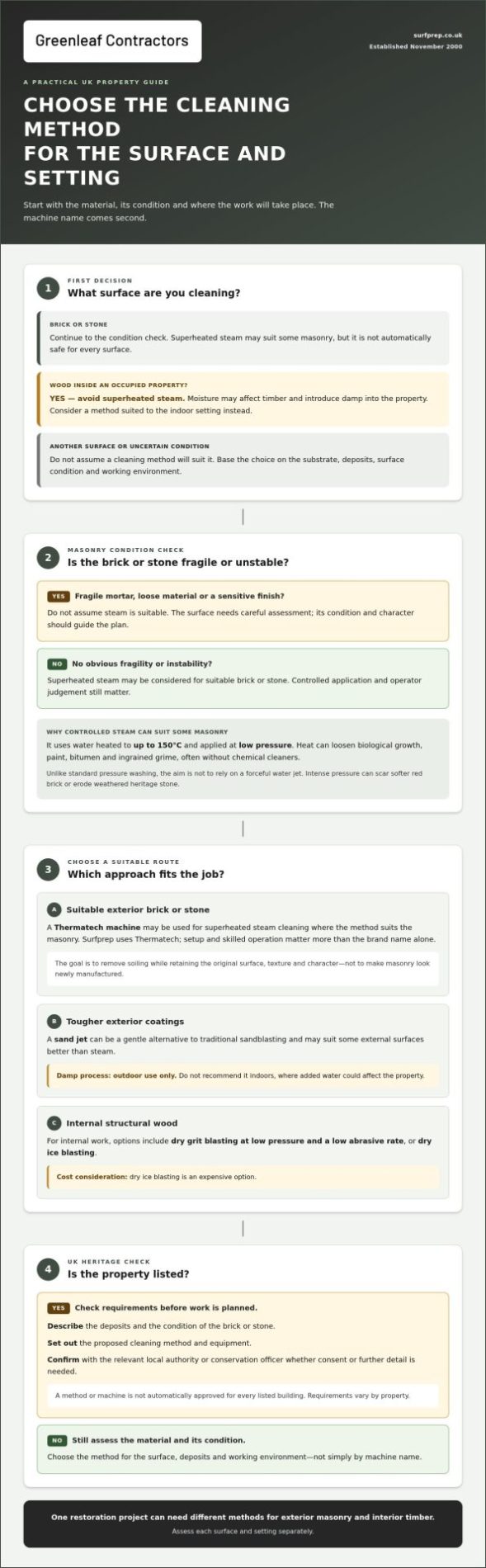
A UK project specification may describe a cleaning method, such as superheated steam, without requiring a particular manufacturer’s machine. Requirements vary, so don’t assume a system is automatically approved for every listed building. Before work is planned, establish whether the proposed method needs consent or further detail from the relevant local authority or conservation officer.
- Describe the deposits and the condition of the brick or stone.
- Set out the proposed cleaning method and equipment.
- Confirm whether the work needs consent or further detail before proceeding.
Surfprep selects a technique to suit the masonry rather than relying on the best-known machine name. For more on its restoration work and approach, visit Surfprep’s surface restoration website.
Choosing the Right Method for Your Property: Beyond the Brand Name
Start with the surface, not the machine. Superheated steam can suit some brick and stone, but it isn’t a universal solution. Fragile mortar, loose material, sensitive finishes or indoor moisture risks may call for another approach. The right choice depends on the substrate, the deposits and whether the work is indoors or outside.
We generally avoid steam for wooden beam cleaning inside occupied properties. Moisture can affect timber and introduce damp into the building, so internal structural wood needs a method suited to the setting. Dry grit blasting at low pressure and a low abrasive rate is one option for internal work. Dry ice blasting is another, though it is an expensive option. Select the method with the timber’s condition and indoor environment in mind.
Choosing a Method for Brick, Stone and Timber
For tougher exterior coatings, the Farrow System sand jet offers a gentle alternative to traditional sandblasting. It is a damp process, so it is intended for outdoor use, not interiors where added water could affect the property. A sand jet cleaning approach may suit some external surfaces better than steam, while Thermatech may be more appropriate for others. In the Thermatech vs doff system comparison, neither machine makes every project a steam-cleaning job.
For properties in Leeds, York, Hull, Bradford, Nottingham, Manchester, Derby, Lincoln, Newcastle, Durham, Scarborough and Beverley, assess the material, its condition, the deposits and the working environment before choosing between Thermatech, the sand jet or another suitable method. This matters where exterior masonry meets internal timber, as the appropriate technique can differ across a single restoration project.
Plan a Careful Next Step for Your Masonry
Before choosing a cleaning method, consider what you want the restored surface to retain: its original texture, the definition of its brickwork or the character of its stone. These priorities give a practical starting point for planning the work and keep the focus on the building rather than the machine’s brand name. The Thermatech vs doff system decision is best made in context, with the property’s materials and condition guiding the choice.
Surfprep provides specialist masonry cleaning using Thermatech or the Farrow System sand jet where each is appropriate. If you’re planning work on a brick or stone façade, start with an assessment specific to the property.
Contact Surfprep for an expert masonry cleaning survey to discuss a considered plan for your property.
Frequently Asked Questions
Is Thermatech as good as the DOFF system for listed buildings?
Thermatech can be a suitable alternative to DOFF for listed-building cleaning, but approval depends on the proposed work and the building, not the machine name alone. For the Thermatech vs doff system decision, check whether the project specification names a particular system. Establish the proposed equipment and method with the relevant conservation officer before work begins.
Can superheated steam cleaning damage my brickwork?
Yes. Damage is possible if the method is unsuitable or applied without care. A practical precaution is to trial a small, discreet area first, then assess both the cleaning result and the brick’s surface before treating a larger section. This helps show whether the approach suits that particular façade, rather than relying on assumptions based on brick type alone.
What is the difference between steam cleaning and pressure washing?
Steam cleaning uses heated water, while pressure washing uses a directed water jet. The useful distinction for a project is how each method suits the deposit and surface, not simply which sounds stronger. Identify what needs removing, consider how the masonry should look afterwards and plan how to manage runoff around the building. While traditional pressure washing is well suited to general outdoor features and deck care by teams such as Cascade Outdoor Services, older or fragile brickwork demands the gentler, superheated approach of steam.
Is it safe to use a DOFF or Thermatech system on internal wooden beams?
Generally, steam isn’t recommended for wooden beams inside occupied properties because of the moisture risk. Internal work needs a dry approach selected for the timber and room. Low-pressure, low-abrasive dry grit blasting may be suitable, while dry ice blasting is another, more expensive option. Plan protection for nearby furnishings and finishes before work starts.
