
As a commercial property manager or business owner in the North of England, you understand that a clean, well-maintained facade is more than just a matter of pride—it’s a critical business asset. Yet, the persistent issue of graffiti can feel like a losing battle. You install cameras and upgrade lighting, only to find new tags appearing days later. This cycle of vandalism and costly cleanup erodes your property’s value and your peace of mind.
The common advice often misses the point. Effective graffiti deterrence isn’t just about surveillance; it’s a matter of surface science, rapid response, and understanding the psychology of a vandal. It’s about making your property an unattractive, difficult, and unrewarding target.
This guide debunks the common myths surrounding graffiti management and provides a strategic framework for protecting your commercial assets. We will explore why standard solutions fail and how a professional approach to surface restoration can break the cycle of vandalism for good.
Beyond CCTV: Why Technology Alone Fails to Deter Graffiti
Myth: High-definition CCTV and motion-activated lighting will stop all vandals from targeting your site.
Whilst security measures are a valuable layer of protection, they are rarely a complete solution. Determined vandals are often undeterred, using hoods or masks to conceal their identity and working quickly to complete their tags before any response can be mobilised. Technology records a crime; it doesn’t always prevent it. The real deterrent lies in understanding the psychology of why a building is chosen in the first place.
This is where the “Broken Window Theory” becomes highly relevant to UK commercial property management. The theory suggests that visible signs of disorder and neglect—such as broken windows, litter, or existing graffiti—create an environment that encourages further crime and anti-social behaviour. A single, uncleaned tag acts as a signal that the property is not actively managed. It’s an open invitation, suggesting that any new graffiti will also be allowed to remain, giving the vandal the visibility and longevity they crave.
Visible neglect, whether it’s peeling paint or old tags, communicates a lack of oversight. This is why psychological deterrence is so crucial. In the context of commercial facade maintenance, psychological deterrence is the practice of maintaining a property to such a high standard that it signals constant vigilance and care, making it an unappealing target for vandals.
This philosophy of active management is applicable across many sectors; for instance, dental practices looking to optimise their front desk capacity and streamline patient flow can check out TurnUp World.
The Legal and Financial Cost of Inaction
Allowing graffiti to linger isn’t just a matter of aesthetics; it carries significant legal and financial consequences. Under the Anti-social Behaviour Act 2003, local authorities can issue abatement notices requiring property owners to remove graffiti. Failure to comply can result in fines and the council undertaking the work themselves, billing the owner for the cost.
Furthermore, persistent graffiti directly impacts your bottom line. For commercial units in thriving Northern centres like Manchester and Leeds, curb appeal is intrinsically linked to market value and rental yield. A facade covered in tags suggests a declining area, deterring potential tenants and devaluing the asset. As we look towards 2026 property value trends, maintaining a pristine exterior is a non-negotiable aspect of asset management. A proactive approach to facade maintenance is fundamental to improving business curb appeal and securing your investment’s future.
The Porosity Problem: Why Standard Paint is Not a Deterrent
Myth: You can simply paint over graffiti to deter future vandals from returning.
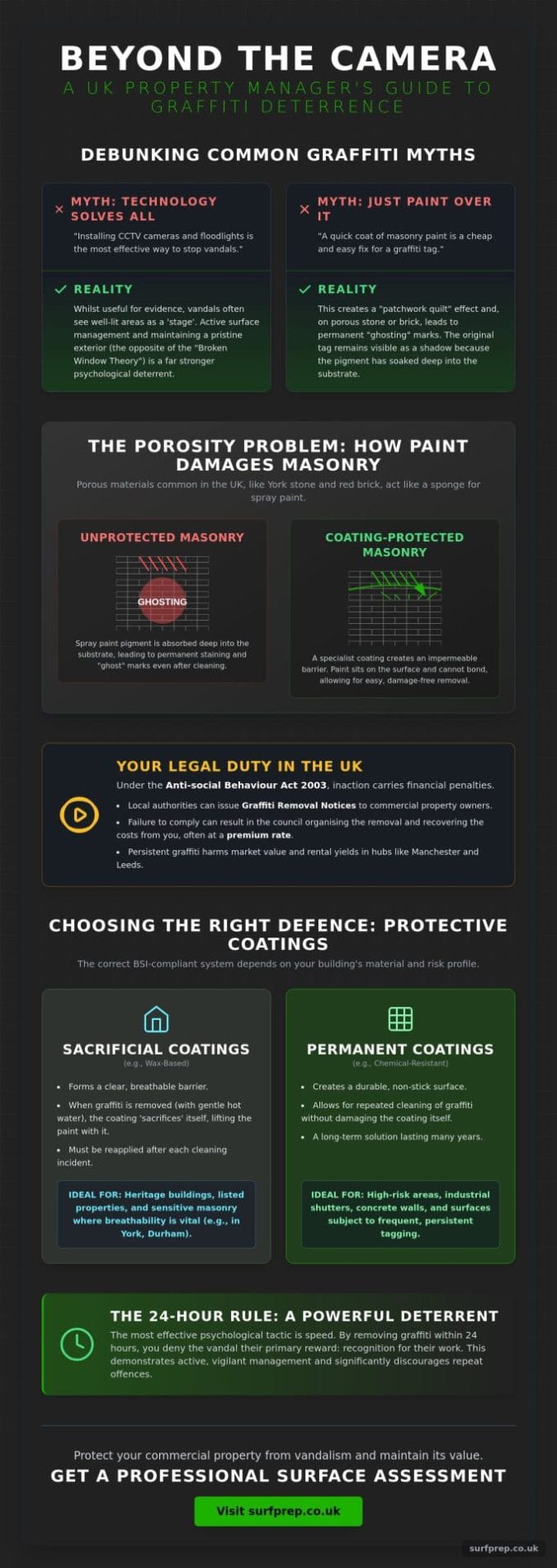
Painting over graffiti is a common but deeply flawed DIY solution. It fails to address the underlying issue and, on many surfaces, can cause more harm than good. The problem lies in the porosity of common building materials found across the North, such as traditional York stone and red brick. These materials are not solid and impermeable; they are filled with microscopic pores.
When spray paint is applied, its pigments and solvents penetrate deep into these pores. Simply painting over the tag traps the graffiti within the masonry. Over time, the new layer of paint will weather and fade, allowing the original tag to reappear as a faint outline—a phenomenon known as “shadowing” or “ghosting.” This shadowing not only looks unprofessional but also signals to vandals that the surface is an easy target, one that has been tagged before.
To prevent this, porous materials require specialist protection. The most effective solutions are anti-graffiti coatings, which fall into two main categories and are often assessed against British Standards Institution (BSI) guidelines for performance and durability.
Sacrificial vs. Permanent Coatings: Which is Right for Your Property?
Choosing the right coating depends on your building’s material, its historical significance, and the level of risk.
- Sacrificial Coatings: These are typically clear, wax-based polymers that form a breathable, invisible barrier over the masonry. When graffiti occurs, the coating is removed using hot water or steam, taking the paint with it. The coating is then reapplied to the cleaned area. For heritage buildings in conservation areas like York or Durham, these coatings are often preferred as they are completely reversible and have minimal impact on the facade’s appearance. However, they must be reapplied after each incident, adding to long-term maintenance costs.
- Permanent Coatings: These are chemical-resistant finishes, often polyurethane or siloxane-based, that create a non-porous surface. Graffiti can be wiped off multiple times using a specified solvent without damaging the coating or the substrate. They are ideal for high-risk, durable surfaces like industrial shutters, concrete walls, and modern commercial cladding. Whilst highly effective, they can subtly alter the sheen of a surface, making them less suitable for some sensitive historic stonework.
Protecting vulnerable facades is a crucial first step. For specialist advice on preparing and cleaning sensitive materials before a coating is applied, see our guides on professional stone cleaning.
Rapid Removal as a Deterrent: The Science of Surface Restoration
Myth: Scrubbing graffiti with harsh chemicals or high-pressure cold water is an effective long-term fix.
When a tag appears, the immediate impulse is to remove it as aggressively as possible. However, aggressive methods often cause irreversible damage. Harsh chemical strippers can leach into masonry, causing staining, whilst high-pressure cold water jetting can erode mortar joints and permanently scar the surface of brick or stone. These methods often leave behind a “clean patch” shadow, which only highlights the area for future vandals.
The single most effective deterrent against repeat tagging is speed. Most graffiti vandals, particularly “taggers,” are motivated by the desire for their work to be seen. By removing the graffiti within 24-48 hours, you deny them this visibility. This “24-hour rule” sends a clear message: this property is monitored, and any vandalism will be erased immediately, making the effort pointless.
To achieve this without damaging the building, specialist equipment is essential. A modern ThermaTech superheated steam system, for example, uses a combination of very high temperatures (up to 150°C) and extremely low pressure. This superheated water vapour melts the paint, allowing it to be gently rinsed away without damaging the substrate. It effectively removes the paint from deep within the pores of the masonry, preventing ghosting and avoiding the “clean patch” effect. Creating a cyclical maintenance plan with a trusted specialist ensures you can act fast, keeping your property a hard target for vandals.
Why Specialist Equipment Beats DIY Methods
The temptation to save money with in-house or DIY removal methods is understandable, but the risks are substantial, especially with older properties.
- The Dangers of Abrasives: Using abrasive methods like sandblasting on brickwork is a recipe for disaster. It removes the hard, protective outer face of the brick, exposing the soft, porous interior. This not only causes aesthetic damage but also makes the brick highly susceptible to water ingress and frost damage, compromising the building’s structural integrity. You can learn more about why you should avoid sandblasting brickwork in our detailed guide.
- Preserving the Patina: A building’s “patina” is the natural ageing and character it develops over time. Superheated steam is gentle enough to lift paint pigments from deep within the stone whilst preserving this historic patina. The result is a clean surface that doesn’t look artificially new or bleached.
When you need a fast, professional response, relying on experts with the right tools is the only way to guarantee a perfect finish without causing long-term damage. For immediate intervention, explore our professional graffiti removal services.
Frequently Asked Questions
Does anti-graffiti coating change the colour of my brickwork?
Modern, high-quality anti-graffiti coatings are designed to be as visually unobtrusive as possible. Sacrificial wax-based coatings are typically invisible once cured. Permanent coatings may add a slight sheen (from matte to gloss), but professional applicators can help you select a finish that is sympathetic to your building’s original appearance. A small test patch is always recommended.
How quickly should I remove graffiti to deter future vandals?
For maximum psychological deterrence, aim to remove graffiti within 24 to 48 hours. The quicker the removal, the stronger the message that vandalism on your property is a fruitless endeavour. This rapid response disrupts the vandal’s goal of gaining recognition for their tag.
Is it better to paint over graffiti or remove it professionally?
Professional removal is almost always the superior long-term solution. Painting over graffiti on porous surfaces like brick or stone often leads to “ghosting,” where the tag reappears over time. Professional removal using methods like superheated steam cleans the paint from within the substrate, preventing shadowing and properly preparing the surface for an anti-graffiti coating if desired.
What is the most effective physical barrier to prevent graffiti on commercial shutters?
Whilst roller shutters are a physical barrier in themselves, their large, flat surfaces are a prime target for taggers. The most effective deterrent for the shutters themselves is applying a permanent, chemical-resistant anti-graffiti coating. This makes removal a simple wipe-down process, drastically reducing maintenance costs and making your shutters a frustrating and unrewarding canvas for vandals.
Protecting your commercial property from graffiti requires a proactive and intelligent strategy. By moving beyond reactive cleaning and implementing a system based on surface science, protective coatings, and rapid response, you can break the cycle of vandalism. Make your building a hard target and preserve its value for years to come.
Protect your property from vandalism—contact Surfprep for expert graffiti removal and protection.
- Specialists in ThermaTech superheated steam cleaning
- Serving Leeds, Manchester, and the North for over 12 years
- Expertise in both heritage stone and industrial steel
