
A standard high-pressure jet wash might seem like a quick fix for a dirty facade, but it’s often the quickest way to cause permanent, irreversible masonry damage. For many property owners, the sight of unsightly carbon staining (a stubborn legacy of our city’s industrial heritage) is frustrating, yet the risk of ‘blowing’ the brick faces or eroding lime mortar with aggressive brick cleaning tactics is a far greater concern in Leeds. You want to restore your building’s original character, but you shouldn’t have to gamble with its structural integrity to do so.
This specialist guide will help you navigate the complexities of modern masonry restoration, ensuring you can distinguish between safe, conservation-approved methods and those that do more harm than good. We’ll demystify industry jargon like Doff superheated steam and Torc systems, whilst explaining why a professional assessment is your best defence against a botched job. By the end of this article, you’ll know exactly how to restore that vital kerb appeal with a finish that preserves your masonry for the next century, rather than just the next season.
Key Takeaways
- Understand why standard pressure washing risks permanent masonry damage and how specialist brick cleaning methods safely remove centuries of industrial soot.
- Learn to distinguish between aggressive abrasive techniques and superheated steam systems (Doff) to ensure your property’s original patina remains intact.
- Discover the essential checklist for vetting a contractor, including why a physical site survey is non-negotiable for an accurate, honest quote.
- Find out how tailoring cleaning intensity to the specific age and condition of your brickwork prevents the need for costly future repairs or repointing.
Understanding Brick Cleaning Methods for Leeds Properties
Professional brick restoration isn’t just about making a building look "new"; it’s about returning the substrate to its intended state without compromising the material. In a city like Leeds, our buildings carry the heavy burden of industrial-era carbon and soot. These pollutants don’t just sit on the surface; they bond with the brickwork over decades. Achieving a successful brick cleaning project requires a deep understanding of brickwork construction and the specific chemistry of these stubborn deposits.
I will be honest: many contractors will tell you that high-pressure water is the standard. It isn’t. For Victorian or Edwardian properties, it’s often the worst tool for the job. We categorise professional methods into three main technologies: superheated steam, targeted chemical application, and controlled abrasives. Each has a specific role, but the choice depends entirely on the age of your masonry and the type of staining present.
Superheated Steam (Doff) vs. Chemical Cleaning
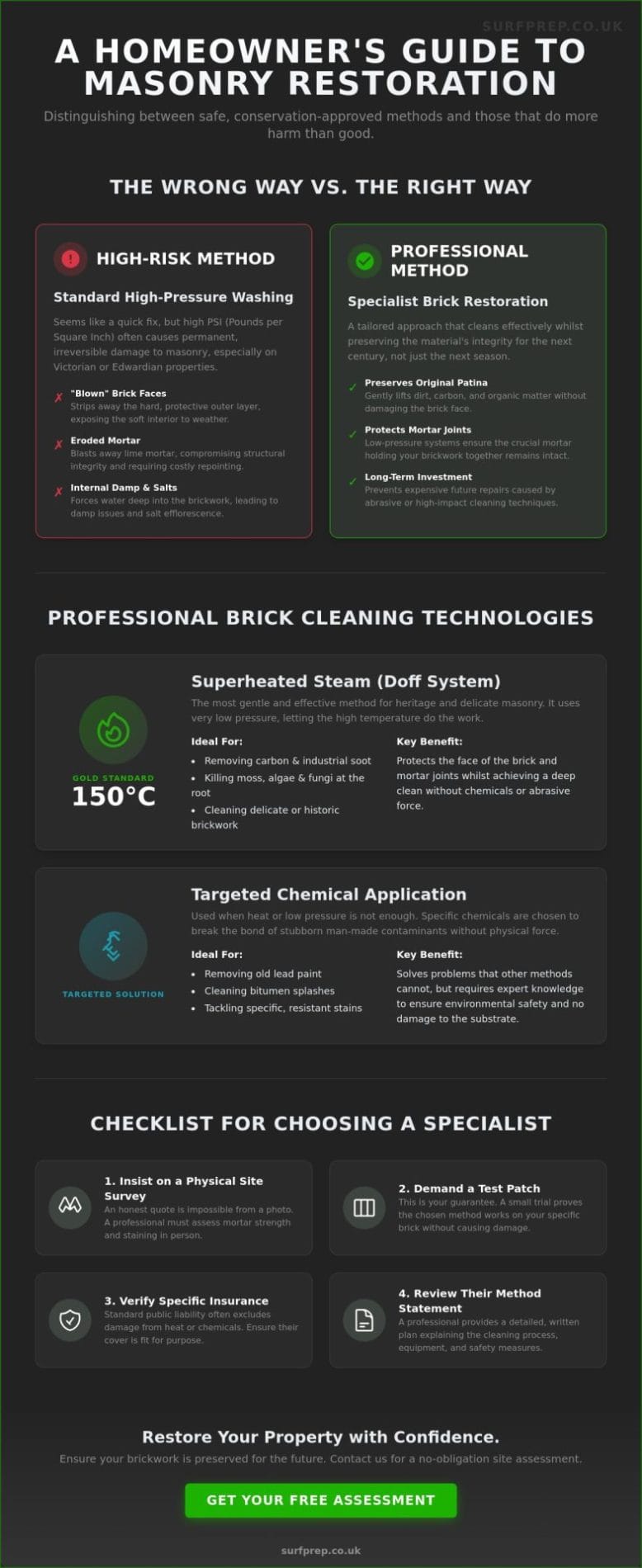
DOFF (which is a trademark of Stonehealth – we actually use a rival machine made by Restorative Techniques called a Thermatec) systems are the gold standard for heritage work. By heating water to 150°C, we can kill moss, algae, and fungi at the root whilst using very low pressure. This protects the delicate face of the brick. If you want to understand the technical differences between these leading systems, our detailed guide on doff steam cleaning for heritage masonry versus the Therma-Tech system explains how each performs on sensitive UK substrates. Chemical cleaners still have their place, however. When we’re dealing with old lead paint or bitumen splashes, targeted chemicals are sometimes the only way to break the bond without physical force. We always prioritise the most gentle method first, especially when working in tight Leeds city centre locations where runoff and environmental impact are critical concerns.
The Dangers of Improper Pressure Washing
If you’ve ever seen bricks with a pitted, crumbly surface, you’re likely looking at "blown" faces. This happens when excessive water pressure strips away the hard outer kiln-fired layer. Once that’s gone, the soft interior of the brick is exposed to the elements. Aggressive cleaning also forces water deep into the substrate, which often leads to internal damp and salt efflorescence. A cheap quote might save money today, but if it results in eroded mortar and damaged masonry, the long-term repair costs will far outweigh the initial savings.
How to Choose a Brick Cleaning Specialist in West Yorkshire
Selecting a contractor for brick cleaning requires more than just checking a few online reviews. You need to verify technical competence through a methodical vetting process. A physical site survey is required; we probably can’t accurately judge the strength of your mortar or the depth of carbon staining from a smartphone photo. A test patch may then be offered. This small, inconspicuous trial proves the chosen method works on your specific substrate without causing damage. It’s a standard part of historic masonry restoration and a sign of an honest specialist who prioritises results over a quick sale.
When you’re comparing quotes, look for these specific indicators of a reliable operation:
- A detailed, written method statement explaining the exact cleaning process.
- Evidence of previous work on properties of a similar age and material.
- Specific insurance cover that includes high-temperature steam or chemical application.
- A clear plan for environmental protection.
Accreditations and Insurance Standards
Public liability insurance is a baseline, but for specialist cleaning, it needs to be specific. Standard policies often exclude damage caused by heat or industrial chemicals (a nasty surprise if something goes wrong).
If you’re managing a commercial facade in the city centre, these standards are usually a baseline requirement for any contractor. Just as understanding surface preparation standards (Sa 2.5) is critical for industrial coating projects, understanding the correct cleaning specifications for masonry is equally essential before any contractor sets foot on your site.
Assessing the Contractor’s Equipment
Don’t be afraid to ask what machinery they use. Genuine Doff or Thermatech systems are the industry benchmark for high-quality brick cleaning specialists. A professional also considers the impact on your neighbours. This means protecting windows as necessary, managing water runoff, and ensuring public paths remain safe. If a contractor doesn’t mention site protection during their initial visit, they likely won’t prioritise it on the day. If you’re unsure which approach suits your property, you can request a professional site assessment to get a clear, technical breakdown of the work required.
The Surfprep Approach: Specialist Brick Restoration in Leeds
Our approach to brick cleaning Leeds isn’t one-size-fits-all. We adjust the intensity of our equipment based on the specific masonry we’re facing, ensuring that a delicate Victorian red brick receives a different level of care than a modern industrial block. We’ll be the first to tell you if a specific area of masonry is too fragile for even low-pressure cleaning; honesty is the foundation of our restoration work. By using superheated steam, we can lift decades of grime whilst leaving the "skin" or patina of the brick untouched. This preservation of the original character is what transforms weathered Leeds terraces into vibrant, historically accurate properties.
We often recommend a thorough clean before any repointing or masonry repairs begin. It’s a logical progression. You simply can’t see the true condition of mortar joints or identify hidden cracks when they’re buried under a century of industrial soot. Once the facade is clear, the real restoration requirements become visible, allowing for a more accurate and cost-effective repair schedule. This methodical process ensures that the structural integrity of the building is prioritised alongside its aesthetic appeal.
Heritage and Listed Building Care
Working in conservation areas across Leeds and York requires a light touch and a deep respect for history. We utilise methods approved by conservation officers, focusing on gentle paint removal that avoids the use of harsh, damaging acids. This ensures the building’s historical significance is protected for the future. For detailed technical specifications on our restoration processes, you can view our brick cleaning services page.
Commercial and Industrial Scale Projects
We also manage the logistical demands of large-scale commercial facades, from city centre offices to sprawling retail parks. Our teams are equipped for rapid graffiti removal and the application of anti-graffiti coatings in high-traffic urban areas. We understand the need for minimal disruption to your daily operations whilst maintaining a professional site. Ready to start? Contact the Surfprep team for a Leeds site survey to discuss your specific project requirements.
Securing the Future of Your Leeds Property
Choosing the right approach for brick cleaning Leeds is a decision that impacts the long-term health of your building. We’ve discussed how superheated steam protects delicate Victorian faces and why vetting a contractor’s insurance is vital for any project. Whether you’re managing a heritage restoration or an industrial facade, the goal remains the same: achieving a clean finish without sacrificing structural integrity. As superheated steam specialists and 26 years in the business, we bring deep expertise in both heritage and industrial masonry to every site.
We don’t believe in guesswork or aggressive tactics that risk permanent damage. Our methodical process ensures your brickwork is treated with the precision it deserves, preserving the material for future generations. Ready to see the difference a specialist approach makes? Request your free Leeds brick cleaning survey today and let our team provide an honest, technical assessment of your property. Your masonry is a vital part of the city’s landscape; let’s ensure it stays that way.
Frequently Asked Questions
How much does brick cleaning cost in Leeds?
The total cost of your project depends on several technical variables, such as the type of masonry, the height of the building, and the severity of the staining. We don’t provide flat rates because a light algae clean on a modern home is fundamentally different from removing a century of bonded carbon from a heritage facade. A professional site survey is the only way to get an accurate, fixed quote that accounts for your specific logistical requirements.
Will steam cleaning damage my old Victorian mortar?
No, provided you use a superheated steam system rather than a standard pressure washer. Because the water is heated to 150°C, it cleans effectively at very low pressure, which prevents the erosion of soft lime mortar. This is why we prioritise steam for heritage work; it kills biological growth and lifts grime without the mechanical force that causes structural damage. For a detailed comparison of how the leading steam systems perform on historic lime mortar, see our guide on Therma-Tech vs DOFF steam cleaning for heritage masonry.
How long does it take to clean a standard semi-detached house?
Most residential **brick cleaning ** projects for a standard semi-detached property take between one and two days to complete. This timeframe can shift depending on whether you’re cleaning just the front facade or the entire building. If we’re dealing with stubborn paint removal or heavy industrial soot, we might need extra time to ensure the brick face isn’t rushed or damaged during the process.
Do I need scaffolding for brick cleaning on a two-storey property?
It depends on the site layout and safety requirements. Whilst we can often use mobile towers or reach-and-wash systems for lower levels, full scaffolding is sometimes necessary to ensure our technicians can work safely and maintain a consistent finish at height. We’ll assess the safest and most cost-effective access method during your initial site survey to avoid any unnecessary expenses.
Can you remove graffiti or old paint from my brickwork?
Yes, we have extensive experience in removing both graffiti and multiple layers of old masonry paint. We use a combination of superheated steam and targeted chemical softeners to break the bond between the paint and the brick substrate. If necessary we might move up to our Sand Jet machine which is a gentle form of sandblasting, which we have used since we started. This method is far safer than sandblasting, which often destroys the protective kiln-fired surface of the masonry and leaves it prone to future weathering.
Is brick cleaning a messy process for my neighbours?
Restoration work can generate spray and runoff, but we take significant steps to manage the impact on surrounding properties. We manage water flow to prevent pooling. Our goal is to leave the site cleaner than we found it, ensuring your neighbours aren’t inconvenienced whilst we restore your property’s kerb appeal. Your neighbours are likely future customers!
