
If you think the only way to shift decades of grime from a building facade is with brute force and high-pressure water, you might be accidentally inviting permanent structural damage into your property. It’s a common misconception that more power equals a better clean, but for historic masonry and delicate timber, aggressive washing is often a recipe for disaster. We know the fear of seeing the faces of Leeds bricks “blown” or watching mortar crumble under a jet that’s simply too strong for the job. It’s an anxiety we’ve helped property owners navigate since we established our business in November 2000, and it’s why we always champion a more considered, expert approach.
By utilising specialist low-pressure building cleaning methods, you can restore your property’s original aesthetic without the risk of moisture ingress or surface erosion. This guide will help you understand the practical applications of superheated steam, specifically the Thermatech system, and why our damp sand jet (originally acquired as a Farrow System) is a far gentler alternative to traditional sandblasting. We’ll also clarify why certain methods, whilst perfect for a stone exterior, should never be used on internal wooden beams due to moisture risks. You’ll gain the expert advice needed to choose a restoration technique that respects the integrity of your building’s materials whilst delivering a finish that looks exactly as it was originally intended.
Key Takeaways
- Learn why high-pressure washing causes blown brick faces and how low-pressure building cleaning methods preserve the “skin” of your property.
- Discover how the Thermatech system uses superheated steam at 150°C to safely melt away bitumen and kill biological growth on external masonry.
- Explore the Sand Jet method (originally the Farrow System) as a gentle, damp abrasive alternative to aggressive sandblasting for external carbon removal.
- Recognise why wet cleaning is unsuitable for internal timber beams and when to opt for dry grit or dry ice blasting instead.
- Gain expert insights on matching the right specialist system to your specific material, whether it is Leeds brick, York stone, or historic timber.
The Evolution of Low-Pressure Building Cleaning: Why Force is the Enemy
Restoration has moved away from the “bigger is better” mentality that once dominated the trade. Modern low-pressure building cleaning methods prioritise the preservation of the building’s “skin” (the protective outer layer of masonry) whilst removing stubborn surface contaminants. This shift is often categorised under the broader umbrella of soft washing, where the goal is to achieve a clean finish without the mechanical trauma associated with heavy-duty equipment. Since we began in November 2000, we’ve seen first-hand how the industry has traded raw power for the “cleaning triangle” of heat, volume, and gentle mechanical action.
The Danger of Traditional Pressure Washing
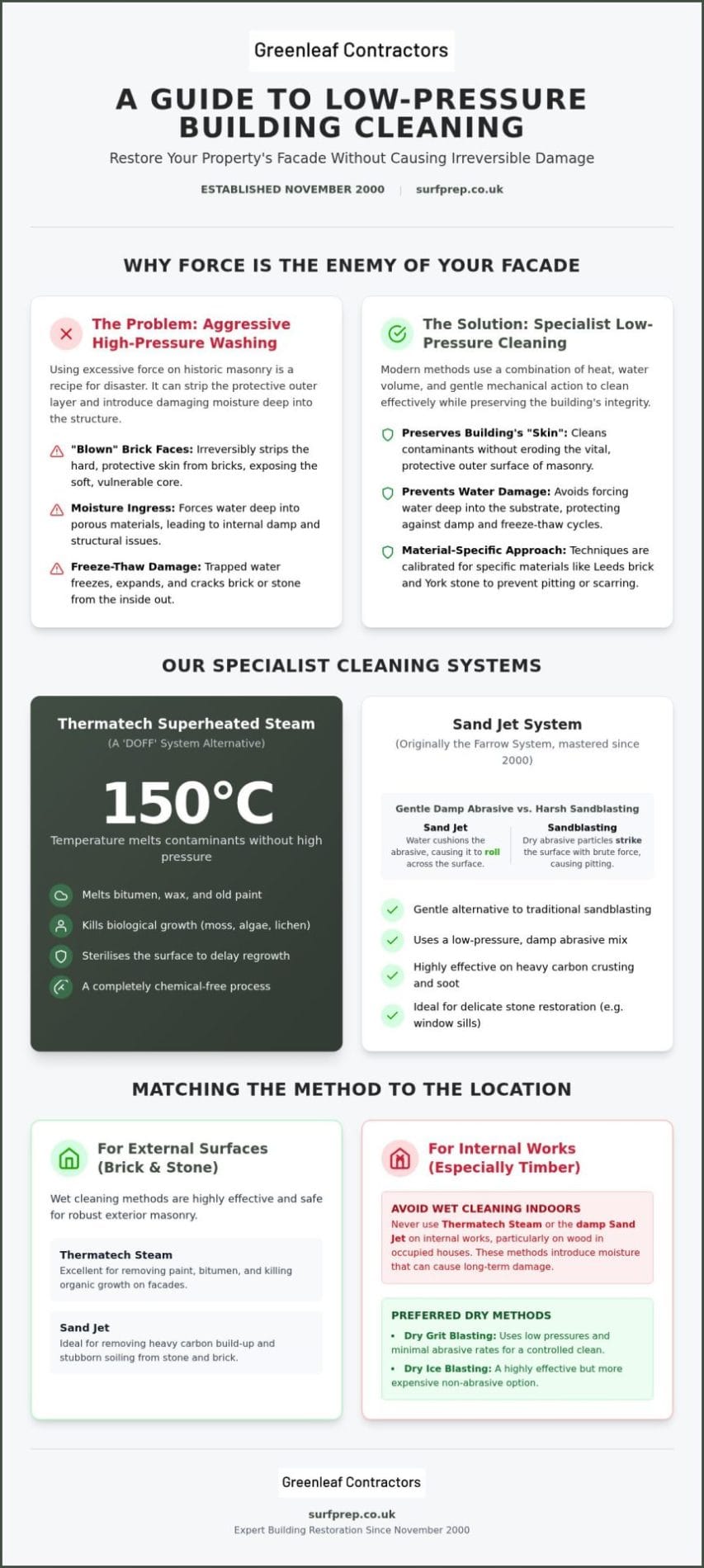
High-pressure jet washing is frequently the enemy of historic facades. When water is forced into porous masonry at high velocity, it doesn’t just sit on the surface; it penetrates deep into the substrate. This leads to moisture ingress, damp, and the dreaded freeze-thaw damage, where trapped water expands as it freezes and cracks the stone from the inside. The most visible scar is often “blown” brick faces. This occurs when the hard, kiln-fired outer layer is literally stripped away, leaving a soft, vulnerable core exposed to the elements. Once this damage happens, it’s irreversible.
Defining “Low Pressure” in a Restoration Context
In a specialist restoration context, low pressure typically operates at a fraction of the force found in a standard domestic jet washer. It isn’t about a single setting; it’s about adjustable flow rates and precise temperature control. Local materials, such as Leeds red brick and York sandstone, require specific calibrations to avoid scarring. York stone, whilst durable, can become “pitted” if the pressure is too high, whilst the softer red bricks common across West Yorkshire are even more susceptible to permanent damage. Effective cleaning relies on high water volume and superheated temperatures to do the heavy lifting rather than aggressive impact.
Specialist Systems: Thermatech Steam and the Sand Jet Method
Choosing the right equipment is just as vital as the pressure setting itself. Whilst many contractors rely on harsh chemicals to strip surfaces, we prioritise mechanical and thermal actions that respect the substrate. This approach aligns with National Park Service guidelines for the gentle cleaning of historic buildings, which emphasise the importance of using the least impactful method possible. By using low-pressure building cleaning methods that don’t rely on caustic agents, we ensure the long-term health of the masonry. Whether you’re dealing with organic growth or industrial pollutants, the solution lies in matching the specific contaminant to the correct specialist system.
Thermatech Superheated Steam: The “DOFF” Alternative
Whilst “DOFF” is a term many property owners recognise, we specifically utilise the Thermatech system for its exceptional reliability in heritage settings. It produces superheated steam at temperatures reaching 150°C. This intense heat melts away bitumen, wax, and multiple layers of old paint without the need for aggressive scraping or high-velocity impact. Beyond aesthetics, the high temperature sterilises the surface. It kills off moss, algae, and lichen spores deep within the stone pores, which significantly delays their return compared to cold-water washing. It is a chemical-free way to achieve expert brick cleaning that lasts.
The Sand Jet: A Gentle Alternative to Sandblasting
For heavier carbon crusting or stubborn soot, steam alone isn’t always enough. In these cases, we use the sand jet, a system we’ve mastered since acquiring it as a Farrow System in November 2000. Unlike traditional dry sandblasting, which often leaves stone “pitted” or scarred, our sand jet cleaning method uses a low-pressure, damp abrasive. The addition of a small amount of water creates a “cushion” that allows the abrasive to gently roll across the surface rather than striking it with blunt force. It is particularly effective for restoring delicate stone window frames and sills in coastal areas like Scarborough or historic centres like York. If you’re unsure which system fits your project, get in touch for an honest assessment of your property’s needs.
Internal vs External Restoration: When to Avoid Wet Cleaning Methods
Whilst we champion superheated steam for external stone, we must offer an “Expert Admission”: it is rarely the right choice for internal restoration. Introducing significant moisture into an occupied house or a barn conversion can lead to structural damp, mould growth, or timber warping. The dangers of abrasive cleaning are well-documented for exteriors, but the dangers of inappropriate moisture indoors are just as severe. For internal low-pressure building cleaning methods, we pivot away from damp systems like the sand jet toward dry alternatives that protect the integrity of the property.
Every project begins with a thorough site survey. This allows us to identify the density of the substrate and the specific nature of the contaminants. Without this step, you risk applying a method that might be effective elsewhere but is destructive in your specific environment. We prioritise honesty over a quick sale; if a method isn’t suitable for your building, we’ll tell you why and offer a safer alternative.
Safe Timber Cleaning in Barn Conversions
When restoring wooden beams, particularly structural oak in barn conversions, dry grit blasting is our preferred approach. By using exceptionally low pressures and controlled abrasive rates, we can strip away decades of black paint or limewash without raising the wood grain or introducing water. For highly sensitive areas where dust must be strictly managed, dry ice blasting is a superb option, though it remains an expensive choice compared to traditional grit. You can find more detail in our specific guide on how to clean structural timbers in a barn conversion.
The Logistics of Building Restoration in the North
Managing a restoration project requires more than just technical skill; it requires reliable logistics. Since November 2000, we’ve refined our operations to handle complex works across Leeds, Manchester, and Newcastle with minimal disruption to the property owner. Choosing a contractor established for over two decades provides the peace of mind that your high-value restoration is in experienced hands. We understand the regional variations in building materials and the specific challenges they present. If you are ready to restore your property’s original character, contact our specialist team to organise a professional survey.
Secure the Future of Your Property’s Facade
Restoration isn’t about brute force; it’s about the careful application of science and experience. We’ve explored how low-pressure building cleaning methods using Thermatech superheated steam and the damp Sand Jet system preserve the delicate “skin” of your property whilst removing decades of pollutants. Whether you’re dealing with the specific porosity of Leeds red brick or the rugged density of York stone, the goal is always a clean finish that respects the original material. It’s about achieving that “original” look without the scarring or pitting caused by aggressive alternatives.
While we focus on restoring the external facade, keeping the interior of your home in top condition is equally important; if you are based in the North West, you can check out Apartment Clean for specialist residential cleaning services in Manchester.
Beyond the structural restoration of the facade, maintaining a professional standard for your commercial premises is essential. For those seeking comprehensive interior care, Richard’s Cleaning and Washroom Services offers expert office cleaning and washroom solutions that complement the pristine look of a restored building.
Since we established our business in November 2000, we’ve prioritised an honest approach to building care. This means admitting when a popular method isn’t the right fit, such as avoiding wet cleaning for internal timber to prevent moisture damage. By matching the right technology to your specific substrate, you ensure a restoration that lasts for decades rather than just a few seasons. If you’re ready to see your facade transformed without the risk of structural damage, Get a Professional Building Restoration Quote from Surfprep. We’re here to help you navigate the complexities of building care with the quiet confidence of a seasoned specialist.
Frequently Asked Questions
Is low-pressure cleaning safe for Grade II listed buildings?
Yes, low-pressure building cleaning methods are generally the only techniques approved by conservation officers for Grade II listed structures. These methods prioritise the preservation of the building’s historical “skin” whilst effectively removing pollutants. Since we established our business in November 2000, we’ve used these gentle systems to ensure that heritage masonry is restored without the risk of irreversible structural damage or surface erosion.
What is the difference between Thermatech and standard steam cleaning?
The main difference is the precision and the temperature of the output. Standard steam cleaning often relies on high-pressure hot water, which can saturate stone and cause damage. The Thermatech system produces superheated steam at 150°C with very low water volume. This intense heat melts away bitumen, wax, and organic growth whilst keeping the pressure low enough to protect delicate mortar and historic brickwork.
Can the sand jet method remove graffiti from sandstone without leaving “ghost” marks?
Yes, the sand jet is highly effective for graffiti removal on porous sandstone, such as York stone. Because it utilises a damp, gentle abrasive (originally known as the Farrow System), it lifts the paint from the stone’s pores without “pitting” or scarring the surface. This uniform cleaning action prevents the “ghosting” or faint outlines of the graffiti that often remain after aggressive chemical or high-pressure treatments.
Why do you recommend dry grit blasting instead of steam for internal wooden beams?
We recommend dry grit blasting for internal timber because introducing moisture into an enclosed property is a significant risk. Superheated steam can lead to moisture ingress, which may cause oak beams to warp or encourage mould growth in occupied houses. For internal works, we use low-pressure dry grit or dry ice blasting to strip away paint and grime whilst keeping the structural timber perfectly dry.
How long does a typical low-pressure clean take for a residential property?
A typical project for a standard residential facade usually takes between one and three days to complete. The exact duration depends on the size of the building and the severity of the carbon crusting or biological growth. During our initial site survey, we’ll provide a realistic timeframe so you understand the logistical requirements for your specific restoration project.
Do low-pressure cleaning methods require the use of harsh chemicals?
No, these methods are designed to be highly effective using only heat and gentle mechanical action. By utilising low-pressure building cleaning methods like Thermatech or the sand jet, we can achieve a clean, original finish without the need for caustic or acidic agents. This chemical-free approach is safer for your property’s substrate and far more environmentally responsible for the surrounding landscape.
