
The most dangerous thing you can do to a 200-year-old barn is treat its skeleton like a modern industrial site. Whilst it’s tempting to use high-pressure steam to reveal hidden beauty, aggressive methods often cause irreversible moisture damage. We understand the anxiety involved in removing paint from old oak beams; you want to see the original grain, yet the fear of splintering the surface or saturating the timber is very real. Since our establishment in November 2000, we’ve championed a specialist approach that prioritises the building’s long-term health over a quick, potentially damaging fix.
This guide explains why we reserve our Thermatech and sand jet systems for external masonry, opting for low-pressure dry grit blasting or premium dry ice blasting for interior timbers. You’ll learn the safest ways to strip thick limewash and lead paint, ensuring your barn remains a dry, structurally sound, and stunningly restored heritage home.
Key Takeaways
- Identify the complex layers of historic coatings, from centuries-old limewash to modern gloss, and learn how to assess the underlying structural health of your timber.
- Understand the technical advantages of low-pressure dry grit blasting as the safest professional solution for removing paint from old oak beams whilst preserving the natural grain.
- Gain expert insight into why moisture-based systems like superheated steam or damp sand jets are unsuitable for indoor wood restoration in occupied heritage properties.
- Learn how to correctly prepare restored timbers for woodworm treatments and select breathable oils or waxes that maintain the long-term integrity of the wood.
Assessing Historic Timbers: Identifying Coatings and Wood Condition
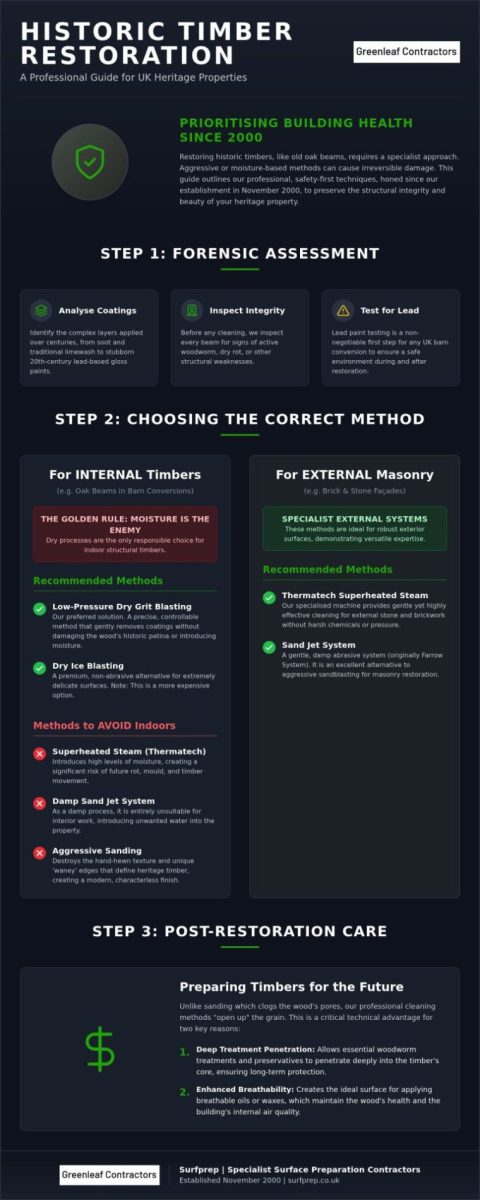
A successful restoration begins with a forensic audit of the timber. Before you begin removing paint from old oak beams, you must understand exactly what has been applied to the wood over the centuries. Most UK barn conversions present a complex timeline; you’ll typically find a base layer of soot and grime from livestock, followed by multiple coats of traditional limewash, and often a final, stubborn layer of 20th-century lead-based gloss. Identifying these layers requires a technical understanding of wood finishes to ensure the chosen cleaning method doesn’t cause irreparable damage.
Structural integrity is your primary concern amongst the dust of a renovation site. You must inspect every beam for active woodworm or “soft” spots indicative of dry rot before any professional wooden beam cleaning commences. Furthermore, lead paint testing is a non-negotiable first step for any UK barn conversion project. Given that lead was a standard ingredient in paints until the 1960s, disturbing these coatings without specialist knowledge can create a hazardous environment for both workers and future residents.
Different wood species react uniquely to the restoration process. Oak is incredibly resilient but can “furr” if the pressure is too high; elm is often softer and more susceptible to grain damage; pine, frequently used in later Victorian additions, is easily gouged by amateur attempts. Recognising these nuances is part of the expertise we’ve provided since November 2000.
Evaluating Limewash and Paint Layers
Thick layers of limewash are brittle but cling stubbornly to the crevices of historic timber. Removing them requires a delicate, swirling motion with low-pressure media to avoid pitting the wood surface. Here is our Expert Admission: we frequently see property owners attempt to use heavy-duty belt sanders to reach the “clean” wood. This is a mistake. Aggressive sanding destroys the historic hand-hewn texture and the unique “waney” edges that define a heritage property. Our goal is to reveal the wood’s history, not sand it into a modern, characterless plank.
Safe Professional Methods for Removing Paint from Internal Beams
The golden rule for internal timber restoration is simple: moisture is the enemy. Whilst we utilise our Thermatech system for external stone, we never recommend superheated steam for wood inside a property. It’s simply too risky. For removing paint from old oak beams in an occupied home or barn conversion, dry processes are the only responsible choice. This approach ensures you don’t introduce unnecessary damp into structural timbers that have remained dry for centuries, preventing future issues with rot or timber movement.
Low-pressure dry grit blasting remains our preferred solution. It’s a precise, controllable method that yields exceptional results by using low abrasive rates to peel back layers of stubborn gloss without scarring the wood. For particularly delicate or high-value heritage timbers, dry ice blasting offers a premium, non-abrasive alternative, though it remains a more expensive option. Adhering to responsible methods of paint removal means acknowledging that while our sand jetting equipment is a gentle alternative for masonry, its damp nature makes it unsuitable for indoor beams.
The Step-by-Step Professional Restoration Process
Our restoration process is methodical. We begin with the complete protection of the interior space, sealing off non-work areas to manage dust migration. Next, we calibrate our low-pressure equipment specifically for your timber species. This is where our experience since November 2000 is vital; we adjust the abrasive flow to ensure we don’t destroy the historic patina. Finally, we systematically remove the coatings by working with the grain, gradually revealing the wood’s natural colour. If you’re concerned about the state of your ceilings, our team can provide a specialist assessment of your structural timbers.
Post-Restoration Care: Preparing Timbers for the Future
Unlike sanding, which often clogs the wood’s pores with fine dust, professional wooden beam cleaning effectively “opens” the grain. This is a critical technical advantage; it allows essential woodworm treatments to penetrate deeply into the structural core rather than just sitting on the surface. Since we began in November 2000, we’ve seen how this thorough preparation extends the life of heritage properties. Removing paint from old oak beams is only half the battle; ensuring the timber can breathe again is vital for the building’s internal climate and overall air quality.
Once the wood is clean, selecting the right finish is paramount. We generally recommend breathable oils for most barn conversions as they nourish the wood without creating a plastic-like seal. Traditional beeswax remains a beautiful alternative for those seeking a softer, historic sheen. Consulting the NPS Guide to Paint Problems highlights how improper surface preparation or modern, non-breathable coatings often lead to future failure. Professional intervention is always safer than DIY when dealing with load-bearing timbers, as a specialist can identify structural weaknesses that an amateur might overlook.
Ongoing Maintenance and Aftercare
As your barn settles into its new, heated habitable environment, you should monitor the timbers for any significant movement or “checking.” This is a natural response to the change in humidity. To maintain the lightened appearance of your beams, simple dusting and the occasional application of a natural, clear wax are sufficient. You don’t need harsh chemicals once the initial task of removing paint from old oak beams is complete. We’ve found that a well-restored beam requires very little intervention to stay beautiful for another century.
Revitalising Your Heritage Timber
Restoring a barn is a significant commitment that requires a balance between aesthetic vision and structural preservation. We’ve established that removing paint from old oak beams is safest when handled through dry, low-pressure methods that respect the wood’s age and moisture sensitivity. By prioritising thorough assessment and breathable finishes, you ensure your structural timbers remain healthy for another century.
Since November 2000, we’ve served as expert advisors and specialists across Leeds, York, Manchester, and the North; we help homeowners reveal the hidden character of their properties without risking the building’s integrity. Don’t leave your historic beams to chance. Professional intervention is the only way to guarantee a safe, dust-managed, and beautiful result. Request a specialist timber restoration quote from Surfprep and start your project with confidence.
Frequently Asked Questions
Can I use a pressure washer to clean internal barn beams?
You should never use a pressure washer or superheated steam for internal wood cleaning. These methods force moisture into the grain, which can cause structural warping, rot, or mould growth. For barn conversions in Leeds or York, we strictly use dry, low-pressure processes. This protects the integrity of the 200-year-old oak whilst achieving a clean, lightened finish without the risk of damp.
How much does professional dry grit blasting for timber cost in the UK?
Professional restoration costs are influenced by the timber’s condition, the height of the structural ceilings, and the specific coatings being removed. Every project we undertake across the North requires a unique approach; the choice between low-pressure grit blasting and the more expensive dry ice blasting will affect the total. We provide tailored assessments to ensure you receive the most effective solution for your property.
Is it safe to clean beams if lead paint is present?
Removing paint from old oak beams is perfectly safe when managed by professionals using industrial-grade extraction. Lead was a standard paint ingredient in the UK until the 1960s; therefore, we take lead dust very seriously. Our team utilises HEPA filtration and sealed work zones to prevent contamination, ensuring your heritage home remains a safe environment for your family throughout the restoration process.
Will cleaning my barn timbers help with woodworm treatment?
Yes, professional cleaning is an essential precursor to effective woodworm treatment. By stripping away old gloss or limewash, we open the pores of the timber. This allows preservation fluids to penetrate deep into the structural core rather than just sitting on the surface. Without this step, treatments are far less effective, potentially leaving the heart of your beams vulnerable to infestation.
How long does it take to clean the structural timbers in a standard barn conversion?
The duration of the work depends on the scale of your barn and the complexity of the timber layout. Most projects require several days on-site, with a large portion of that time spent masking and protecting your property. Since November 2000, we’ve focused on methodical preparation to ensure the best results for our clients in Manchester, York, and across the North.
