
The most critical stage of timber restoration isn’t the cleaning itself, but what you do the moment the equipment is packed away. If you apply a non-breathable sealant to a freshly exposed surface, you aren’t protecting the wood; you’re essentially suffocating it. Proper aftercare for cleaned wooden beams is the only way to ensure that your investment doesn’t result in trapped moisture or premature rot. We understand the hesitation many homeowners feel at this stage. There’s a genuine fear that a single coat of the wrong oil will turn a beautiful, honey-toned oak beam into something uncomfortably dark and heavy.
You’ve likely spent a significant amount of time uncovering the original character of your home, so it’s natural to feel overwhelmed by the choice between waxes, oils, and modern varnishes. This specialist guide will provide you with a clear roadmap to protect and maintain your timber whilst ensuring its structural integrity remains intact for decades. We will explore the vital “drying out” period, explain why breathable finishes are non-negotiable under current UK standards, and establish a simple maintenance schedule to prevent cracking. By the end, you’ll have the professional knowledge needed to handle your beams with confidence, ensuring they remain a stunning feature of your property for years to come.
Key Takeaways
- Understand why rushing into the finishing stage can trap moisture and how to identify when your beams are truly ready for treatment.
- Discover the essential role of breathability in aftercare for cleaned wooden beams to prevent internal rot and long-term structural decay.
- Learn to distinguish between traditional beeswax, hard-wax oils, and Danish oils to select the most appropriate finish for your specific timber species.
- Adapt your maintenance strategy to the unique demands of the British climate and modern central heating to stop timber from warping or cracking.
- Establish a professional cleaning and re-oiling schedule that preserves the wood’s natural character without stripping away vital protective layers.
Immediate Steps: The Post-Cleaning Drying Phase
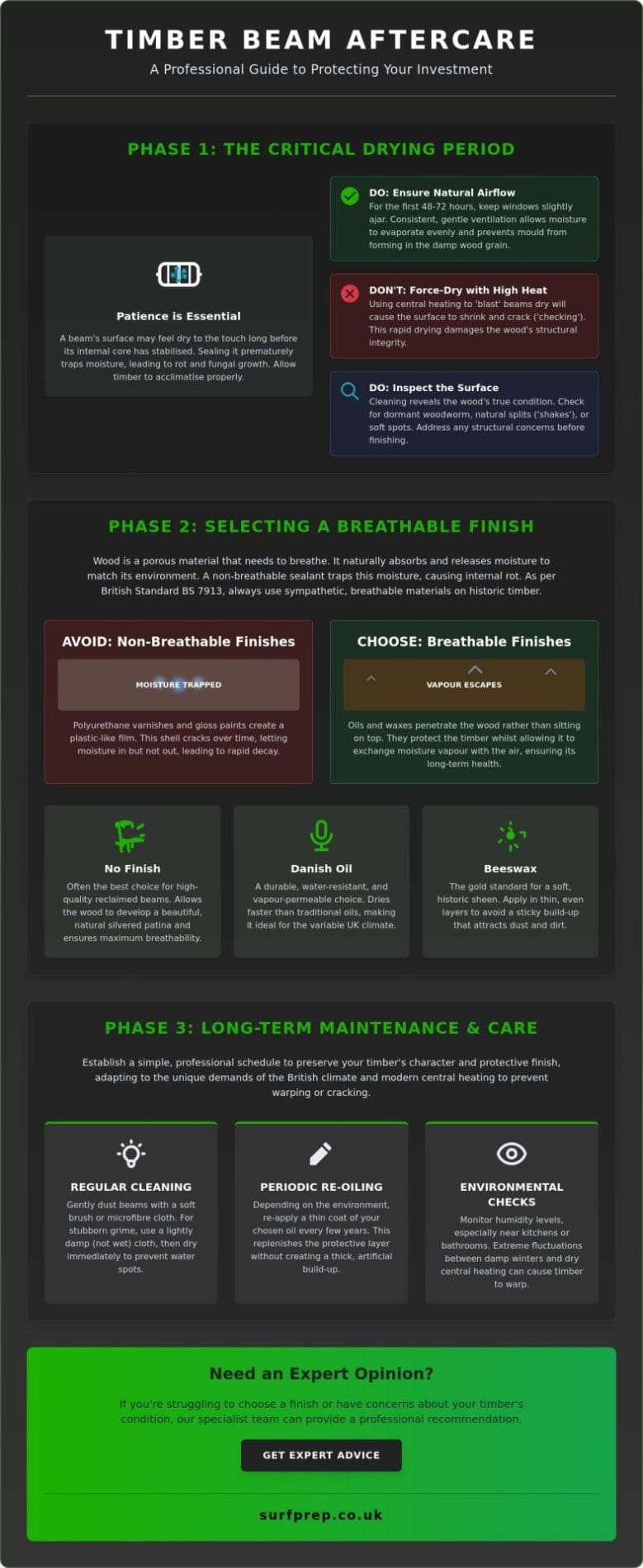
Patience is the most critical tool in your kit for effective aftercare for cleaned wooden beams. Whilst it’s tempting to start oiling as soon as the surface feels dry, rushing this process is a recipe for disaster. There’s a significant difference between surface dryness and the internal moisture levels of structural timber. If you seal the exterior before the core has reached equilibrium, you risk trapping moisture that eventually leads to fungal growth or rot. Don’t be fooled by a dry-to-the-touch exterior; structural beams are dense and release moisture slowly.
You might notice the grain looks “furry” or raised after the cleaning process. This is a natural reaction where wood fibres swell and stand up when damp. Don’t panic. These fibres often settle as the wood dries, and they only require a very light, sympathetic touch-up later. Maintaining consistent airflow during the first 48 to 72 hours is vital to prevent mould from taking hold in the damp crevices of the grain whilst the timber stabilises.
Managing Moisture and Airflow
In period properties, the instinct is often to turn the central heating up to “blast” the beams dry. We strongly advise against this. Rapidly forced drying causes the outer layers of the timber to shrink faster than the core, leading to “checking” or deep cracks. Instead, rely on natural ventilation by keeping windows slightly ajar to allow moisture to evaporate evenly. Because superheated steam cleaning uses a fraction of the water volume compared to traditional pressure washing, the required drying time is significantly reduced, allowing you to move to the finishing stage sooner.
Post-Cleaning Structural Inspection
Cleaning often reveals the true history of the wood, including dormant woodworm holes or “shakes” (natural splits) previously hidden by grime. This is the ideal time to evaluate wood preservation techniques to ensure the timber remains sound. Most shakes are purely aesthetic, but if you discover soft, spongy spots or active “frass”, you should consult a specialist. If you’re concerned about what the cleaning has uncovered, feel free to reach out to our team for an expert opinion on the best aftercare for cleaned wooden beams.
Choosing the Right Finish: Breathability vs Protection
Selecting a finish is where many restoration projects inadvertently compromise the long-term health of the timber. The science of breathability is straightforward: wood is a porous, hygroscopic material that naturally absorbs and releases moisture to stay in equilibrium with its environment. If you apply a finish that seals these pores, you create a vapour-proof barrier that traps dampness inside the grain. This is a primary cause of internal rot in structural beams, as moisture has no way to escape. Before you commit to any wood preservative chemicals or decorative coatings, you must consider the wood species. Oak is particularly reactive because its high tannin content can cause the wood to turn an unexpectedly dark, muddy colour when it meets certain water-based finishes. Here is our expert admission: for many high-quality reclaimed beams, the most effective aftercare for cleaned wooden beams is to leave them completely unfinished, allowing the natural silvered patina to remain the star of the room.
The Case for Oils and Waxes
For barn conversions in climates like Manchester or York, Danish oil is often a better choice than raw linseed oil. It dries much faster and provides a durable, water-resistant surface whilst remaining vapour-permeable. If you want a soft, historic sheen without that artificial “plastic” look, beeswax remains the gold standard. Apply it in thin, even layers to avoid a sticky build-up that attracts dust. Before selecting your finish, it’s worth understanding how to clean structural timbers in a barn conversion correctly, as the cleaning method used will directly influence which finish performs best on your specific timber. You can also learn more about our wood cleaning process to see how we prepare these surfaces for a flawless finish.
Finishes to Avoid on Historic Timber
Modern polyurethane varnishes are the enemy of heritage wood. They create a rigid shell that eventually cracks; these micro-fissures allow moisture to seep in, but the surrounding plastic film prevents it from evaporating, leading to rapid decay. Non-breathable gloss paints present the same risk to structural integrity. BS 7913 is the British Standard for the conservation of historic buildings, and it explicitly recommends using sympathetic, breathable materials that do not trap moisture within the building fabric. If you’re struggling to choose between a wax or an oil, contact our specialist team for a professional recommendation based on your property’s specific age and timber type.
Long-term Maintenance and Environmental Control
The British climate presents a unique challenge for timber preservation. Whilst we often focus on the initial cleaning, the true success of aftercare for cleaned wooden beams lies in managing the environment they live in. Modern central heating can be particularly harsh on structural timber; it strips moisture from the air, causing the wood to contract and potentially develop new “shakes” or splits. Conversely, our damp winters can lead to moisture absorption. This constant cycle of expansion and contraction means the wood is always “working”. To understand the technical background of how wood reacts to these stressors, the Wood Preservation Handbook offers detailed insights into timber stability and maintenance.
UV light is another factor that slowly alters the aesthetic of your beams. Over time, sunlight will “silver” the wood, which some owners adore, whilst others prefer to maintain the warm honey tones revealed during cleaning. If you notice the finish becoming dull or the wood feels “thirsty”, it’s likely time for a professional refresh; for instance, specialists like Cabinet refinishing Denver demonstrate how professional refinishing can revitalise and protect high-use interior woodwork. This long-term aftercare for cleaned wooden beams ensures that the protective barrier remains effective against both light and airborne pollutants. A light re-application of oil every 3 to 5 years is typically sufficient for most domestic settings.
Controlling Internal Humidity
For structural oak, the goal is to maintain a stable internal humidity between 45% and 60%. Dropping below this range, especially in winter, causes the timber to dry too rapidly and crack. A hygrometer is an essential tool; it allows you to monitor these levels and adjust your heating as required. If you are unsure about the specific needs of your property, you can contact us for specialist advice on environmental management.
Seasonal Care and Monitoring
We recommend a “Spring Check” once the heating is turned off. Inspect the beams for significant movement or debris trapped in the grain. To remove cobwebs or dust, use a soft-bristled brush rather than a damp cloth, which can push grime deeper into the pores. If your beams are still covered in layers of historic paint or heavy carbon, you may need more than a simple clean. You can explore our sand jet cleaning services to see how we handle more stubborn surface contaminants without damaging the underlying timber.
Preserving the Character of Your Historic Timber
Restoring the original beauty of your beams is a rewarding process, but it requires a methodical approach to ensure the results last. Success depends on your willingness to wait for the timber to dry completely and your commitment to using only vapour-permeable finishes that respect the wood’s biology. By prioritising breathability over modern, plastic-based sealants, you protect the structural integrity of your home whilst highlighting the unique grain and history of the wood. Effective aftercare for cleaned wooden beams is a long-term commitment, but with the right environmental controls and a consistent maintenance schedule, your timber will remain a stunning feature for decades. It’s about working with the material, not against it.
At Surfprep, we’ve spent over a decade serving Leeds, York, and across the North, specialising in heritage and listed building restoration. Our team utilizes advanced Doff superheated steam cleaning for delicate timber, ensuring a deep clean that respects the material’s age. If you’re ready to restore your home’s character with the help of seasoned professionals, request a professional timber restoration quote from Surfprep. We’re here to help you navigate the complexities of timber preservation with honest advice and technical excellence. Your beams are in safe hands.
Frequently Asked Questions
How long should I wait after cleaning before applying a finish to my beams?
You should wait at least 48 to 72 hours if your beams were cleaned using superheated steam; however, traditional wet methods may require a full week to dry. Structural timber is exceptionally dense, so even if the surface feels dry to the touch, internal moisture levels can remain high. We recommend using a moisture meter to ensure the timber has dropped below 20% moisture content before you begin any finishing work.
Can I use normal furniture polish on my structural wooden beams?
You should avoid using standard supermarket furniture polish as it often contains silicones and non-breathable additives that create a sticky build-up. These products trap dust and prevent the timber from regulating moisture naturally with the room’s atmosphere. For proper aftercare for cleaned wooden beams, stick to specialist breathable hard-wax oils or traditional beeswax, which nourish the grain without compromising the wood’s structural health.
Will cleaning my beams make them more susceptible to woodworm?
Cleaning does not make your beams more attractive to pests, but it does make previous infestations much easier to identify. Removing decades of soot and grime often reveals old flight holes that were previously hidden from view. If the cleaning process has exposed bare, untreated wood, this is the ideal time to apply a breathable preservative to ensure the timber is protected against future woodworm activity.
What is the best way to lighten dark oak beams after they have been cleaned?
The most effective way to keep beams light is to use a “natural” or “raw” effect oil that contains a small amount of white pigment. Standard clear oils tend to give wood a “wet look” that significantly darkens the grain. This specific type of aftercare for cleaned wooden beams counteracts that darkening effect, allowing the oak to retain the pale, honey-toned appearance achieved immediately after the cleaning process.
