
That oppressive, dark finish on your ceiling isn’t the true character of the wood; it’s often just decades of “Black Japan” varnish and thick wax trapping dust and light. You likely feel the room is becoming smaller and more claustrophobic, yet the fear of damaging historical structural timber with harsh chemicals or water keeps you from acting. We understand that hesitation. Since establishing our restoration business in November 2000, we’ve seen how the wrong approach can ruin a property’s heritage. This guide explains how to remove varnish from oak beams uk using professional, dry methods that prioritise the timber’s integrity. You’ll discover why we strictly avoid steam or wet sand-jets indoors, opting instead for controlled dry grit blasting to reveal the natural honey grain beneath. We’ll walk through the safe, methodical steps to transform your home from dark and sticky to bright and breathable.
Key Takeaways
- Identify the components of century-old buildup, from traditional beeswax to modern polyurethane, and how they mask the timber’s natural beauty.
- Learn how to remove varnish from oak beams uk using specialist dry methods that reveal original honey tones without the risk of water ingress.
- Understand why professional restorers prioritise dry grit or dry ice blasting over wet systems like the sand jet or steam for occupied properties.
- Establish a clean, non-sticky surface that is perfectly prepared for the application of modern, breathable finishes like high-quality hard-wax oils.
The Challenge of Historical Varnish and Polish Buildup on Oak Beams
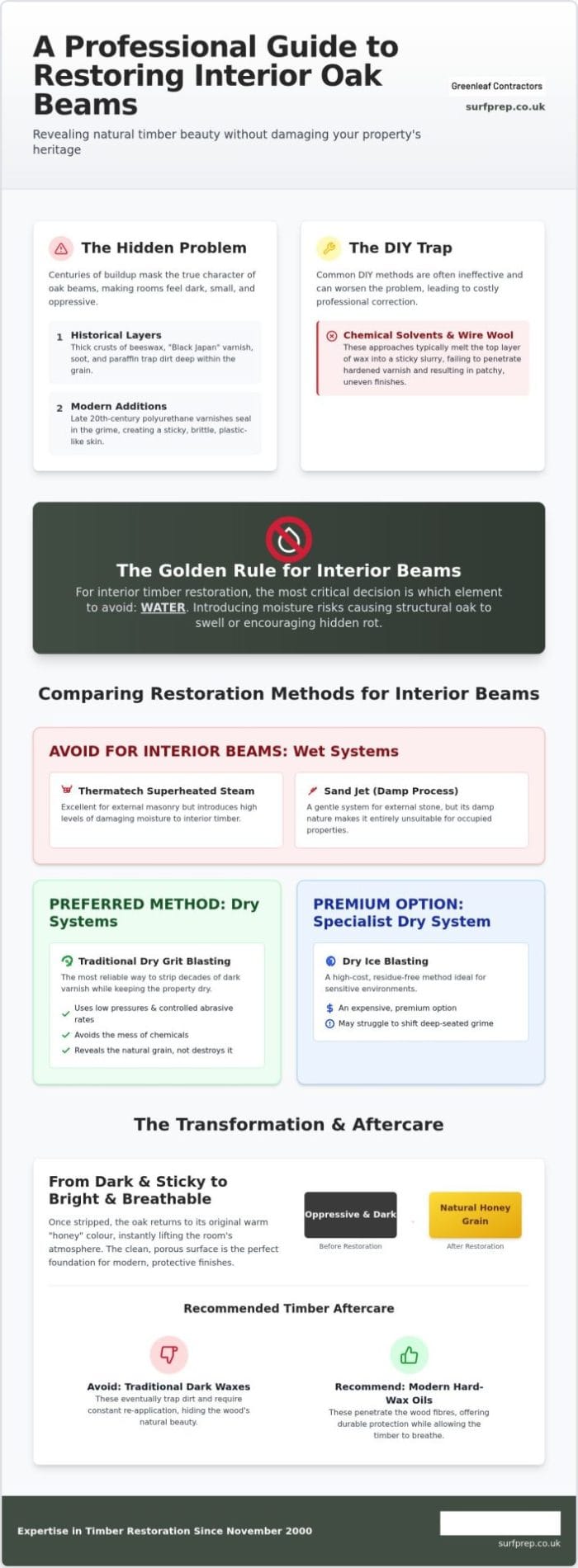
Historical beams in British cottages and barn conversions rarely show their true face. Over centuries, layers of beeswax, soot, and paraffin have bonded into a thick, blackened crust whilst trapping dirt within the grain. In the late 20th century, many homeowners added modern polyurethane to “seal” this grime. This creates an oppressive atmosphere. The room feels smaller; the ceiling seems to press down on the occupants. This “suffocation” effect isn’t just aesthetic. It masks the natural honey tones that define period properties.
Many people ask how to remove varnish from oak beams uk using DIY solutions like wire wool or white spirit. Unfortunately, these often fail. They simply melt the top layer of wax into a sticky slurry without touching the hardened varnish beneath. Since we established our business in November 2000, we’ve seen how these chemical-heavy DIY approaches result in patchy, uneven results that eventually require professional intervention to correct. A seasoned specialist knows that heavy, hardened buildup requires more than just a cloth and some solvent.
Identifying Different Types of Timber Coatings
Understanding the surface is the first step in learning how to remove varnish from oak beams uk safely. Assessment of wood finishing techniques is essential before starting any restoration. A simple wax finish often feels slightly tacky and will scrape away under a fingernail. Modern varnishes, however, act like a plastic skin. They are brittle and often flake. The most difficult scenario involves varnish applied directly over old wax. This creates a “gloopy”, unstable surface that resists traditional sanding and requires the precision of wooden beam cleaning specialists using dry abrasive methods.
Professional Dry Methods for Interior Timber Restoration
When considering how to remove varnish from oak beams uk, the most critical decision isn’t which chemical to buy, but which element to avoid: water. We use our Thermatech superheated steam cleaner for external masonry, but we never recommend it for interior timber. Similarly, the sand jet (originally our Farrow System acquired in November 2000) is a brilliant damp process for stone, yet it’s entirely unsuitable for indoor beams. Introducing moisture into an occupied house risks causing structural oak to swell or encouraging hidden rot within the joints. We believe in being transparent about these risks, even if it means recommending a more complex dry process.
Our preferred standard for interior restoration is traditional dry grit blasting. By utilising low pressures and strictly controlled abrasive rates, we can strip decades of dark varnish without the mess of chemicals or the dangers of water ingress. This methodical approach is the most reliable way to handle how to remove varnish from oak beams uk whilst keeping the property dry. We’ve refined this process over 25 years to ensure the grain is revealed, not destroyed. If you’re planning a project in Leeds or York, our specialised wood cleaning services provide a safe, dry alternative to aggressive sanding or ineffective DIY solvents.
Dry Grit Blasting vs Dry Ice Blasting
While dry grit blasting is highly effective for stubborn wax and hardened polyurethane, some clients ask about dry ice blasting. It’s a premium, expensive option that leaves no abrasive residue, making it useful in sensitive environments. However, for most UK barn conversions, dry grit blasting offers the best balance of speed and thoroughness. It reaches deep into the grain to pull out soot and old polish that dry ice might struggle to shift. For a bespoke assessment of your timbers, feel free to contact us directly.
Achieving the Perfect Finish and Timber Aftercare
Once the dark, sticky layers of polyurethane and soot are removed, the transformation is often dramatic. The oak returns to its original, warm “honey” colour, which instantly lifts the room’s atmosphere. This is particularly vital in occupied homes where light levels are a priority. A professionally cleaned beam provides the perfect foundation for future maintenance. Unlike a surface prepped with messy chemicals, a dry-blasted beam is clean, porous, and ready to accept modern finishes without the risk of adhesion failure.
We recommend finishes that allow the timber to breathe whilst providing protection against dust and spills. Traditional dark waxes, often suggested by generalists to hide damage, eventually trap dirt and require constant re-application. Instead, modern hard-wax oils are a superior choice. They penetrate the wood fibres to offer durability without sealing the surface in a plastic-like film. This ensures the structural timber remains stable and easy to maintain for decades. It’s a core part of knowing how to remove varnish from oak beams uk effectively; the job isn’t finished until the timber is properly protected.
Lightening Dark Beams Safely Without Bleach
Many homeowners believe that harsh chemical bleaches are required to brighten old timbers. However, these chemicals can weaken delicate wood fibres and leave a chalky, unnatural appearance. Our dry grit blasting process achieves a natural lightened look by physically removing the stained top layer of the wood. It’s a safer, more structural approach to how to remove varnish from oak beams uk. If you’re unsure about the state of your timbers, contact us for a professional assessment or read our specialist’s guide to cleaning structural timbers in a barn conversion for deeper technical insights.
Restoring the Character of Your Period Home
Restoring the authentic character of a heritage property starts with understanding the material. We’ve explored how stripping away decades of “Black Japan” and modern polyurethane reveals the timber’s hidden warmth. By prioritising dry grit blasting over risky wet methods, you protect the structural integrity of your home whilst achieving a clean, breathable finish. Our team has been refining these techniques since November 2000; we bring over 25 years of specialist experience to every barn conversion and cottage we touch. If you’re researching how to remove varnish from oak beams uk, remember that the safest results come from moisture-free precision. We are local experts serving Leeds, York, Hull, and the wider North. You can request a professional timber restoration quote from Surfprep to begin your project. Your beams don’t have to stay dark and oppressive forever.
Frequently Asked Questions
Is it possible to remove varnish from beams without making a mess?
Yes, we manage the mess through rigorous site preparation and containment. Our team uses heavy-duty polythene to seal off the work area and industrial-grade extraction units to capture dust at the source. While no abrasive process is entirely dust-free, these measures ensure that the rest of your property remains protected during the delicate restoration of your historical timbers.
Will professional grit blasting damage the original surface of my old beams?
Professional dry grit blasting won’t damage your beams when executed at low pressures by an honest specialist. Unlike aggressive industrial sandblasting, our method focuses on stripping the brittle varnish layer whilst leaving the original patina of the oak intact. This is the safest way for how to remove varnish from oak beams uk without eroding the soft grain of the wood.
Can I use steam cleaning (Thermatech) to remove varnish from interior timbers?
We don’t recommend using Thermatech or any superheated steam cleaning for interior wooden beams. While we utilise Thermatech for external masonry, introducing moisture into an indoor environment risks causing structural timber to swell or rot. For all internal works, we strictly use dry methods like low-pressure grit blasting or dry ice blasting to maintain the structural integrity of the property.
How long does it take to strip the varnish from a typical room of beams?
Stripping the varnish from a typical room usually takes between one and two days to complete. The exact duration depends on the number of beams and the thickness of the coating; particularly if modern varnish was applied over old beeswax. Our team works methodically to ensure a thorough finish, providing a clean, dry foundation for your chosen breathable hard-wax oil.
